
Crawl Space Encapsulation & Vapor Barrier in Indianapolis: What It Costs and How It Works
Crawl space encapsulation in Indianapolis typically runs $5,500-$12,000 for a standard post-war ranch or split-level, with vapor barrier installation alone at $2,200-$4,800 depending on square footage and access. Most jobs take one to three days, and we schedule within five to seven business days across the metro. Call (218) 261-7714 for a written price before any work starts; that’s how every job begins at Topside Attic Insulation
Indianapolis sits in IECC Climate Zone 5A, meaning homes here need insulation that works hard in both directions: bitter polar vortex winters and humid summers that regularly push past 90°F. The city’s post-war building boom left tens of thousands of ranch and split-level homes over vented crawl spaces on expansive clay soils, and those crawls are where Indianapolis homes leak conditioned air and take on moisture faster than nearly any other part of the envelope. This page covers what encapsulation actually does here, what it costs in this market, and why our approach to Crawl Space Encapsulation & Vapor Barrier work starts with air sealing before any barrier goes down.
Key Takeaways
- 1
Vapor barrier installation in Indianapolis: $2,200-$4,800 for a typical ranch. Full encapsulation with wall and rim joist work: $5,500-ul2,000.
- 2
Post-war ranches in Warren, Pike, Lawrence, and Wayne townships are the highest-risk housing stock for crawl space moisture and freeze-pipe failures in the city.
- 3
We publish before-and-after blower-door numbers on every applicable job so you can see exactly how much air your home stopped losing.
- 4
Every job includes a Documented Photo Record and a written scope and warranty before anyone lifts a tool. That’s the Haven Standard, in effect since 2016.
- 5
Wes Okafor leads the crew; a live person answers the phone 24/7 at (218) 261-7714.
Why Indianapolis Homeowners Call Us for Crawl Space Work
We work in Indianapolis neighborhoods where the housing stock has a specific problem: vented crawl spaces over expansive clay. That combination doesn’t exist in basement-dominated Midwest cities like Chicago or Minneapolis at the same scale. It’s the reason freeze-pipe calls here cluster in post-war ranches rather than older brick homes with basements. Our crews know which blocks in Irvington, Fountain Square, and the east side have balloon-frame construction with zero cavity insulation, and which 1960s splits in Lawrence and Wayne have open stairwells that let crawl space air pour straight up into the living room.
We’re an independently owned building-envelope contractor, not a franchise. Since 2016, we’ve sealed and insulated more than 9,000 homes across Central Indiana, every one with a written price before work started and a documented photo record when the crew left. Homeowners in Indianapolis who read the three-star reviews as carefully as the five-star ones tend to respond to what we show rather than what we claim: before-and-after blower-door readings, printed on the invoice. A blower-door test is a pressurization measurement that shows, in a single number, how much conditioned air your building envelope was losing before the work and after.
Our Crawl Space Encapsulation & Vapor Barrier Services in Indianapolis
Crawl Space Vapor Barrier
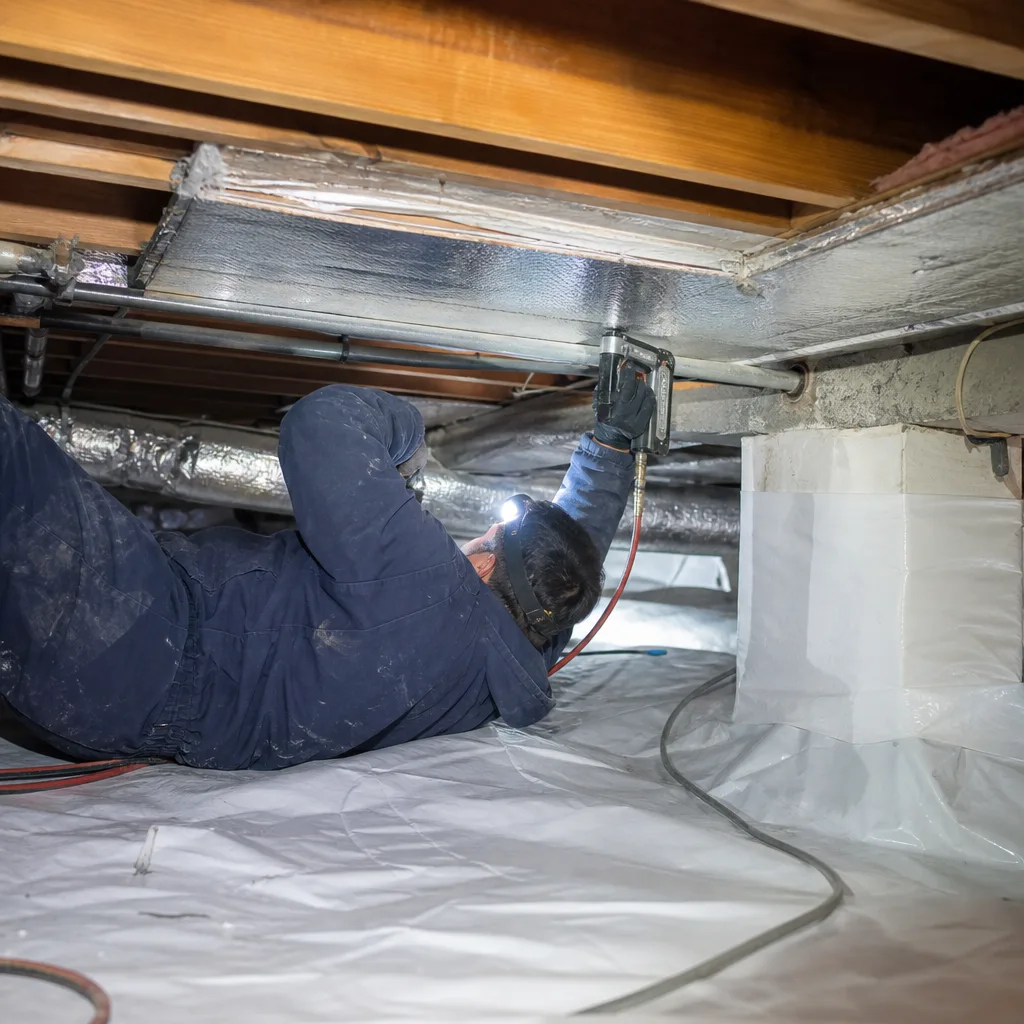
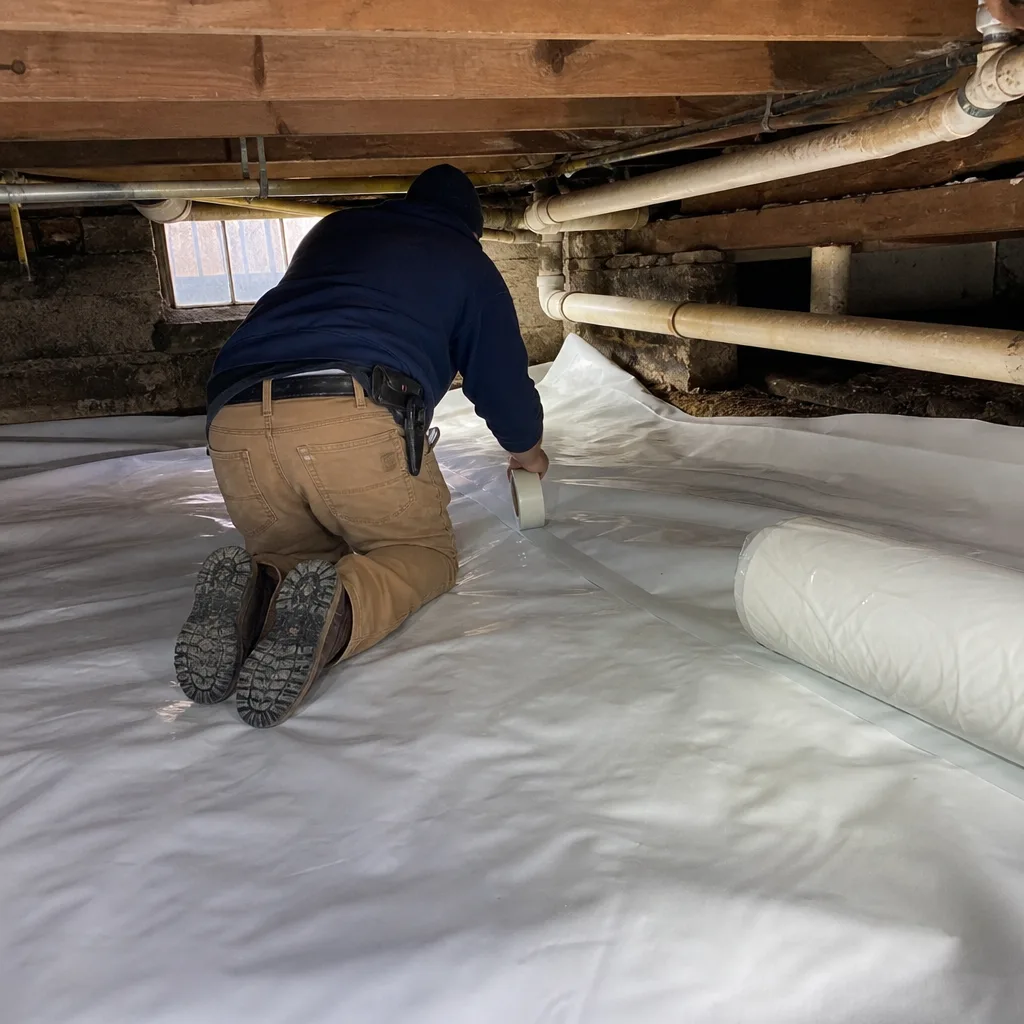
A vapor barrier in an Indianapolis crawl space has to do more than lie flat. The city’s expansive clay soils shift with moisture, and pier supports move enough to tear thin poly at column bases. We install 12-mil reinforced barrier, tape seams, and mechanically fasten terminations, because a taped seam that fails under a 40°F temperature swing is how humid summer air gets back in. Most Indianapolis vapor barrier jobs run $2,200-$4,800, with clay-soil homes on the south and east sides often requiring additional seam work around piers.
Crawl Space Encapsulation
Full encapsulation in Indianapolis means sealing foundation vents, insulating rim joists and walls, and covering the floor with reinforced barrier. In older Irvington and Fountain Square homes with balloon framing, we also address the rim joist cavities where crawl space air leaks directly into wall cavities and up through the house. Encapsulation in Indianapolis runs $5,500-$12,000. The price difference between a simple vapor barrier and a full encapsulation usually comes down to one thing: whether you’re solving a moisture problem or a moisture problem plus an air-sealing problem. We’ll tell you which one you have, in writing, before you spend a dollar.
Crawl Space Insulation
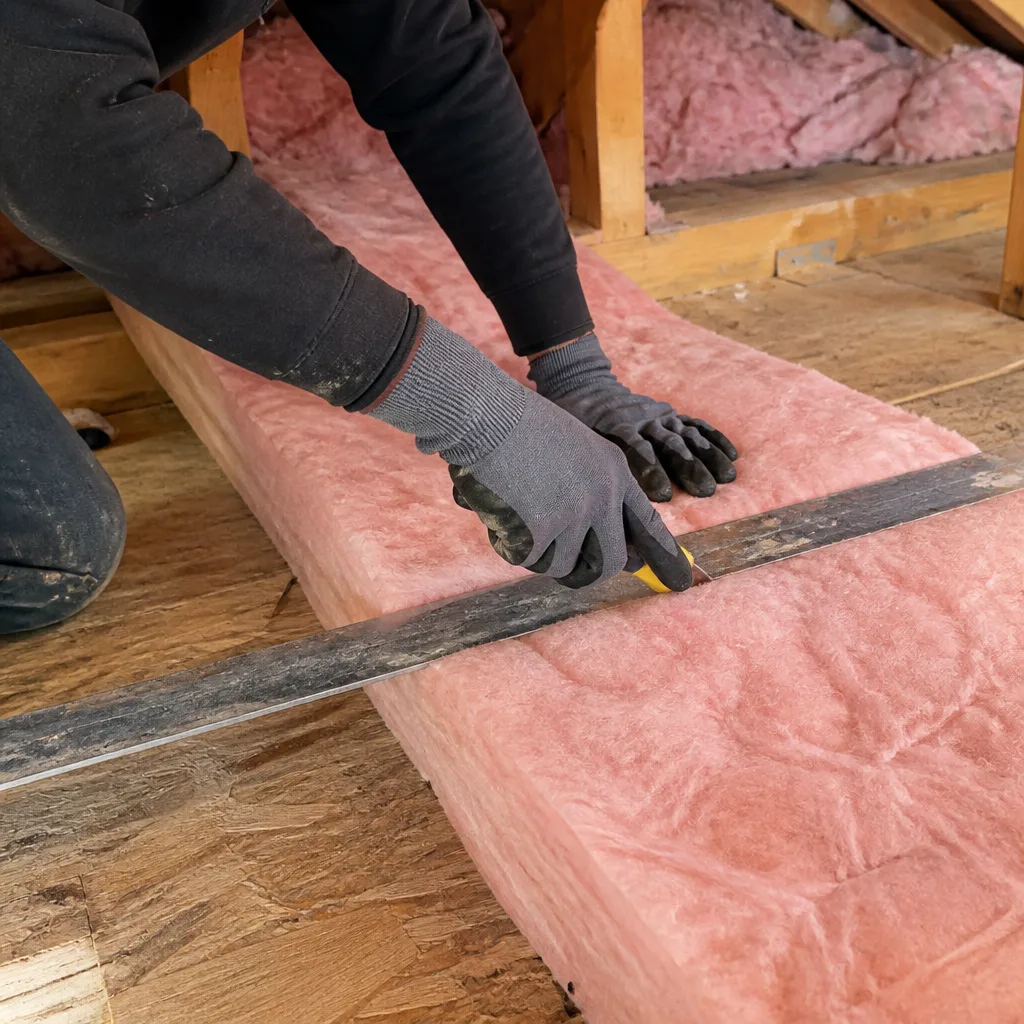
Insulating a crawl space in Indianapolis without air sealing first is wasted material. If rim joists leak, the insulation gets bypassed and cold air still reaches the floor deck above. We air seal first, then install Owens Corning foam board on walls and rim joists, with Johns Manville fiberglass where the assembly calls for it. Crawl space insulation in Indianapolis typically runs $1,800-$3,500 as part of an encapsulation scope. On its own, it’s rarely the right call, and we’ll say so.
Crawl Space Moisture Control
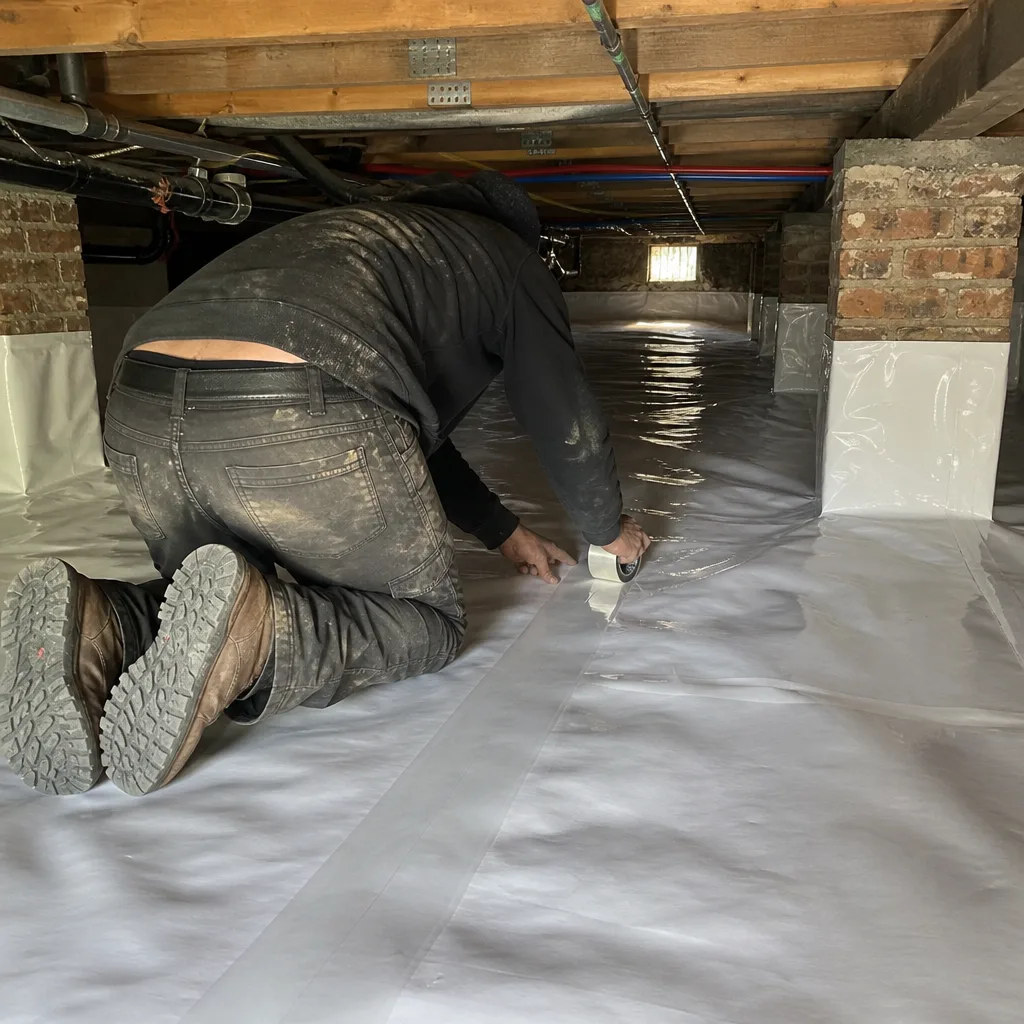
Moisture control in Indianapolis crawl spaces is a year-round fight. Spring rains saturate the clay, summer humidity drives indoor dew points up, and winter cold condenses on any uninsulated surface. We install drainage matting where groundwater is active, seal foundation vents, and document the before-and-after with photos and blower-door readings where applicable. A moisture control visit with a written assessment is included at no charge when we quote an encapsulation job.
What happens when you call
- 1
A real person answersNo phone trees - you reach a local pro.
- 2
You get an upfront price rangeHonest numbers before anyone is dispatched.
- 3
A background-checked tech heads outLicensed & insured, dispatched right away.
- 4
You approve before work beginsNothing starts until you say go.
Trusted Brands We Service in Indianapolis
We install and service vapor barriers, encapsulation systems, and crawl space insulation from Owens Corning, Johns Manville, Knauf, and Rockwool. We don’t have proprietary product lock-in; we specify the material that fits the assembly. For Indianapolis crawl spaces on expansive clay, that usually means a reinforced 12-mil barrier and Owens Corning foam board on walls, but we’ll write the spec in the scope, not just tell you what we’re installing. Parts are stocked locally in our Indianapolis metro office, so turnaround doesn’t stretch out waiting on a truck from out of state.
Common Crawl Space Problems We See in Indianapolis Homes
- Freeze-pipe failures in post-war ranches. During polar vortex events, the freeze-pipe calls across Indianapolis are overwhelmingly concentrated in vented crawl spaces with uninsulated floor decks and exposed supply lines. This isn’t random; it’s the city’s most predictable and recurring failure mode. Encapsulation and air sealing remove the path for cold air to reach those lines.
- Expansive clay tearing vapor barriers at pier bases. Indianapolis sits on clay that shrinks and swells with moisture. Pier supports shift, and the barrier tears at column bases. Those tears go unnoticed until humid summer air drives mold growth. We cut, lap, and mechanically fasten around every pier, then document each termination with photos.
- Tight alley-load access in older neighborhoods. Fountain Square, Bates-Hendricks, and parts of Irvington have crawl space entries with no side driveway and tight clearances. Barrier has to be cut and carried in pieces, then taped and sealed around piers and ductwork in a space you can’t stand up in. We do this regularly; it changes how the job is sequenced but not whether it can be done.
- Security-conscious homeowners skipping rim joist sealing near garage entries. Door-jamb sensors and smart openers are common in Indianapolis homes, and we’ve seen homeowners avoid sealing rim joists near garage entries because they’re worried about interfering with wiring or sensors. That leaves a direct air path from the crawl into the living space. We work around security equipment carefully and document exactly what we did and didn’t touch.
Pricing for Crawl Space Encapsulation & Vapor Barrier in Indianapolis, IN
Most vapor barrier installations in Indianapolis run $2,200-$4,800. Full encapsulation, including foundation vent sealing, rim joist air sealing, wall insulation, and reinforced floor barrier, runs $5,500-$12,000 for the city’s typical 900-1,500 square foot post-war ranch or split-level. Larger homes, extensive mold remediation, drainage matting, or crawl spaces with less than 18 inches of clearance push toward the top of and beyond those ranges.
What moves the price in Indianapolis specifically: the clay soil. Homes in Pike and Wayne townships with active groundwater seepage need drainage work before encapsulation. Homes in Irvington or Fountain Square with balloon framing and only an exterior crawl access point take more labor hours. We’ll give you a flat price, in writing, before any work starts. That’s Haven Standard Clause 1, and it’s non-negotiable for us. Call (218) 261-7714 for a written price.
We Also Serve Cities Near Indianapolis
Our crews run encapsulation and moisture control jobs throughout the metro, including Greenwood, Carmel, Fishers, and Noblesville. If you’re outside the city proper, the same written-price policy applies. For more on the full scope of our work across the region, see Crawl Space Encapsulation & Vapor Barrier in Indianapolis or call us directly.
Serving Indianapolis, IN - Our Local Coverage Area
We’re based in the Indianapolis area and know this community well. Use the map below to see our service coverage - if you’re nearby, we can almost certainly help.
FAQs - Crawl Space Encapsulation & Vapor Barrier in Indianapolis
Because those homes have uninsulated floor decks and exposed supply lines sitting in a vented space that polar vortex cold penetrates directly. During the rapid 40°F+ temperature drops central Indiana gets, the crawl space reaches outdoor temperatures within hours, and supply lines freeze. We’ve documented this pattern block by block across the east and south sides. Encapsulation removes the air path, and air sealing keeps the conditioned air you paid to heat from leaking into the crawl. Call (218) 261-7714 for a written assessment of your crawl.
Clay soil moves, and that movement tears cheap vapor barrier at pier bases and column terminations. The answer is a reinforced 12-mil barrier with mechanical fastening at every termination, plus drainage matting where groundwater pushes up. In a 1960s ranch near Irvington, our crew encapsulated a vented crawl where polar vortex cold had frozen exposed supply lines under the uninsulated floor deck. We installed a 12-mil reinforced vapor barrier, sealed foundation vents, and added Owens Corning foam board on the walls, eliminating the moisture that had warped subflooring and stopping the recurring freeze-ups. The barrier has held through two full freeze-thaw cycles.
Yes. We do it regularly. The barrier is cut into manageable sections, carried through the entry, and taped and sealed in place. It’s slower, which affects labor cost, but it doesn’t affect the quality of the seal. We’ll sequence the job around your access constraints and tell you, in the written scope, exactly how many entry trips the crew will make and how the material gets staged. Call (218) 261-7714 to discuss your specific access.
Air seal first, then insulate. In that type of home, the open stairwell from the crawl often acts like a chimney, pulling crawl space air up into the living space. We’d seal the rim joists and any penetrations, then install foam board on the crawl walls and a reinforced vapor barrier on the floor. Wall insulation comes after the air sealing is done, not before. A typical 1950s Cape in Indianapolis with a vented crawl runs $6,000-$10,000 for full encapsulation plus crawl air sealing, depending on square footage and access.
No, not alone. Encapsulation stops moisture and most of the air movement through the floor deck, but if the stairwell from the crawl is open to conditioned space, the stack effect still pulls cold air up. The fix is encapsulation plus rim joist and penetration air sealing, verified with a before-and-after blower-door test. We print those numbers on your invoice so you can see the change. For a written scope on your split-level, call (218) 261-7714.
Written by Wes Okafor, Owner at Topside Attic Insulation, serving Indianapolis since 2016.