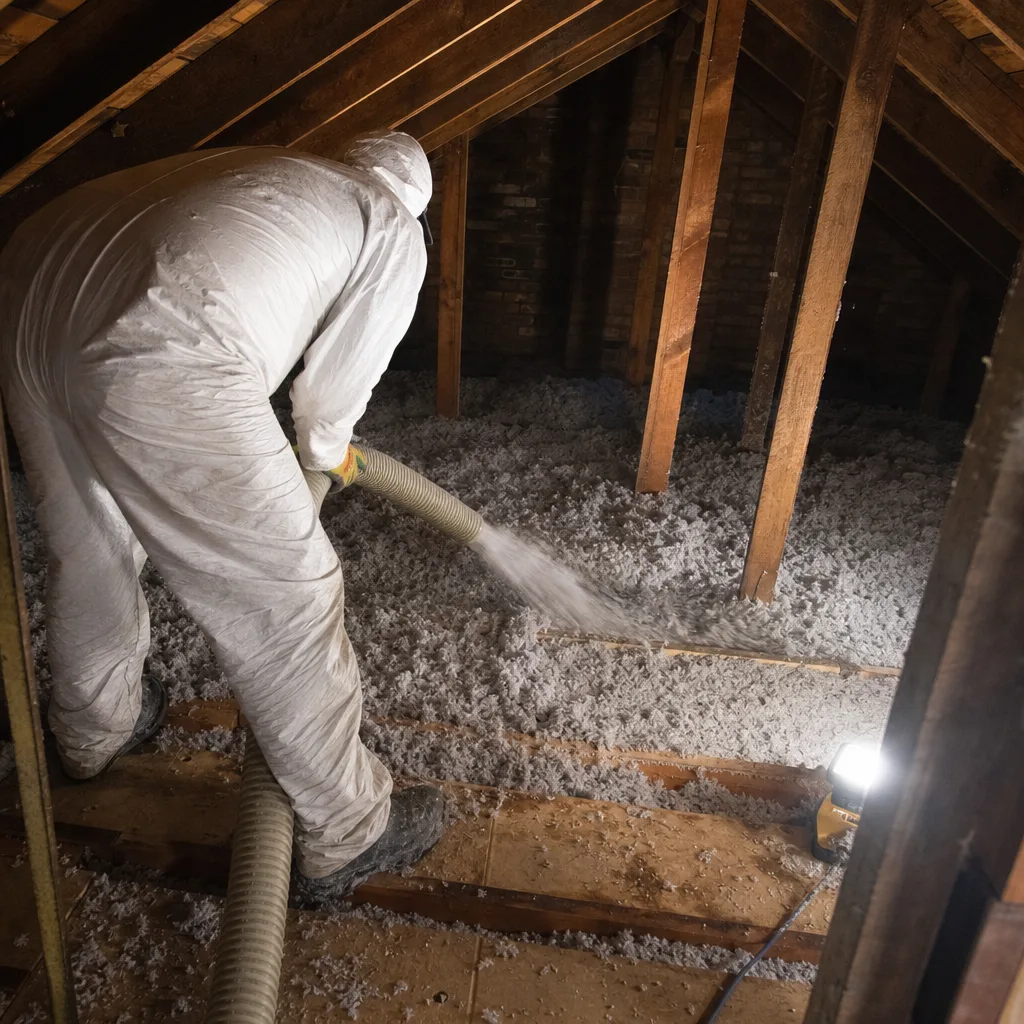
Fast, Reliable Crawl Space Encapsulation & Vapor Barrier Across Newark
Crawl space encapsulation in Newark typically costs between $5,500 and $14,000 for a standard row-house footprint, and vapor barrier installation alone usually runs $2,800 to $6,500. We finish most Newark jobs in one to two days. If your floors feel cold in January and your house smells like wet dirt in August, the crawlspace under your Newark home is likely the source, and sealing it properly is the only fix that lasts.
Our Crawl Space Encapsulation & Vapor Barrier team works in the Ironbound, the North Ward, Forest Hill, Weequahic, and every neighborhood in between. Newark’s pre-1940 housing stock has crawlspace conditions that suburban crews rarely see, and we know them well. Call (218) 261-7714 for a written price before anyone lifts a tool.
Why Topside Attic Insulation Gets Called for Newark Crawlspaces
Newark homeowners call us after other contractors walk away from the job. The reason is almost always the same: balloon-frame construction. In a row house off Ferry Street or a three-story walkup in the North Ward, the stud cavities run uninterrupted from the crawlspace sill plate all the way to the roof sheathing. Most insulation crews from the suburbs never see that, and they don’t know how to seal a vapor barrier against it.
We do. Under the Haven Standard since 2016, every Newark job starts with a written price and a written scope, and ends with a documented photo record of what we did below your floors. Wes Okafor, who leads our crews, has walked thousands of Newark crawlspaces, and he can tell from the first sniff of the air whether you’re dealing with Passaic River humidity, a broken sewer line, or mold feeding on 1920s rock wool. When you book with us, a named technician arrives on schedule, and you get a text when we’re on the way.
Our Crawl Space Encapsulation & Vapor Barrier Services in Newark
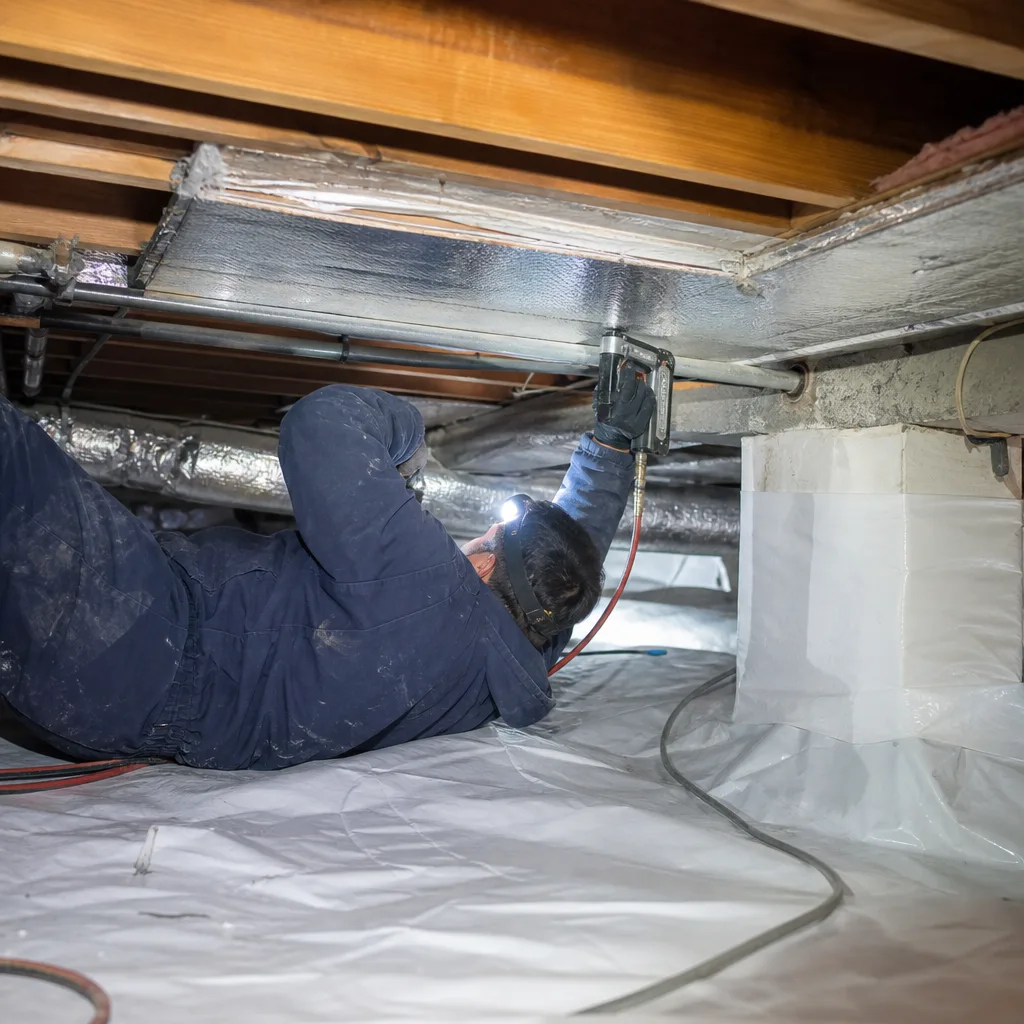
We don’t sell a one-size-fits-all encapsulation package. Each Newark home gets a plan based on what we actually find under the floor, and we document what we leave behind. Here’s the work we do most often in Newark crawlspaces:
Crawl Space Vapor Barrier
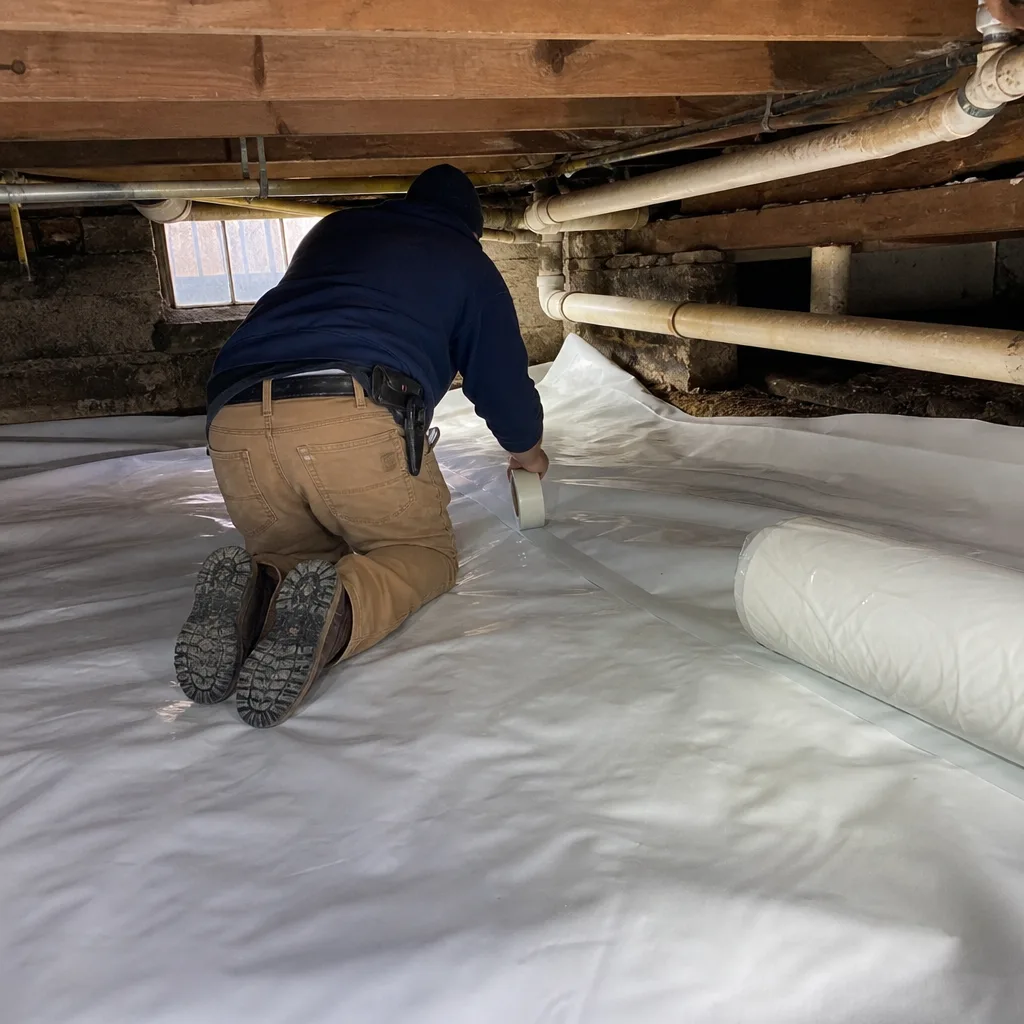
A vapor barrier in a Newark row house is only as good as its attachment to the rim joist. Most crews staple plastic to the masonry foundation wall and call it done. In balloon-frame construction, that fails within a season because the sill plate expands and contracts with stack-effect air movement, popping the seams open. We mechanically fasten 12-mil barrier to the sill plate itself, not just the masonry, and we seal every seam with the kind of tape that stays stuck when the humidity spikes in August.
Crawl Space Encapsulation
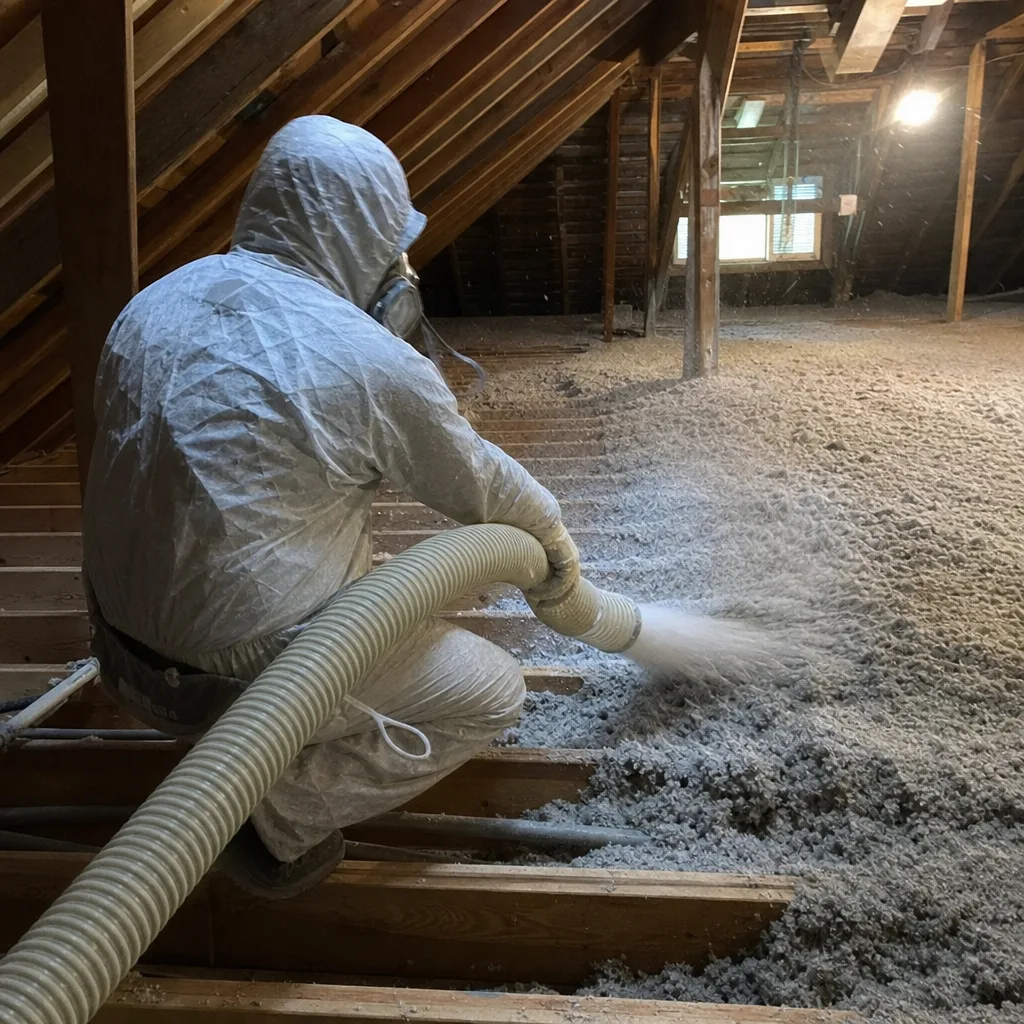
Full encapsulation means closing the vents, sealing the floor and walls, and conditioning the space so it becomes part of the home’s thermal envelope. In Newark, that matters more than in drier inland towns because the Passaic River lowlands keep ambient humidity high enough that even ‘dry’ crawlspaces hit dew point regularly. When we encapsulate a crawlspace in the Ironbound or near Branch Brook Park, we’re not just laying plastic, we’re breaking the connection between river air and your floor joists.
Crawl Space Insulation
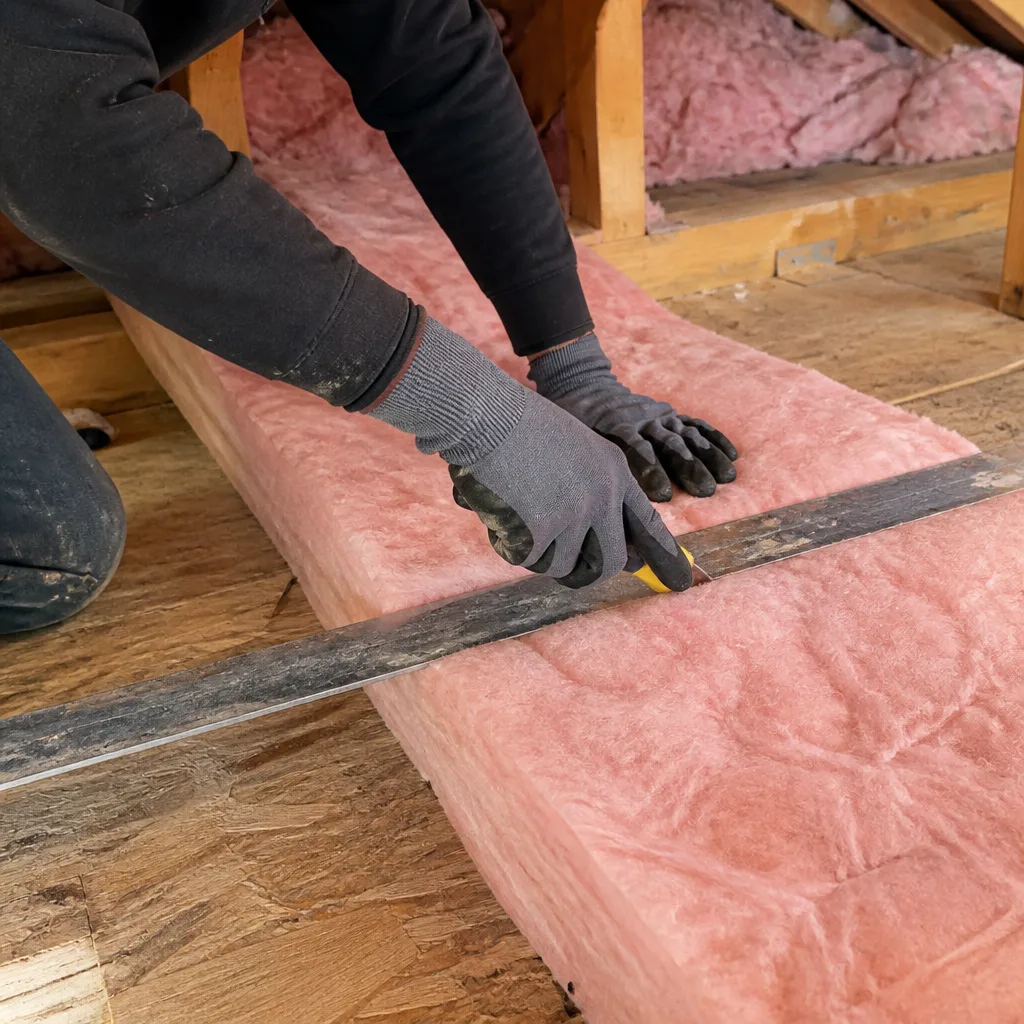
The right insulation sequence for a Newark crawlspace is: seal first, then insulate. We never hang fiberglass batts under an unsealed floor, because we’ve pulled too many dripping mats out of North Ward walkups where the vents were left open and river air condensed right into the insulation. After the vapor barrier is sealed, we dense-pack the band joist area with Knauf Jet Stream or Johns Manville Spider, which stops the stack-effect air movement that makes first floors cold all winter.
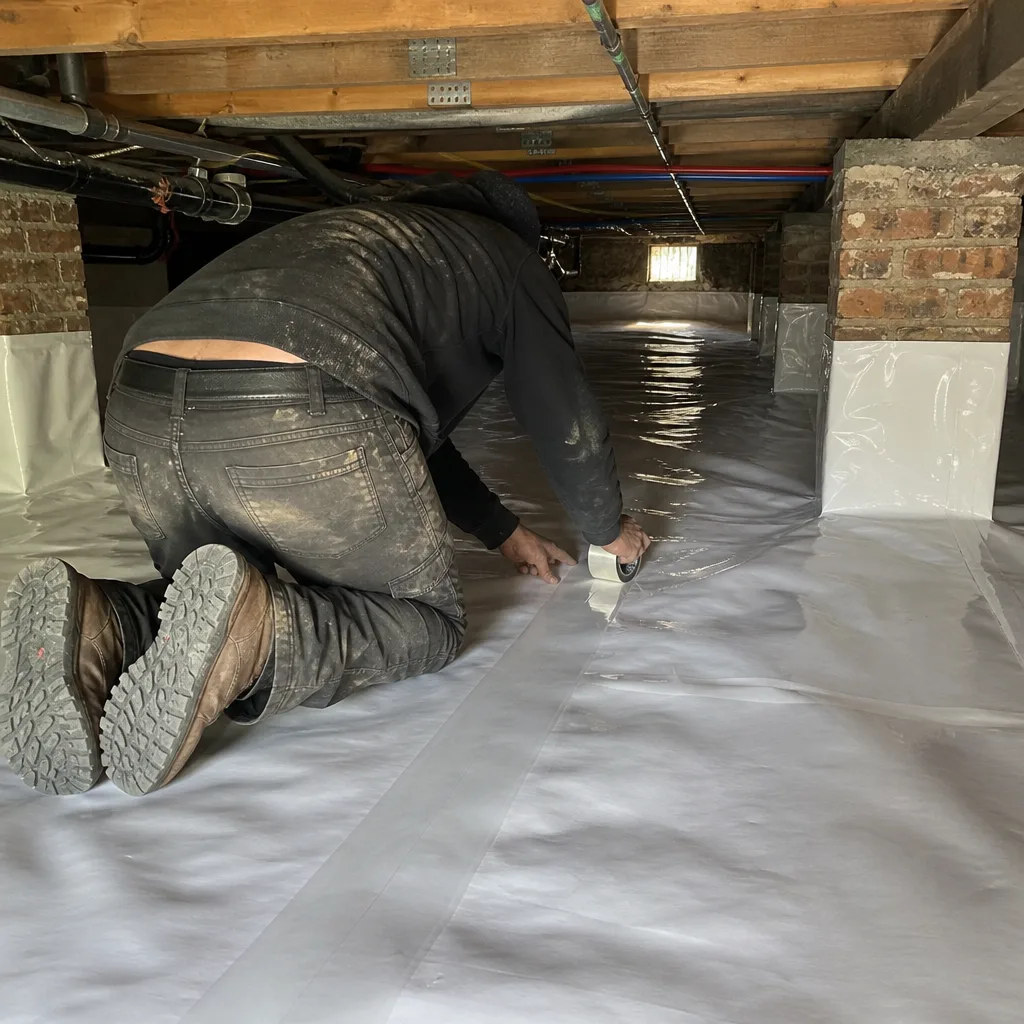
Crawl Space Moisture Control
Moisture control in Newark starts with figuring out where the water is coming from. Sometimes it’s condensation from humid air hitting cold ductwork. Sometimes it’s groundwater wicking up through a 1920s slab that was never poured with a vapor retarder. Sometimes it’s a broken clay drain line. We find the source, fix it, and then install the barrier and dehumidification the space actually needs, so we’re not sealing moisture inside your crawlspace.
What happens when you call
- 1
A real person answersNo phone trees - you reach a local pro.
- 2
You get an upfront price rangeHonest numbers before anyone is dispatched.
- 3
A background-checked tech heads outLicensed & insured, dispatched right away.
- 4
You approve before work beginsNothing starts until you say go.
Trusted Materials We Install in Newark
We stock 12-mil and 20-mil vapor barrier, crawlspace liner tape, mechanical fasteners, and rigid foam board sized for Newark row-house foundations. For insulation, we install materials from Owens Corning, Knauf, and Johns Manville, choosing based on the specific conditions in your crawlspace, not a brand deal. No proprietary product lock-in. What goes under your floor is whatever will hold up best against Newark’s humidity and your home’s construction, and it’s all written down in your scope before we start.
Common Crawl Space Encapsulation & Vapor Barrier Problems We See in Newark Homes
- Vapor barrier seams popping at the rim joist. Installers attach only to masonry. In balloon-frame row houses, the sill plates move with temperature swings and tear the barrier open within one nor’easter season. We fasten to the sill plate itself, which is the only attachment that survives stack-effect air movement.
- Open crawlspace vents admitting salt-laden river air. In the Ironbound and North Ward, vents left as-built pull in air off the Passaic and Newark Bay. That air condenses on cold ductwork and joists, turning fiberglass batts into soaked mats that rot subflooring from below. Encapsulation closes those vents permanently and conditions the space instead.
- Fire-blocking surprises that derail encapsulation. Newark’s pre-1940 construction frequently has open stud bays running three stories from crawlspace to attic, with no fire-stopping at the floor lines. NJ code requires fire-blocking at each level before a permit can close. That adds labor and material cost, and it means your vapor barrier’s thermal boundary is broken until those bays are sealed. We flag it on every job where we find it.
- Rock wool and asbestos-era materials in the crawlspace. In 1920s and 1930s walkups, we regularly find the original rock wool insulation hanging in wet clumps from the joists, and occasionally vermiculite or asbestos pipe wrap. You can’t encapsulate over degraded material. We remove the wet fiber, coordinate abatement when required, and then install the barrier on a clean surface.
Pricing for Crawl Space Encapsulation & Vapor Barrier in Newark, NJ
For a typical Newark row house with a 700 to 1,000 square foot crawlspace, here’s what we quote most often:
- Crawl space vapor barrier only: $2,800 to $6,500
- Full crawl space encapsulation: $5,500 to $14,000
- Crawl space insulation (band joist sealing and dense-pack): $1,200 to $3,800
- Moisture control with dehumidifier installation: $1,800 to $4,200
The biggest cost drivers in Newark are access, the condition of what we find when we open the space, and whether fire-blocking remediation is required for the balloon-frame bays. A crawlspace with three feet of headroom costs less than one with eighteen inches. A crawlspace with active groundwater costs more than one with simple condensation. We’ll give you a flat written price before any work starts, and we’ll stand behind it. Call (218) 261-7714 and we’ll schedule a walkthrough.
We Also Serve Cities Near Newark
Our crews work throughout Essex and Hudson counties. You’ll find us under houses in Newark, across the river in Elizabeth and Bayonne, up through Jersey City, and north to Union City. If you’re within a half hour of the Ironbound, we can usually be on site within a day or two of your call.
Serving Newark, NJ - Our Local Coverage Area
We’re based in the Newark area and know this community well. Use the map below to see our service coverage - if you’re nearby, we can almost certainly help.
FAQs - Crawl Space Encapsulation & Vapor Barrier in Newark
Because the humidity isn’t coming from rain. It’s coming from the air. Newark sits in the Passaic River lowland, where ambient humidity runs higher than inland New Jersey nearly year-round. When that humid air enters your crawlspace through open vents and hits cooler surfaces like floor joists and ductwork, it condenses, the same way water beads on a cold glass in July. In a balloon-frame row house, the problem gets worse because stud cavities run uninterrupted from the sill plate to the roof, so that damp air is actually being pulled through your walls by stack effect. Closing the vents and sealing the floor is the only way to stop it. Call (218) 261-7714 for a written assessment.
Yes, but the approach is different than in a platform-frame suburban home. In balloon-frame construction, the vapor barrier must be mechanically fastened to the sill plate, not just the masonry foundation wall, or the seams will pop open within a season. We also have to check for open stud bays running vertically from the crawlspace to the attic, which require fire-blocking at each floor line under NJ code before the permit can close. We do this work in the Ironbound regularly and we’ll explain the scope before we start.
No. A vapor barrier won’t fix the smell if the source is wet rock wool, and in 1920s-era Newark homes, the rock wool is often soaked through and hanging from the joists. The smell will persist until the degraded insulation is removed, the masonry is cleaned, and the barrier is installed on a dry surface. In a three-story walkup off Ferry Street, our crew found the original rock wool saturated and falling apart, cut it all out, scrubbed the piers, and laid a 12-mil Owens Corning barrier up the foundation walls and across the floor. The musty smell was gone within a week. If you’re smelling old insulation every time the furnace kicks on, call (218) 261-7714 and we’ll tell you what’s actually in your crawlspace.
Salt air accelerates corrosion on metal surfaces and increases the conductivity of moisture, which means hardware in your crawlspace, fasteners, duct straps, even the foil facing on insulation, degrades faster than it would in inland homes. We use mechanically fastened, non-corrosive hardware and vapor barrier rated for continuous high-humidity exposure. For homes in the Ironbound or anywhere within a mile of the bay, we also recommend checking any metal ductwork in the crawlspace for rust during encapsulation, because if it’s pitted through, you’ll be replacing it within a few years. The barrier itself won’t corrode, but the attachments can, which is why we don’t use cheap staples that rust out.
Yes, usually within the first heating season. Cold floors in Newark walkups are typically caused by two things working together: stack effect pulling cold air through balloon-frame stud bays, and unsealed crawlspace vents letting that air flow directly under the floor. When we seal the crawlspace and dense-pack the band joist with Knauf Jet Stream, we break the air path, and first floors warm up measurably. We verify with before-and-after blower-door readings on applicable jobs, so you can see the air-sealing improvement in a single number. For an exact scope and written price for your walkup, call (218) 261-7714.
We Don’t Sell Plastic. We Seal Balloon-Frame Crawlspaces.
Newark’s housing stock was built before modern building science existed. That means the standard encapsulation playbook, written for platform-frame suburban homes, does not work here. We know that because we’ve been under more Newark row houses than we can count, and we’ve seen what happens when a vapor barrier is stapled to masonry and left to fight balloon-frame air movement. The barrier loses. Always.
What we do instead is specific to Newark: fasten to the sill plate, seal the band joist, check for fire-blocking gaps, remove degraded rock wool before laying barrier, and document every step with photos. You’ll get a written price before work starts, a written scope that describes exactly what we found, and a documented photo record when we leave. That’s the Haven Standard, and it applies to every crawlspace we touch in Newark. Call (218) 261-7714 to schedule your walkthrough.
Written by Wes Okafor, Owner at Topside Attic Insulation, serving Newark since 2016.
Crawl Space Encapsulation & Vapor Barrier in Nearby Areas