
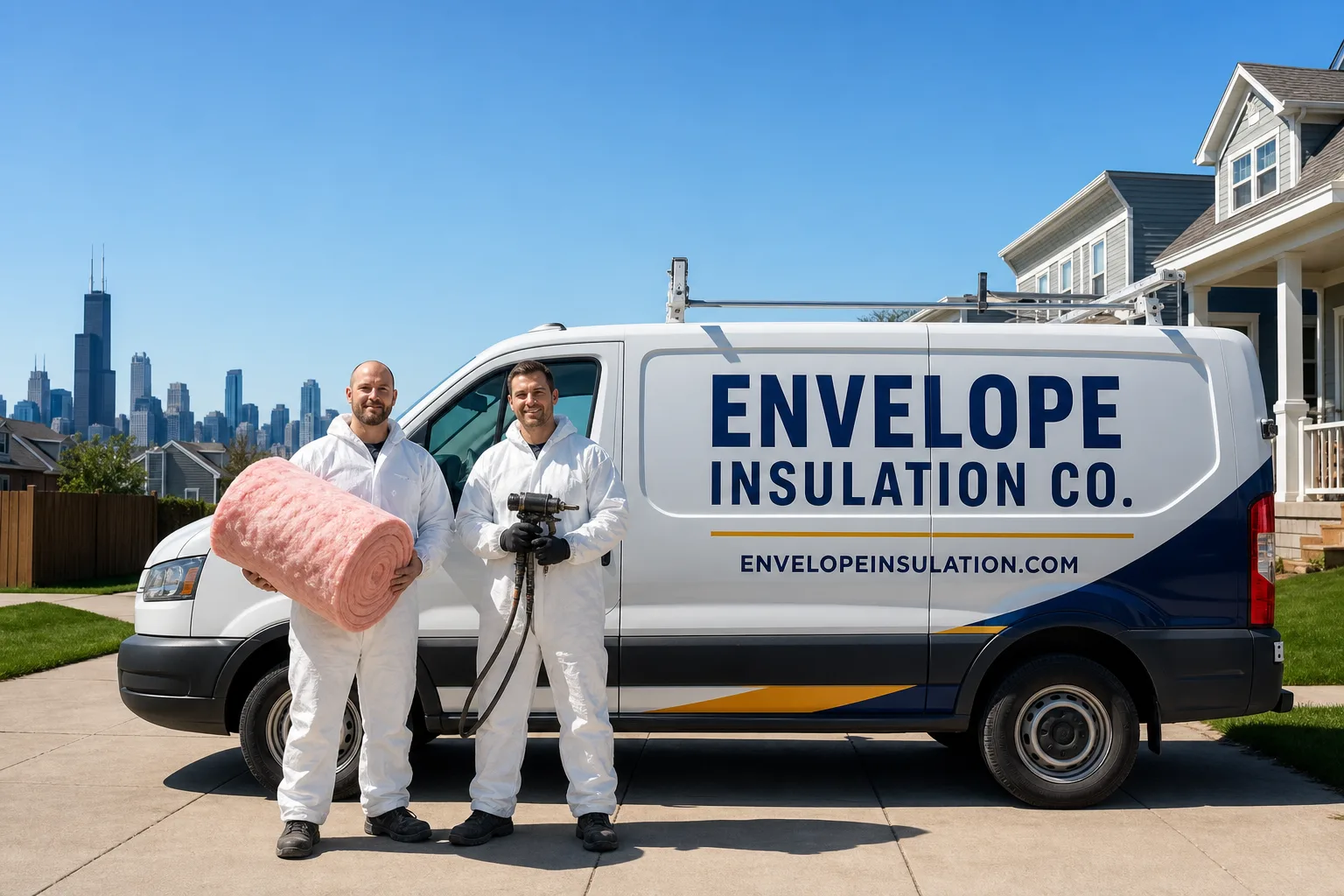
Fast, Reliable Crawl Space Encapsulation & Vapor Barrier Across North Richland Hills
Most crawl space encapsulation jobs in North Richland Hills run $3,200 to $7,800 depending on square footage, access, and how much moisture damage already exists. We stock 20-mil reinforced vapor barrier, Demilec closed-cell foam for rim joists, and Johns Manville crawl insulation at our DFW metro office, so crews reach North Richland Hills fast without waiting on supply runs. If you’re in Smithfield, Home Town, or the College Circle area and wondering whether that damp smell under your split-level is a vapor barrier problem, call (218) 261-7714. Wes Okafor’s team will get you a written price before any work starts.
Why Topside Attic Insulation Is North Richland Hills’s Preferred Crawl Space Encapsulation & Vapor Barrier Company
North Richland Hills has a housing stock problem most insulation companies never mention: the city isn’t supposed to have crawl spaces at all. The dominant build is brick-veneer slab-on-grade ranches and two-stories from the late 1960s through the mid-1980s. But the same Tarrant County tract builders who poured those slabs also framed additions, split-level sections, and mechanical alcoves over shallow dirt crawl spaces with open foundation vents and exposed soil. Those are the spaces we get called about. Our Crawl Space Encapsulation & Vapor Barrier team has cut enough 40-year-old subfloor access hatches in NRH to know what’s waiting underneath: standing water from spring storms, delaminated barriers, rim joists rotting from the inside out.
What homeowners in North Richland Hills tell us matters more than anything is documentation. You want to see what was done, not hear about it. That’s how we work. Every job closes with a Documented Photo Record showing the barrier lap-sealed up the stem walls, the foam on the rim joists, the sealed penetrations. On applicable jobs you also get before-and-after blower-door readings, one number that tells you how much conditioned air the home was losing before and after. Since 2016 we’ve sealed and insulated over 9,000 homes under The Haven Standard: flat written price, written scope, written warranty before anyone lifts a tool. A live person answers our phone 24/7. No voicemail loops.
Background-checked, uniformed crews. Free Second Opinion on any written estimate. 365-Day Done Right Promise: if it’s not done right, we make it right.
Our Crawl Space Encapsulation & Vapor Barrier Services in North Richland Hills
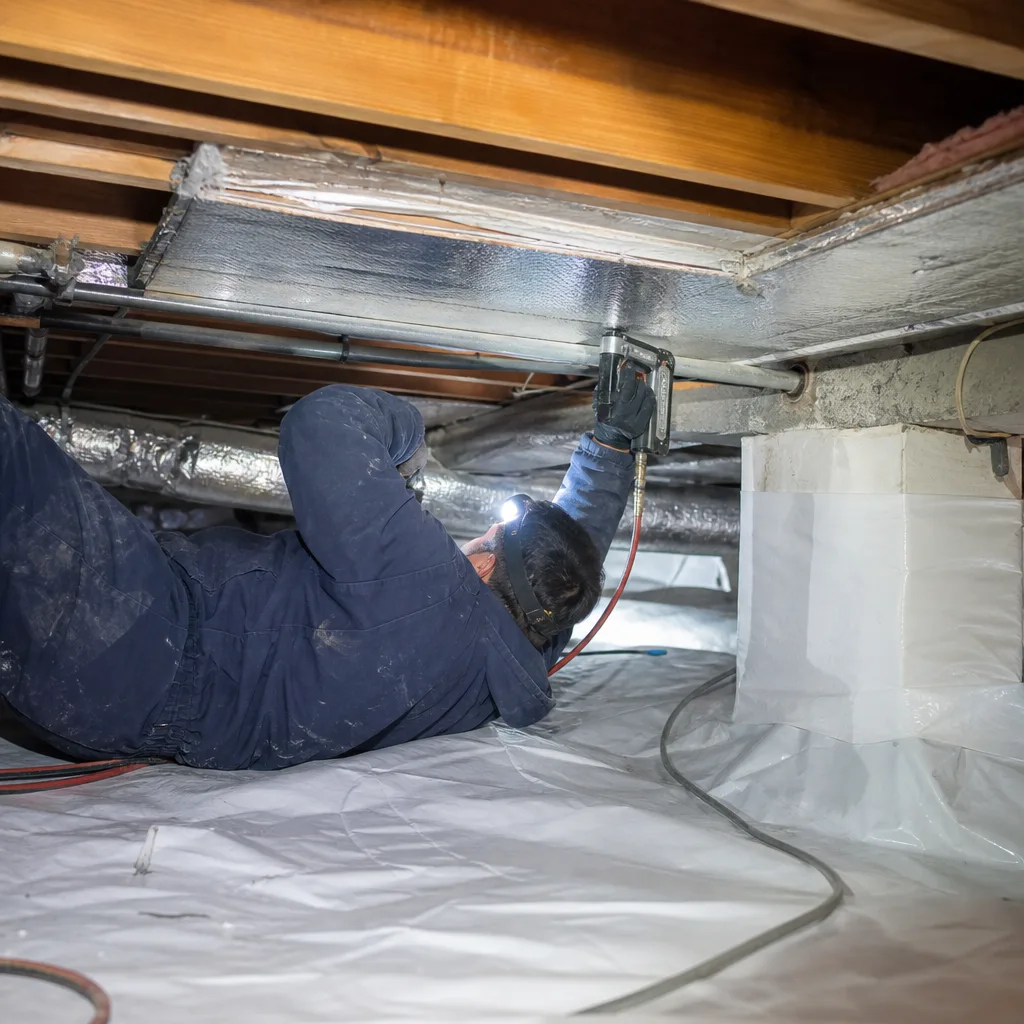
Crawl Space Vapor Barrier
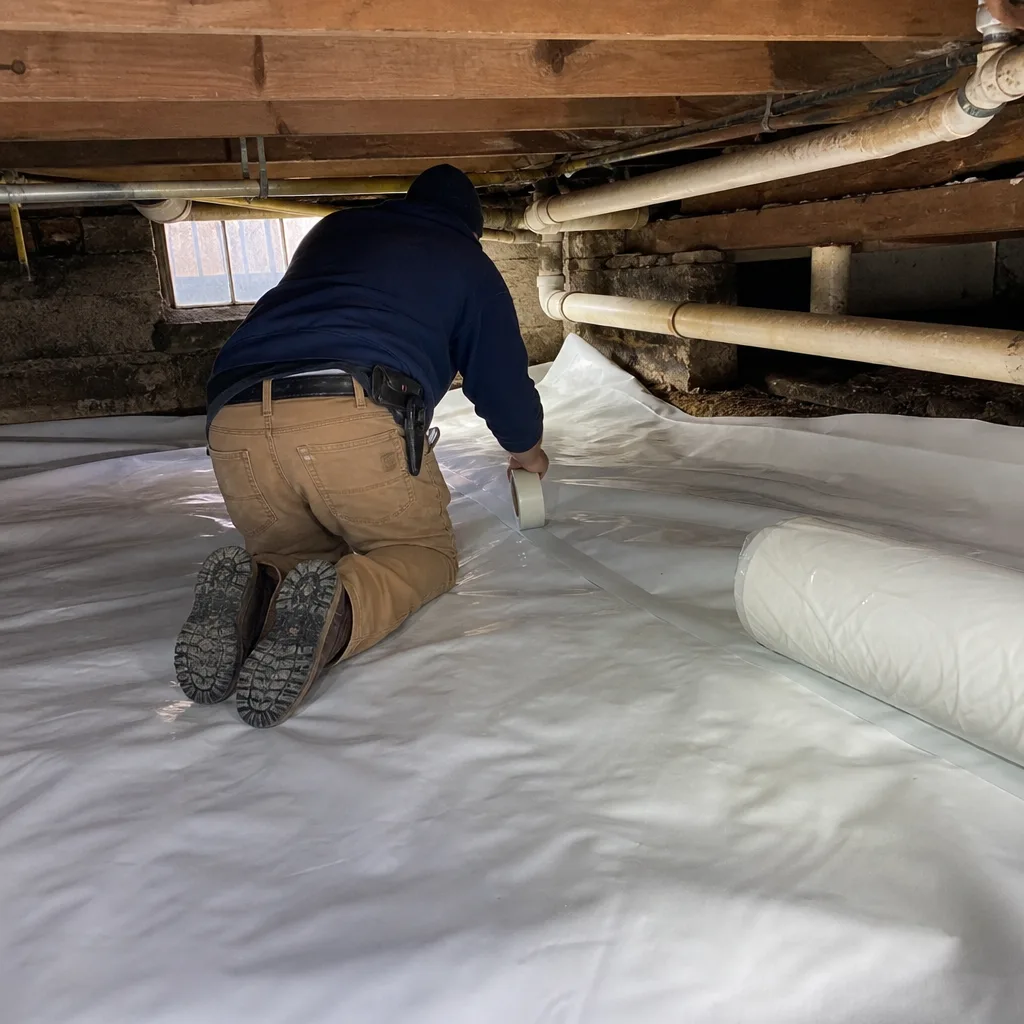
In North Richland Hills, a vapor barrier does two jobs at once: it blocks ground moisture from rising into the subfloor, and it keeps the 140°F-plus attic air from baking exposed soil into a convection oven. We install 20-mil reinforced poly, lap-sealed at every seam and mechanically fastened up the stem walls. The difference between what we do and a DIY roll-out is the sealing: a 4-foot roll doesn’t fit most NRH alley-load and split-level access hatches, and unsealed seams are just moisture highways.
Crawl Space Encapsulation
Full encapsulation in North Richland Hills means treating the crawl space as part of the building envelope. We seal foundation vents, install the vapor barrier across the floor and up the walls, spray closed-cell foam on the rim joists, and seal every plumbing chase penetration. That last step matters enormously in 1970s NRH builds: original builders ran supply plumbing up through open wall cavities into unsealed attic chases, and those same cavities channel straight down into crawl spaces. Encapsulation severs that air bridge.
Crawl Space Insulation
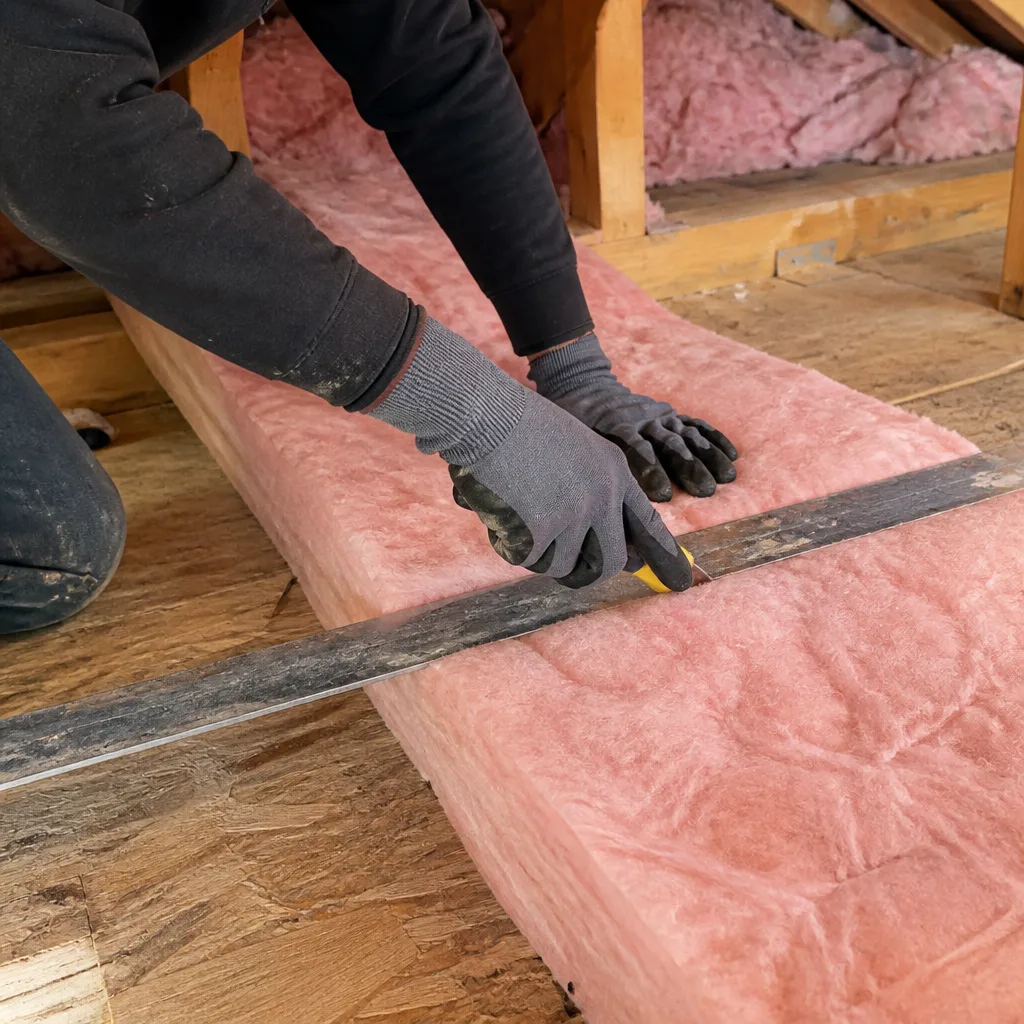
Most North Richland Hills crawl spaces we see have either zero insulation or a few sagging fiberglass batts held up by rusted wire. We remove and replace those with Johns Manville or Knauf crawl-specific insulation that won’t wick moisture, then pair it with the vapor barrier. Insulating a damp crawl space without a barrier first just traps moisture against the framing. Sealed first, then insulated. That order is non-negotiable for us.
Crawl Space Moisture Control
Moisture control in North Richland Hills starts with understanding where the water comes from. Shallow crawl spaces under additions wick groundwater after heavy spring storms. Unsealed plumbing chases pull attic-heated air in, condensing on cool concrete and ductwork. We address both: barrier and sealing for the vapor side, then a properly sized dehumidifier if the space still needs it. On the Smithfield split-level we encapsulated, summer humidity dropped by over half once the barrier and rim joist foam went in.
What happens when you call
- 1
A real person answersNo phone trees - you reach a local pro.
- 2
You get an upfront price rangeHonest numbers before anyone is dispatched.
- 3
A background-checked tech heads outLicensed & insured, dispatched right away.
- 4
You approve before work beginsNothing starts until you say go.
Trusted Brands We Service in North Richland Hills
We’re not locked into one manufacturer. We install Johns Manville and Knauf crawl insulation, Demilec closed-cell spray foam for rim joists and band boards, and CertainTeed vapor barrier products where the project calls for them. No proprietary product lock-in means the spec is driven by your crawl space, not by our supplier agreement. Because the DFW office keeps these materials stocked, we’re not waiting on a distribution run when you’re already two weeks into a musty-smell problem in Home Town or the Walker’s Creek area.
Common Crawl Space Encapsulation & Vapor Barrier Problems We See in North Richland Hills Homes
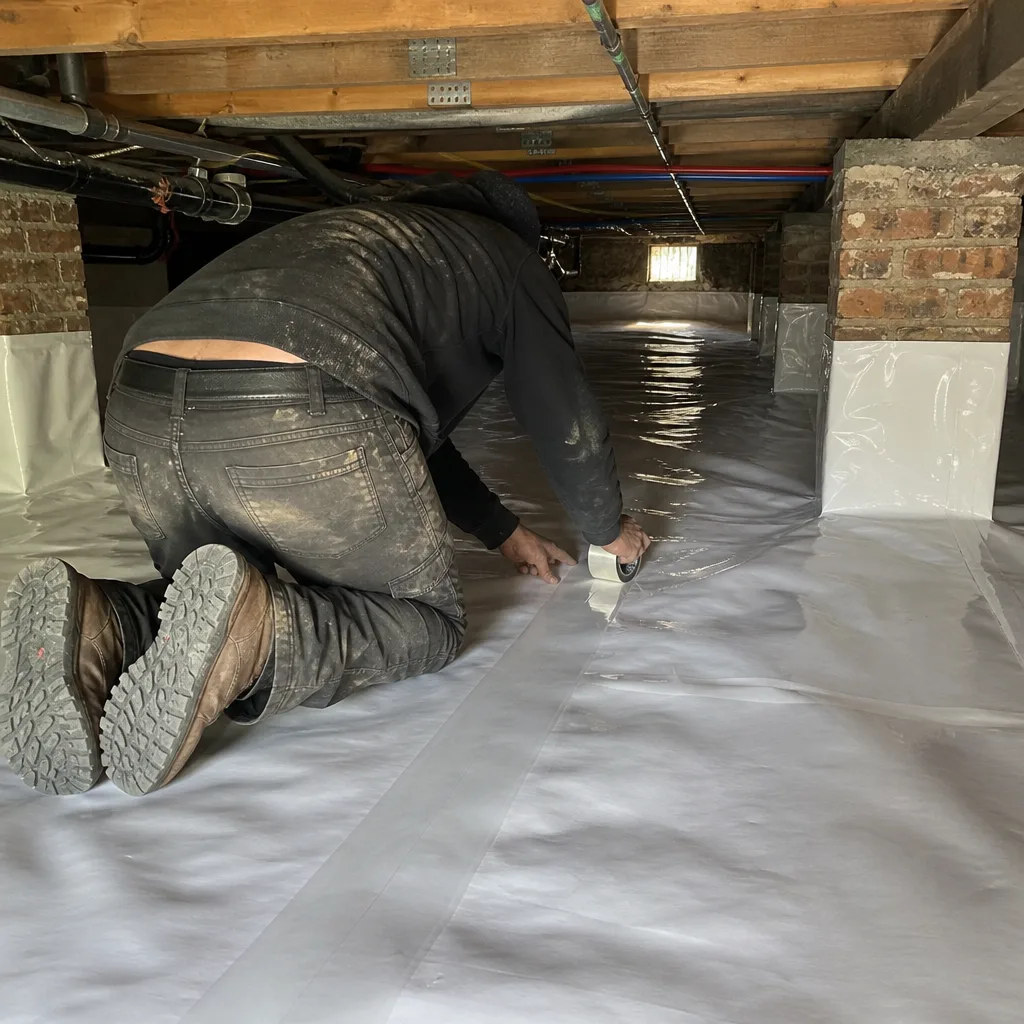
- Exposed soil in shallow crawl spaces under additions. North Richland Hills’s 1968-1988 brick ranches often have a small crawl under a family-room addition or split-level section. Groundwater wicks up after storm season, subfloor framing rots, and nobody notices until the floor feels soft.
- Unsealed plumbing chases from the original tract build. The 1970s Tarrant County shortcut was running supply lines up open interior wall cavities. Those cavities act as ducts, pulling attic air down into the crawl and cooking exposed soil until any DIY barrier delaminates.
- Narrow alley-load and townhome access hatches. Standard 4-foot barrier rolls simply do not fit through many access openings in NRH’s denser neighborhoods. DIY jobs end up with unsealed seams, which lets moisture bypass the barrier entirely.
- Open foundation vents that should have been sealed decades ago. Code in the 1970s called for cross-ventilation. In North Texas, that means 100-degree humid air enters in summer, condenses on cool ductwork, and feeds mold. Encapsulation closes those vents and treats the space as conditioned area.
Pricing for Crawl Space Encapsulation & Vapor Barrier in North Richland Hills, TX
We Also Serve Cities Near North Richland Hills
If you’re just outside North Richland Hills, we also run crews into Fort Worth, Grand Prairie, Flower Mound, and Arlington. Same written-price standard, same Documented Photo Record, same 24/7 live-answer phone. Our Crawl Space Encapsulation & Vapor Barrier in North Richland Hills coverage area extends to every neighborhood in and around the city.
Serving North Richland Hills, TX - Our Local Coverage Area
We’re based in the North Richland Hills area and know this community well. Use the map below to see our service coverage - if you’re nearby, we can almost certainly help.
FAQs - Crawl Space Encapsulation & Vapor Barrier in North Richland Hills
Why do North Richland Hills crawl spaces need vapor barriers even if they stay dry in summer?
Because the moisture problem in NRH crawl spaces isn’t visible water; it’s vapor that condenses on cool surfaces and feeds mold silently year-round. Even a dry-looking crawl space in August is wicking moisture from the soil underneath. A proper 20-mil barrier stops that vapor at the source. Call (218) 261-7714 for a written assessment.
What’s different about encapsulating a crawl space in a 1970s NRH brick ranch with an alley-load garage?
Access. The hatch is narrow, often tucked behind the garage or under a split-level landing, and standard 4-foot barrier rolls won’t fit. That’s why so many DIY barrier jobs in North Richland Hills have unsealed seams. We cut barrier to fit the access, lap-seal every seam, and mechanically fasten it up the stem walls.
Can crawl space encapsulation stop the pipe-freezing problem North Richland Hills saw in February 2021?
Yes, partially. The pipe bursts in North Richland Hills during Winter Storm Uri weren’t just from cold air; they were from plumbing chases that run through open wall cavities into unconditioned crawl spaces. Encapsulating the crawl and sealing those chase penetrations removes the air path that lets freezing air reach the pipes. It’s not a guarantee against every freeze, but it removes the mechanism that failed.
Do I need a separate dehumidifier after encapsulating my North Richland Hills crawl space?
Sometimes. If the crawl space is sealed properly and the rim joists are foamed, the space should stay around 50-60% humidity on its own. But in NRH’s densest neighborhoods where the crawl sits partially below grade, a small dehumidifier gets the humidity down to where you want it. We’ll tell you during the written-price visit whether you actually need one, and line-item the cost separately.
Will a white vapor barrier make my NRH crawl space too hot under a dark-shingle ranch roof?
No. The barrier doesn’t generate heat; it blocks moisture. The heat comes from the roof and attic, and a white barrier actually reflects a small amount of radiant heat back instead of absorbing it into dark soil. If your crawl space is running hot, the fix is rim joist insulation and sealing the chases that channel attic air down, not skipping the barrier.
Contact North Richland Hills homeowners trust for crawl space encapsulation and vapor barrier work: Topside Attic Insulation at (218) 261-7714. Wes Okafor and the team will get you a written price before any work starts, a Documented Photo Record when the crew leaves, and a warranty in writing before anyone lifts a tool.
Written by Wes Okafor, Owner at Topside Attic Insulation, serving North Richland Hills’s crawl space and building envelope needs since 2016.