
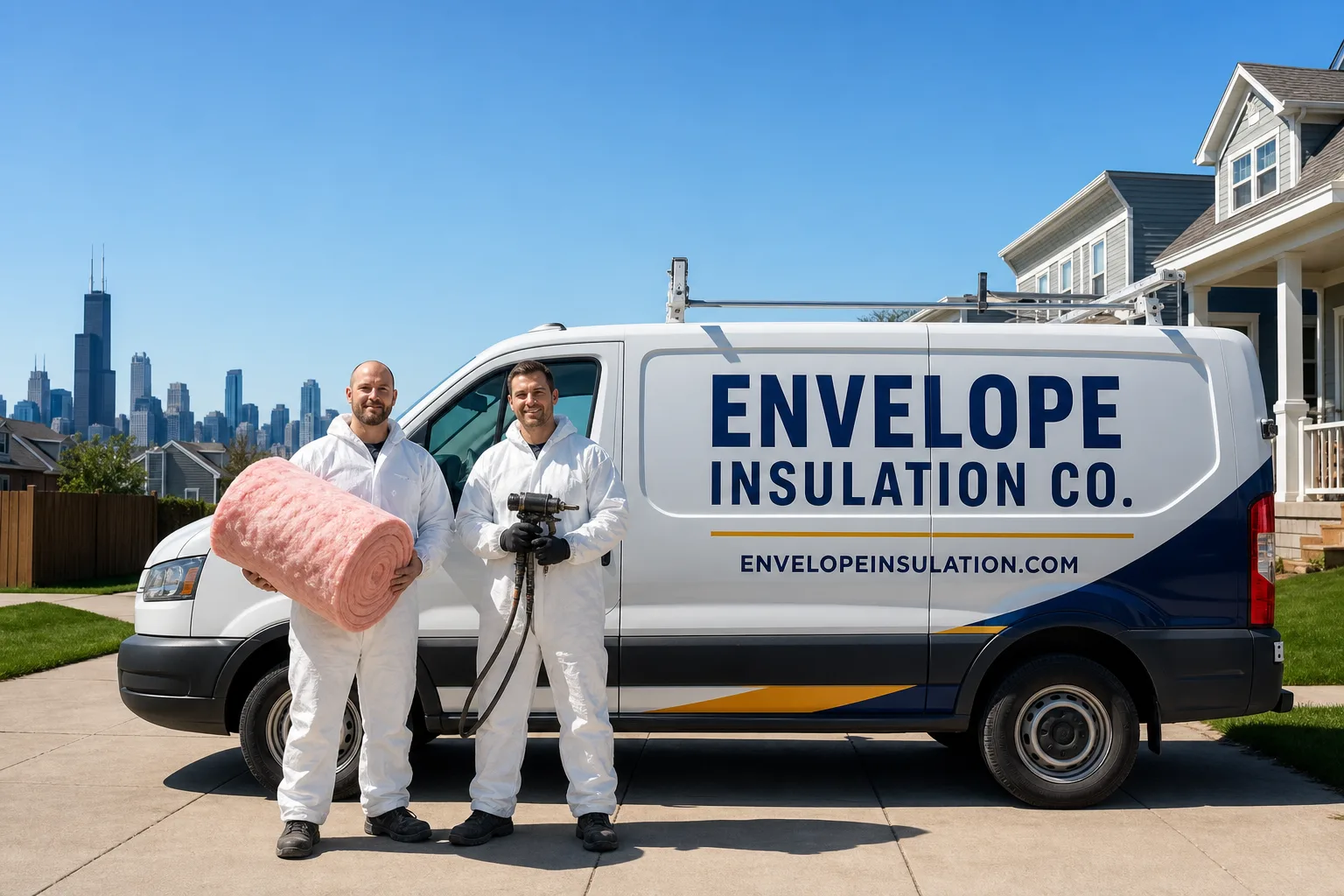
Fast, Reliable Crawl Space Encapsulation & Vapor Barrier Across Paterson
Crawl space encapsulation in Paterson typically runs $4,200-$9,800 for an average 900-1,200 sq ft crawl space, depending on whether fire-blocking and rim joist insulation are required. Most jobs take two to three days from start to finish, and our crews are in Paterson neighborhoods every week. If you own one of the city’s pre-1920 brick rowhouses or multi-family tenements, you’re dealing with a crawl space that most national contractors have never seen: rubble-stone foundations, open balloon-frame bays, and groundwater that moves up through the floor. Call (218) 261-7714 for a written price before any work starts.
Key Takeaways:
- Paterson’s balloon-frame construction means encapsulation must include fire-blocking at every floor line, not just a liner on the floor.
- The Passaic River’s high water table pushes moisture upward through rubble-stone foundations, which is why we use 10-mil or heavier vapor barriers here.
- Every job includes a written scope, written warranty, and before-and-after documentation, per The Haven Standard we’ve operated under since 2016.
- You’ll get a free estimate with a written price before any work begins. Always.
Why Topside Attic Insulation Is Paterson’s Preferred Crawl Space Encapsulation & Vapor Barrier Company
Paterson’s housing stock is not like Clifton’s or Wayne’s. The overwhelming majority of residential buildings here are late 19th- and early 20th-century two- and three-family wood-frame and brick-clad tenements, built tight on narrow lots at the foot of the Watchung ridgeline. We’ve worked in the 4th Ward, Eastside, South Paterson, and around East 18th Street and Market Street long enough to know what’s under these floors before we open the hatch. A Paterson crawl space usually means a dirt floor, a rubble-stone foundation, and stud cavities that run open from the sill plate to the attic with no fire-stops in between.
That’s why our approach starts the same way on every Paterson job: sealed first, then insulated, in that order. We don’t lay a vapor barrier over an unsealed rim joist and call it done. We don’t blow insulation into open balloon-frame bays and let it fall into the crawl space. Under The Haven Standard, every crawl space encapsulation and vapor barrier job in Paterson starts with an inspection, a written scope that spells out exactly what we’ll do, and a flat price before anyone lifts a tool. Wes Okafor, who leads our team, has been enforcing that standard since 2016.
Paterson customers get the same documentation on every job: a written price, a written warranty, and a photo record of the work from start to finish. On applicable jobs, we also provide before-and-after blower-door readings, a pressurization measurement that shows, in a single figure, how much conditioned air the home was losing before and after the work. No other insulation contractor in the Paterson market makes that a standard part of the job.
Our Crawl Space Encapsulation & Vapor Barrier Services in Paterson
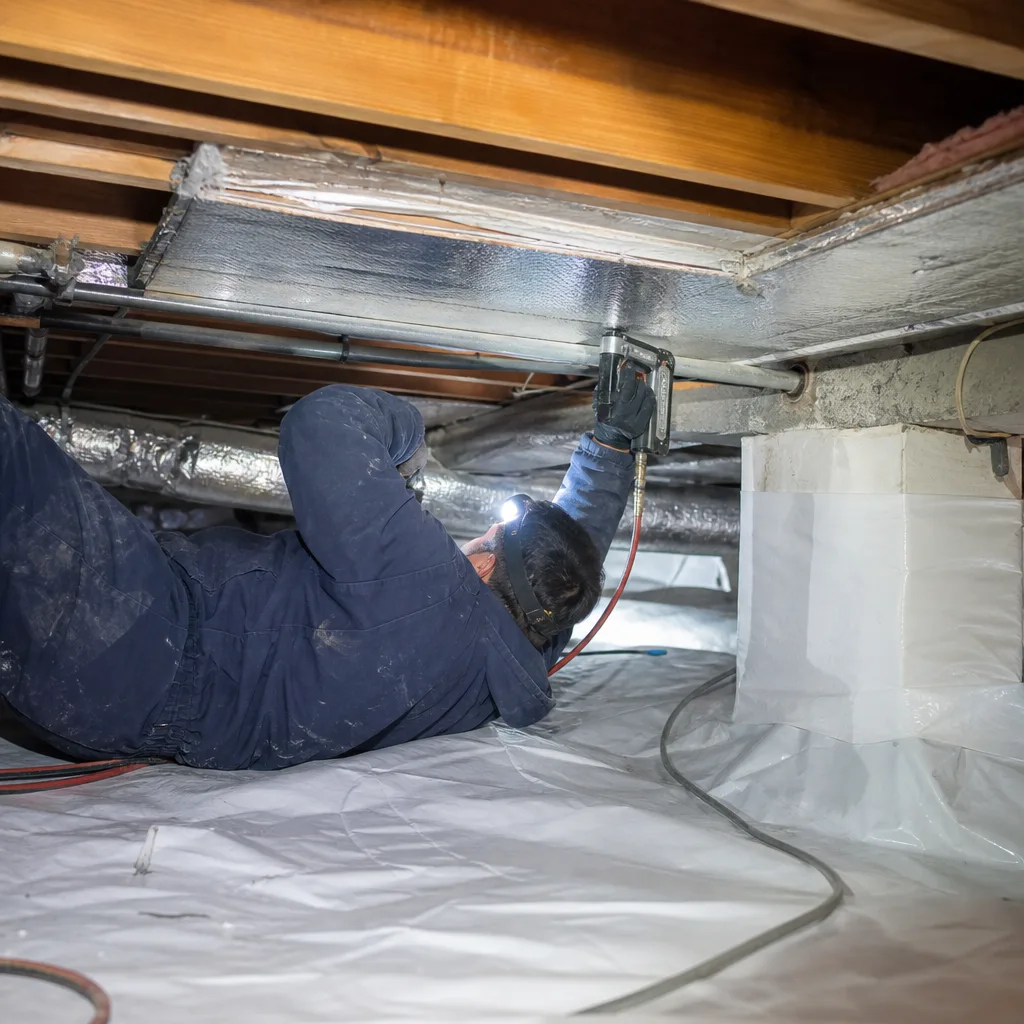
Crawl Space Vapor Barrier
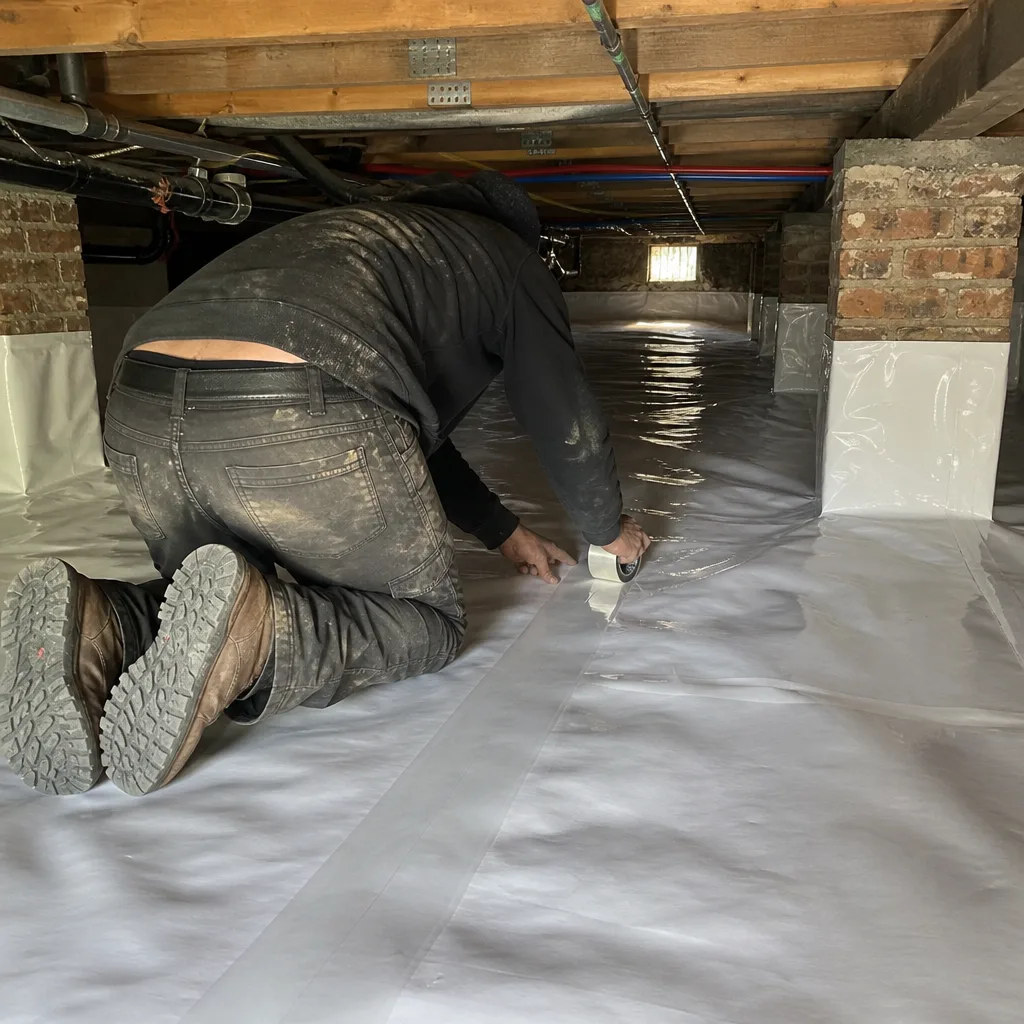
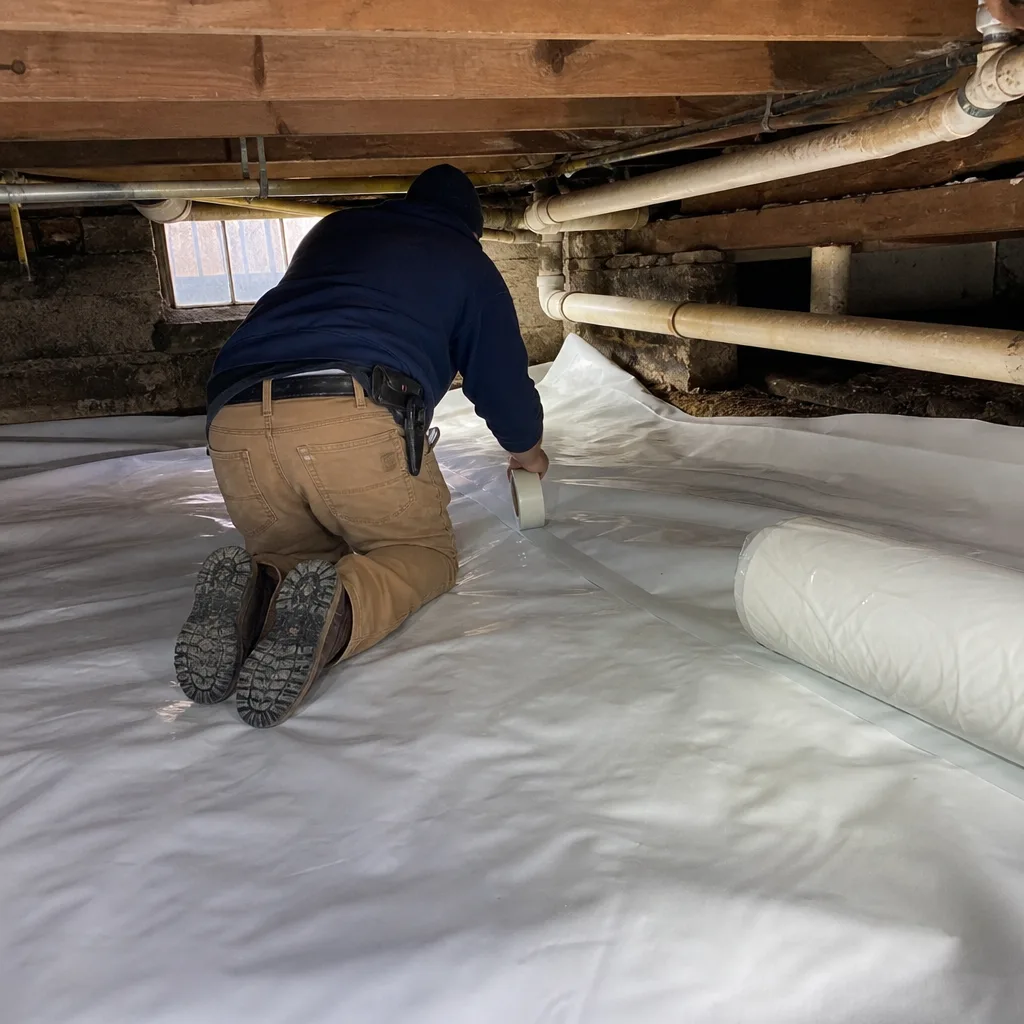
A crawl space vapor barrier in Paterson has to handle conditions that a barrier in, say, a 1990s development in Clifton never faces. The Passaic River valley’s high water table means moisture moves upward through the soil and into rubble-stone foundation walls year-round. We install 10-mil and 12-mil reinforced polyethylene barriers, lapped and sealed at every seam, with the edges run up the foundation wall and mechanically fastened. The goal is to stop ground moisture from entering the crawl space air, where it feeds mold, rots floor joists, and travels upward through the house.
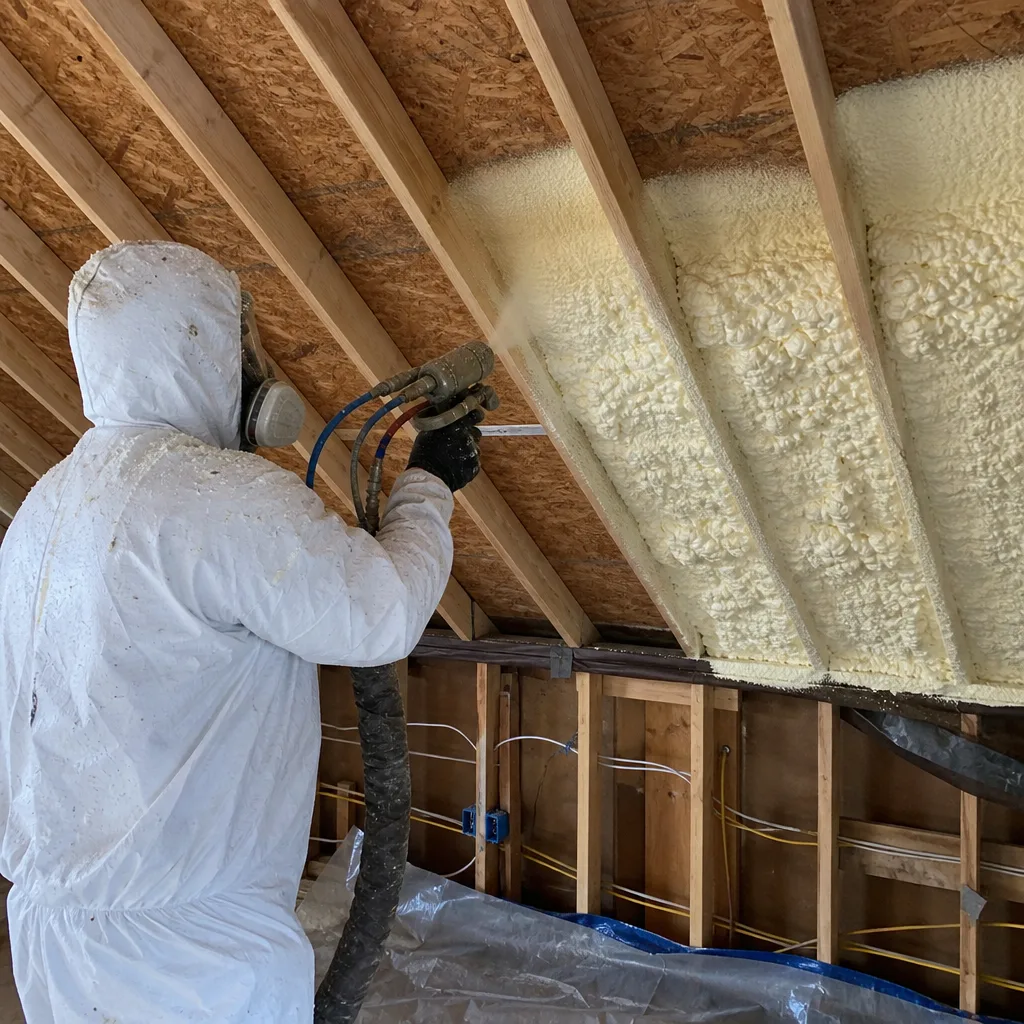
Crawl Space Encapsulation
Encapsulating a crawl space in Paterson is not a one-day liner job. Because so many of the city’s older buildings have balloon-frame construction, the stud cavities that run from the basement sill plate to the attic act as open chimneys for moisture and air. A proper encapsulation here means sealing the crawl space floor and walls, insulating the rim joists, and, critically, fire-blocking those balloon-frame bays at every floor line before anything is sealed. Without that fire-blocking, you’re wrapping a building cavity that still moves air and moisture from the ground to the attic. Our Crawl Space Encapsulation & Vapor Barrier team has addressed this exact condition in three-family tenements across the 4th Ward and Eastside.
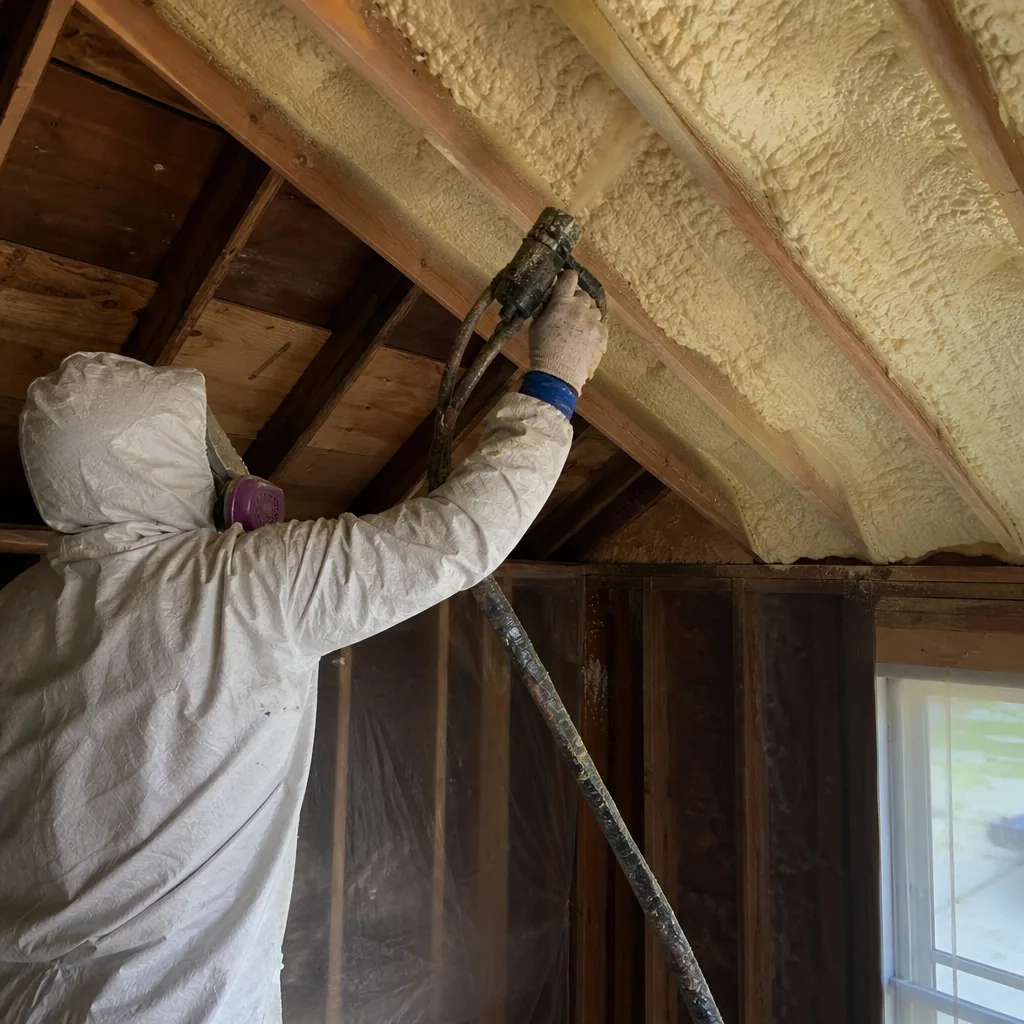
Crawl Space Insulation
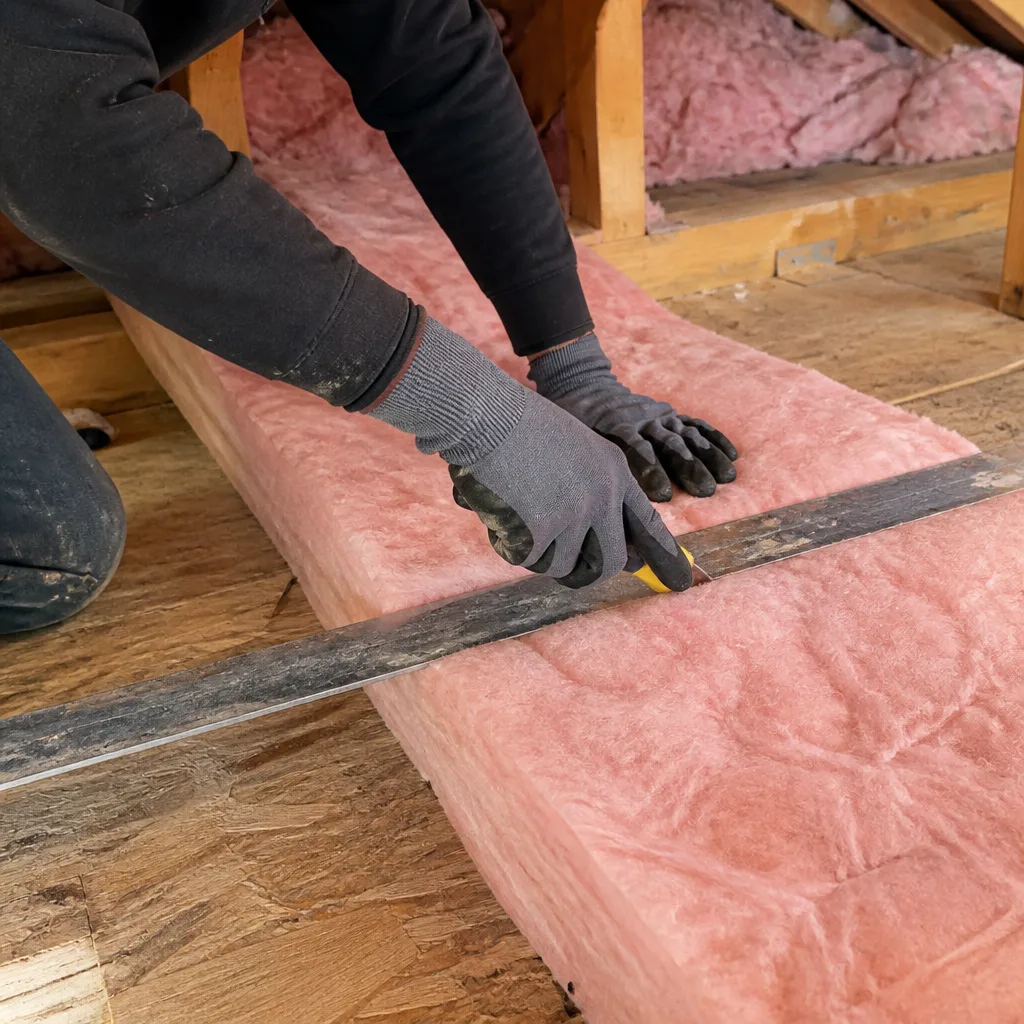
Crawl space insulation in Paterson works differently than wall insulation. The rim joist, the exposed framing that runs around the perimeter of the crawl space where the floor joists meet the foundation, is typically the single largest air leak in an older Paterson home. We insulate rim joists with rigid foam board, typically Owens Corning or Johns Manville products, cut to fit each bay and sealed with expanding foam around the edges. Then the sill plate and any penetrations get air-sealed before the floor is insulated. That order matters. Blown-in insulation without air sealing is a waste of money in a Paterson tenement where the rim joist is already leaking like a screen door.
Crawl Space Moisture Control
Paterson sits in the Passaic River valley at the foot of the Watchung ridgeline. The topography pools cold air in winter and holds humidity in summer, and the region’s freeze-thaw cycling drives moisture into uninsulated brick and stone. In a crawl space, that means condensation on the underside of the subfloor in winter and standing water or saturated soil after heavy rain. Moisture control in Paterson means first addressing the water: grading, downspout extensions, sump pumps where the water table demands, and then sealing and mechanically dehumidifying the space. A vapor barrier alone won’t fix a crawl space that floods every spring.
What happens when you call
- 1
A real person answersNo phone trees - you reach a local pro.
- 2
You get an upfront price rangeHonest numbers before anyone is dispatched.
- 3
A background-checked tech heads outLicensed & insured, dispatched right away.
- 4
You approve before work beginsNothing starts until you say go.
Trusted Brands We Service in Paterson
We stock and install materials from Johns Manville, Knauf, and CertainTeed, among others. When a Paterson homeowner calls us about a failed vapor barrier or a musty crawl space, we don’t wait on a distributor in Newark to ship material. Our crews arrive with what they need on the truck. For Paterson’s brick rowhouses and older wood-frame tenements, we typically recommend Owens Corning foam board for rim joists and a reinforced 10-mil or 12-mil polyethylene barrier for the floor. The material we pick depends on the crawl space, not on what we have a deal on that month. We’re independently owned and operated, and no brand owns our recommendation.
Common Crawl Space Encapsulation & Vapor Barrier Problems We See in Paterson Homes
- Open balloon-frame bays carrying moisture from the crawl space to the attic. In Paterson’s pre-1920 tenements, the stud cavities between floors are open. Moisture from the crawl space rides those cavities straight up into the attic, condenses on the underside of the roof sheathing, and feeds mold in walls that were never insulated to begin with. Encapsulation without fire-blocking those bays leaves this path open.
- Vapor barriers failing because moisture wicks through rubble-stone walls. A 6-mil barrier laid on a Paterson dirt floor with its edges taped to a rubble-stone wall will fail. Water moves through the stone, condenses on the underside of the barrier, and pools. We see it on jobs where a previous contractor laid a barrier and called the crawl space “sealed.” The fix is a thicker barrier, mechanical fastening, and management of the water table first.
- Blown-in insulation vanishing into open bays. On multiple Paterson jobs, we’ve found where a previous contractor blew insulation into what they thought were closed wall cavities, only for it to fall straight through into the crawl space floor because the balloon-frame bays were open at the bottom. The homeowner paid for insulation they never got. We always fire-block before insulating.
- Spalling brick from freeze-thaw cycling trapping moisture behind retrofit insulation. Paterson’s brick-clad tenements take a beating every winter. Water gets into the brick, freezes, expands, and breaks the face off the brick. If you inject dense-pack insulation into those walls without addressing the spalling and the moisture source, you trap water inside the wall assembly and accelerate the damage. A crawl space encapsulation won’t fix that, but a proper building-envelope assessment will catch it before it gets worse.
On a three-family tenement in the 4th Ward, our crew found a dirt crawl space with open balloon-frame bays carrying moisture straight to the attic. We sealed the floor with a 10-mil vapor barrier, insulated rim joists with Owens Corning foam board, and fire-blocked every floor line before encapsulation. The result cut the musty air in the stairwell and stopped rot at the sill plate, and the blower-door reading before and after showed a measurable change.
Pricing for Crawl Space Encapsulation & Vapor Barrier in Paterson, NJ
Here’s what Paterson homeowners should expect to pay, based on the work we’ve done in neighborhoods across the city:
- Crawl space vapor barrier only (no insulation or fire-blocking): $2,400-$4,200 for a 900-1,200 sq ft crawl space, depending on access and the condition of the foundation walls.
- Crawl space encapsulation (vapor barrier, rim joist insulation, seam sealing, wall sealing): $4,200-$7,500 for a typical Paterson two- or three-family tenement.
- Full encapsulation with fire-blocking in balloon-frame bays: $6,500-$9,800. This is the job most Paterson pre-1920 homes actually need, and it’s the one that fixes the problem instead of covering it.
- Crawl space moisture control (sump pump, grading, drainage fixes): Add $1,800-$4,000 if the water table or runoff is active.
Every job starts with a written price. No work starts without it. We’ll walk the crawl space with you if you want, show you what we’re seeing, and hand you a scope that spells out exactly what will be done and what it will cost. Call (218) 261-7714 for a free estimate, or bring us a competing written quote and we’ll read it with you. Free second opinions are part of how we work in Paterson.
We Also Serve Cities Near Paterson
Our crawl space encapsulation and vapor barrier crews work throughout Passaic and Bergen counties. We regularly serve Clifton, Union City, Newark, and Jersey City, and our dispatch is coordinated from our New York City office, with crews arriving in Paterson from local staging. If you’re in a neighboring city and dealing with the same pre-war housing stock, the same standards apply: written price first, documentation when the job is done.
Serving Paterson, NJ - Our Local Coverage Area
We’re based in the Paterson area and offer Paterson Reflectix service because we know this community well. Use the map below to see our service coverage - if you’re nearby, we can almost certainly help.
FAQs - Crawl Space Encapsulation & Vapor Barrier in Paterson
In balloon-frame construction, the wall stud cavities run continuously from the foundation sill plate to the attic with no horizontal framing at each floor level to stop them. Without fire-blocking, those open bays act as chimneys that move smoke, air, and moisture from the crawl space straight to the attic. Encapsulation that ignores this leaves the home’s most dangerous air pathway untouched. We install fire-blocking at every floor line before laying any vapor barrier or insulation in Paterson’s balloon-frame homes. Call (218) 261-7714 if you suspect your home has open bays.
The high water table under much of Paterson means groundwater moves upward through the soil and into rubble-stone foundation walls even when the crawl space floor looks dry. A standard 6-mil barrier will trap that moisture underneath itself, where it condenses and pools. We use 10-mil or 12-mil reinforced barriers, lap and seal every seam, fasten edges to the foundation wall above grade, and address exterior drainage before sealing anything. A barrier on top of trapped water is a mold incubator.
Yes, but only if the moisture source is addressed at the same time. A 4th Ward rowhouse with a rubble-stone crawl space and spalling brick needs drainage managed, the sill plate inspected for rot, and the rim joists air-sealed before a vapor barrier does any good. Encapsulation alone will stop ground moisture from entering the crawl space air, but it won’t fix water entering through the brick above grade. Our Crawl Space Encapsulation & Vapor Barrier team evaluates the whole envelope before recommending any liner.
The insulation will fail to do its job, and in some cases the home becomes less safe. Without fire-blocking, the open stud bays let air and moisture move freely from the crawl space into the walls and attic. Blown-in insulation dropped into these bays can fall straight through to the crawl space floor. A careful contractor blocks every bay first. We’ve had to redo jobs in Paterson where a previous crew skipped this step and the homeowner was left with an insulated crawl space and a house that still smelled like dirt.
They damage the foundation walls the barriers are attached to. Paterson’s freeze-thaw cycles drive moisture into brick and stone, which expands when it freezes and spalls the surface. If a vapor barrier is mechanically fastened to crumbling masonry, the fasteners fail and the barrier pulls away from the wall. In Paterson, we inspect the foundation wall before fastening anything. If the wall is spalling, we address the moisture and repair the surface first, so the barrier stays sealed through the winter. For a free assessment of your crawl space in Paterson, call (218) 261-7714.
Ready to fix the crawl space in your Paterson home for good? Call Topside Attic Insulation at (218) 261-7714 for a free estimate and a written price before any work starts. We’ve sealed and insulated 9,000+ homes since 2016, and every one of them got the same thing: evidence of the fix, not just a promise.
Written by Wes Okafor, Owner at Topside Attic Insulation, serving Paterson under The Haven Standard since 2016.