

Drafty Rooms in Winter: What Your House Is Telling You
Drafty rooms in winter almost always mean conditioned air is escaping through gaps in the building envelope – and cold outside air is trading places with it. The most common entry points are unsealed top plates in the attic, gaps around recessed lights, and deteriorated weatherstripping at windows and doors. Fixing the draft means finding and sealing those air pathways first, then verifying the insulation behind them is still doing its job.
Here is the part most homeowners miss: insulation and air sealing are two different things. Insulation slows heat transfer. Air sealing stops the actual movement of air. A room that is drafty usually has an air leak somewhere in the building envelope – the boundary between conditioned and unconditioned space. Piling more insulation on top of an unsealed attic floor is like stacking blankets over an open window. The room stays cold. The energy bill stays high. The problem stays.
Why It Happens
Unsealed attic penetrations above the drafty room
When plumbers, electricians, and framers work in an attic, they leave holes. Top plates – the framing members at the top of interior walls – are rarely sealed at all in homes built before 2000, and inconsistently in homes built after. Warm air rises into the attic through these gaps, and cold air drops into the living space to fill the void. If the drafty room is directly below an attic, this is the first place to look. A thermal camera – or even a slow walk on a cold morning, hand held near the ceiling – will often reveal exactly where the cold is entering.
Degraded or missing insulation in the attic floor or walls
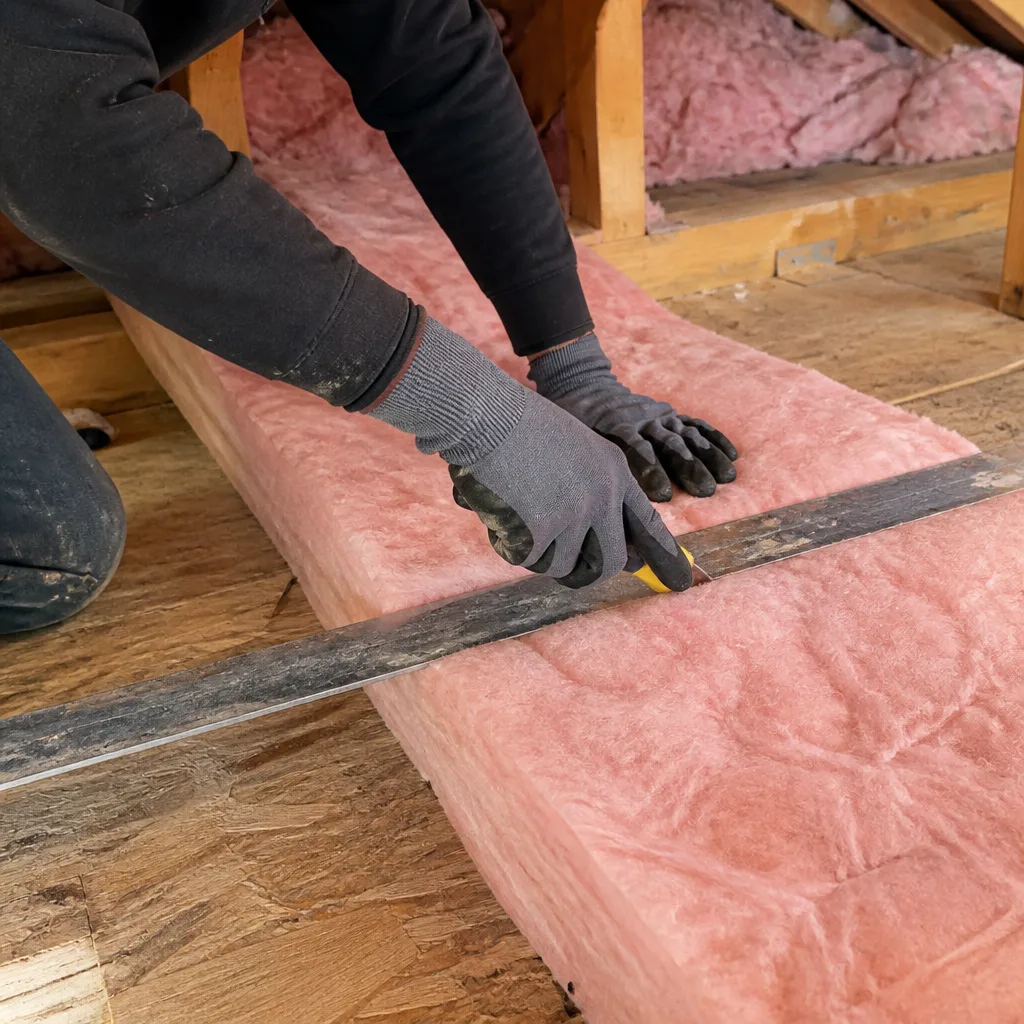
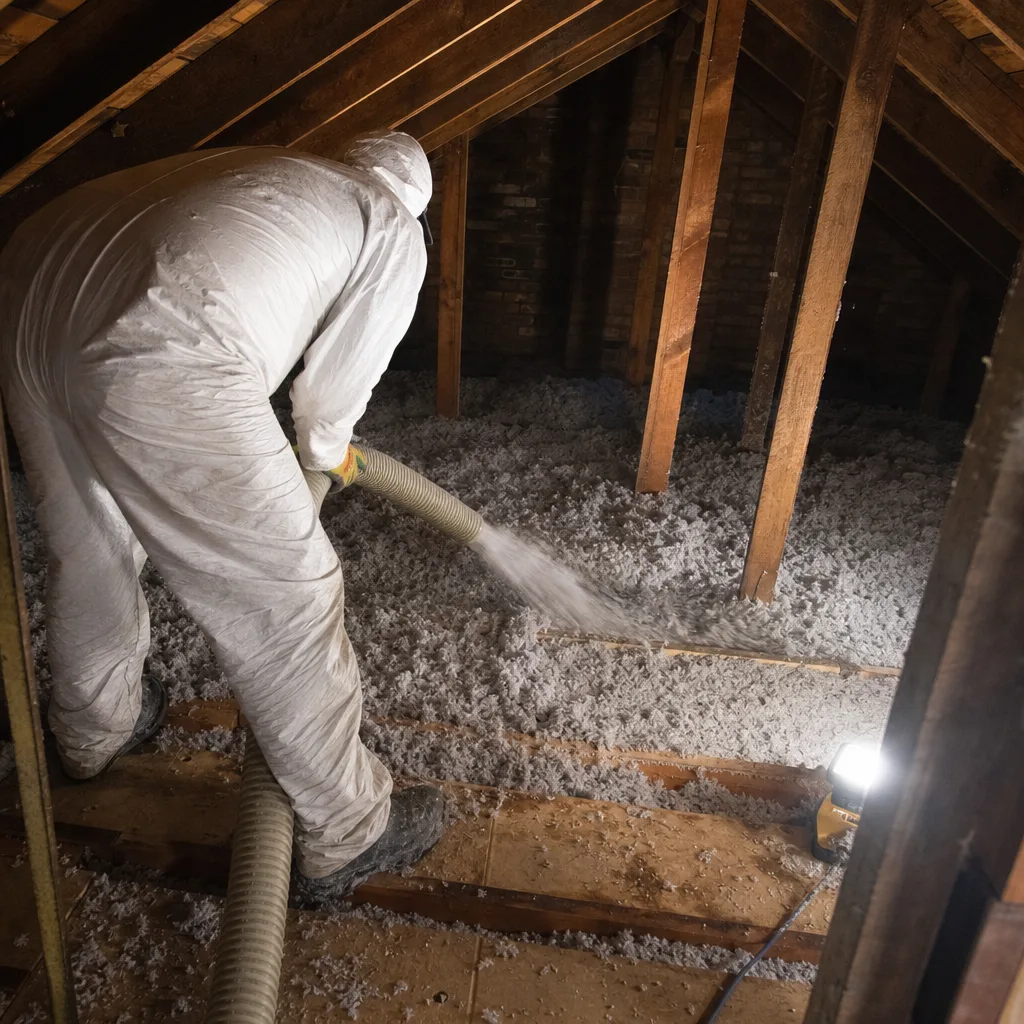
Blown-in insulation compacts over time. Fiberglass batts sag, shift, or get displaced when anyone works in the attic. A rim joist packed with crumbled fiberglass is insulation in name only – it performs closer to a screen door than a thermal barrier. If your attic insulation looks thin, matted, or inconsistent in depth, it is likely not performing anywhere near its rated R-value. You can check depth yourself with a ruler from the attic access hatch, though getting a blower-door reading is the only way to know how much air is actually moving.
Failed weatherstripping and door or window air gaps
This one is visible without any equipment. Hold a lighter or a thin strip of tissue paper near the edge of an exterior door or window on a windy day. If the flame wavers or the tissue moves, air is getting through. Weatherstripping compresses and cracks over years of use. Door sweeps bend and stop making full contact with the threshold. These are smaller leaks than attic penetrations, but they are real, and they are fixable.
Crawl space air bypassing the floor above
In homes with a crawl space under a drafty floor-level room, unconditioned air migrates up through gaps around pipes, ducts, and framing. An unsealed crawl space – especially one with a simple polyethylene sheet on the dirt floor rather than a full encapsulation – acts as a cold reservoir that feeds air into the house all winter. If the drafty room is on the first floor and the floor itself feels cold to the touch, the crawl space is worth investigating.
What to Do Right Now
- Walk the room and find the cold source. Put your hand near baseboards, electrical outlets on exterior walls, the tops of windows, and the gap under exterior doors. Note exactly where the cold air is most noticeable – that information helps a technician diagnose faster.
- Check your attic hatch. Attic access panels are among the worst air leaks in a house and are almost never insulated. Touch the hatch cover on a cold day. If it is cold, it is leaking. You can photograph it for reference – but do not attempt to modify it yourself if there are electrical fixtures nearby.
- Look at your insulation depth from the hatch opening. You do not need to enter the attic to get a rough sense of whether the insulation looks thin or compressed. Take a photo if you can. Depth alone does not tell the whole story, but obvious gaps or bare spots are meaningful.
- Do not use a space heater as a long-term fix. Portable electric heaters are expensive to run and do not address the leak. They also become a fire risk when used continuously in an unvented or cluttered space.
- If you notice cold air near a gas appliance, furnace flue, or water heater vent, stop and call. Gaps around combustion appliances can allow backdrafting of exhaust gases into the living space. That is a safety issue, not an insulation issue – call a licensed HVAC or plumbing professional before anyone starts any other work in that area.
How We Fix It
When your local Topside Attic Insulation team arrives, the first step is a blower-door test. That pressurization reading gives us a single number – expressed in ACH50, or air changes per hour at 50 pascals – that tells us exactly how leaky the building envelope is before we touch anything. We have walked into homes testing at 18 ACH50, which is roughly three times the leakiness of a typical 1970s build. The number is on the record either way.
From there, the technician identifies the primary air pathways – top plates, can lights, plumbing and electrical penetrations, attic hatch – and seals them using spray foam or caulk as appropriate. That work is completed before any insulation is added. This is not optional and it is not negotiable: Topside will not blow insulation over an unsealed attic floor. The services most likely to resolve a drafty-room complaint are attic air sealing combined with blown-in or attic insulation, and in some cases crawl space encapsulation. After sealing, we run the blower-door test again so you have the before-and-after numbers in writing.
The entire visit – diagnostic, sealing, insulation – typically wraps in a single day. Before anyone starts, you receive a flat written price and a written scope under Haven Standard Clause 1. When we leave, you receive a Documented Photo Record and the blower-door readings. The 365-Day Done Right Promise applies to everything we completed.
Frequently Asked Questions
It can wait in the sense that it is not an emergency, but waiting costs you money every day the leak is open. Air leaks that cause winter drafts also cause summer cooling losses – the same gap that lets cold in during January lets cool air out in July. The longer the building envelope stays unsealed, the more energy you are paying to heat or cool air that immediately escapes. If you want a straight answer on where you stand, call (218) 261-7714 and we will schedule a blower-door diagnostic – no work starts without a written price first.
In most cases, yes – your local Topside Attic Insulation team schedules diagnostics quickly, and a live person answers at (218) 261-7714 around the clock, seven days a week. No voicemail loops. When you call, we give you a real window and the name of the technician coming out, and you get a text when they are on the way.
It could be both, but attic air leaks are statistically the more common cause of whole-room drafts – windows tend to create localized cold spots near the glass rather than a general chill across the room. The blower-door test tells us where the air is actually moving, rather than us guessing. Window replacement is expensive; sealing the attic penetrations first often resolves the draft at a fraction of the cost.
There is no honest number to give you here without knowing your attic’s square footage, current insulation depth, number of penetrations, and whether the crawl space is part of the picture. What we can tell you is how our pricing works: Haven Standard Clause 1 means you receive a flat written price before anyone starts – no estimates that grow once the crew is inside. Call (218) 261-7714 or book online to schedule the diagnostic; the written quote comes before any work does.
Get It Fixed
If a room in your home is drafty right now, your local Topside Attic Insulation team is ready to find the source and fix it – with a written price before anything starts and a documented record when we leave. Call (218) 261-7714 any time – a live person answers – or book online to get on the schedule.
Written by Wes Okafor, Owner and Lead Building Envelope Technician, Topside Attic Insulation, serving communities nationwide since 2016.
What Our Customers Say
"Crawl space encapsulation done properly. Photographs of the vapour barrier at every seam, and the damp smell in the hallway is gone."
- Ainsley P."The winter gas bill dropped by about a third. They had estimated a quarter, so they under-promised."
- Genevieve R."Two other companies quoted to blow more insulation on top of what was there. These were the only ones who said the existing material had to come out first, and explained why."
- Clifford E.