
Blown-In Insulation Stopped Working
What’s Happening
When blown-in insulation stops working, the cause is almost always one of two things: the material has settled and compressed over time, losing the air pockets that give it its R-value, or the attic floor was never properly air-sealed to begin with and conditioned air has been escaping around it the whole time. Either way, your heating and cooling system is working harder than it should, and the insulation you paid for is not doing what it was supposed to do.
Blown-in insulation – whether cellulose or fiberglass – is rated at a specific depth. When that depth drops by even two or three inches, R-value drops with it. But depth is only half the story. A fully topped-up attic can still underperform badly if the top plates, can lights, and penetrations underneath were never sealed. Air bypasses the insulation entirely, and no amount of added material fixes a gap that lets conditioned air pour out around it. That’s the part most insulation companies skip. We don’t.
Why It Happens
The Insulation Has Settled Over Time
Blown-in material – especially cellulose – compacts under its own weight. An attic installed at a full 15-inch depth in 2010 might measure closer to 10 or 11 inches today, which can represent a loss of four or more R-value points. You can check this yourself with a ruler or a tape measure near the attic hatch. If the depth is below what your original paperwork or the insulation depth marker (a small ruler stapled into the insulation) shows, settling is your answer.
Air Is Bypassing the Insulation Through Unsealed Gaps
Top plates – the framing members at the top of interior walls – often have gaps where wires, pipes, and ceiling fixtures pass through. Recessed can lights are especially bad: older ones are essentially open holes into the attic. If your home feels drafty at the ceiling level, or if your energy bills spiked without a change in usage, air bypasses are the likely culprit. The insulation is still there; it just has air tunneling around and through it.
Moisture Has Gotten Into the Material
Cellulose and fiberglass both lose R-value when they absorb moisture. A slow roof leak, condensation from an improperly sealed attic hatch, or a bathroom exhaust fan venting into the attic instead of outside can introduce enough humidity to mat down the insulation and, in some cases, trigger mold growth. Signs include a musty smell from the ceiling, visible staining on the drywall below the attic, or insulation that looks clumped or discolored when you look in with a flashlight.
The Original Install Was Shallow
Homes built before the mid-1990s were frequently insulated to standards that wouldn’t pass today’s energy codes. If you’ve never had additional insulation added, you may simply be running at R-11 or R-13 in a climate that warrants R-38 or higher. Pull out your tape measure near the hatch. If you’re looking at four to six inches of material, that’s your answer. The insulation didn’t stop working – it was never installed to a level that could work consistently in the first place.
What to Do Right Now
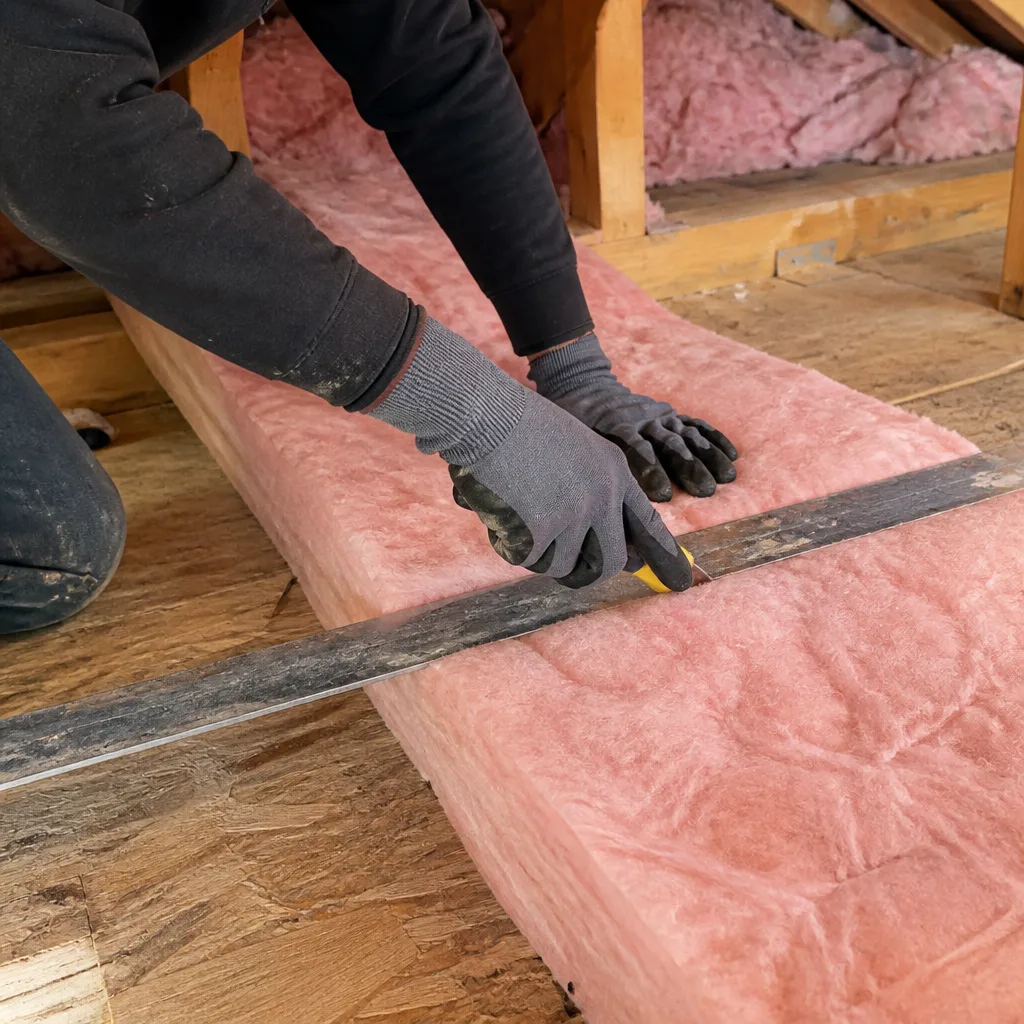
- Measure the depth at the attic hatch. Use a tape measure or ruler and note the number. This single measurement tells you immediately whether settling is part of the problem, and it’s useful information to have before any technician arrives.
- Photograph what you see. Take photos of the insulation surface, any visible gaps around light fixtures or pipes, and anything that looks discolored, compressed, or wet. These photos help a technician assess the situation before stepping foot in your attic.
- Check your recent energy bills. Pull the last 12 months and compare them to the same period a year prior. A quiet, steady increase in usage – without a change in your behavior – is useful diagnostic data.
- Don’t add insulation yourself before getting an assessment. Blowing additional material over an unsealed attic floor locks in the air leakage problem underneath. A depth problem and a sealing problem need to be addressed in the right order: sealed first, then insulated.
- If you see signs of moisture, mold, or pest activity, stop using the attic space and call. Disturbing moldy insulation or rodent debris without proper protective equipment is a genuine health risk. Photograph what you can from the hatch and leave the rest for a suited technician.
How We Fix It
When your local Topside Attic Insulation team arrives, the first step is an attic assessment – measuring current insulation depth, checking for moisture damage, and identifying air bypass points at top plates, can lights, and penetrations. On applicable jobs, we take a blower-door reading before we touch anything. That number tells us, in a single figure, how much conditioned air the home is losing. It also gives you a baseline.
If air sealing is needed, that work is completed first – always. Top plates are foamed, can lights are capped, and penetrations are sealed before any insulation is added or topped up. Then the blown-in layer is brought to the correct depth for the target R-value. We close with a second blower-door reading so you can see the improvement in writing.
The services that resolve this are Attic Air Sealing and Blown-In Insulation, often on the same visit. Most jobs are completed in a single day. Before anyone lifts a tool, you receive a written price with a written scope – that’s Haven Standard Clause 1, and it applies to every job we do. The 365-Day Done Right Promise covers the completed work.
Frequently Asked Questions
It depends on what’s driving it. Settled insulation is a slow drain on your energy bills and comfort – it won’t cause immediate structural damage, but every month you wait is money leaving through the ceiling. Moisture intrusion or mold is a different matter: that should not wait, because the problem compounds and the remediation cost grows with it. If you saw anything wet, discolored, or suspect when you looked in the attic, call (218) 261-7714 and describe what you found. A live person answers around the clock.
The honest answer is that the price depends on your attic’s square footage, the number of air bypasses present, and how much depth needs to be added. We don’t publish a flat rate for this work because those flat rates are almost always wrong in one direction or the other, and we’d rather give you the real number. Every job at Topside starts with a free written estimate – a specific price for your specific attic, in writing, before anything starts. Call (218) 261-7714 or book online to set up your assessment at no charge.
Your local Topside Attic Insulation team works to get assessments scheduled quickly, and a live person is available to take your call right now at (218) 261-7714 – no voicemail, no callback window measured in business days. Availability varies by location and season, but we’ll tell you exactly when we can be there and who is coming. You’ll get a named technician and a text when they’re on the way.
You can, but if the attic floor isn’t properly air-sealed first, you’re spending money on insulation that will underperform from day one. Blown-in material slows conductive heat transfer – it doesn’t stop air movement. If conditioned air is escaping through gaps around top plates and fixtures, a thicker layer of loose fill won’t fix it. The correct sequence is to seal the bypasses, then add the insulation. It’s the core reason Topside was founded in 2016: a blower-door technician kept being called to top up attics that were leaking air through unsealed penetrations underneath. We sealed them first back then and we still do.
Get It Fixed
Call (218) 261-7714 – a live person answers now, any time of day. Or book your assessment online. Your local Topside Attic Insulation team will measure what’s actually there, give you a written price before anything starts, and document every step of the work.
Written by Wes Okafor, Owner and Lead Building Envelope Technician at Topside Attic Insulation, independently owned and operated under The Haven Standard since 2016.
What Our Customers Say
"They photographed rodent damage in the old insulation that we had no idea about, and priced the exclusion work separately so we could decide."
- Harriet N."They air-sealed the attic floor before insulating and showed me the blower-door number before and after. The upstairs is finally the same temperature as downstairs."
- Marisol D."Crawl space encapsulation done properly. Photographs of the vapour barrier at every seam, and the damp smell in the hallway is gone."
- Ainsley P.