
Owens Corning Crawl Space Encapsulation & Vapor Barrier in Chicago: What to Know First
We provide independent Owens Corning crawl space encapsulation and vapor barrier work throughout Chicago, typically completing most basement-sized or crawl space jobs in one to two days. A straightforward vapor barrier install on a 1,000-square-foot crawl space in Chicago runs between $1,800 and $3,400, while full encapsulation with insulation and sealing lands between $4,500 and $9,500 depending on access, existing moisture damage, and whether any rim joist work is required. We’re not an Owens Corning dealer or authorized service provider, but we’ve worked behind enough of their product failures to know exactly what goes wrong and how to fix it without redoing the whole job.
If you own a home with Owens Corning insulation or vapor barrier material in the crawl space and you’re seeing dampness, odor, or heat loss, call (218) 261-7714. This page is written for you.
How Owens Corning Products Fail - and How We Fix Them
Owens Corning makes solid insulation products, but crawl spaces in Chicago push every material to its limit. Here’s what we actually find when we open up a failed Owens Corning crawl space installation, and what we do about it.
- Fiberglass batt sag in rim joists and floor cavities. Owens Corning EcoTouch and older Pink fiberglass batts were never designed for the humidity load of a Chicago crawl space. Once they absorb moisture, they lose R-value fast and start pulling away from the subfloor, leaving gaps where conditioned air escapes. We remove the compromised batts, air-seal the rim joist bays with foam, and refit with moisture-resistant material rated for below-grade exposure.
- Foil-faced polyiso board delamination. Owens Corning FOAMULAR and older Thermafiber polyiso products hold up well above grade, but sustained crawl space humidity causes the foil facer to separate from the foam core. Once that bond breaks, the board loses structural integrity and its vapor retarding properties drop. We replace delaminated sections with closed-cell spray foam or rigid foam board with a bonded vapor barrier, depending on the assembly.
- Unfaced batt installed as a vapor barrier substitute. This is the most common Owens Corning mistake we see in Chicago homes that were insulated in the 1990s and early 2000s. Unfaced fiberglass doesn’t stop moisture migration, so ground vapor moves right through it and condenses on the cold subfloor above. The fix isn’t patching; it’s pulling the batt, laying a true 10-mil or 12-mil vapor barrier over the crawl space floor, and reinstalling insulation that belongs in a high-humidity assembly.
- Owens Corning QuietR duct wrap falling off crawl space ductwork. QuietR is a fiberglass duct wrap with a foil scrim facing, and in damp crawl spaces the adhesive and mechanical fasteners loosen over time. Ducts end up sweating, the wrap sags, and the exposed ductwork loses conditioned air before it reaches the registers. We refasten or replace with a mechanically secured wrap and seal all duct joints with mastic before reinsulating.
- Owens Corning AttiCat blown fiberglass settling in floor cavities. Some Chicago contractors ran AttiCat loose-fill in crawl space ceilings, which was never the right application. It settles, compresses, and loses thermal performance within a few years. We vacuum out the settled fill, air-seal the floor assembly, and install cavity insulation with the proper vapor profile.
Our Owens Corning Crawl Space Encapsulation & Vapor Barrier Process
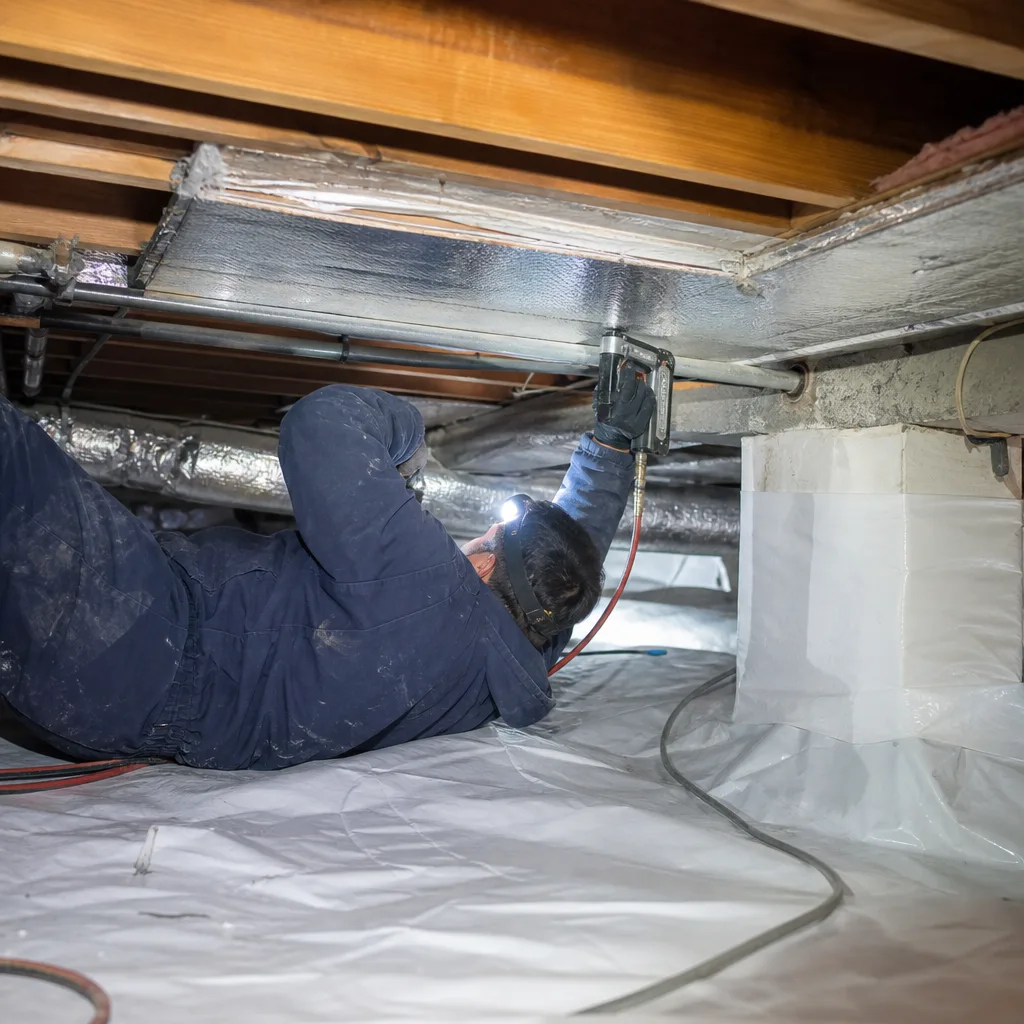
Every Owens Corning crawl space job we take in Chicago follows the same documented sequence. No work starts without a written price, and no job closes without a photo record.
- 1
Site walk and moisture reading. We measure relative humidity at the crawl space floor, the subfloor, and the rim joist. We note where Owens Corning product is failing and whether it can be salvaged. If the crawl space has standing water, we tell you before we quote anything else.
- 2
Written scope and price. You get a flat price with a written scope of work before anyone lifts a tool. That’s Haven Standard Clause 1, and we don’t deviate from it.
- 3
Product decision. We identify whether your Owens Corning material is worth keeping, can be reworked, or needs replacement. We’ll tell you which option makes sense and why. We’re not married to any one manufacturer; we’ll spec what the assembly actually needs.
- 4
Air sealing first. Before any new insulation or vapor barrier goes in, we seal rim joists, penetrations, and any gaps in the floor assembly. Seal the holes first. Then add the R-value. The numbers will tell you whether it worked.
- 5
Encapsulation and insulation install. We lay the vapor barrier, mechanically fasten it, seal seams with tape, and install the specified insulation. Every step is photographed.
- 6
Verification and documentation. We take a final moisture reading, walk you through the photo log, and hand you the written record: scope, materials used, photos, and the post-installation reading. On applicable jobs, we’ll run a blower-door test before and after so you can see the air-sealing result in one number.
What Owens Corning Crawl Space Encapsulation & Vapor Barrier Costs in Chicago
Here’s what we charge for the most common Owens Corning crawl space scenarios in Chicago. These are real working numbers, not bait pricing.
| Job Type | Typical Chicago Price Range |
|---|---|
| Crawl space vapor barrier only (up to 1,200 sq ft) | $1,800 - $3,400 |
| Full crawl space encapsulation with insulation and sealing | $4,500 - $9,500 |
| Crawl space cleanout and remove failed Owens Corning insulation | $800 - $2,200 |
| Rim joist air sealing and insulation (per linear foot) | $12 - $22 |
| Complete crawl space restoration (cleanout, encapsulation, insulation, sealing) | $6,000 - $13,500 |
What moves the price: crawl space height, access, whether we’re removing existing Owens Corning material, whether ductwork needs re-wrapping, and whether there’s active moisture intrusion. We give you the written price before any work starts, and estimates are free. Call (218) 261-7714 to schedule a site walk.
Why Chicago Homeowners Call Topside Attic Insulation for Owens Corning Work
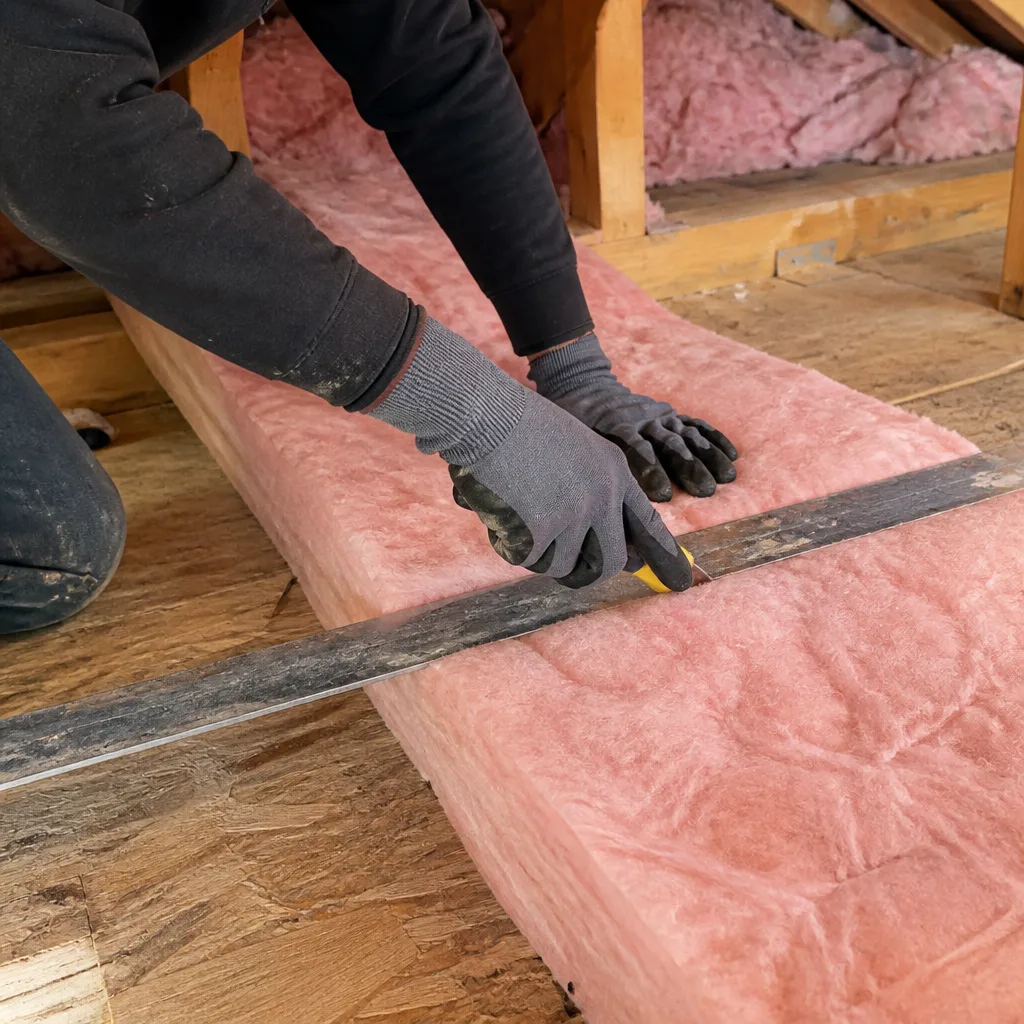
We’ve sealed and insulated more than 9,000 homes in the Chicago area since 2016. Every one started with a written price and ended with a documented record. When we work on Owens Corning product, we treat it for what it is: a material that performed a certain way in a certain assembly, under a certain moisture load. We don’t install blind, and we don’t promise results we can’t measure.
The 365-Day Done Right Promise applies to every job we complete. If it’s not done right, we make it right. Our technicians are background-checked and uniformed, and a live person answers the phone 24/7. We also work with Reflectix radiant barrier products and a range of other manufacturers, so when a mixed-material crawl space needs a coordinated repair, we can handle it without forcing a single-brand solution.
Wes Okafor runs our building science work, and he’s been doing insulation in Chicago for over twenty years. He grew up on the Northwest Side, about six blocks from the Portage Park field house, and he learned the trade the hard way before studying building technology at Truman College. He’ll tell you what he’d do if it were his house, and then he’ll put it in writing.
FAQs
In most cases, no. Owens Corning warranties are limited to specific products and specific installation conditions, and crawl space failures often stem from improper installation or moisture levels that exceed the product’s rated exposure. The warranty may cover the material, but rarely covers the labor to remove and replace it. That’s why we document everything: when we find failed Owens Corning product in your crawl space, you’ll see it in the photo log and we’ll explain what the warranty actually covers before you spend anything. Call (218) 261-7714 and we’ll walk you through it.
We can usually schedule a site walk within 48 hours and start work within the same week, depending on the scope. For a failed vapor barrier causing active moisture damage, we’ll prioritize same-week service. A live person answers the phone 24/7, so you won’t sit in a voicemail queue.
If the tears or gaps are isolated and the material is still bonded properly, a repair can make sense. But if the barrier has been wet for multiple seasons, it’s usually cheaper in the long run to replace it, because the mold and subfloor damage will only spread. We’ll give you a repair quote and a replacement quote side by side, in writing, so you’re not deciding blind. Estimates are free.
Yes. We can source Owens Corning material where it makes sense, and we also carry compatible alternatives from other manufacturers when a different product will perform better in your specific assembly. We don’t force a proprietary lock-in. We’ll explain what we’re using and why, in the written scope before any work starts.
On applicable jobs, yes. A blower-door test is a calibrated pressure diagnostic that measures how many cubic feet of outside air leak into your house per minute. We run it before and after air sealing so you can see the change in one number. It’s part of our standard documentation on envelope work, not an upsell.
Written by Wes Okafor, Owner & Lead Building Envelope Technician, Topside Attic Insulation at Topside Attic Insulation, serving Chicago and nearby areas.