
Owens Corning Attic Air Sealing: The Chicago Owner’s Guide
Topside Attic Insulation stocks Owens Corning-compatible attic air sealing materials on our trucks and typically completes a full attic air sealing job in a Chicago home for $1,800 to $4,200, with most homes landing near $2,600. We can usually start within 3 to 5 business days. Most homeowners don’t discover their attic air sealing has failed until they notice a specific problem: a bedroom that won’t hold temperature in February, a gas bill that climbed 30% over last winter, or the faint smell of attic dust drifting down through ceiling light fixtures. What’s actually happening is that the sealing materials installed years ago, whether foam, caulk, or the original sealing collar around a can light, have separated, dried out, or were never properly installed in the first place.
Key Takeaways
- Owens Corning attic air sealing is not a single part. It’s a system: spray foam, caulk, rigid foam board, and sealing collars applied across your attic floor’s penetrations.
- Installed cost in Chicago runs $1,800 to $4,200 depending on attic size, accessibility, and how many penetrations need work.
- We publish before-and-after blower-door numbers on every sealing job, so you see exactly how much air you stopped losing.
- If you smell attic air or see daylight through your attic hatch, don’t wait. One Chicago winter cycle can push conditioned air through a failed seal at rates you’ll pay for monthly.
Which Owens Corning Models This Applies To
Owens Corning attic air sealing products fall into a few specific categories, and the compatibility question depends on which one your home has. The most common products we encounter in Chicago attics are Owens Corning’s foam sealant (the orange-labeled can they market for gaps around pipes and wires), their rigid foam board for sealing attic hatch covers and knee walls, and their recommended sealing collars for recessed can lights. Owens Corning does not manufacture a dedicated “air sealing kit” for retrofit attics, which is an important distinction. When a contractor says they installed “Owens Corning air sealing,” they almost always mean they used Owens Corning insulation with a mix of sealing products from other manufacturers, which is standard practice and entirely fine for performance.
Our position at Topside Attic Insulation is simple: we don’t lock you into one brand. We source sealing materials from Owens Corning, Johns Manville, Knauf, Rockwool, CertainTeed, and specialized air-sealing manufacturers like Demilec and Icynene. The brand of foam matters less than the technique. What we check when assessing any Owens Corning attic is whether the sealing material has actually bonded to the surface. In Chicago’s freeze-thaw cycles, cheaper foam sealants separate from wood and drywall within three to five years. Higher-grade products hold far longer. Topside Attic Insulation is an independent service provider and not affiliated with Owens Corning, so when we tell you a specific Owens Corning product isn’t the right tool for your attic, that’s not brand loyalty talking. It’s the blower-door number.
Signs Your Owens Corning Attic Air Sealing Is Failing
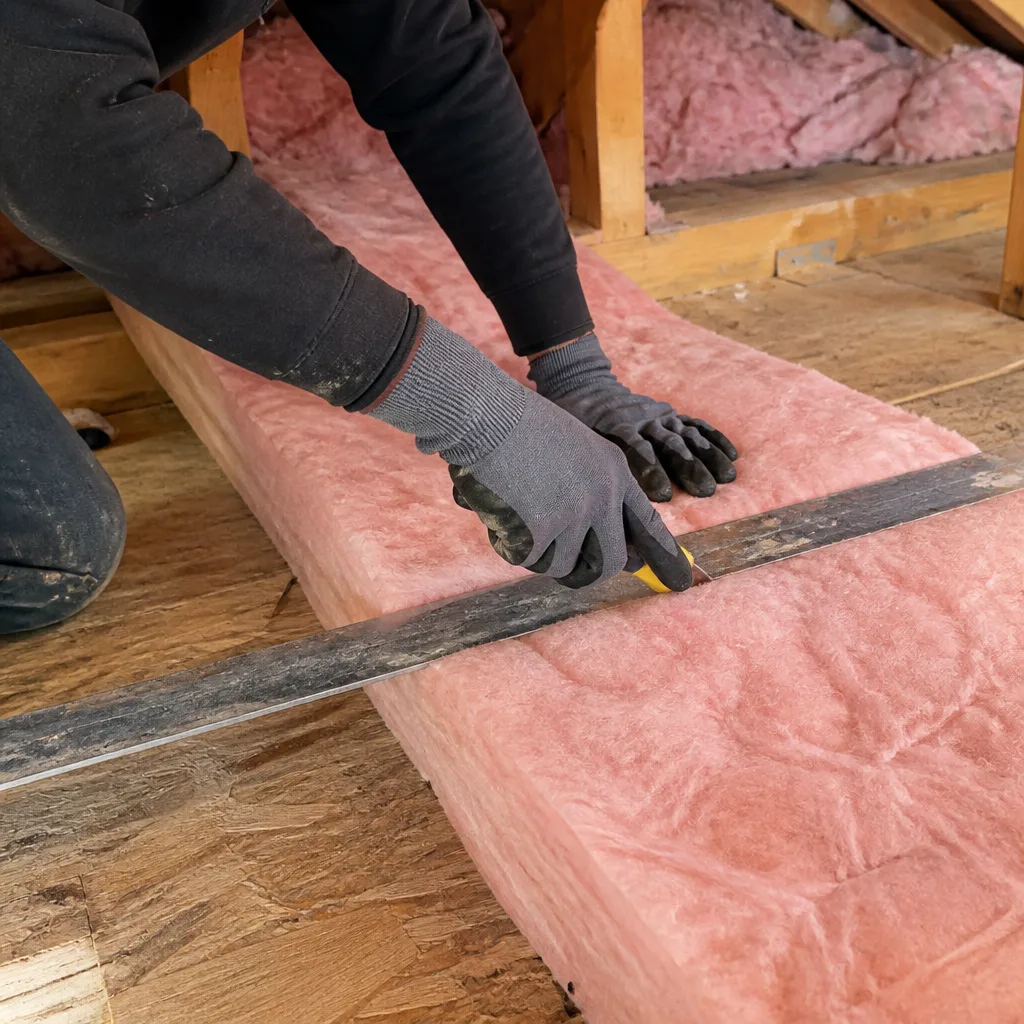
Here’s what compromised air sealing actually looks like from the living space, and what each symptom means mechanically:
- Drafts near ceiling light fixtures and ceiling fans in winter. Warm air rises, hits the ceiling, and follows the path of least resistance. If the sealing around a ceiling electrical box has failed, that air gets pushed into the attic and cold attic air drops back down around the fixture trim. You’ll feel it on a still, cold night.
- Higher heating bills year over year. Your furnace doesn’t run more because it’s moody. It runs more because conditioned air is leaving through the attic floor. A home at 18 ACH50 is losing roughly three times the air of a typical 1970s build, and that air is replaced by whatever Chicago’s weather is doing outside.
- Attic dust on top of your ceiling or on the blades of ceiling fans. Dust doesn’t materialize in a closed room. It’s being pulled in from the attic through whatever gaps exist in the ceiling plane. Every line of dust on a fan blade is an air leak that seeps through a failed or missing seal.
- Visible gaps or crumbled foam around attic penetrations. Climb up, lift the insulation, and look at where pipes, wires, and ducts pass through the attic floor. Foam that has cracked, shrunk, or pulled away from the framing is not sealing anything. It’s occupying space.
- An attic hatch that doesn’t sit flat or shows daylight around its edges. Many older Chicago homes have attic hatches that were never sealed at all. A hatch that leaks air around its perimeter is the equivalent of leaving a small window open all January. The attic access is one of the most overlooked air leaks in the entire house.
Replacement Cost & What’s Included
For a typical Chicago bungalow or two-flat with a walkable attic, expect to pay between $1,800 and $4,200 for full attic air sealing. The spread depends on four factors: total attic square footage, how many penetrations need to be sealed, whether your attic hatch requires reframing or sealing collars around recessed lights, and whether the attic floor currently has insulation we need to move and reset. Homes with extensive can lighting or older balloon-frame construction land at the higher end because there are more leak paths to address.
Under The Haven Standard, every job starts with a written price before any work starts. That price includes all sealing materials, labor, and the cleanup. It also includes a Documented Photo Record of every sealing location before insulation goes back down. On applicable jobs, we run a blower-door test before sealing and again after, and we hand you the numbers: your starting ACH50, your post-sealing ACH50, and the installed R-values by zone. You see the performance change in a single figure before you pay the balance.
DIY or Call Us?
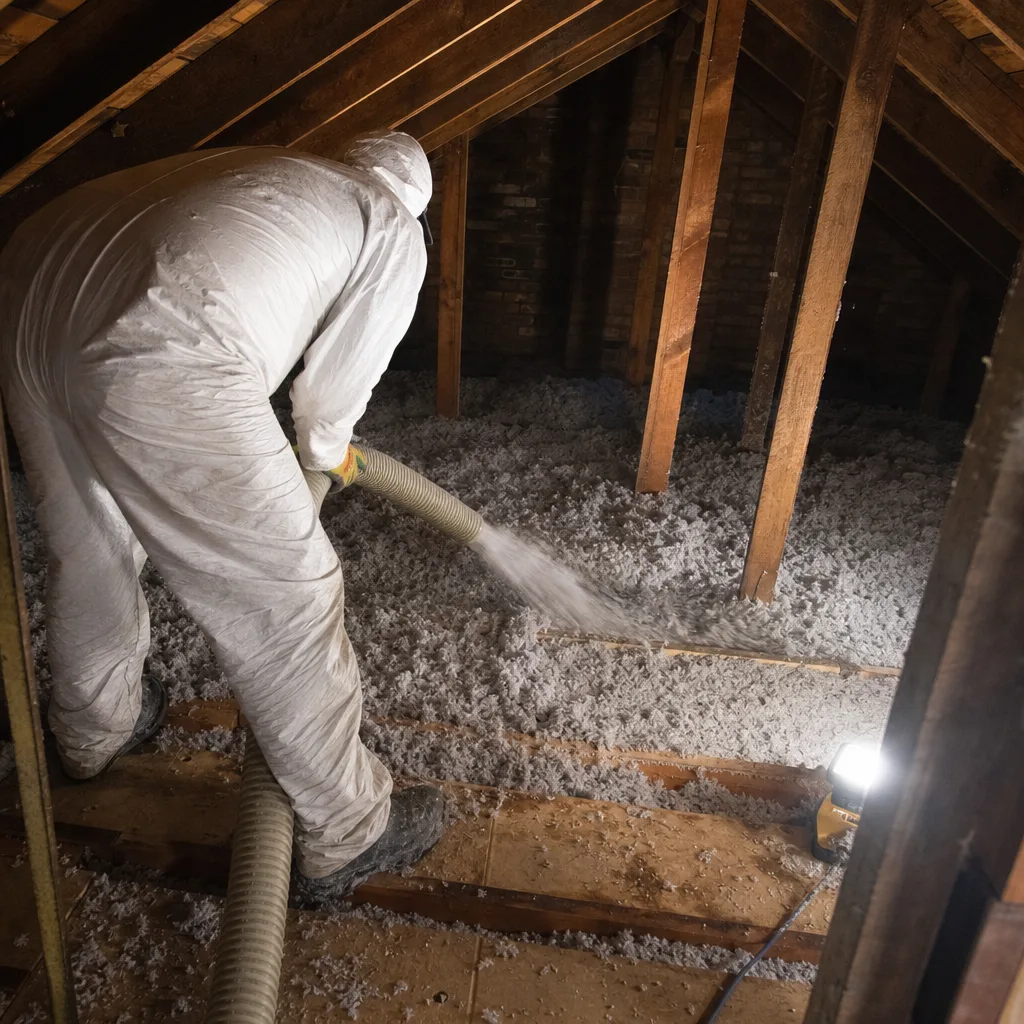
There are things a careful homeowner in Chicago can do safely. You can inspect your attic hatch with a flashlight and look for daylight around the edges. You can pull back a corner of insulation and visually check whether foam around plumbing vents and electrical wires is intact or crumbling. What you shouldn’t do is attempt to seal can lights from the attic side with spray foam unless you know the fixture is IC-rated, because sealing a non-IC fixture creates a fire hazard. Spray foam expands unpredictably in tight cavities, and a homeowner working overhead in a cold attic is not the time to learn how much pressure a foam can generates.
Where DIY usually goes wrong is depth. A can of foam from a big-box store seals a single gap. It doesn’t address top plates, interior wall cavities, chase ways, or the 30 other gaps you can’t see from the hatch. And it won’t tell you whether the leakage was actually fixed. We run a blower-door before and after so you know, with a number, whether the air you’re losing was stopped. If you’d rather have that documented, call us at (218) 261-7714.
FAQs
A properly applied air sealing job using quality foam and caulk will last 10 to 20 years in a Chicago attic, though some components like hatch gaskets may need touch-up after 5 to 7 years. The limiting factor is usually attic heat cycling, which causes cheap foam to become brittle and lose its bond. If you had sealing done more than a decade ago, it’s worth a visual inspection. Call (218) 261-7714 and we’ll take a look during a free estimate.
Yes, if the failure is localized. A single cracked foam collar around a bathroom exhaust vent can usually be scraped and resealed in under an hour. But if the sealing material throughout the attic is deteriorated, spot repair just chases the same problem around the floor plan. The blower-door reading tells us which situation you have. We quote the repair either way, and the written price covers exactly what we’ll do.
Most Chicago homes take one full day for a complete attic air sealing, including the before-and-after blower-door tests. Larger or more complex attics with extensive can lighting or balloon-frame construction may run into a second day. We schedule a specific day, name your technician before they arrive, and text you when they’re on the way.
We stock Owens Corning foam sealants and rigid board on our trucks, along with sealing collars, caulk, and gasket material from Johns Manville, Knauf, and Reflectix. If your existing sealing system used a specific product we don’t stock, we source it before we arrive so you’re not paying for a second trip.
Written by Wes Okafor, Owner & Lead Building Envelope Technician, Topside Attic Insulation at Topside Attic Insulation, serving Chicago and nearby areas.