
Johns Manville Attic Air Sealing: The Chicago Owner’s Guide
If you have Johns Manville insulation in your attic and you’re seeing higher heating bills or cold rooms, the problem usually isn’t the insulation itself. It’s the air moving through it. In Chicago, a typical attic air sealing job on a home with Johns Manville fiberglass or blown-in insulation runs between $1,400 and $2,800, depending on attic size and how many penetrations need sealing. We stock Johns Manville-compatible sealing materials and complete most attic air sealing jobs in a single day.
Most Chicago homeowners discover their attic air sealing has failed the same way: they insulated five or eight years ago, the R-value is fine, but the upstairs is still cold in January. The insulation is doing its job. The holes under it are not.
Which Johns Manville Models This Applies To
Attic air sealing works alongside any Johns Manville insulation product: ComfortTherm batts, Attic Protector blown-in fiberglass, or the JM Spider spray-applied system. The sealing itself isn’t a Johns Manville part number – it’s the layer of work that has to happen before insulation goes in or on top. That said, there’s a compatibility detail most people miss: Johns Manville blown-in fiberglass is lighter per square foot than cellulose, which means it settles differently around can lights and top plates. If those penetrations aren’t sealed first, air moves through the fiberglass like it’s not even there. We match sealing materials – fire-rated caulk, spray foam, and gaskets – to the specific JM product installed so nothing degrades or separates.
One thing to know: we’re an independent Chicago contractor. We install and seal around Johns Manville products regularly, but we’re not affiliated with the brand. We also work with Owens Corning, Knauf, CertainTeed, and Reflectix when the job calls for it.
Signs Your Johns Manville Attic Air Sealing Is Failing
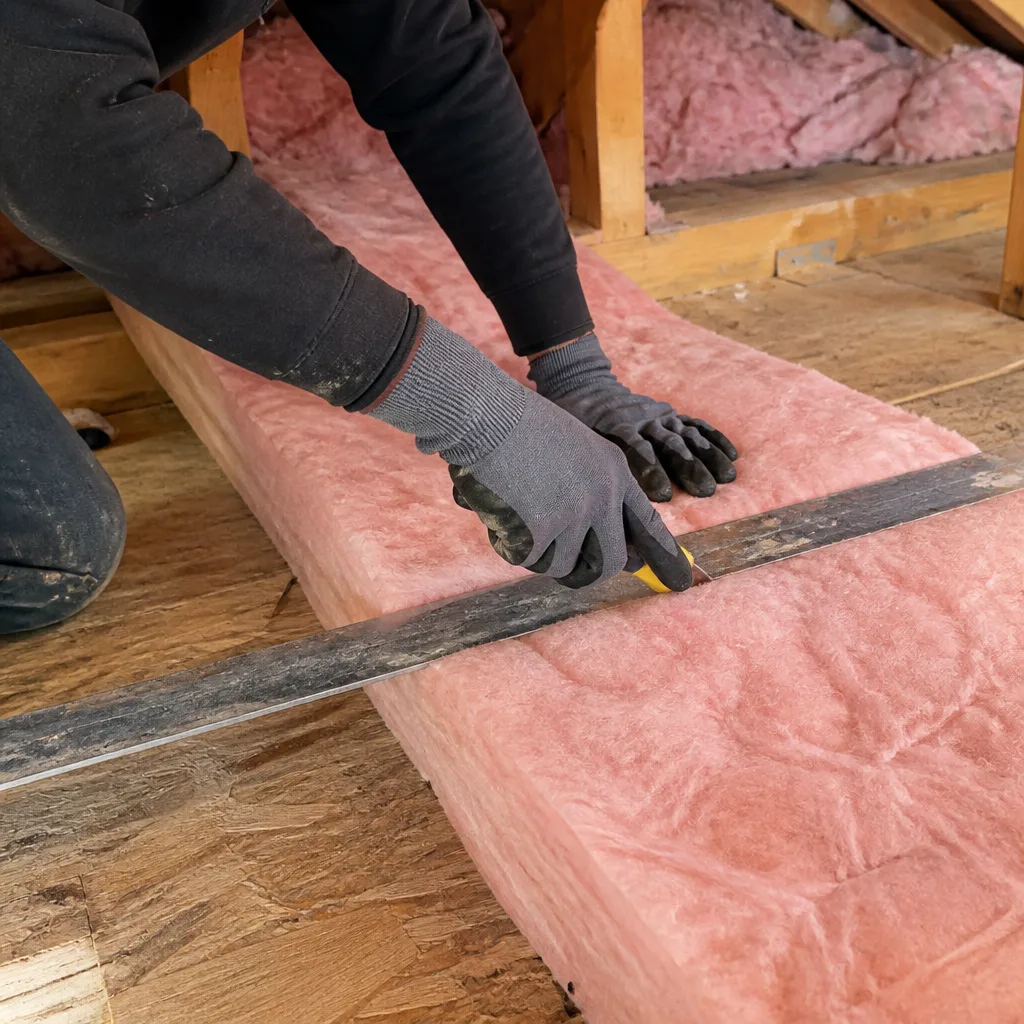
- Upstairs rooms run 5-8 degrees colder than the rest of the house. That temperature gap usually means conditioned air is escaping through unsealed top plates and the furnace is working harder to compensate.
- Dust streaks on the insulation near can lights and plumbing vents. Air moving through fiberglass filters dust as it passes, leaving dark gray lines where air has been blowing through for months.
- Ice dams forming along the roofline in winter. Warm air leaking into the attic melts snow at the ridge, then it refreezes at the eave. Air sealing fixes the root cause, not the symptom.
- Second-floor humidity swings dramatically between seasons. Unsealed attic penetrations let moist air into the attic in summer and out of the house in winter, making both the living space and the attic harder to condition.
- You can feel a draft around the attic hatch or pull-down stairs. In Chicago, the attic hatch alone often leaks as much air as a window left cracked open all year. We seal and weatherstrip it as part of every air sealing job.
Replacement Cost & What’s Included
For a single-family home in Chicago, attic air sealing typically runs $1,400 to $2,800 installed. The range depends on attic size, how many penetrations need sealing, and whether we’re adding new insulation or sealing around existing Johns Manville material. In a bungalow in Portage Park with a 900-square-foot attic, most jobs land around $1,600 to $2,100. In a larger two-story in Lincoln Square, the same work runs closer to $2,400 to $2,800.
Every job starts with a blower-door test before any work begins. That reading – measured in CFM50, or cubic feet per minute of air leakage at 50 pascals of pressure – tells us exactly how much air the house is losing. Then we seal top plates, can lights, plumbing and electrical penetrations, and the attic hatch. When we’re done, we run the blower door again. You get both numbers in writing, plus a photo log of every penetration we sealed. The 365-Day Done Right Promise covers the work: if it’s not done right, we make it right.
DIY or Call Us?
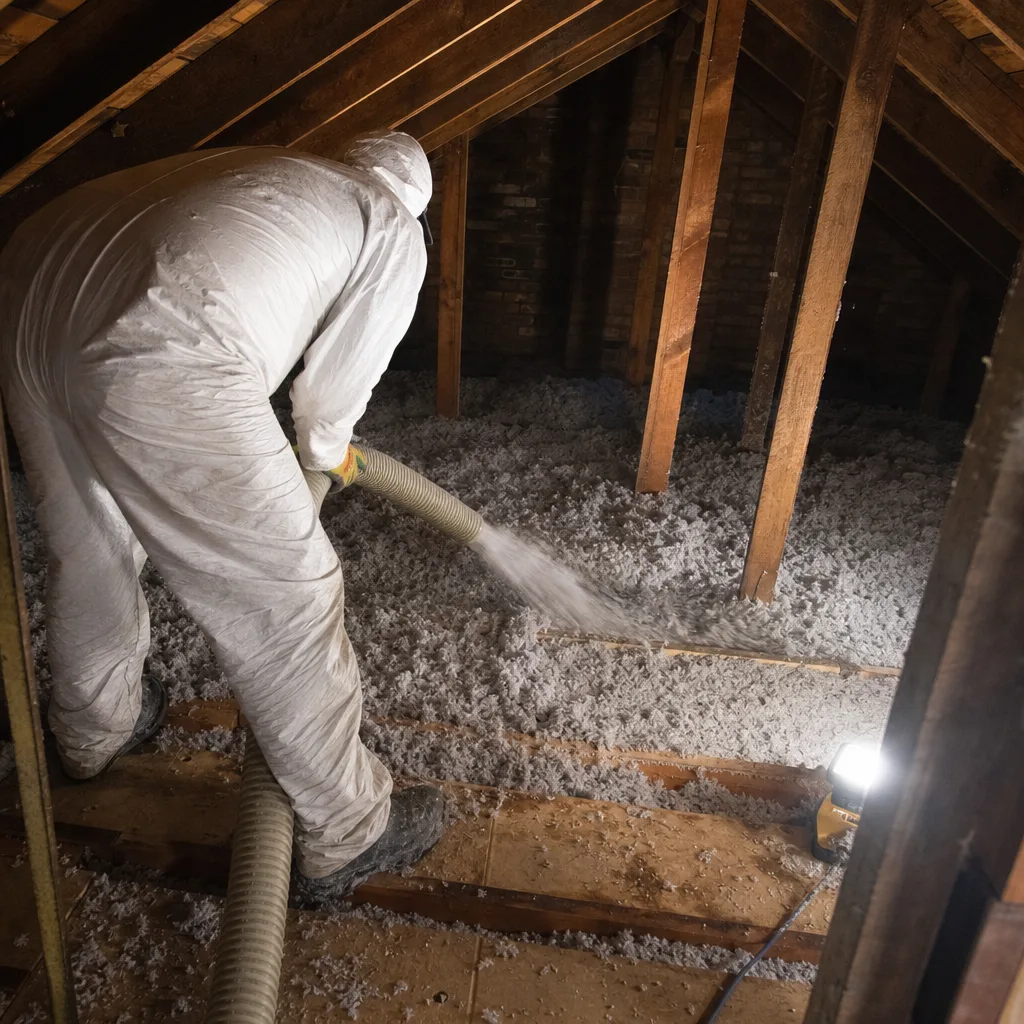
You can check a few things yourself: shine a flashlight at the attic hatch and look for daylight around the edges. Inspect can lights from below and see if there’s a visible gap between the fixture and the ceiling drywall. Look for dust streaks on the insulation near any pipe or wire coming up from below. Those are diagnostic, not dangerous.
What you shouldn’t do is climb through an attic in Chicago in January to seal penetrations with spray foam around hot can lights or electrical boxes. Foam around electrical needs to be fire-rated and applied correctly, and working around recessed fixtures that might be IC-rated missing proper spacing creates a fire risk. We’ve also pulled homeowners out of attics where they stepped between trusses and put a foot through the drywall below. It’s cheaper to call us the first time. Reach us at (218) 261-7714 for a free estimate, and we’ll have a written price before anyone starts.
FAQs
Properly installed air sealing – fire-rated caulk, spray foam, and gaskets at penetrations – lasts 20 to 30 years in a Chicago attic. The sealants we use stay flexible through temperature swings, so the seal doesn’t crack as the house shifts through freeze-thaw cycles.
Yes, if the failure is isolated. If a single penetration, like a plumbing vent, has opened up or the hatch gasket has compressed, we can spot-fix it in under an hour. Most Chicago homes, though, have five to ten unsealed penetrations by the time anyone notices a problem. Call (218) 261-7714 and we’ll tell you honestly which situation you have.
Most Chicago attics take one day for the full job: blower-door test before, sealing all penetrations, hatch weatherstripping, and blower-door test after. Larger attics or homes with extensive can light retrofits take two days.
We stock everything on the truck: fire-rated caulk, one-part and two-part spray foam, hatch gaskets, and can light covers rated for the Johns Manville insulation already in your attic. You don’t order anything. We bring the materials, do the work, and hand you the printed report before we leave.
Written by Wes Okafor, Owner & Lead Building Envelope Technician, Topside Attic Insulation at Topside Attic Insulation, serving Chicago and nearby areas.