
Johns Manville Wall Insulation in Chicago: What to Know First
We install, retrofit, and replace Johns Manville wall insulation throughout Chicago as an independent contractor, not a manufacturer dealer. Most drill-and-fill or injection foam jobs on a standard Chicago brick bungalow or frame two-flat run $1,800 to $4,200, and we typically complete the work in one to two days. If you’re at (218) 261-7714, we’ll give you a written price before anyone touches a wall.
This page is for homeowners who already have Johns Manville products in their walls, are considering them for a re-side or gut-rehab, or have been told by an energy auditor that their wall cavities read empty or settled. We work with the full Johns Manville fiberglass and mineral wool lineup, and we also service Reflectix applications where they show up in Chicago basements and rim joists.
How Johns Manville Products Fail - and How We Fix Them
Johns Manville makes a solid product. The failures we see in Chicago walls are rarely the material itself. They’re the installation, the air movement around it, or time. Here’s what we actually find when we open walls or run a blower-door test:
- JM ComfortTherm batts with the poly-encapsulated facing, compressed behind wiring or plumbing. The facing tears during retrofit work, and once it tears, the batt loses its air-sealing claim and starts bypassing. We cut out the compressed section, refit with unfaced JM batts, and seal the cavity before closing. Fix: replace the batt, seal the penetration, retest.
- JM Spider blown-in fiberglass in older frame walls, settled 20-30% in the top third of the cavity. This is a classic Chicago balloon-frame problem: the blow was done from the interior through small holes, and the top plates never got sealed. The insulation settled because the house kept breathing through the rim joist. We drill-and-fill from the exterior when siding allows, or from the interior in plaster walls, and we seal top plates and rim joists first. Fix: dense-pack the void, seal the air path, document the before-and-after CFM50.
- JM Kraft-faced R-13 batts in brick bungalow walls, installed backwards in the 1990s. Kraft facing should face the conditioned side in Chicago’s climate. When it faces the brick, the paper holds moisture against the cavity in winter and you get mold on the back of the drywall. We see this mostly in Portage Park, Jefferson Park, and the bungalow belt. We pull the drywall, remove the wet batt, air-seal the lath and top plate, and reinstall with unfaced JM batts plus a smart vapor retarder. Fix: remove, remediate, reseal, reinsulate.
- JM mineral wool (TempControl or GoBoard adjacent) in exterior sheathing cavities, cut sloppy around outlet boxes. Mineral wool won’t sag or rot, but a bad cut around a single-gang box leaks more air than most people think. We see it on blower-door tests all the time: a 4-inch gap around an outlet in an exterior wall can account for 15-20 CFM50 of leakage. We pull the cover, seal behind the box with acoustical sealant or spray foam, and pack the gap properly. Fix: detail the penetrations, not just the field.
- JM fiberglass in rim joist cavities that was never air-sealed at the band board. The rim joist is the single leakiest spot in a Chicago frame house. If the fiberglass went in without foam or caulk behind it, it’s an open window by January. We remove the old batt, seal the band board and subfloor seam, and reinstall with rigid foam plus JM batt over the top. Fix: seal first, then insulate. The numbers tell you whether it worked.
Our Johns Manville Wall Insulation Process
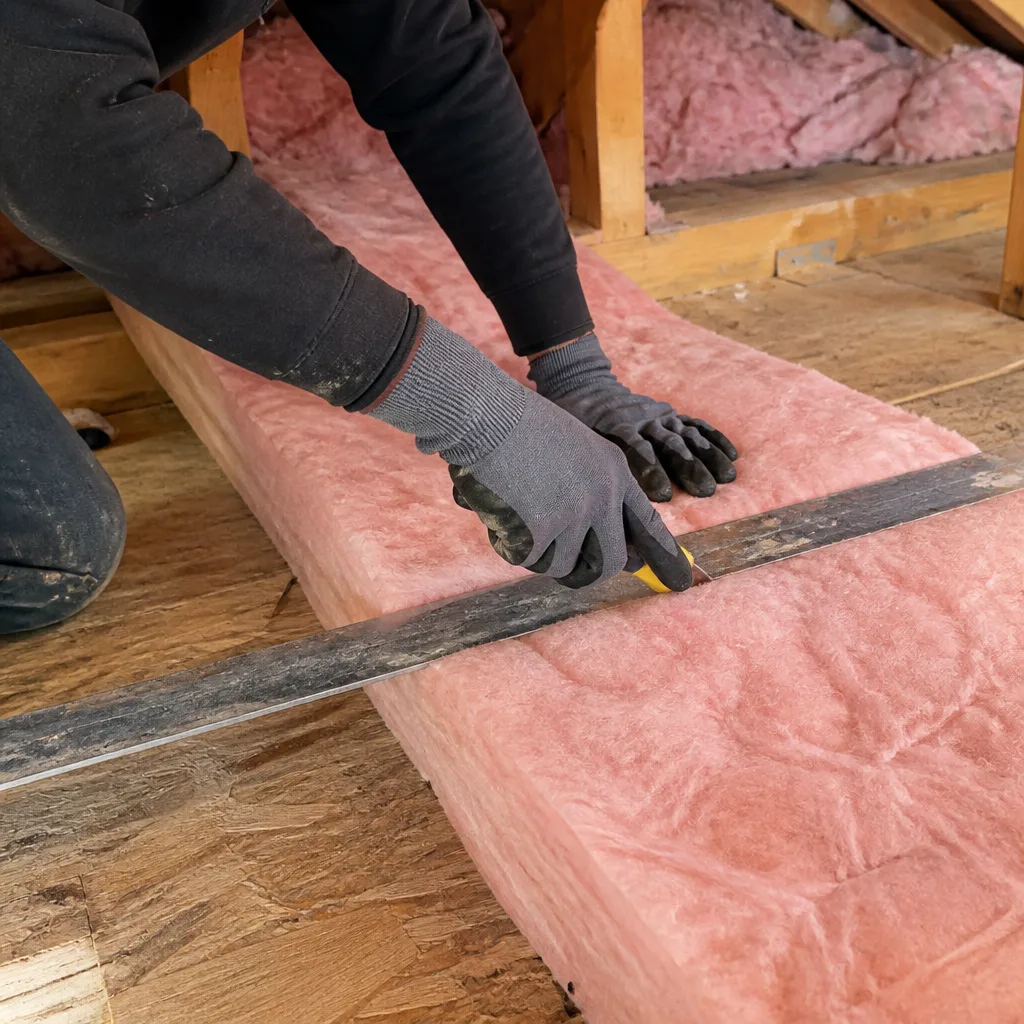
Here’s what actually happens when you call us about Johns Manville wall insulation in Chicago:
- 1
Call and talk to a person. You reach a live dispatcher at (218) 261-7714, not a voicemail. We schedule a site visit, usually within 2-3 business days.
- 2
Diagnostic walkthrough. Wes Okafor or a senior tech walks the house, checks the existing wall assembly, and runs a blower-door test if the scope involves air sealing. The pre-installation CFM50 number goes on the written quote.
- 3
Written price, written scope. You get a flat price with the exact scope: which walls, what material, what R-value, what penetrations we’ll seal, and what the warranty covers. Haven Standard Clause 1: nothing happens without this in writing.
- 4
Seal, then insulate. We seal top plates, rim joists, can lights, and any penetrations in the scope before any Johns Manville product goes in. If we’re drill-and-filling, we seal from both sides. If it’s open-cavity work, we air-seal every stud bay.
- 5
Insulate and document. We install the JM product, take a photo log of every sealed penetration and every filled cavity, and run a post-installation blower-door test on applicable jobs.
- 6
You get the report. A printed record: pre- and post-ACH50, installed R-values by zone, photo log, and the warranty. That’s the documented record you paid for.
What Johns Manville Wall Insulation Costs in Chicago
Most Johns Manville wall insulation jobs in Chicago fall into these ranges:
- Drill-and-fill dense-pack fiberglass or Spider in an exterior wall: $1,800-$3,200 for a typical bungalow side, including sealing penetrations.
- Open-cavity work (gut-rehab or re-side): $2.50-$4.50 per square foot of wall area, depending on whether we’re air-sealing stud bays and what JM product you’re using.
- Rim joist seal-and-insulate package: $900-$1,800 for a typical Chicago basement perimeter.
- Full wall insulation plus air sealing in a 1,200-1,800 sq ft home: $3,500-$7,500, including blower-door before and after.
What moves the price: access (interior plaster vs. exterior siding), whether we’re removing old wet or settled material, and how many penetrations need sealing. We don’t charge for a second opinion if you have a competing written estimate. Call (218) 261-7714 and we’ll give you a written price before any work starts. That’s the entire point.
Why Chicago Homeowners Call Topside Attic Insulation for Johns Manville Work
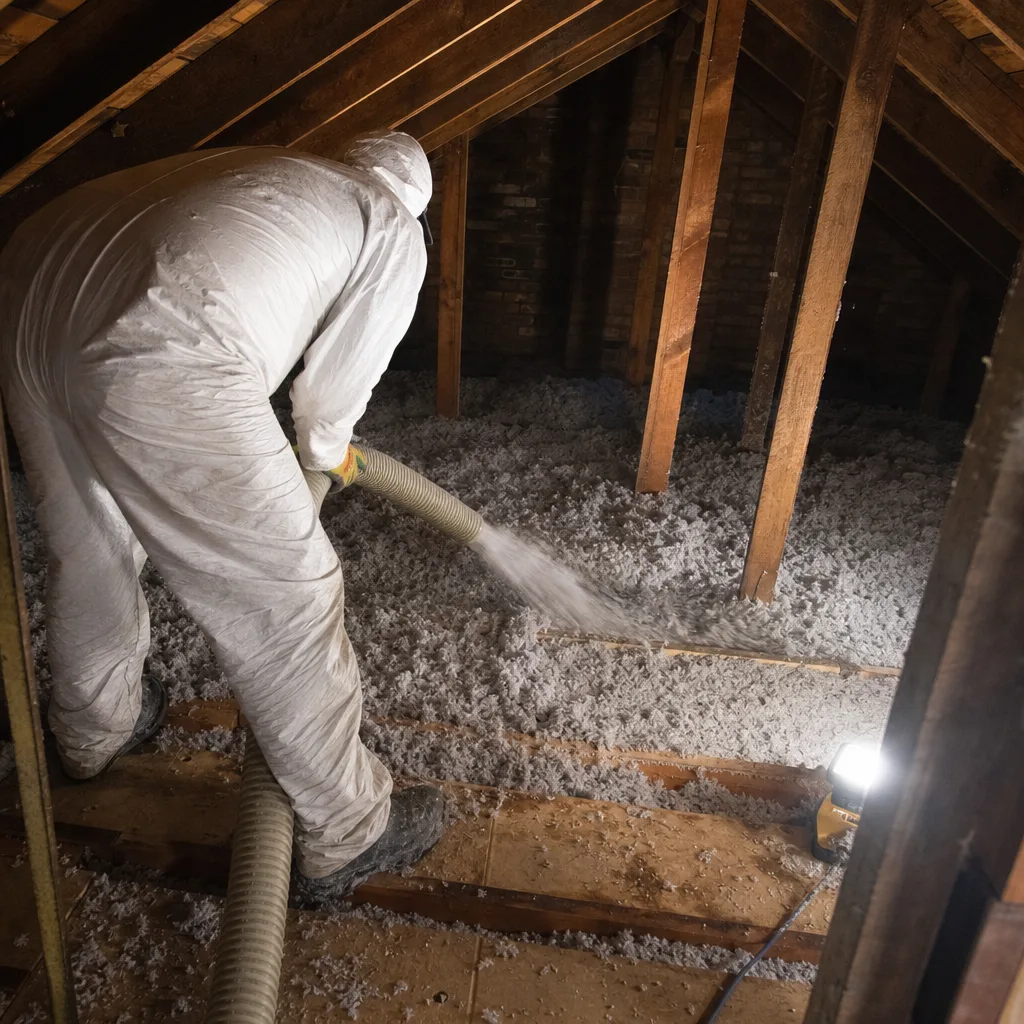
We’ve sealed and insulated more than 9,000 Chicago homes since 2016, and every single one got a written price before work started and a documented record when the crew left. You’ll see the blower-door numbers before and after on any job where air sealing is in scope, so you know what you paid for in CFM50, not in adjectives. If a rim joist full of crumbled fiberglass is the insulation equivalent of leaving a window open all January, our job is to close the window and show you the test that proves it’s closed.
Every tech is background-checked and uniformed. We answer the phone 24/7. We’re not locked into one manufacturer, so if a Johns Manville product isn’t the right fit for your wall assembly, we’ll source from Owens Corning, Rockwool, CertainTeed, or another line, and we’ll say so. And if anything’s not done right, the 365-Day Done Right Promise means we make it right. Seal the holes first. Then add the R-value. The numbers will tell you whether it worked.
FAQs
We’re an independent Johns Manville service provider, so we don’t process manufacturer warranty claims directly, but we install to the manufacturer’s stated specs and document the work so your warranty path stays clean. If a JM product failed due to a manufacturing defect, we’ll tell you and help you through the claim. If it failed because of installation or air movement, that’s on the installer, and we’ll fix it under the 365-Day Done Right Promise.
We schedule most diagnostics within 2-3 business days, and emergency air-sealing or water-damage work can often be same-day or next-day. A live person answers at (218) 261-7714, 24/7. You’ll know when we’re coming, and your tech will text when they’re on the way.
It depends on what we find. If the JM batts are dry, intact, and in the right orientation, topping off or spot-sealing is cheaper. If they’ve settled, gotten wet, or been chewed through, replacement is usually cheaper than continuing to heat a leaky wall cavity. We’ll show you the blower-door numbers and the photo log so you can make the call on evidence, not a sales pitch.
Yes. Dense-packing voids left by settled Spider is a routine job for us, especially in Chicago balloon-frame houses where the top plates were never sealed. We don’t blow new material over an unsealed cavity, period. The air seal comes first, then the insulation, then the post-test.
Written by Wes Okafor, Owner & Lead Building Envelope Technician, Topside Attic Insulation at Topside Attic Insulation, serving Chicago and nearby areas.