
Knauf Blown-In Insulation in Chicago: What to Know First
We install, top up, and remove Knauf blown-in insulation throughout Chicago as an independent contractor, not a manufacturer-authorized dealer. Most Knauf top-up jobs on standard Chicago attic footprints take a single morning, with a written price in your hand before we start. A typical Chicago attic top-up with Knauf Jet Stream Ultra fiberglass runs $1,100 to $2,300 depending on square footage and current R-value, and we’ll show you the blower-door numbers before and after so the performance change is documented, not claimed.
This page is for homeowners in Chicago who own a home insulated with Knauf products and want blown-in insulation installed, supplemented, or replaced correctly. If that’s you, call (218) 261-7714 and a live person answers, not a voicemail tree.
How Knauf Products Fail - and How We Fix Them
Knauf fiberglass is decent material. But we see the same failure patterns in Chicago homes year after year, and they usually have less to do with the product than with how it was installed and what the house did afterward.
- Knauf Jet Stream Ultra settling in cathedral ceilings. This is a lower-density blown fiberglass, and in sloped ceiling cavities with any vibration from wind or traffic, it compacts measurably within three to five Chicago winters. We find the thermal voids with an infrared scan, then dense-pack the cavities with the correct material at the correct pounds-per-square-foot. The fix is a re-blow done right, not a prayer.
- Knauf EcoBatt batts and Knauf blown insulation mixed in the same attic. When a previous contractor topped off old batts with blown Knauf fiberglass without air sealing first, the batts act as a filter, not a thermal barrier. Air moves through them, carrying heat and moisture. We pull the old material, seal the top plates and penetrations, then blow the new insulation to spec.
- Moisture absorption in Knauf Jet Stream Ultra after roof leaks. Blown fiberglass loses R-value fast when it gets wet, and in Chicago’s freeze-thaw cycle, damp insulation against roof decking invites mold before you ever see a stain on the ceiling. We remediate the wet zones, dry the cavity properly, and re-blow only after the envelope is sound.
- Knauf blown-in fiberglass installed over recessed can lights. This is a code issue and a fire-safety issue, not a product defect. In older Chicago homes with non-IC-rated cans, insulation must be dammed back from the fixtures. We build barriers around every can before blowing, then document it in the photo log.
- Attic hatches and scuttle holes left uninsulated. This one isn’t Knauf-specific, but we see it on nearly every Knauf-insulated Chicago attic we test. An uninsulated attic hatch in a 1,200-square-foot ranch can leak more conditioned air than a bedroom window left cracked all February. We build and weatherstrip an insulated hatch cover as part of the job, because a thermal envelope with a hole in it isn’t an envelope.
Our Knauf Blown-In Insulation Process
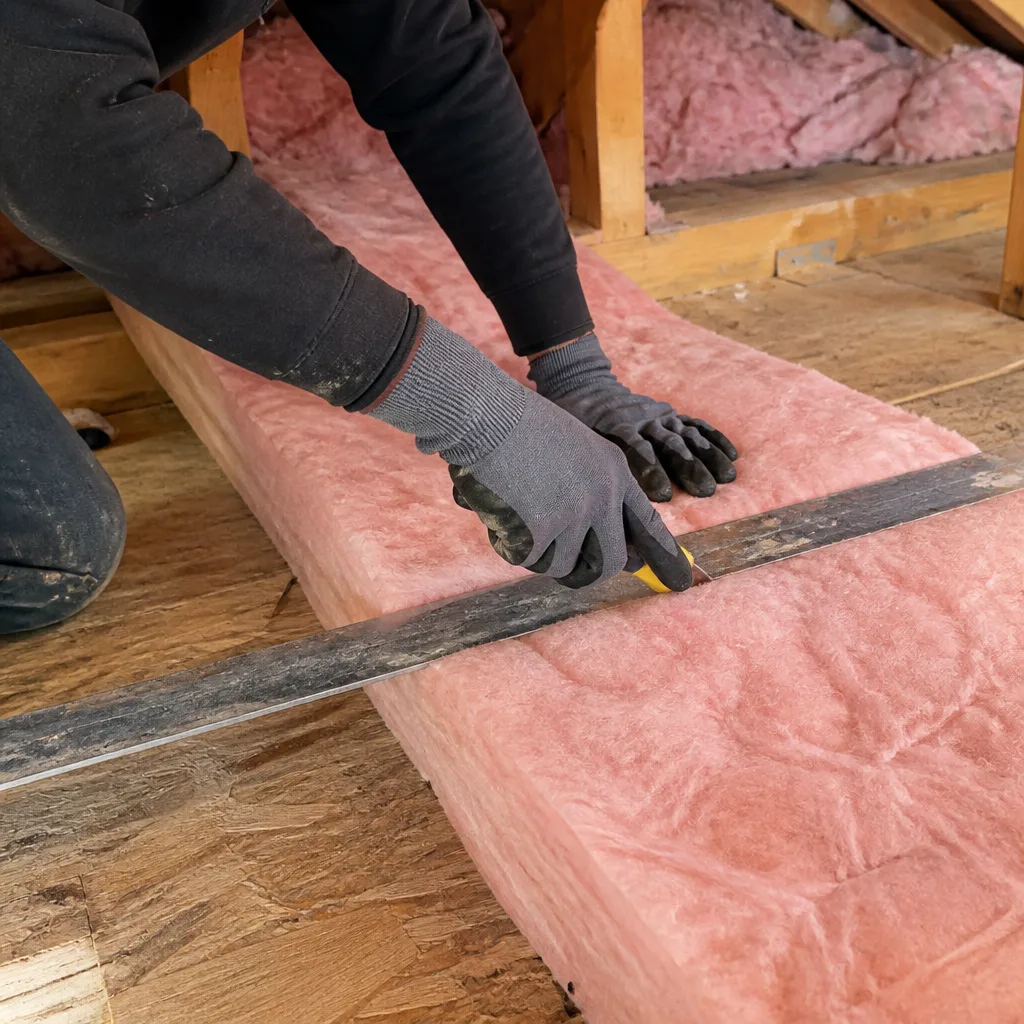
Every Knauf job we run in Chicago follows the same sequence, and that sequence starts before any material leaves the truck.
- 1
The blower-door test comes first. We pressurize the house and record the pre-installation ACH50 reading. That number tells us, and you, how much conditioned air the home was losing before we touched anything.
- 2
Air sealing happens before insulation. Top plates, can lights, plumbing penetrations, flue chases, and any chase that connects the attic to the living space. We never blow Knauf fiberglass over unsealed holes. Ever.
- 3
We establish the target R-value by zone. In Chicago, we typically blow attics to R-49 or R-60 depending on the home’s age and roof configuration. We write the target into the scope before we start.
- 4
We blow to spec, not to “looks full.” Our techs run a tube density check and document the installed inches and R-value in each zone. You get those numbers on a printed report, not a verbal pat on the back.
- 5
We run the blower-door test again. Post-installation ACH50 goes on the same report as the pre-installation number. Seeing 4,200 CFM50 before sealing and 2,100 after is the entire point of the exercise.
- 6
You get a documented record. Photo log of air-sealing locations, installed R-values by zone, pre and post ACH50 readings, and the written warranty. All of it yours before the truck pulls away.
What Knauf Blown-In Insulation Costs in Chicago
Most Knauf blown-in jobs we price in Chicago land between $1,100 and $4,800, depending on what the house needs. The numbers below are real ranges for the common scenarios, not estimate-in-disguise placeholders.
Attic top-up over existing blown insulation, 1,000 to 1,500 square feet: $1,100 to $1,900 depending on how much is already there and what air sealing we find once we’re in the joists.
Full attic re-blow with air sealing, 1,200 square feet: $2,400 to $4,400, because the sealing work is the bulk of the labor and it’s also the part that moves the blower-door number.
Dense-pack sidewall insulation with Knauf fiberglass, per wall section: $1,600 to $4,800 depending on sheathing access, siding type, and how many penetrations need remediation.
The price moves with square footage, ceiling pitch, the level of air sealing required, and whether we’re removing old material. A flat written price, a written scope, and a warranty document are all in your hands before we lift a tool, under Haven Standard Clause 1. Call (218) 261-7714 for a free estimate on your specific Knauf job in Chicago.
Why Chicago Homeowners Call Topside Attic Insulation for Knauf Work
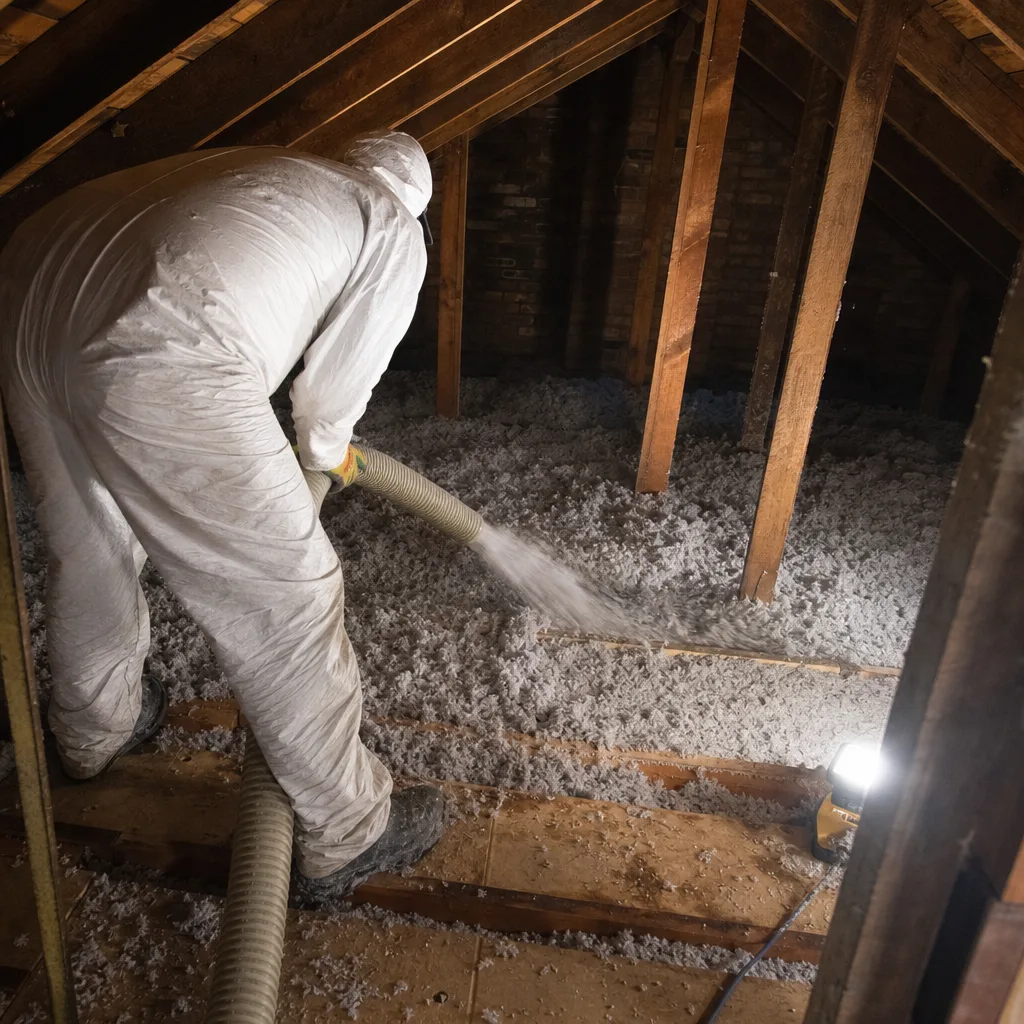
Since 2016, we’ve sealed and insulated over 9,000 homes, and every single one left with a written price before work started and a documented record when the crew left. That’s not a slogan. That’s Haven Standard operating procedure, and it applies to every Knauf blown-in job we run in Chicago.
Wes Okafor grew up on the Northwest Side, about six blocks from the Portage Park field house, and he’s been doing insulation work here for over twenty years. He runs a blower-door test because he was taught at Truman College that air movement and thermal performance are two sides of the same problem, and the data proves it every time. Our techs are background-checked and uniformed, and they know Knauf products the way a mechanic knows a specific engine. And if a Knauf line isn’t the right material for your situation, we’ll say so, we stock and install Owens Corning, Johns Manville, Rockwool, CertainTeed, GreenFiber, and Reflectix when the job calls for it.
We don’t ask you to call for a price. We give you a written price before any work starts. Then we document the result. On every applicable job, before-and-after blower-door numbers are published so you can see the performance change you actually paid for. If it’s not done right under the 365-Day Done Right Promise, we make it right. That’s the entire arrangement.
FAQs
No. Knauf’s fiberglass insulation warranties cover material defects, not installation work, and adding blown-in fiberglass on top of existing Knauf insulation does not void the product warranty. That said, if the existing material has been saturated by a roof leak or heavily compacted, the right move is removal and re-blow, which we’ll document in the written scope before any work begins. Call (218) 261-7714 and we’ll walk through what your specific attic actually needs.
In most cases, we can have a Knauf blown-in top-up complete in a single morning. Air sealing and blower-door testing add time, and we won’t skip them, so a full job with those components typically runs a full day. We schedule by appointment, not by whichever truck is closest.
Re-blowing over existing Knauf insulation is cheaper in materials and labor, and it’s a fine solution when the existing material is dry, uncompressed, and the air sealing is already done. Removal and replacement costs more because of the labor, but when the old insulation is damp, rodent-saturated, or contaminated with old can-light debris, that’s the only option that actually fixes the problem. We’ll tell you which one you need based on what we find, and the written price will reflect that.
Knauf Jet Stream Ultra blown fiberglass delivers approximately R-2.5 to R-2.7 per installed inch depending on settled density. In Chicago attics, that means R-49 requires roughly 18 to 20 inches of installed material, which we verify with a depth gauge and document on your report.
We install and service blown-in insulation across all the major brands used in Chicago homes, including Owens Corning, Johns Manville, CertainTeed, and GreenFiber, plus reflective materials like Reflectix where the application calls for it. No proprietary product lock-in, and no brand loyalty that outweighs what the building science actually says. Call (218) 261-7714 for a free estimate and we’ll work from the data, not a brand playbook.
Written by Wes Okafor, Owner & Lead Building Envelope Technician, Topside Attic Insulation at Topside Attic Insulation, serving Chicago and nearby areas.