
Knauf Attic Air Sealing: The Chicago Owner’s Guide
Knauf attic air sealing in Chicago typically runs $1,800 to $4,200 installed, depending on attic size, access, and how many penetrations need to be sealed. We stock Knauf-compatible air sealing materials on our trucks and can complete most attic air sealing jobs in a single day. If you’re reading this, you’ve probably already found the problem: a Knauf insulation product that isn’t performing, a draft you can’t trace, or an energy bill that climbed despite insulation that looks fine from the hatch. That last one is the story we hear most often in Chicago: the insulation went in, but the air sealing never happened first.
Which Knauf Models This Applies To
Knauf doesn’t sell a standalone “air sealing” product line the way they sell EcoBatt insulation or Jet Stream blown-in fiberglass. The air sealing we do is the preparatory work that makes Knauf insulation actually perform: sealing top plates, can lights, plumbing penetrations, chimney chases, and attic hatches before any Knauf material goes in. This applies to every Knauf attic product: EcoBatt R-30 and R-38 batts, Jet Stream loose-fill, and the Insulation Board line used on attic kneewalls. The compatibility gotcha most Chicago homeowners run into is this: if you’re replacing old insulation and find Knauf batts that look compressed or discolored at the edges, the insulation itself didn’t fail. Air leaked around it. The fix is sealing first, then reinstalling or topping up the Knauf material. There’s no meaningful “OEM vs aftermarket” decision for attic air sealing the way there is for, say, a furnace ignitor. The materials are standard: closed-cell foam sealant, rigid foam board, aluminum tape, weatherstripping. The skill is knowing where Chicago attics leak, and that’s knowledge, not a part number.
Signs Your Knauf Attic Air Sealing Is Failing
- Ice dams forming on the roof edge in January. Warm air from the living space is leaking into the attic, warming the roof deck, and melting snow that refreezes at the eaves. This is the most expensive symptom in Chicago, because roof repair costs more than air sealing ever will.
- Rooms below the attic are 4-6 degrees colder than the rest of the house. Stack effect pulls conditioned air up through unsealed penetrations. The attic insulation can’t stop it. Air sealing can.
- You can see daylight around the attic hatch. A 1/4-inch gap around a 30×54 hatch is a 47-square-inch hole in your ceiling. That’s a single penetration leaking as much air as a window left cracked all winter.
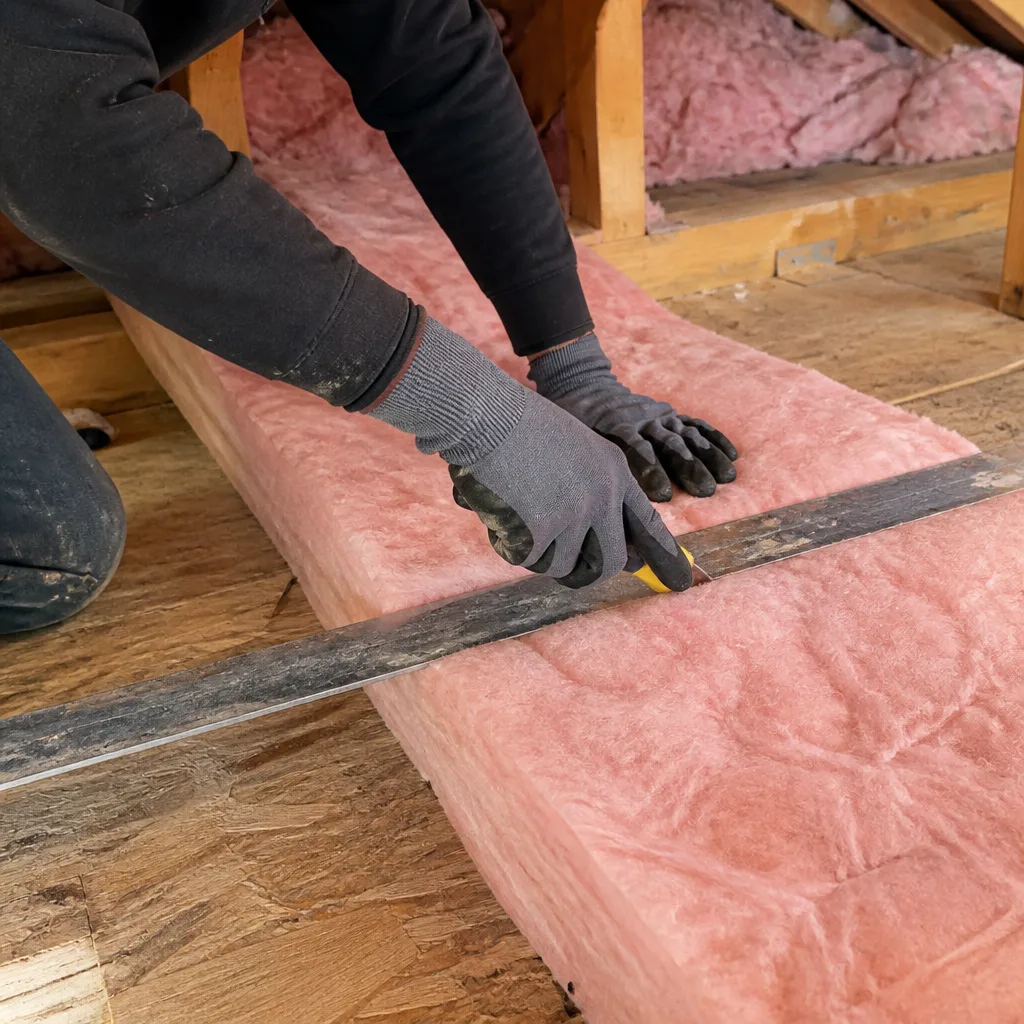
- Fiberglass batts have gray or black streaks along the edges. That’s filtered dust. Air passes through the insulation, and the fiberglass does the filtering. The streaking tells you exactly where the leak is.
- The blower-door number is the quietest sign of all. If a Chicago home tests at 4,500 CFM50 or higher, sealing the attic floor typically drops that figure 15-25% on its own. We publish before-and-after readings on every attic sealing job so you see the change in one number.
Replacement Cost & What’s Included
For a typical Chicago bungalow or two-flat attic, the attic air sealing portion of a job runs $1,800 to $2,600. A larger attic with a finished kneewall space or multiple chases runs $3,000 to $4,200. What drives the range: square footage, attic access (pull-down stairs versus a scuttle hole), how many can lights need sealing, and whether rodent activity has to be addressed before sealing starts. Every job gets a written price before any work begins, per Haven Standard Clause 1. You’ll know the flat price, the written scope, and the written warranty before a tool gets lifted. Afterward, you get a documented photo record of every sealed location plus, on applicable jobs, before-and-after blower-door readings showing the CFM50 change. The work is covered under our 365-Day Done Right Promise: if it’s not done right, we make it right.
DIY or Call Us?
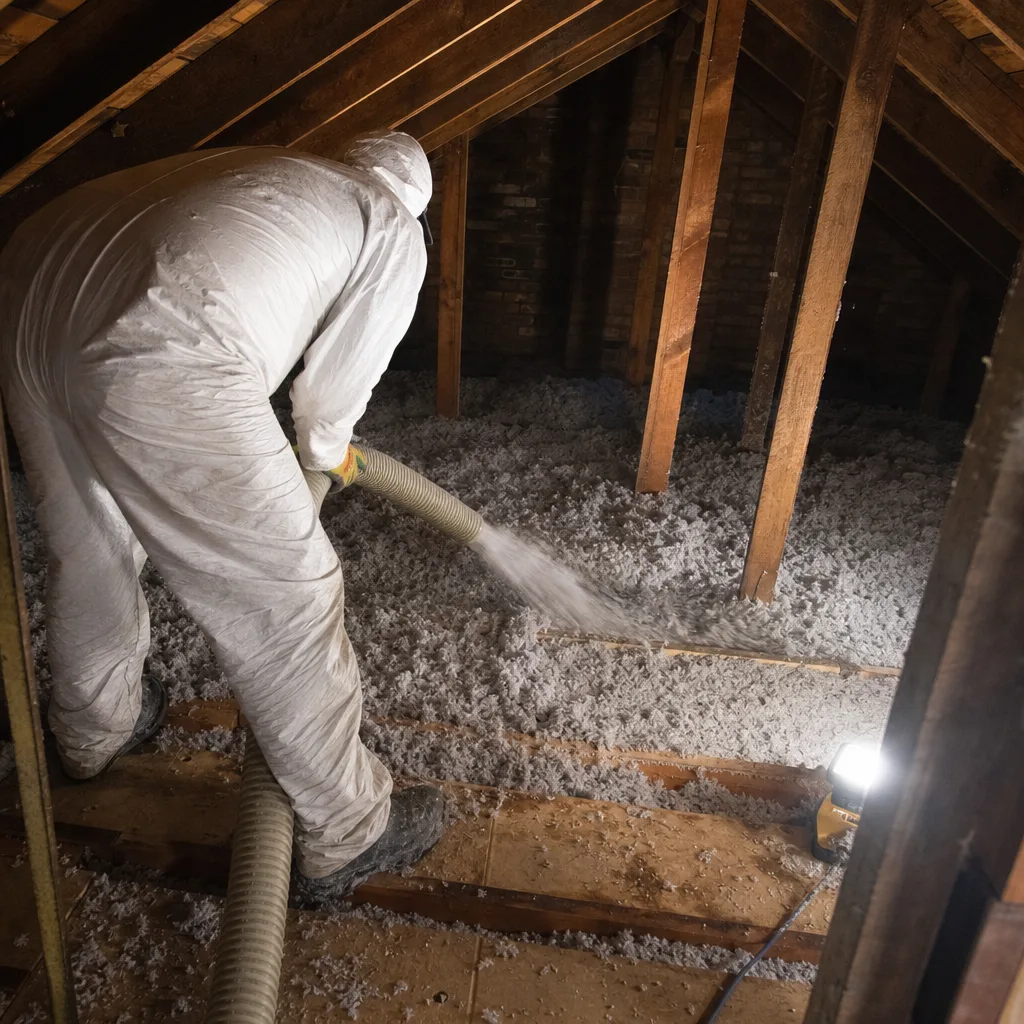
Some of this is safe to check yourself. Walk the attic on a cold day and feel around the top plates, can lights, and the hatch for drafts. Mark what you find with tape. That’s useful information to have when we do the walkthrough. But the work itself is not a weekend project. Attic air sealing means working on your hands and knees in a 120-degree space in July or a 20-degree space in January, over open joist bays, around electrical boxes and recessed cans that can be hot. A slip through the drywall below is a hospital visit or worse. The other reason to call: we run the blower-door test before and after, so you’re not trusting anyone’s word. You’re reading a printed number. If you’d rather have it handled, call (218) 261-7714 and we’ll schedule the walkthrough. A live person answers, 24/7.
FAQs
Properly applied attic air sealing lasts 20 to 30 years in Chicago. Foam sealant and rigid board don’t break down on their own. What shortens the lifespan is moisture from roof leaks, rodent damage, or settling in older homes. In homes built before 1940 with balloon framing, the attic seal can be compromised by air moving through wall cavities years later, which is why we document everything with photos so a five-year follow-up inspection takes ten minutes.
Yes, and most Chicago attics only need partial repair. If the original sealing was done piecemeal, say, a previous owner caulked the hatch but missed the top plates, we seal the gaps from below where accessible. We rarely remove and redo an entire attic seal unless the original work was done wrong or rodents have shredded the foam. Call (218) 261-7714 and we’ll tell you the honest scope after a walkthrough, not before.
Most Chicago attics are sealed in one day, typically six to eight hours for a standard bungalow. A two-flat or a large attic with finished kneewalls can run two days. We arrive with the Knauf materials and sealing supplies on the truck, which means no second visit and no waiting on a parts order.
We keep closed-cell foam sealant, rigid foam board, aluminum tape, and weatherstripping on every truck, sized for standard Chicago attic penetrations: 4-inch and 6-inch can lights, plumbing vents, bath fan boxes, and chimney chases. For Knauf-specific jobs, we also carry EcoBatt and Jet Stream material so we can top up insulation the same day if needed. We also work with Reflectix, Owens Corning, Johns Manville, Rockwool, and CertainTeed, so we’re not locked into any single product line.
Topside Attic Insulation is an independent service provider. We are not affiliated with Knauf or any other insulation manufacturer. We stock and install materials from multiple brands and select based on the home’s needs, the attic configuration, and the documented performance goal for the job.
If you have a Knauf attic that isn’t performing, the fix is almost never more insulation alone. Seal the holes first. Then add the R-value. The numbers will tell you whether it worked. Call (218) 261-7714 for a written price before any work starts. The estimate is free, and it includes the blower-door reading we use to build the scope.
Written by Wes Okafor, Owner & Lead Building Envelope Technician, Topside Attic Insulation at Topside Attic Insulation, serving Chicago and nearby areas.