
Knauf Wall Insulation in Chicago: What to Know First
We provide independent Knauf wall insulation service across Chicago, from drill-and-fill injection in vintage brick bungalows to dense-pack retrofits in newer frame construction. Most wall insulation jobs run two to three days from initial diagnostic to final blower-door verification. For a typical Chicago two-flat or single-family home, expect to spend between $2,800 and $6,400 depending on wall depth, access, and what we find behind the sheathing. Call (218) 261-7714 and we’ll put a written price in front of you before any work starts.
This page is for homeowners who have Knauf insulation already in their walls, or who are weighing Knauf against other brands for a wall insulation project. If your heating bills climb every January and your walls feel cold to the touch in February, the problem is rarely the brand of insulation. It’s usually how it was installed, or what happened to it after.
How Knauf Products Fail - and How We Fix Them
- Knauf Jet Stream Ultra settling and slumping in wall cavities. Jet Stream Ultra is a blown-in fiberglass product that works well when densely packed to spec, but in Chicago we regularly open walls where it was installed at low density and has slumped, leaving an uninsulated band at the top of each cavity. That’s where the heat leaves. We drill access holes, check fill density with a probe, and re-dense cavities that have settled below spec.
- Knauf EcoBatt compression behind vapor barriers in older Chicago frame homes. EcoBatt batts lose R-value when compressed. We see this in 1960s and 70s split-levels on the Northwest Side where someone forced R-19 batts into 2×4 cavities, crushing them to roughly R-11 of real-world performance. The fix is removal and re-insulation with a properly fitted product, plus air sealing at the rim joist and top plate before anything goes back in.
- Moisture wicking in Knauf fiberglass batts along masonry party walls. Chicago’s brick bungalows and two-flats share wall lines with unconditioned space or direct masonry contact. Fiberglass holds moisture against framing, and we’ve pulled Knauf batts from behind bedrooms in Portage Park that were soaked along the bottom twelve inches from condensation alone. We address the moisture path first with air sealing and drainage-plane assessment, then re-insulate with a product suited to the wall assembly.
- Knauf R-13 and R-15 batts installed backward in exterior walls with insulation facing degradation. Batt orientation matters more than most homeowners know. When the facing is pointed toward the exterior in a Chicago winter, you get condensation inside the cavity. We correct orientation, or remove and replace when the facing has deteriorated past usefulness. This is a matter of pulling a few batts in an inspection opening and looking at them.
- Injection foam over Knauf existing fiberglass - the incompatible retrofit. We are occasionally called to fix walls where someone injected foam over older Knauf fiberglass without removing it first. The two materials interact poorly: foam can’t expand properly around the fiberglass, and the result is inconsistent density and air pockets. On those jobs, removal is almost always the answer, then a clean re-insulation to the cavity’s actual depth and condition.
Our Knauf Wall Insulation Process
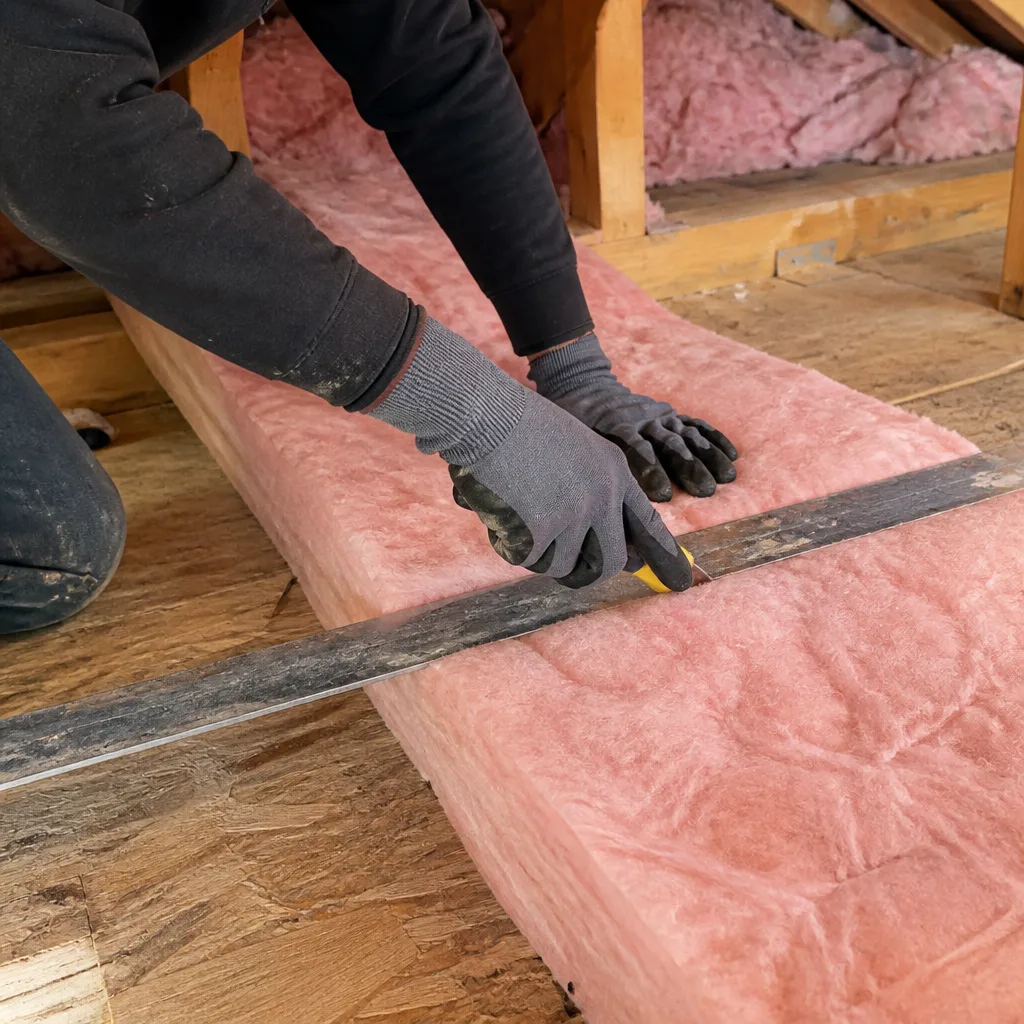
Every Knauf job at Topside Attic Insulation follows the same sequence, and it starts before any insulation is touched:
- 1
Blower-door test first. We pressurize the house and read the air leakage in ACH50. On a Chicago brick two-flat, we typically see 12 to 18 ACH50 before sealing. That number tells us where air is moving through wall cavities, rim joists, and top plates.
- 2
Air sealing before insulation. We seal the top plates, rim joist, can lights, and penetrations first. Knauf insulation performs to its rated R-value only when air isn’t moving through the wall assembly. Sealing first is the only order that makes sense.
- 3
Wall inspection. We open access points and document what’s in the cavities: brand, condition, density, moisture, and any wiring or plumbing we need to work around. Photos go in the job file, and you see them before we quote.
- 4
Knauf-specific install or repair. Whether it’s dense-packing Jet Stream Ultra, re-fitting EcoBatt, or replacing degraded batts, the work follows the manufacturer’s stated density and coverage specs. We are an independent Knauf service provider, not a factory-authorized shop, so our allegiance is to what the wall actually needs.
- 5
Verification and documentation. After the walls are sealed and insulated, we run the blower-door again and compare the numbers. You get both readings on the report, along with installed R-values by zone and a photo log of the sealing locations. No exceptions.
What Knauf Wall Insulation Costs in Chicago
Here are the price ranges we quote most often for Knauf wall work in Chicago:
- Drill-and-fill dense-pack in an existing wall line (Jet Stream Ultra or equivalent): $1,800 to $3,400 per floor, depending on wall height and access.
- Full wall insulate-and-seal on a standard Chicago bungalow exterior wall (all four sides, air sealing included): $4,200 to $6,400.
- Targeted cavity repair where Knauf insulation has settled or gotten wet: $600 to $1,800, depending on how many cavities and what we find.
- Interior wall soundproofing with Knauf EcoBatt plus air sealing: $2,000 to $3,500 for a typical party wall.
What moves the price is access. Knauf work on a third-floor walk-up with a garden unit below costs more than a single-story bungalow. The blower-door test, the written scope, and the guarantee are included in every price we quote. Call (218) 261-7714 and you’ll get a written number, not an estimate that drifts.
Why Chicago Homeowners Call Topside Attic Insulation for Knauf Work
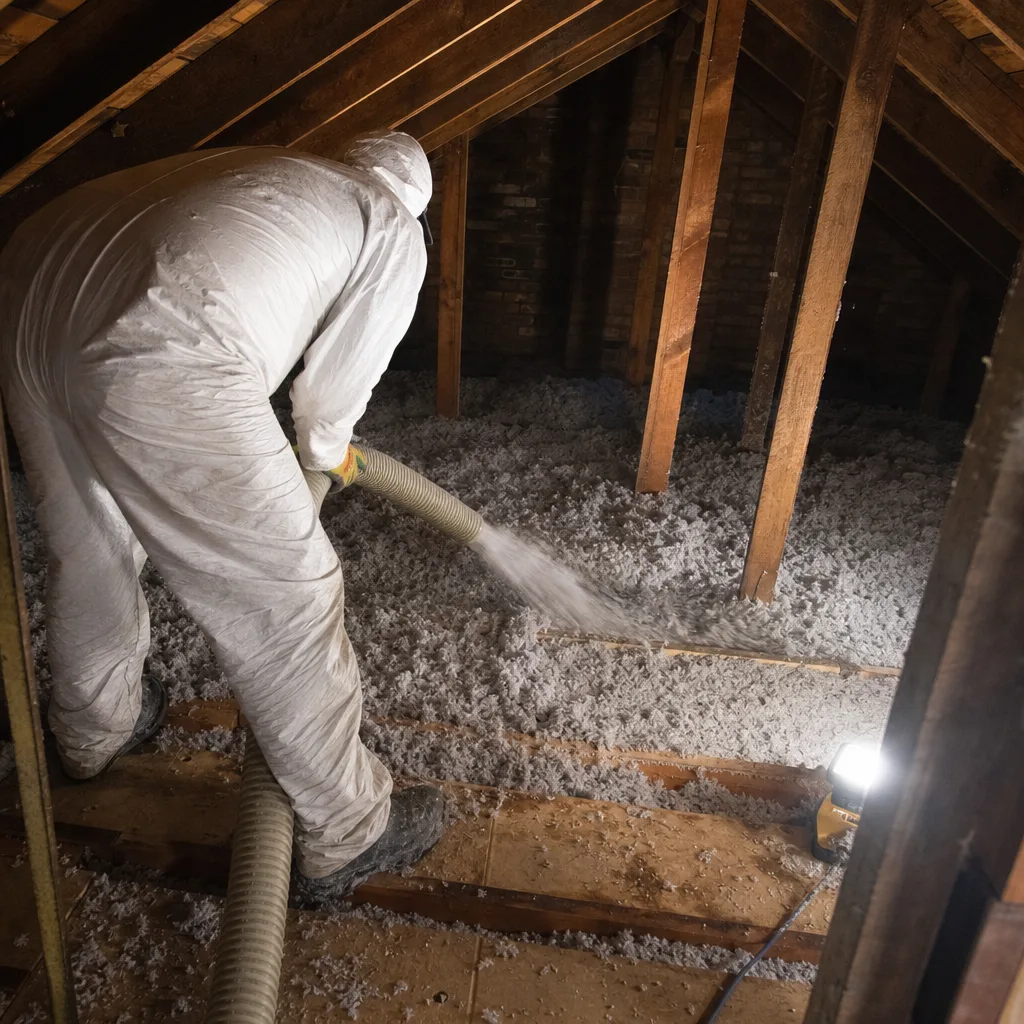
Wes Okafor has been doing insulation work in Chicago for over twenty years, and he runs the blower-door before any material goes in - that’s just how he builds a scope. We also service Reflectix and other wall products, so if a wall line contains a mix, we work with what’s there rather than insisting on a tear-out. Every job gets the Haven Standard: written scope before work starts, a documented photo record when we leave, and before-and-after air leakage numbers printed for you. If it’s not done right within 365 days, we make it right. That’s the promise, and it’s in writing.
FAQs
Knauf fiberglass products are generally non-warranted against installation errors, and working with an independent contractor does not void any applicable manufacturer warranty on the material itself. Our work carries the 365-Day Done Right Promise in writing.
Usually, repair is cheaper if the majority of the cavities are still full and dry - targeted drill-and-fill runs $600 to $1,800. You’re into full replacement territory on a standard bungalow between $4,200 and $6,400. The blower-door test is what tells us which path applies.
Yes. If you have EcoBatt or Jet Stream Ultra in part of a wall and need the rest brought to the same product, we can match it. Where the existing Knauf is degraded, we’ll show you photos and talk you through what replacement actually buys you before any quote is issued.
Most wall insulation jobs get scheduled within a week. A live person answers our phones 24/7 at (218) 261-7714, and if you have a wall open for another contractor, we can get a diagnostic done same-day.
Yes, on every applicable job. You get the pre-install and post-install ACH50 readings printed on your report. That’s the number that tells you whether the work actually stopped air movement - not just whether insulation was added.
Written by Wes Okafor, Owner & Lead Building Envelope Technician, Topside Attic Insulation at Topside Attic Insulation, serving Chicago and nearby areas.