
Knauf Home Energy Audit in Chicago: What to Know First
A Knauf home energy audit in Chicago starts with a blower-door test, a calibrated pressure reading that shows exactly how much outside air is moving through your building envelope, followed by a thermal imaging pass and a written report naming every air leak and insulation gap we found. We schedule most audits within 3 to 5 business days, and the audit itself runs 2 to 4 hours depending on house size. The audit costs between $295 and $495 for a standard Chicago single-family home, and that price is written down before we set the date.
This page is for Chicago homeowners who have Knauf insulation in their attics, walls, or rim joists and want to know whether it’s actually performing. If you’ve noticed rooms that won’t hold temperature, heating bills climbing for no obvious reason, or drafts near baseboards in January, call us at (218) 261-7714.
How Knauf Products Fail - and How We Fix Them
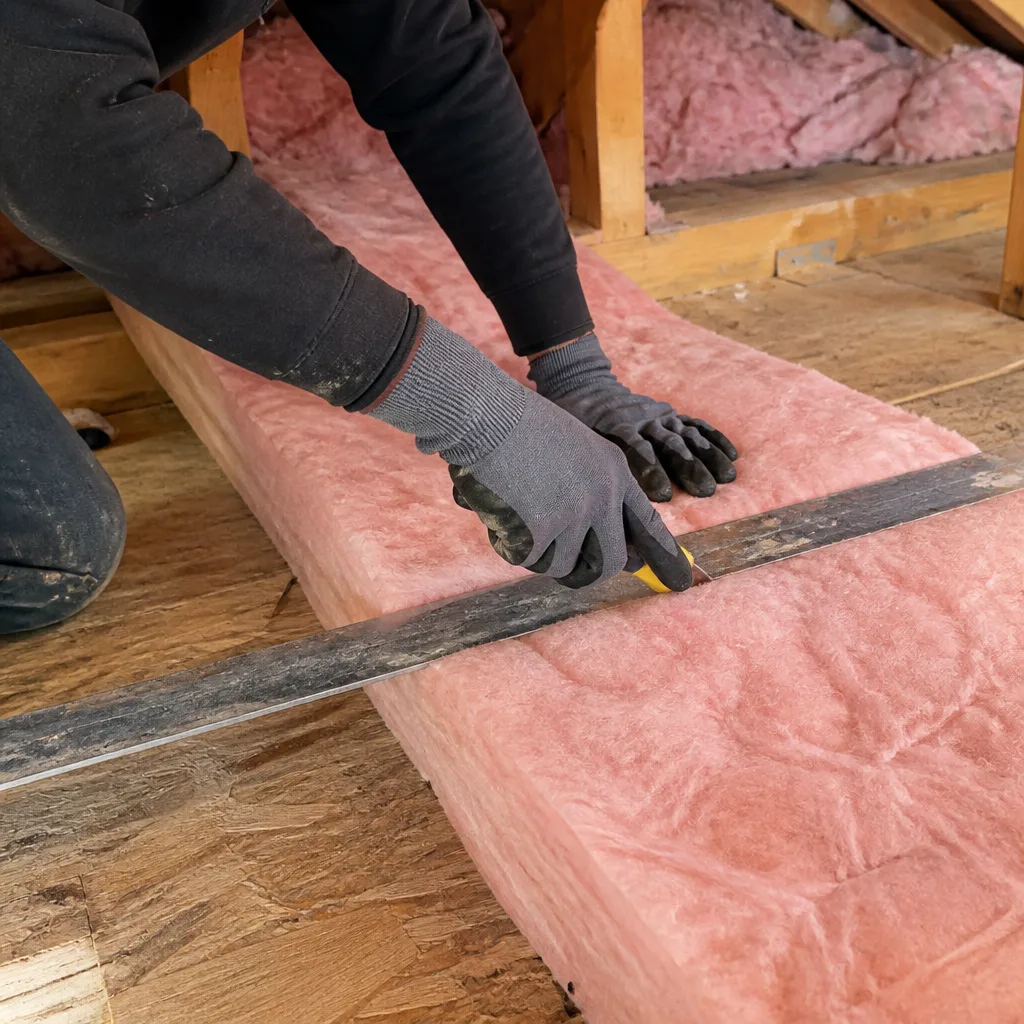
- Knauf EcoBatt fiberglass batts in vented attics with no air sealing below. Homeowners install R-38 or R-49 EcoBatt and assume the attic is done. Then winter comes and the second floor won’t hold heat. The problem is rarely the batt itself. It’s the unsealed top plates, wire penetrations, and recessed can lights underneath it. Air moves through the batt like it isn’t there. In Chicago attics we routinely read 3,800 to 5,200 CFM50 on houses with fresh-looking EcoBatt. Our fix: pull the batts back, air seal the attic floor, reset the batts. That’s the order the job has to happen in. No exceptions.
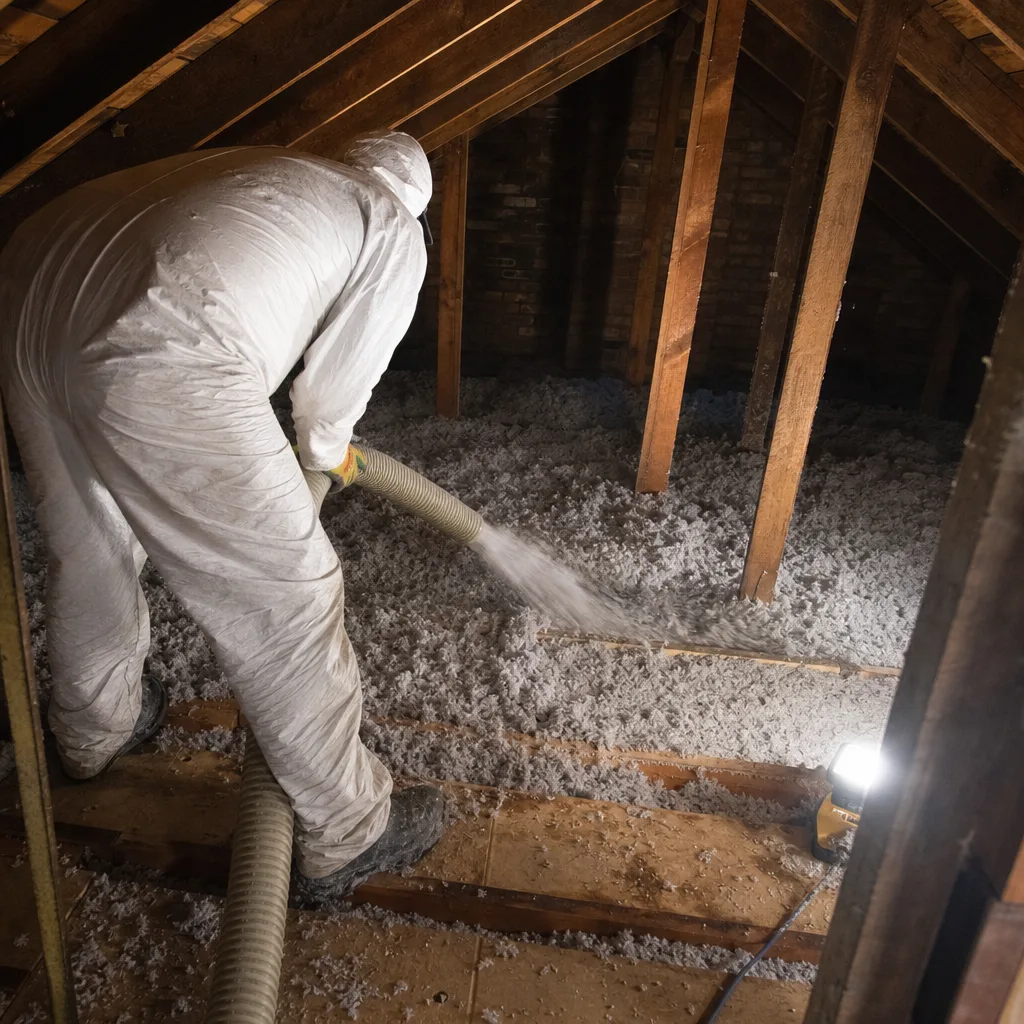
- Knauf Jet Stream blown-in fiberglass that has settled below the top of the ceiling joists. Jet Stream is installed loose over the attic floor. Over five to ten Chicago winters, it settles. We’ve measured settled depths of 6 to 7 inches where install specs called for 14. That’s R-19 performing where R-38 was paid for. On an audit, we document actual settled depth and use the blower-door reading to show how much of the heat loss is the settled insulation versus air leaks elsewhere. Then we quote a top-up or a full removal-and-replace, depending on what the numbers show.
- Knauf R-13 faced batts in rim joist cavities, compressed into place. This is one Wes sees constantly. A rim joist bay is 14.5 inches wide and 9 to 11 inches deep. Compressing R-13 fiberglass into that space cuts its R-value by roughly a third, and fiberglass doesn’t stop air movement anyway. In Chicago basements, the rim joist is a major air infiltration point. We open one bay during the audit and show the homeowner what’s actually in there. The fix is usually two inches of closed-cell spray foam at the rim, then the batt reset properly.
- Knauf insulation in walls installed without dense-packing in a balloon-frame Chicago home. Balloon framing means wall cavities run open from the basement rim joist to the attic. If fiberglass was shoved into those cavities loose, air moves through the entire wall stack like a chimney. We see this most often in bungalows and two-flats built before 1940. The blower-door test usually comes back at 12 to 18 ACH50 on these houses. The fix is dense-packing the cavities, but only after the attic and rim joist air sealing are done.
- Knauf batt insulation installed under floors over unheated crawl spaces, falling out or sagging. In Portage Park, Jefferson Park, and Norwood Park, we see batt insulation held up with wire rods or just friction fit. It sags, fiberglass gets exposed to crawl space moisture, and the floor above gets cold. The audit catches this with thermal imaging: cold bands across the living room floor where the batts have dropped. Fix is usually foam board or spray foam at the rim and replacement batts with proper mechanical support.
Our Knauf Home Energy Audit Process
- 1
Call, get a written price, pick a date. We answer the phone 24/7. You get a flat price for the audit before you schedule anything. No ranges, no “depends on what we find.” Haven Standard: Have it in writing.
- 2
Walkthrough and baseline. On the day of the audit, the tech walks every room, attic access, and the basement with you. We note existing insulation, visible gaps, and any Knauf product you know was installed.
- 3
Blower-door test. A calibrated fan mounts in your front or back door frame, depressurizes the house to 50 pascals, and reads the airflow in cubic feet per minute. We write down the number in front of you.
- 4
Thermal imaging pass. With pressure on the house, we scan walls, ceilings, outlets, rim joists, and the attic hatch with an infrared camera. Air leaks show up as temperature streaks. We photograph every finding.
- 5
The duct leakage test if needed. If our thermal pass flags supply ducts running through unconditioned space, we run a duct blaster test. In older Chicago homes, we’ve seen duct systems losing 30 to 40 percent of conditioned air into the attic.
- 6
Written report and scope. You get the full report: pre-installation ACH50 reading, thermal images with callouts, R-values by zone, what failed, and a written scope of work with flat pricing. If you decide not to move forward, the report is yours to keep.
What Knauf Home Energy Audit Costs in Chicago
A standalone home energy audit in Chicago runs $295 to $495 depending on square footage, number of floors, and whether we’re also testing ductwork. Here’s the breakdown of typical jobs:
- Standard single-family, 1,200 to 2,000 sq ft, attic access, no duct test: $295 to $395
- Larger home over 2,500 sq ft or bungalow with balloon framing: $395 to $495
- Duct leakage test add-on: $150 to $195
- Thermal imaging only, no blower door (rare, typically for spot issues): $195 to $295
What moves the price is access: if your attic hatch is small or the scuttle is in a tight closet, the job takes longer. Call (218) 261-7714 and we’ll give you a flat number before you hang up, plus a date. That price is written. It doesn’t change.
Why Chicago Homeowners Call Topside Attic Insulation for Knauf Work
We’ve sealed and insulated more than 9,000 Chicago homes since 2016, every one with a written price before work started and a documented record when the crew left. Before-and-after blower-door numbers are published on every applicable job, so you see exactly what changed, in one number, above what you paid for. Our techs are background-checked and uniformed, and the person who answers the phone at 2 a.m. is the same person who answers at noon. We work with insulation from Knauf, Owens Corning, Johns Manville, Rockwool, CertainTeed, and Reflectix, so there’s no one product we’re married to. Seal the holes first. Then add the R-value. The numbers will tell you whether it worked.
As an independent Knauf service provider, we are not affiliated with or authorized by Knauf. That’s actually the point. We’re paid to tell you what’s wrong, not to sell you more of one brand’s material. If the existing Knauf insulation is doing its job, we’ll say so.
FAQs
No. A diagnostic audit does not alter or remove your insulation. We’re measuring it and documenting its condition. What voids warranties is improper modification or installation. As a practical matter, most insulation warranty claims fail because of improper installation, not product failure. Our audit documentation is useful if you ever do need to pursue a claim.
In most cases, yes, provided we have a blower-door and thermal imaging tech available. Same-day audits in Chicago are scheduled on a first-call basis. Call (218) 261-7714 to confirm today’s availability.
Depends on what the audit shows. Settled blown-in Knauf Jet Stream can often be topped up for less than $900, while compressed or moisture-failed batts in rim joists usually need removal and replacement with spray foam and new batts, which runs $1,800 to $4,200 depending on linear feet. We’ll only recommend replacement when the numbers support it. Flat, written pricing either way.
Typical attic air sealing in a Chicago home runs $1,200 to $2,800, including the top plates, can lights, and penetrations. Rim joist sealing runs $1,800 to $3,500. We do the sealing before any insulation gets added or replaced. Never the other way around.
A printed report with the pre-installation ACH50 reading, thermal images with locations, installed R-values by zone, a photo log of every air-sealing location found, and a written scope of work with flat pricing if you choose to move forward. The report is yours, regardless of whether you hire us for the fix.
Written by Wes Okafor, Owner & Lead Building Envelope Technician, Topside Attic Insulation at Topside Attic Insulation, serving Chicago and nearby areas.