
Knauf Crawl Space Encapsulation: The Chicago Owner’s Guide
We stock and install Knauf-compatible crawl space encapsulation materials across Chicago, with most full encapsulation jobs in a standard 1,200-square-foot crawl space running between $3,800 and $6,500 installed. That price includes the vapor barrier, seam taping, pier wrapping, and rim-joist sealing, and we can typically schedule the work within 5 to 7 business days of the initial inspection. Most Chicago homeowners discover their encapsulation has failed when they notice a musty smell coming through the floorboards, humidity readings above 60% in the crawl space, or condensation on ductwork that runs through the space.
Knauf’s encapsulation liners, particularly the 10-mil and 12-mil polyethylene reinforced products, fail more predictably than most people expect. In Chicago’s freeze-thaw climate, the real culprit is usually not the liner itself but the seam tape and mechanical fasteners, which lose adhesion when the crawl space cycles between damp summers and cold, dry winters. We see the same pattern in Jefferson Park, Beverly, and Portage Park: the liner is intact, but the seams have peeled open and moisture is wicking through every separation.
Which Knauf Models This Applies To
Knauf’s crawl space encapsulation line is smaller than their insulation catalog, but the naming conventions matter for compatibility. The two products we most often match to existing installations are the Knauf Insulation Crawlspace Blanket, a fiberglass batt with a vapor-retarder facing designed for foundation walls, and the Knauf EcoSeal system, a water-based elastomeric sealant used at the rim joist and sill plate. If your liner is a white or silver reinforced polyethylene sheet, it may be a Knauf 10-mil or 12-mil liner, and the seam tape and termination fasteners are where failures start.
Here’s the compatibility gotcha most Chicago homeowners run into: Knauf’s Crawlspace Blanket uses a kraft-paper facing with a specific flame-spread rating, and substituting a generic fiberglass batt from a big-box store changes your fire-code compliance. The facing is not decorative; it is part of the assembly’s rating. When we arrive at a home in Lincoln Square or Edison Park, the first thing we do is read any printed label still visible on the liner or batt, then measure the stud cavities and pier spacing. Knauf products come in 16-inch and 24-inch on-center widths, and using the wrong width means the vapor barrier either sags away from the wall or gets punctured by fasteners that miss the framing entirely.
For OEM versus aftermarket, the honest answer depends on which part failed. Knauf’s seam tape is a butyl-based adhesive with a specific elongation rating, and cheap acrylic tapes from hardware stores will not hold through a Chicago winter. Aftermarket 12-mil reinforced liners from suppliers like Raven or Americover generally perform as well as the Knauf original, provided the install details are right. We stock both OEM Knauf components and quality aftermarket equivalents on the truck, and we do not have a proprietary lock-in with any brand. We also keep Reflectix radiant barrier on hand for rim-joist applications where condensation control is the primary concern.
Signs Your Knauf Crawl Space Encapsulation Is Failing
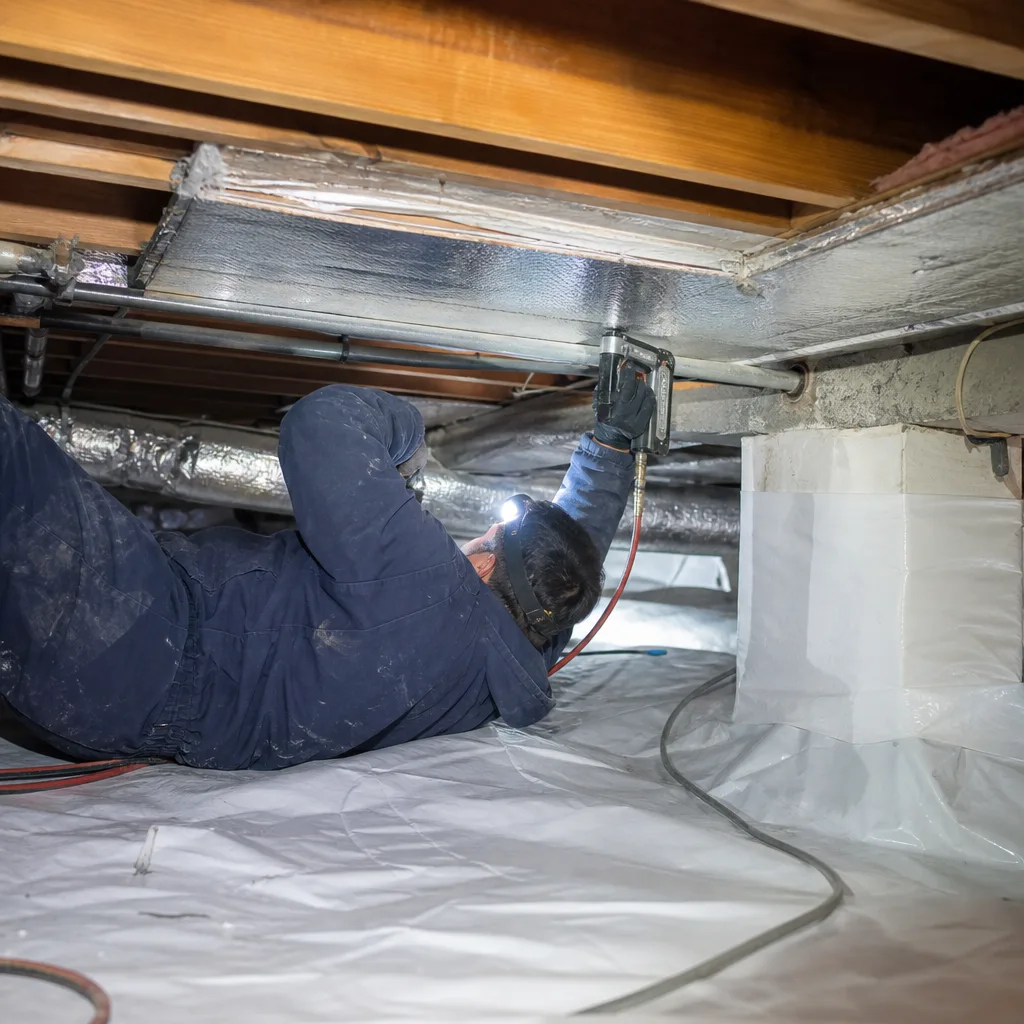
- Musty odor through the floorboards. This is the most common first sign, and it usually means a seam has separated or the liner has torn, allowing soil moisture to evaporate into the crawl space air. The smell rises because warm air in the house pulls air up from below, so a failed liner essentially turns your crawl space into a humidifier under the floors.
- Condensation on ductwork or floor joists. When the encapsulation barrier stops doing its job, relative humidity in the crawl space climbs, and the first cool surfaces to collect water are exposed metal ducts and the underside of the subfloor. In a Chicago August, a crawl space with a failed liner commonly reads 75% to 85% relative humidity, while a properly encapsulated one should stay below 60%.
- Visible sagging or pooling in the liner. Pooled water on top of a liner means the liner is holding water that should be draining or evaporating elsewhere, which points to a grading or drainage issue rather than a liner failure. Sagging away from foundation walls means the mechanical fasteners have pulled out of the concrete or block, which we see frequently in older Chicago homes where the foundation walls are soft lime mortar.
- Rusted or corroded pier plates and anchors. The steel plates that sit on top of crawl space piers rust when moisture is present year-round, and once they begin flaking, the structural connection is degrading. This is a long-term consequence of a failed encapsulation system, not an overnight failure, but it is the single most expensive downstream repair if left alone.
- Visible gaps at the top of the foundation walls. The termination point where the liner meets the rim joist is the highest-failure location in any encapsulation system, because this is where bulk water from the exterior meets the interior air barrier. In Chicago homes with concrete block foundations, the top course of block often wicks moisture from the outside, and a liner that has pulled away from the rim joist is letting that moisture enter the crawl space unchecked.
Replacement Cost & What’s Included
A full Knauf-compatible crawl space encapsulation replacement in Chicago runs between $3,800 and $6,500, depending on three things: the square footage of the crawl space, whether the foundation is concrete block or poured concrete (block holds fasteners worse and requires more mechanical anchoring), and whether rim-joist air sealing is part of the scope. The materials, which include the 12-mil liner, butyl seam tape, termination bars, and pier wrap, account for roughly 30% to 40% of the total; the labor to properly clean, level, and seal the space is where the real cost lives.
Every quote we write follows Haven Standard Clause 1: a flat price, a written scope that lists the exact materials and the areas to be covered, and a written warranty before anyone lifts a tool. Our work carries the 365-Day Done Right Promise: if the encapsulation is not doing what it was scoped to do within a year, we come back and make it right at no charge. You also get a documented photo record on the day of installation, because you should be able to see the seam you paid to have taped.
DIY or Call Us?
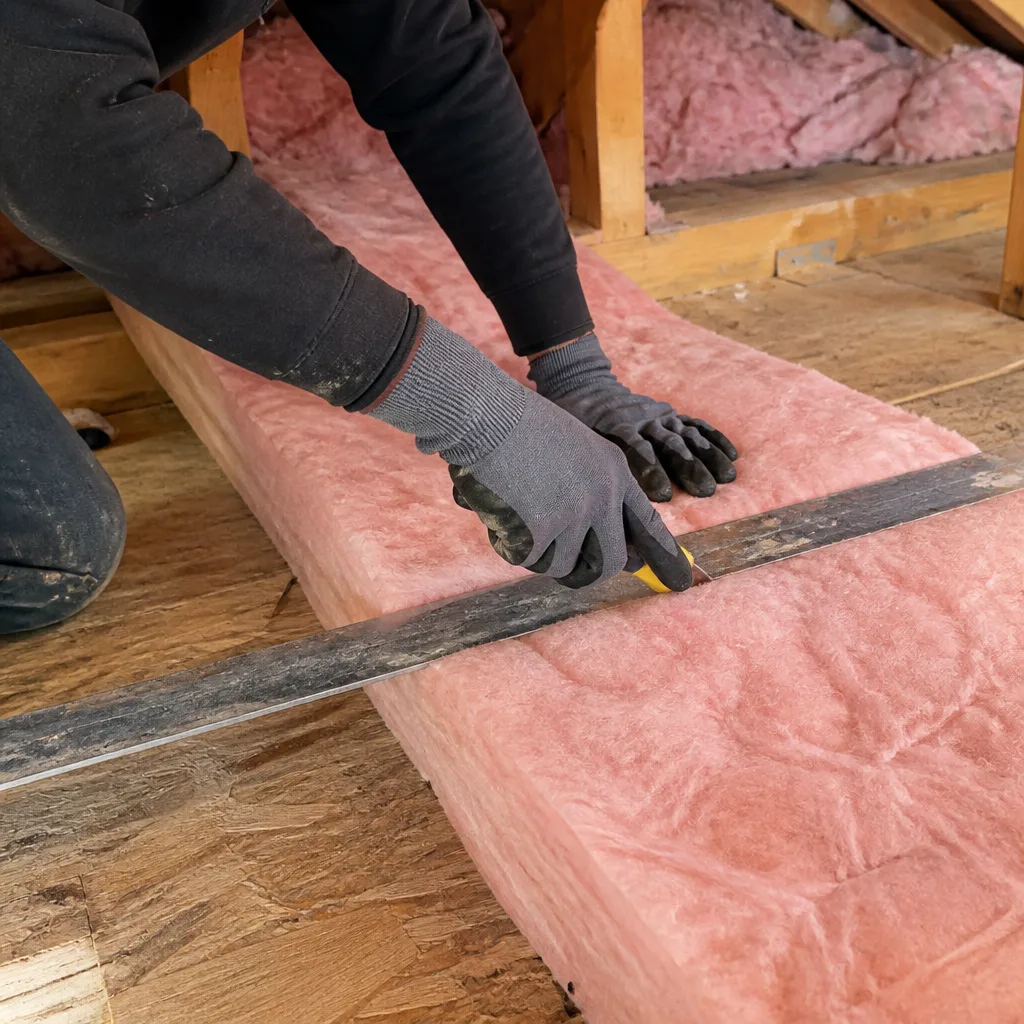
Encapsulation materials are not hazardous to handle the way high-tension springs or electrical panels are, so an experienced homeowner can inspect their own crawl space safely. You can check for separated seams, loose fasteners, tears along pier bases, and any standing water with a flashlight and a moisture meter from the hardware store. What is not safe to DIY in most Chicago crawl spaces is the structural work: worn-out pier shims, crumbling block, or a floor system that has been compromised by years of moisture. That work requires a trained eye and, in some cases, an engineer.
What we find when we take over a DIY encapsulation is usually not bad liner work; it is missing preparation. If the ground under the liner was not graded and raked flat, the liner will stretch and tear at high points. If the rim joist was not cleaned and dried before the sealant went on, the sealant fails within a season. That is why we run a pre-installation inspection that includes a relative humidity reading and a visual survey of every seam before we quote the work. If you have already attempted a repair and it is not holding, call us at (218) 261-7714 and we will come out, read the space, and tell you exactly what failed and why.
FAQs
A properly installed Knauf-compatible encapsulation system should last 12 to 15 years in a Chicago crawl space, with the liner itself outlasting the seam tape and mechanical fasteners by 5 to 8 years. The failure point is almost always the tape and the fasteners, not the polyethylene, which is why we include a documented photo record of every seam so you can see the condition of the materials you paid for. Call (218) 261-7714 to schedule an inspection if your liner is more than 10 years old.
Yes, most failed encapsulations can be repaired, and a full replacement is only necessary when the liner has torn in multiple places, when the ground underneath has settled and needs regrading, or when the rim-joist seal has failed around the entire perimeter. The average Chicago repair, which usually involves re-taping separated seams and replacing pulled-out fasteners, runs between $400 and $900. We will tell you plainly whether your space needs a repair or a replacement, and the written scope will show you the difference in cost before you commit.
A full encapsulation in a standard Chicago crawl space takes one to two days, including all prep work, liner installation, seam taping, pier wrapping, and rim-joist sealing. Larger homes in neighborhoods like Sauganash or Mount Greenwood with complex foundation layouts may take three days. You will get a start date and a named technician before we arrive, and a text when the crew is on the way, per the Haven Standard.
We stock Knauf-compatible 10-mil and 12-mil liners, butyl seam tape, termination bars, mechanical fasteners, and pier wrap on every truck, so most repairs are completed the same day we diagnose the failure. If your job requires a specialty Knauf component we do not carry, we order it and schedule the work within the week, and the written quote will show you the lead time before you pay anything. Call (218) 261-7714 for a free estimate; a live person answers, and the estimate is in writing before any work starts.
Written by Wes Okafor, Owner & Lead Building Envelope Technician, Topside Attic Insulation at Topside Attic Insulation, serving Chicago and nearby areas.