
Rockwool Attic Insulation: The Chicago Owner’s Guide
Rockwool attic insulation installed in a typical Chicago attic runs between $1,800 and $4,200 depending on square footage and depth, and we stock Rockwool-compatible batts and boards on our trucks for same-week installation. Most homeowners discover their attic insulation has failed when they notice a room that won’t hold temperature in January or a heating bill that climbed 30 percent over two winters without explanation. The insulation itself rarely announces the failure; the house does.
What we typically find when we get into a Chicago attic is Rockwool that was installed correctly fifteen years ago but has been compromised by roof leaks, rodent traffic, or one poorly sealed bathroom vent that’s been dumping moist air into the fiber since the Obama administration. The material is dense and durable, but it’s not invincible. When a section gets wet, it loses its loft and its R-value drops fast. When critters nest in it, they compress it down to something closer to a welcome mat than insulation. Wes Okafor, our lead building-envelope technician, has pulled Rockwool batts out of attics that crumbled in his hands like stale biscotti.
Which Rockwool Models This Applies To
Rockwool’s attic lineup splits into two families: the batt products (Comfortbatt, Safe’n’Sound, and the newer Comfortboard series) and the loose-fill granulate (Rockwool Comfortloft or the older Jet Stream). The batts are what most Chicago homeowners have between their attic joists; the boards are more common in cathedral ceilings and cantilevered bays. Each has a different failure signature and a different replacement path.
Identifying what you have is straightforward: pull back the hatch insulation and read the printed facing. Rockwool batts carry a white or green face with the R-value and product name printed along the edge every 16 to 24 inches. If the facing is gone or unreadable, measure the batt thickness against the joist depth. A true R-30 batt runs 9.5 inches deep; R-38 runs 12 inches; R-60 runs 15.25 inches. If you’re in a 1920s Chicago bungalow with 2×6 ceiling joists, you’re almost certainly looking at R-19 or R-23 batts that were never deep enough for this climate to begin with.
One compatibility gotcha we see weekly: Comfortbatt is a high-density friction-fit product. It’s designed to be compressed slightly into a cavity and held by friction, not stapled. If someone previously installed it with staples through the face, the batts are no longer performing as tested. Air moves around the staple lines. We won’t top off a staple-punctured batt job with new material; we pull it and start clean. As for OEM versus aftermarket: Rockwool is the name on the product, but the company’s attic batts are commodity insulation, not proprietary parts. Any code-compliant mineral wool batt with the same R-value and thickness works. We source from Rockwool, Owens Corning, Johns Manville, Knauf, CertainTeed, Icynene, Demilec, GreenFiber, and others, including Reflectix for radiant-barrier applications. We select the material based on your attic’s specific conditions, not a brand contract. Topside Attic Insulation is an independent service provider, not affiliated with Rockwool.
Signs Your Rockwool Attic Insulation Is Failing
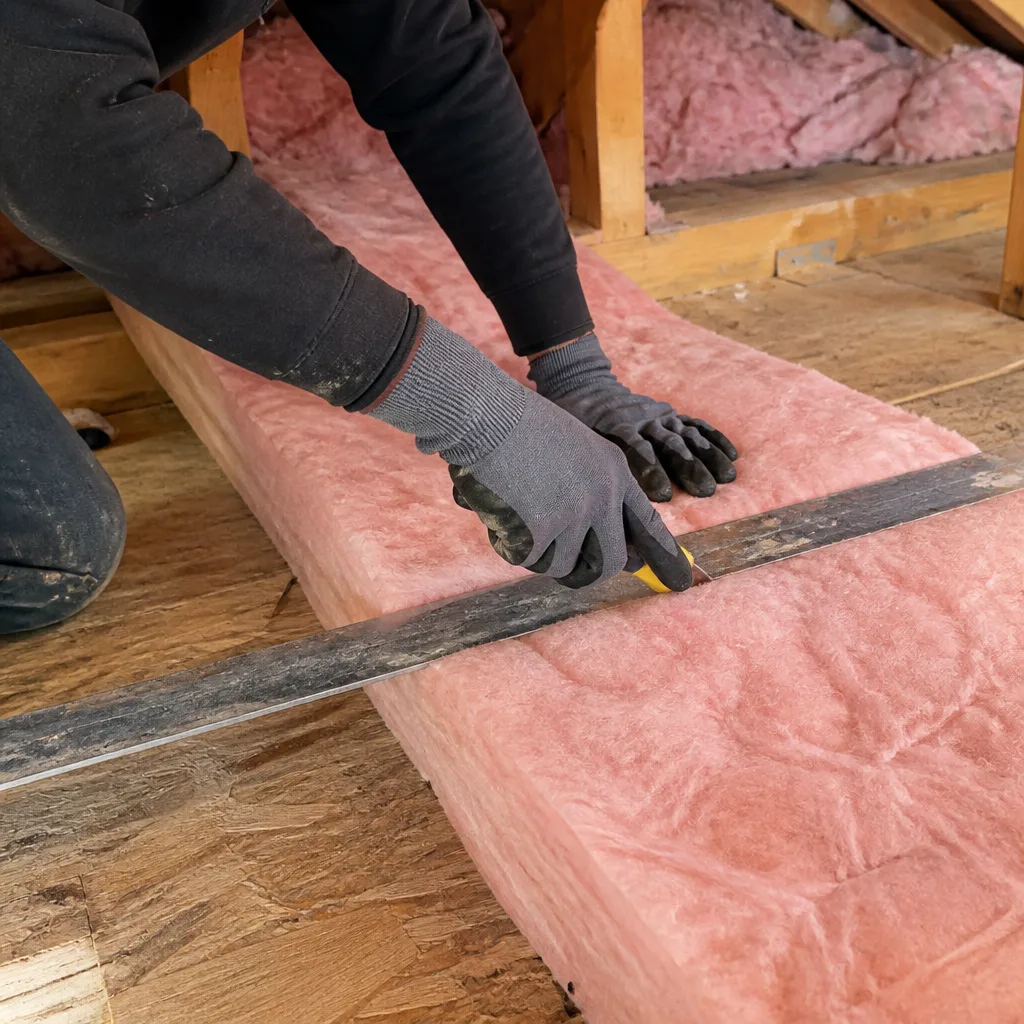
- Cold bedrooms directly below the attic, even with the heat running. This usually means the batts have been compressed by foot traffic or storage, and their R-value has dropped below what the ceiling needs. Compression is the most common silent killer of mineral wool in Chicago attics with finished storage decks.
- Wet or mold-stained batts near the eaves or under bathroom vents. Moisture from a failed vent boot or an ice dam soaks the Rockwool and never fully dries in a Chicago winter. Wet mineral wool loses up to 40 percent of its thermal resistance and holds water against the ceiling drywall, which is how you get ceiling stains.
- Rodent nests, droppings, or shredded Rockwool scattered along the soffits. Mice and squirrels tunnel through mineral wool in minutes. Although Rockwool resists mold better than fiberglass, rodents prefer the density and tend to break it apart faster.
- Drafts that move through the upstairs hallway when the wind picks up. This points less to the Rockwool itself and more to air leaks through top plates, can lights, and chaseways underneath it. That’s the wall-vs-insulation failure we diagnose with a blower-door test before any material is touched.
- Dust and mineral-wool lint accumulating around the attic hatch. When Rockwool ages hard in a dry, ventilated attic, it can shed fibers that drift down any unsealed hatch seam. It’s not hazardous if handled properly, but it means the material is past its useful life.
Replacement Cost & What’s Included
In Chicago, a full Rockwool attic removal and replacement runs between $1,800 and $4,200 for most homes under 2,000 square feet. The range breaks down simply:
- Removal of failed or compressed Rockwool: $0.45-$0.85 per square foot. We bag it, vacuum what’s left, and haul it off.
- New Rockwool batts to R-49 or R-60: $1.10-$1.70 per square foot installed, depending on depth and access.
- Air sealing of top plates, can lights, and penetrations before insulating: $550-$950 for a typical Chicago attic, always completed before new material goes in.
Every job at Topside Attic Insulation starts with a written price before any work begins, under Haven Standard Clause 1: flat price, written scope, written warranty, before anyone lifts a tool. The price you see is the price you pay. We don’t quote by square foot and then discover “unexpected” complications at hour two. And on every applicable job, we run before-and-after blower-door numbers: a pressurization measurement that shows, in one figure, how much conditioned air the home was losing before and after the work. When we remove failed Rockwool and seal the floor, the post-test number drops measurably; you get a printed report showing both readings, not a verbal claim.
DIY or Call Us?
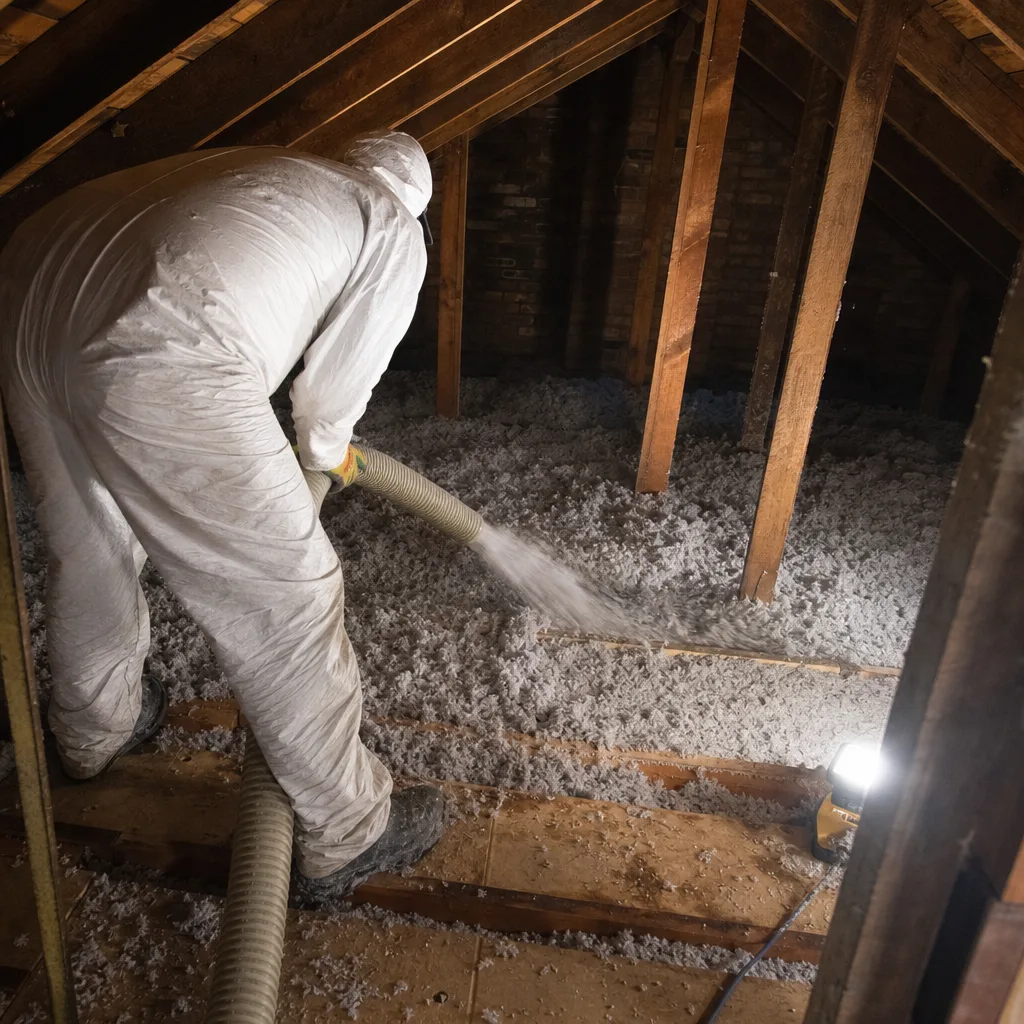
You can safely check the condition of your Rockwool insulation yourself: lift the hatch, look for wet spots, compressed areas, pest sign, and gaps at the perimeter. You can take measurements and read the facing labels. What you should not do is climb into a Chicago attic in February on a plywood pull-down ladder and start pulling wet mineral wool batts without a respirator and proper containment. Wet Rockwool is heavy. Vermiculite-era attics may contain asbestos below the newer batts. And if the batts are wet because your bath fan vents into the attic, replacing them without fixing the vent means you’ll replace them again in five years.
If you find rot, if you find rodent runs through the Rockwool, if the hatch is air-sealed with old weatherstripping that lets conditioned air pour through, or if the failure is tied to air leaks below the insulation, you’re better off with a building-envelope contractor who diagnoses before treating. We do this work in Chicago year-round, and the air sealing happens before the Rockwool goes back in. Call (218) 261-7714 for a written price.
FAQs
Rockwool attic insulation can last 50 to 80 years if it stays dry, uncompressed, and pest-free, but real Chicago conditions (moisture from ice dams, rodents, and storage foot traffic) usually shorten that window to 15 to 30 years before sections need replacement.
Yes, in many cases we can remove and replace only the failed runs (wet eaves, rodent-damaged soffits, compressed center bays) and leave the healthy Rockwool in place, which is often the most economical approach for a partial failure.
A standard Chicago attic under 1,500 square feet takes one full day for removal, air sealing, and new Rockwool installation; larger attics or those with pest remediation run two days.
We stock Rockwool Comfortbatt in R-23, R-30, and R-38 on our trucks, and can have R-49 and R-60 on site within 72 hours; most Chicago homes are scheduled within five business days of the initial attic inspection.
Seal the holes first. Then add the R-value. The numbers will tell you whether it worked. Call (218) 261-7714 for a free estimate and a written price before any work starts. A live person answers 24/7.
Written by Wes Okafor, Owner & Lead Building Envelope Technician, Topside Attic Insulation at Topside Attic Insulation, serving Chicago and nearby areas.