
Rockwool Crawl Space Encapsulation & Vapor Barrier in Chicago: What to Know First
Rockwool crawl space encapsulation and vapor barrier installation in Chicago typically runs $4,800 to $11,500 depending on square footage, access height, and how much existing insulation has been compromised by moisture. We’re an independent Rockwool service provider, not a manufacturer-authorized shop, which means we install what the crawl space actually needs rather than what a brand program tells us to push. Most jobs are completed in one to two days, and we publish before-and-after documentation on every project. If you own a home in Chicago with Rockwool insulation in the crawl space and you’re seeing moisture, musty air, or cold floors, call (218) 261-7714 and we’ll give you a written price before any work starts.
Key Takeaways
- Rockwool stone wool is hydrophobic, but that doesn’t mean the crawl space stays dry. Moisture moves through the air and condenses on rim joists and subflooring, not just through direct water contact.
- Rockwool in a damp crawl space can wick water through its edges even though the fibers repel liquid. The edges compress against the foundation, and that’s where we see actual saturation.
- Encapsulation on a Rockwool-insulated crawl space requires pulling back existing batts, inspecting the rim joist bays and sill plate, then sealing air leaks before any barrier goes down.
- You don’t need to remove Rockwool if it’s dry and intact. You may need to if it’s been sitting against a wet foundation wall or the subfloor has condensation staining.
- Every job closes with a documented photo record and a written scope. No exceptions, under The Haven Standard.
How Rockwool Products Fail - and How We Fix Them
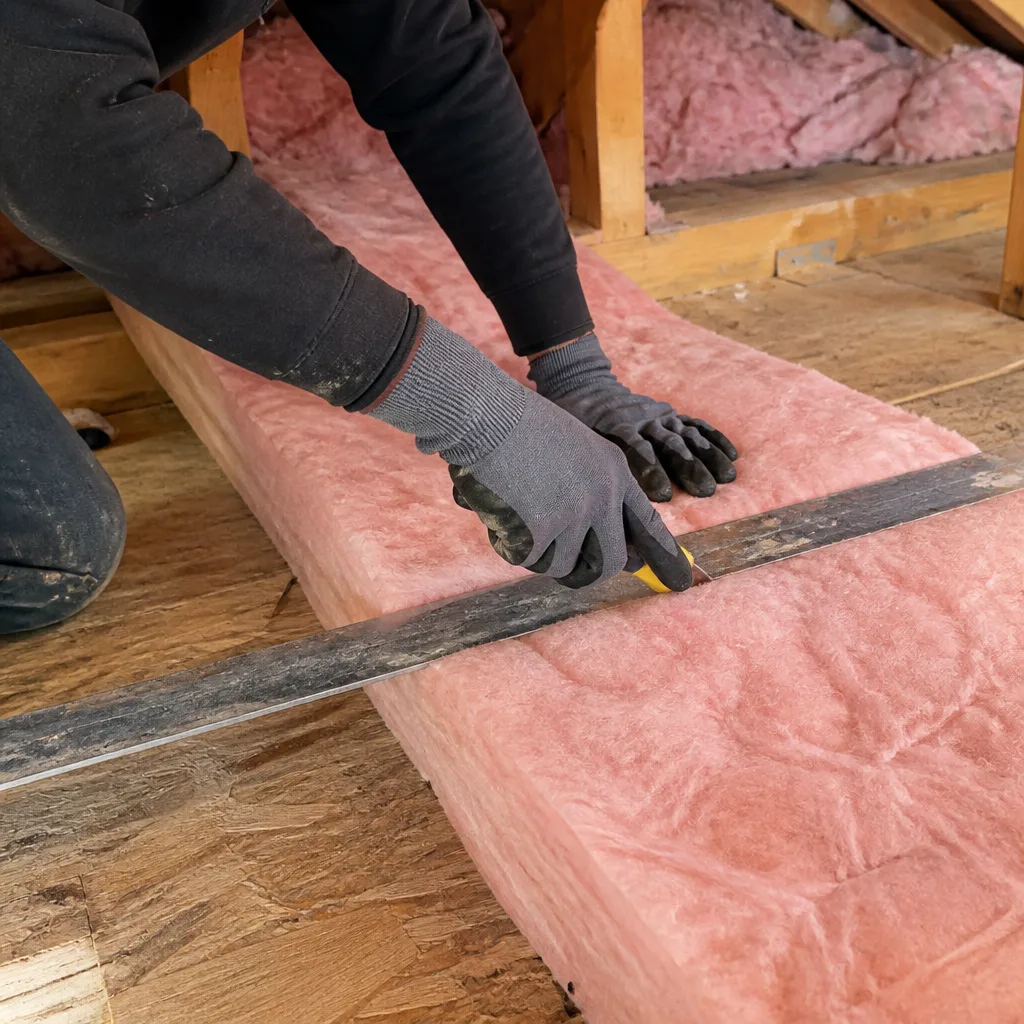
Rockwool products don’t fail the way fiberglass does. They fail at the edges, at the fasteners, and at the points where someone installed them without air sealing first. Here’s what we find in Chicago crawl spaces:
- Rockwool ComfortBatt R-15 edge compression against foundation walls. When installers friction-fit batts between joist bays or against a stone foundation, the edges compress. Compressed stone wool loses R-value, but more importantly, the compressed edge becomes a moisture collection point. Cold foundation air meets warm crawl space air at that edge, condensation forms, and the batt absorbs water at the perimeter while the field stays dry. Our fix: pull the batt, air seal the bay, reinstall with proper support or replace with a rigid board cut to fit without compression.
- Rockwool Safe’n’Sound used in a crawl space ceiling as thermal insulation. Safe’n’Sound is an acoustical product, not a thermal one. It’s R-4 per inch, not R-4.3 like ComfortBatt, and it wasn’t designed for unconditioned, humid spaces. In Chicago crawl spaces we see it sagging, delaminating, and holding moisture at the bottom edge where it touches a humid sill plate. The fix is usually replacement with a proper thermal batt or rigid foam board, and we document why in the written scope.
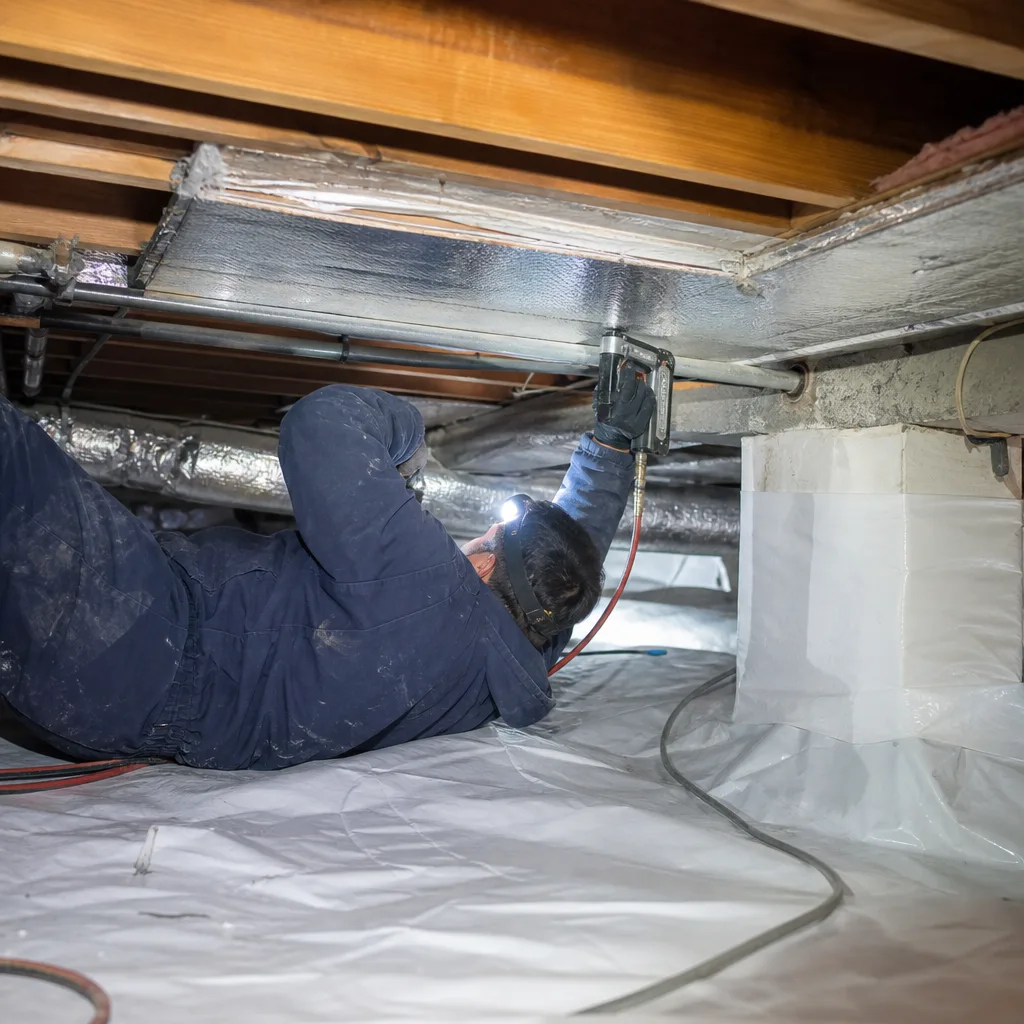
- Rockwool ComfortBatt R-23 in rim joist bays that were never air sealed. This is the one Wes Okafor sees most often. A rim joist bay in a 1920s Chicago bungalow or a 2015 suburban build both need the same thing first: the bay gets sealed at the sill plate, the band joist, and any penetrations. Rockwool batt shoved into an unsealed bay is a filter, not a thermal barrier. Air leaks through and around it, dropping the effective R-value to a fraction of the label. We seal first, then insulate, then test with a blower door if the crawl space connects to the conditioned envelope.
- Rodent damage in Rockwool batts along the rim joist. Stone wool doesn’t provide food, but it provides warmth. Mice burrow into the bottom edge of the batt where it meets the sill plate. What starts as a small tunnel becomes a highway across the rim joist. In Chicago, the freeze-thaw cycle drives rodents into crawl spaces in October and November. We see infiltration every year. The fix is removal, bay air sealing, new insulation, and a documented exclusion detail at the foundation vents.
- Rockwool direct-to-ground contact from crawl space floor moisture. We’ve pulled Rockwool batts that looked fine on top but were saturated at the bottom third. Crawl space humidity in Chicago runs 60% to 80% from May through September. If a batt touches the dirt floor or a wet concrete pad, capillary action does what the hydrophobic fibers can’t resist at the contact point. Encapsulation fixes the moisture source. Then we replace the batts.
Our Rockwool Crawl Space Encapsulation & Vapor Barrier Process
- 1
Walkthrough and diagnostic. We document the existing Rockwool: product type, condition, locations, and any visible moisture damage. We check rim joist bays, sill plate exposure, foundation vents, and drainage. If the crawl space connects to the house envelope, we run a blower-door test before work starts to establish the baseline ACH50 number.
- 2
Written scope and price. You get a flat price, a written scope of work, and a written warranty before anyone lifts a tool. This is Haven Standard Clause 1. No deposit, no surprise change orders.
- 3
Removal of compromised insulation. We pull any Rockwool that’s wet, rodent-damaged, compressed, or installed in an unsealed bay where it can’t perform. Dry, intact batts stay where they are. We never remove R-value without a reason.
- 4
Air sealing and vapor barrier installation. This is the “sealed first, then insulated” part. Top plates, rim joist seams, floor penetrations, and sill plate gaps get sealed. Then we lay the vapor barrier across the floor, up the foundation walls, and mechanically fasten at the top of the wall. Tape and seal all seams. Encapsulation means sealing the vents with insulated covers or eliminating them per code.
- 5
Re-insulation and thermal correction. We reinstall the Rockwool that survived, add new batts or rigid foam where the old product failed, and correct any compression or contact issues. If the job included a blower-door baseline, we run a post-installation test. You get both numbers in writing.
- 6
Photo documentation and walkthrough. Every job closes with a printed report: pre-installation ACH50 (if applicable), post-installation ACH50, installed R-values by zone, and a photo log of air-sealing locations. Wes Okafor grew up on the Northwest Side and has been doing this work in Chicago for over twenty years. He built this process so the documentation tells the story, not his opinion of it.
Under Haven Standard: Arrive on schedule. You get a named technician and a text when they’re on the way. The photo report is included on every visit, not available on request.
What Rockwool Crawl Space Encapsulation & Vapor Barrier Costs in Chicago
| Job Type | Typical Range in Chicago |
|---|---|
| Crawl space vapor barrier only (400-800 sq ft) | $2,800 - $4,500 |
| Full encapsulation with Rockwool rim joist treatment (800-1,200 sq ft) | $6,000 - $9,500 |
| Encapsulation plus Rockwool removal and replacement (1,200+ sq ft) | $9,500 - $14,000+ |
| Rim joist air sealing and insulation only (12-20 bays) | $3,200 - $6,200 |
What moves the price: access height, whether we’re removing and hauling saturated Rockwool, the number of rim joist bays, whether the crawl space has a dirt floor or concrete, and the condition of existing vapor barrier. A 400-square-foot crawl space with easy access and a dirt floor runs lower. A 1,000-square-foot space with 18 rim joist bays, rodent damage, and standing moisture runs higher. We’ll give you the exact number in writing before any work starts. Call (218) 261-7714 for a free estimate. Bring us a competing quote and we’ll read it with you, line by line, no charge.
Why Chicago Homeowners Call Topside Attic Insulation for Rockwool Work
We’re known for one thing: we run a blower-door test before any material goes in, so the scope of work is documented rather than estimated. That’s not a slogan. It’s how Wes Okafor built the company after watching a relative’s two-flat in Irving Park burn through heating bills despite attic insulation that looked fine from the hatch. Once the blower-door numbers came back, the rim joists and balloon-frame walls told a different story.
We’ve sealed and insulated over 9,000 homes since 2016, and every single one got a written price before work started and a documented record when the crew left. We carry materials from Rockwool, Owens Corning, Johns Manville, Knauf, CertainTeed, Icynene, Demilec, GreenFiber, and Reflectix, so we’re not locked into one brand when your crawl space needs something different. The 365-Day Done Right Promise covers all completed work: if it’s not done right, we make it right. And a live person answers the phone 24/7. No voicemail loops, no callback windows measured in business days.
FAQs
Only if it’s wet, compressed, rodent-damaged, or installed in an unsealed bay where it can’t perform. Dry Rockwool in good condition stays in place. We inspect every batt before we decide, and the written scope tells you exactly what we’re removing and why.
Rockwool is hydrophobic, which means the fibers themselves repel water. But moisture moves through air, and a crawl space in Chicago runs 60% to 80% humidity from May through September. That humid air condenses on cold surfaces, and the batt edges where Rockwool contacts the foundation or sill plate can absorb water even though the face of the batt stays dry. Hydrophobic is not waterproof.
Most vapor barrier-only jobs on a 400 to 800 square foot crawl space finish in one day. Full encapsulation with rim joist air sealing and Rockwool replacement takes two days on average. We’ll tell you the schedule in the written scope before work begins.
A vapor barrier covers the floor and sometimes the lower foundation walls. Full encapsulation seals the entire crawl space: floor, walls, rim joist bays, vents, and all seams taped and mechanically fastened. Encapsulation also treats the air leaks, which is the part most companies skip. Your Rockwool only performs if the air moving around it is controlled.
Rockwool doesn’t warrant performance in unconditioned crawl spaces with unsealed air leaks. Encapsulation doesn’t void anything. If anything, it creates the temperature and humidity conditions where the product can actually hit its labeled R-value. We’re an independent Rockwool service provider, so we’re not bound by a manufacturer program’s installation protocols. We follow building science, and we document everything.
Call (218) 261-7714 for a free estimate on Rockwool crawl space encapsulation or vapor barrier work in Chicago. We’ll give you a written price before any work starts, a named technician, and a documented photo record when the job is done. Seal the holes first. Then add the R-value. The numbers will tell you whether it worked.
Written by Wes Okafor, Owner & Lead Building Envelope Technician, Topside Attic Insulation at Topside Attic Insulation, serving Chicago and nearby areas.