
Rockwool Blown-In Insulation in Chicago: What to Know First
Rockwool blown-in insulation in Chicago typically costs $1,800 to $4,200 for a full attic in a standard 1,200 to 2,000 square foot home, and most jobs are completed in a single day. We’re an independent Rockwool service provider, not authorized by the manufacturer, and we run a blower-door test before any material goes in so you know exactly what you’re paying to fix. This page is written for homeowners who already have Rockwool batt or blown-in products in their Chicago home and need top-up, replacement, or a second opinion on what’s actually going wrong. Call (218) 261-7714 if you want to skip the background and get straight to a written price.
How Rockwool Products Fail - and How We Fix Them
Rockwool is a good product. But it fails in predictable ways in Chicago homes, and most of what we repair is not the material itself but how it was installed or what’s happened around it since. Here are the five failure modes we see most often:
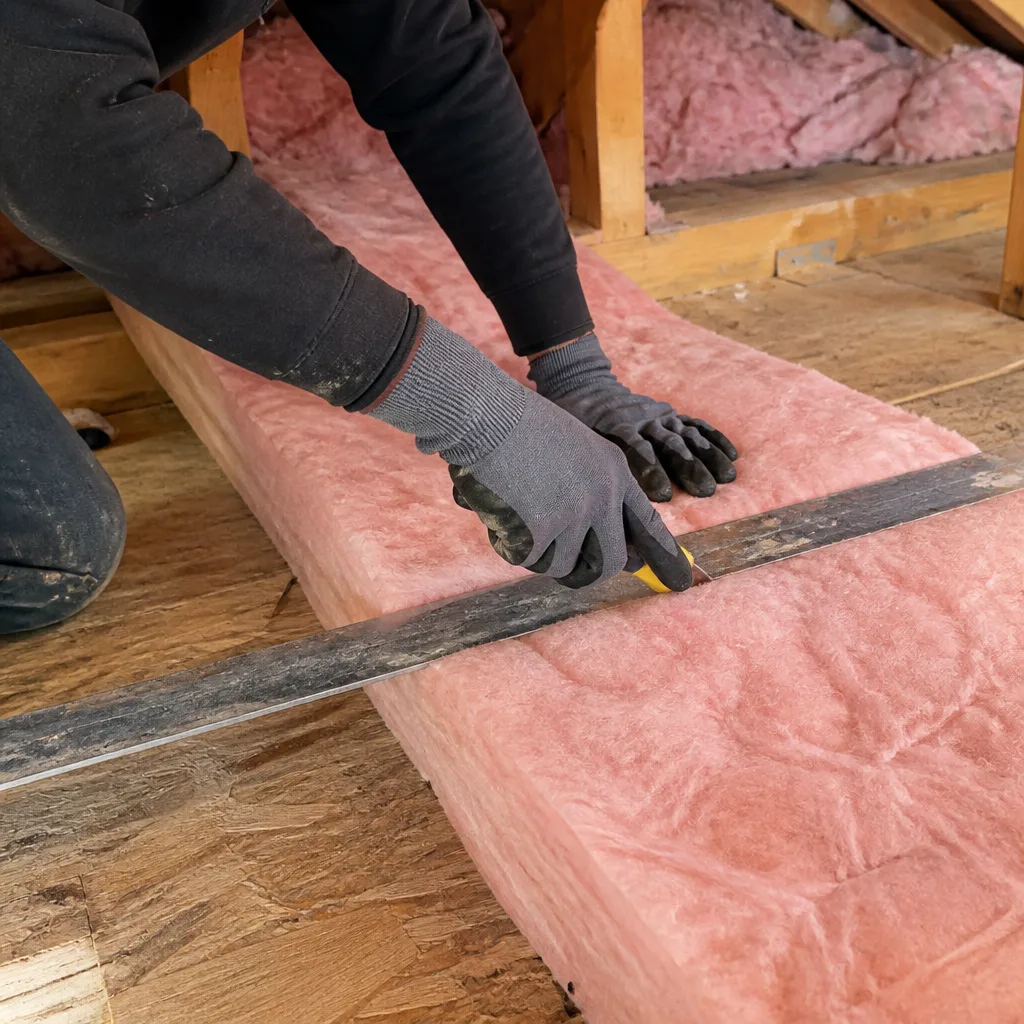
- Settling in Rockwool Safe’n’Sound batts used horizontally. Safe’n’Sound is a soundproofing batt, not a thermal batt, and it has no loft to lose when you compress it. But when someone lays it flat across an attic floor and then walks over it or stacks boxes on it, the batt flattens to a fraction of its original R-value. We see this in finished attic spaces all over Chicago’s bungalow belt. The fix is removing the compressed material and blowing in Rockwool granulate at the correct depth, or batts rated for horizontal thermal use.
- Air moving through Rockwool Comfortbatt and rendering the R-value useless. Rockwool batts allow air movement through the material. That’s a feature for drainage and fire resistance, but in a Chicago attic with unsealed top plates and can lights, conditioned air moves straight through the insulation instead of being stopped by it. A batt that’s supposed to deliver R-23 might behave like R-9 under real conditions. We air seal first, then insulate. Seal the holes first. Then add the R-value. The numbers will tell you whether it worked.
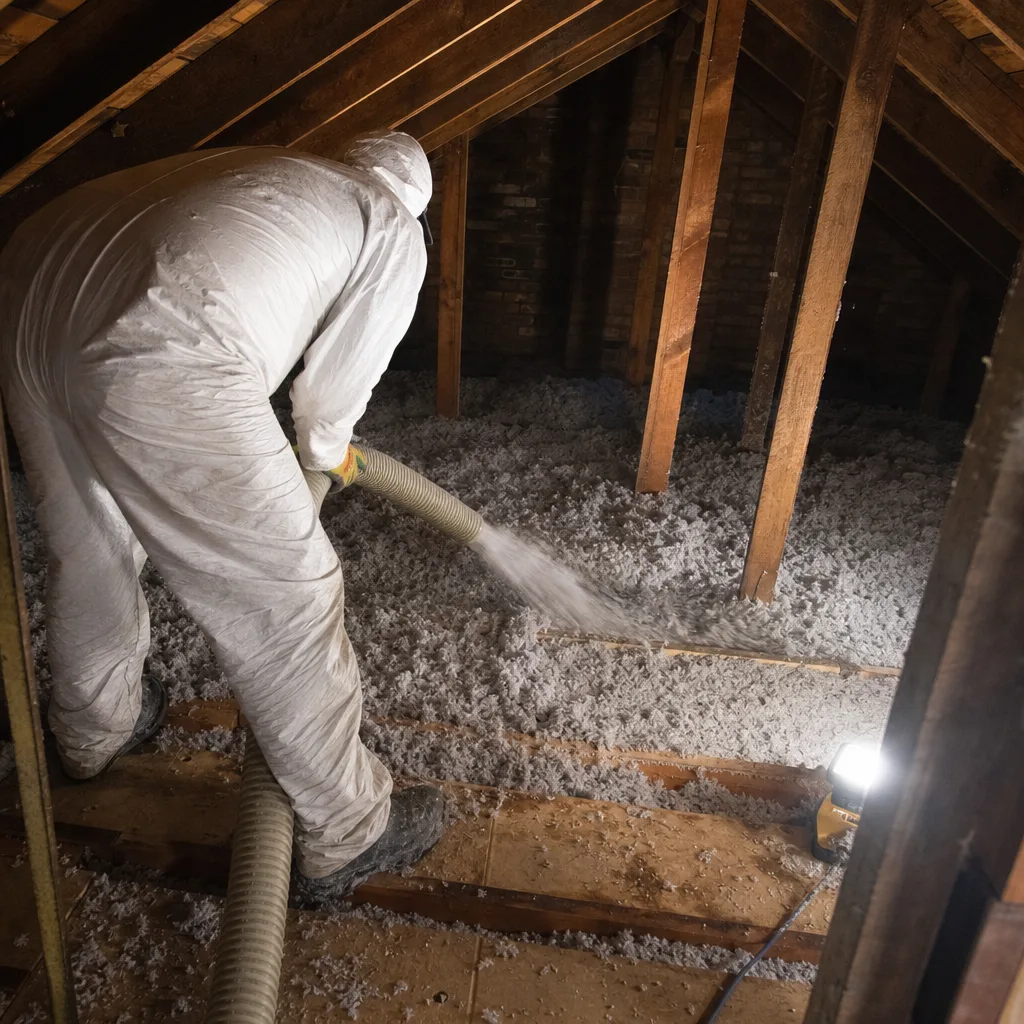
- Rockwool blowing wool that’s never reached proper density. Rockwool’s loose-fill product performs well when it’s installed to the manufacturer’s density spec, but under-blown attics are common enough that we run into them weekly. The homeowner sees a full-looking attic but the thermal performance is 30 to 40 percent below what the bag claims. We check depth and density with a board and scale, not by eye. The difference is measurable, and we publish the before number.
- Mold staining on Rockwool products in Chicago basements and rim joist cavities. Rockwool is inorganic and doesn’t feed mold, but that doesn’t mean mold won’t grow on the dust and skin cells that land in it. In humid Chicago basements, especially in older homes near the lake, we find Rockwool batts that are stained and musty because they were installed against a damp concrete wall with no capillary break. We remove the material, address the water path, and reinstall with proper separation. Blowing Rockwool into a damp cavity solves nothing.
- Mice nesting in Rockwool granulate. Rockwool’s density and texture don’t deter rodents the way some reps suggest. We pull more nests out of Rockwool loose fill than out of fiberglass in the Chicago neighborhoods we serve, likely because it holds a burrow shape well. Rodent proofing is part of the envelope work we do before new material goes in. If the entry point is still open, new insulation is just replacement bedding.
Our Rockwool Blown-In Insulation Process
- 1
Call and get a live person. You reach us at (218) 261-7714, day or night. We take the address, the age of the home, and what you’re seeing. Then we text a confirmation with a named technician.
- 2
Site walk and documentation. Wes or a tech walks the attic, rim joists, and any problem areas. We photograph what’s there before touching it. If you have a written estimate from another contractor, bring it out; we’ll read it with you and point out what it includes and what it doesn’t.
- 3
Blower-door test. Before we recommend any material, we run a pressurization test and record the ACH50 number. Most Chicago homes we test run between 6 and 14 ACH50, and what that means is your house loses its entire interior air volume that many times per hour at 50 pascals of pressure. That number determines the air-sealing scope.
- 4
Air sealing, then insulation. Top plates, can lights, electrical penetrations, and plumbing stacks get sealed. Then we blow the Rockwool or the specified material to the correct depth and density. No insulation goes over an unsealed attic floor, ever.
- 5
Post-test and documentation. We run the blower door again and document the new number. You get a printed report with pre- and post-installation ACH50, installed R-values by zone, and a photo log of every air-sealing location.
- 6
Written warranty and photo record. Before we leave, you get the warranty in writing and a copy of the photo record. This is part of the Haven Standard: Have it in writing, every job, no exceptions.
What Rockwool Blown-In Insulation Costs in Chicago
Most Rockwool blown-in attic jobs in Chicago run between $1,800 and $4,200, depending on square footage, existing insulation condition, and how much air sealing the blower-door test shows is required. Here’s how the common scenarios break down:
- Top-up over existing Rockwool batts in a 1,000 sq ft attic: $1,100 to $1,700, including air sealing of the major penetrations if the ceiling is accessible.
- Full removal of rodent-damaged Rockwool and reinstallation: $2,800 to $5,200, depending on the size of the attic and the extent of damage.
- Dense-pack Rockwool into walls in a Chicago two-flat or frame house: $2,500 to $6,000, depending on stud cavity access and the number of stories.
- Rim joist air sealing plus Rockwool insulation in a Chicago basement: $900 to $2,400, depending on the length of rim and access conditions.
What moves the price is access, existing damage, and the air-sealing scope that the blower-door test reveals. Under Haven Standard Clause 1, you get a flat price written down, a written scope, and a written warranty before anyone lifts a tool. Call (218) 261-7714 for a free estimate. We don’t price over the phone without seeing the space, but we’ll tell you what to expect before we arrive.
Why Chicago Homeowners Call Topside Attic Insulation for Rockwool Work
We’re the contractor that documents what it does. Since 2016, Topside Attic Insulation has sealed and insulated more than 9,000 homes, and every single one of those jobs started with a written price and ended with a photo record and a warranty in writing. We run a blower-door test on every applicable job and publish the numbers, so when a homeowner in Portage Park or Beverly asks us whether the insulation actually worked, we hand them two readings and let them read the difference. Our techs are background-checked and uniformed, and we answer the phone around the clock with a live person, not a voicemail tree. We work with Rockwool, Owens Corning, Johns Manville, Knauf, CertainTeed, and GreenFiber, and we’ll also handle Reflectix jobs, so we’re not tied to a single brand. Our 365-Day Done Right Promise covers the work: if it’s not done right, we make it right, with no fine print and no argument. Wes Okafor grew up a few blocks from the Portage Park field house and has been doing insulation work in Chicago for over twenty years. The company runs on the idea that you deserve to see the number before you pay, and to see it again after the job is done.
FAQs
At current Chicago supply pricing, Rockwool blown-in runs about 20 to 35 percent higher than blown fiberglass for the equivalent installed R-value, and what you’re paying for is fire resistance, density retention, and better sound attenuation. For most Chicago attics, fiberglass or cellulose is the more economical choice. For wall cavities and sound-sensitive spaces, Rockwool is often the better material. We’ll show you the side-by-side numbers before you decide.
Yes, but only after we inspect the existing batts for compression, rodent damage, and air leaks below them. Blowing fresh material over compressed or soiled batts locks the problem in place. In most cases, we recommend a quick air seal of the top plates and penetrations first, then blow to the correct total depth. Call (218) 261-7714 and we’ll tell you what we see when we see it.
Rockwool granulate is denser than fiberglass and settles minimally when installed to the manufacturer’s density spec, but that’s the catch: under-blown installs are common. The only way to verify your current R-value is to measure depth and density, not to eyeball it. We measure as part of the written estimate before any work is proposed.
Rockwool is non-combustible and doesn’t require the same treatment as cellulose around older wiring. That said, we inspect for knob-and-tube and overloaded circuits before we install anything. The material is not the hazard; the condition of the wiring and the air-sealing details are what determine whether the job is safe and durable.
Most attic jobs are completed in one day. Wall dense-pack or rim joist work on a two-flat or larger frame house takes one to two days. We schedule around the blower-door test, not around a sales pitch, so the written estimate you receive already reflects what the test found. Call (218) 261-7714 to get on the schedule and get a free estimate. We answer live, 24/7.
Written by Wes Okafor, Owner & Lead Building Envelope Technician, Topside Attic Insulation at Topside Attic Insulation, serving Chicago and nearby areas.