
Rockwool Insulation Removal & Replacement in Chicago: What to Know First
Rockwool insulation removal and replacement in Chicago typically runs between $1,800 and $4,200 for a standard attic, depending on square footage, depth, and whether the old batts are contaminated. Most jobs are completed in a single day, with the replacement material blown or laid the same visit. We’re an independent Rockwool service provider - not affiliated with or authorized by the manufacturer - and we publish our written price before any work starts.
This page is for Chicago homeowners who bought a house with Rockwool already in the attic or walls and now suspect it wasn’t installed right, got wet, or has been torn apart by rodents. If you’re standing at the attic hatch looking at black-stained batts or matted gray wool that’s lost its loft, call (218) 261-7714 and we’ll walk through what you’re seeing.
How Rockwool Products Fail - and How We Fix Them
Rockwool doesn’t fail the way fiberglass does. It doesn’t settle as dramatically, it holds its R-value when dry, and it doesn’t feed mold the same way. But we’ve pulled enough of it out of Chicago attics to know exactly where it goes wrong. Here are the five failure modes we see most often:
- Water intrusion in Rockwool Safe’n’Sound batts. Safe’n’Sound is a dense, mineral-wool batt designed for interior sound control, but Chicago homeowners sometimes find it in attics where a previous owner used it as thermal insulation. It’s not built for that. When a roof leak or ice dam soaks it, the batts hold water against the ceiling drywall for weeks. We remove the saturated material, trace the leak, and replace with a thermal product rated for the attic’s R-value zone.
- Rodent nesting in Comfortbatt R-23 cavity insulation. Rockwool’s dense batts resist rodents better than fiberglass, but mice in Chicago’s bungalows and two-flats will still tunnel through it if the rim joists and sill plates are unsealed. The fix isn’t just pulling the contaminated batts - it’s removing them, sealing the entry points, and only then installing new insulation. We’ve pulled Comfortbatt out of rim joists that looked like a mouse condo complex.
- Crushed or compressed Comfortbatt in cathedral ceilings. Rockwool batts lose R-value when compressed, and we regularly find Comfortbatt R-30 shoved into 2×8 rafter bays that need an R-38 or higher fill, leaving a 2-inch air gap at the ridge. The homeowner paid for R-30 and got something closer to R-19. Removal and proper replacement, often with a different material and vent baffles, restores the stated R-value.
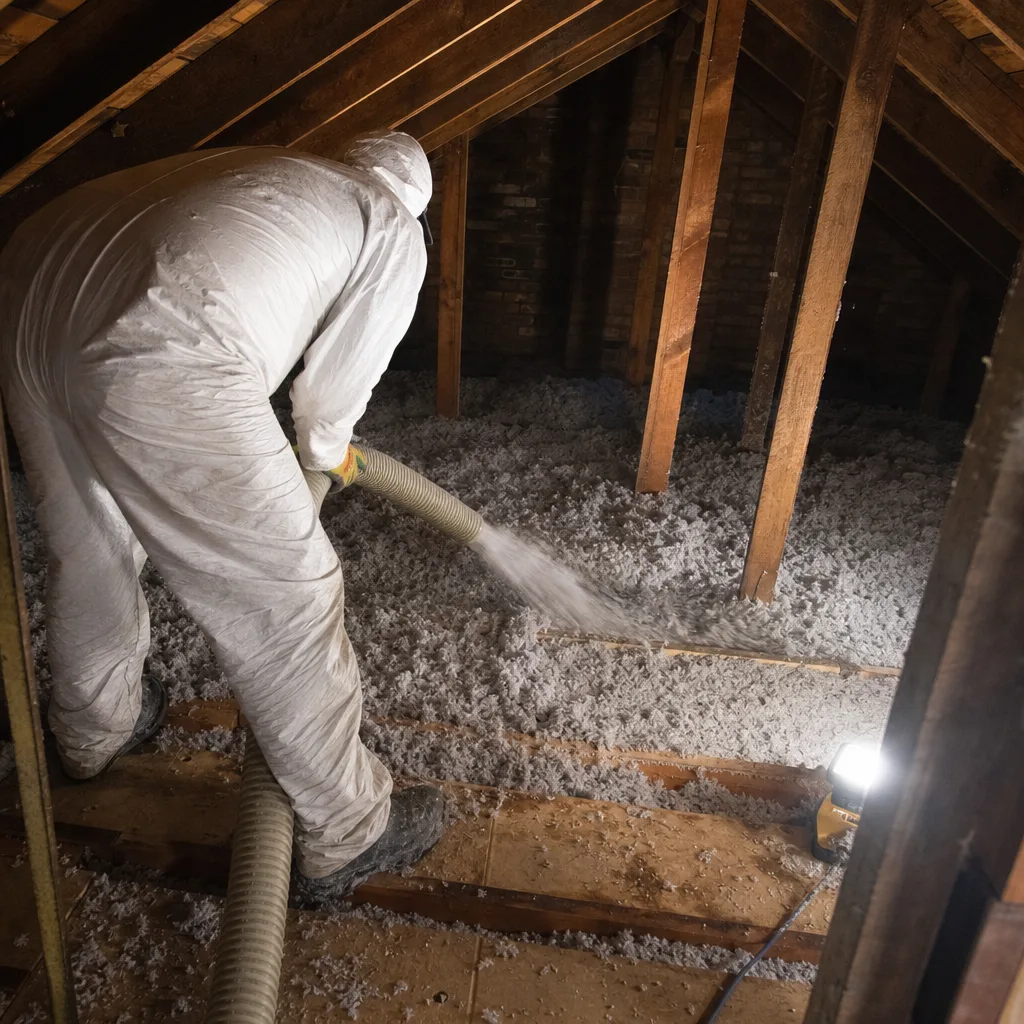
- Older Rockwool loose-fill (pre-2000) with debris contamination. Before Rockwool shifted to batts for residential, loose mineral wool was blown into some Chicago attics. When a roof replacement leaves granules, nails, and shingle debris in the insulation, or when knob-and-tube wiring was buried under it, the material needs to come out. We use HEPA-filtered vacuums and bag everything for disposal before any new insulation goes in.
- Frozen or soaked exterior wall cavities after masonry work. Chicago’s brick bungalows and greystones have a specific failure: when tuckpointing or parapet repairs are done without addressing flashing, water tracks down inside the wall and soaks whatever insulation is in the cavity. Rockwool Comfortbatt in a wet 2×4 wall will hold moisture against the sheathing. The fix is removal, drying, air sealing, and re-insulating after the masonry issue is resolved.
Our Rockwool Insulation Removal & Replacement Process
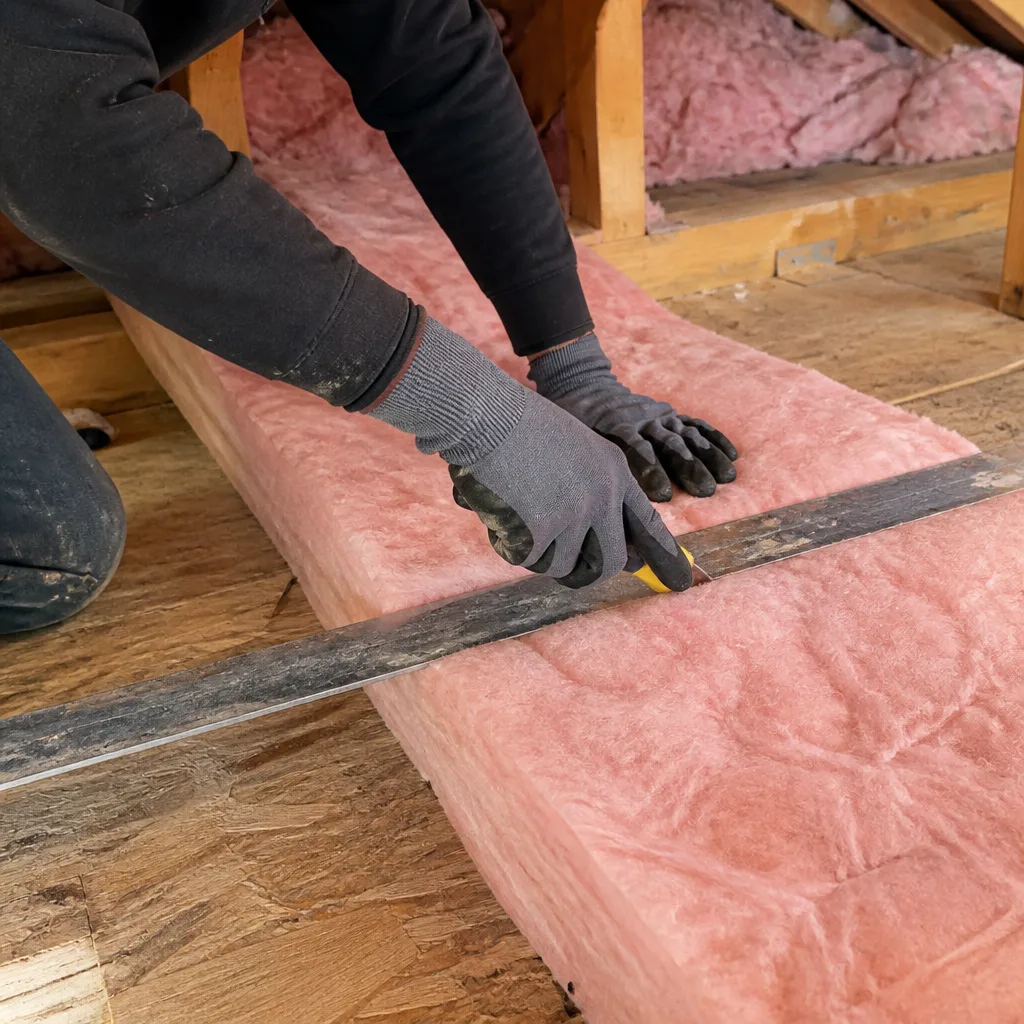
Every Rockwool job we do in Chicago follows the same sequence, and nothing gets skipped:
- 1
Call and on-site assessment. A live person answers (218) 261-7714, and we schedule a walkthrough. We photograph the existing Rockwool, measure depth and coverage, and note contamination, moisture, or air leaks.
- 2
Blower-door test before removal. We run a blower-door test - a calibrated pressure reading that shows, in one number, how many cubic feet of outside air leak into the house per minute. For Rockwool replacement jobs, this tells us what the air sealing scope should be before we touch the insulation.
- 3
Written price, written scope, written warranty. You get a flat price and a written scope of work under Haven Standard Clause 1 before anyone lifts a tool. No estimate roulette.
- 4
Removal and air sealing. We vacuum out the old Rockwool using HEPA-filtered equipment, bag it, and remove it from the property. Then we air seal top plates, can light boxes, chase ways, and any penetrations - before any new insulation is installed.
- 5
Replacement insulation installed. We install the replacement material - Rockwool batts where they make sense, or blown-in fiberglass or cellulose where performance and budget align. We’re not locked into one brand.
- 6
Post-installation blower-door test and documentation. You receive before-and-after ACH50 readings, a photo log of air-sealing locations, and installed R-values by zone. If the numbers don’t show improvement, we make it right under the 365-Day Done Right Promise.
What Rockwool Insulation Removal & Replacement Costs in Chicago
Here’s what we typically see in Chicago homes:
- Attic Rockwool batt removal and replacement (1,000-1,500 sq ft): $1,800-$3,200. Includes removal, bagging, air sealing of penetrations, and new blown-in insulation to R-49.
- Contaminated or rodent-damaged Rockwool removal with full attic sanitization: $2,400-$4,200. Adds decontamination, entry-point sealing, and sometimes baffle replacement.
- Wall cavity Rockwool removal after water damage: $800-$1,800 per wall section, depending on access and drywall repair scope.
- Cathedral ceiling Rockwool replacement with vent baffles: $2,200-$3,800. The baffle work and limited access drive the cost.
What moves the price: square footage, insulation depth, contamination severity, access difficulty, and whether air sealing is part of the scope - which it always should be. We don’t charge for the assessment. Call (218) 261-7714 for a written price, not a ballpark.
Why Chicago Homeowners Call Topside Attic Insulation for Rockwool Work
We’re an independently owned and operated building-envelope contractor, not a franchise, and we’ve sealed and insulated 9,000+ Chicago-area homes since 2016 under The Haven Standard. That means every job starts with a written price and ends with a Documented Photo Record. Wes Okafor, our owner and lead building-envelope technician, grew up six blocks from the Portage Park field house on the Northwest Side and has been doing insulation work in this city for over twenty years. He’ll tell you the same thing he tells every homeowner: seal the holes first, then add the R-value, and the numbers will tell you whether it worked.
We work with Rockwool when it’s the right material and with Owens Corning, Johns Manville, Knauf, CertainTeed, GreenFiber, and Reflectix when the job calls for something else. No proprietary lock-in. And if a written estimate from another contractor has you reading fine print, bring it to us - we’ll read it with you as a Free Second Opinion, even if you never hire us.
FAQs
Yes - Rockwool batts or loose-fill need removal when they’ve been saturated by roof leaks or ice dams, contaminated by rodents or debris, crushed to the point they’ve lost their R-value, or installed in the wrong application (like Safe’n’Sound used as thermal insulation). Water-damaged Rockwool holds moisture against framing and drywall, and no amount of drying restores its performance. Call (218) 261-7714 and we’ll tell you if removal is actually necessary after seeing photos or doing a walkthrough.
Rockwool holds its R-value when dry, resists fire, and doesn’t settle like blown fiberglass - but those advantages vanish if the attic isn’t air sealed. In Chicago’s temperature swings, a sealed attic with R-49 blown fiberglass outperforms an unsealed attic with R-49 Rockwool every time. That’s why we air seal before any insulation is installed, regardless of brand.
Yes. We’re not locked into Rockwool, and neither are you. Depending on the application, budget, and existing air sealing, we may recommend blown-in fiberglass, cellulose, or spray foam. The material decision comes after the blower-door numbers and attic conditions are documented, not before.
Most attic removal and replacement jobs are finished in one day. Larger attics, heavy contamination, or wall cavity work can run two days. We’ll give you a written timeline with your written price so there’s no ambiguity about when the crew arrives and when they leave.
Yes. Every applicable job includes a before-and-after blower-door test, and you receive both ACH50 readings in your final documentation. If the post-installation number doesn’t show a measurable improvement, the 365-Day Done Right Promise applies. That’s not a warranty buried in fine print - it’s the Haven Standard: Have it in writing.
Written by Wes Okafor, Owner & Lead Building Envelope Technician, Topside Attic Insulation at Topside Attic Insulation, serving Chicago and nearby areas.