
Rockwool Attic Air Sealing: The Chicago Owner’s Guide
Rockwool attic air sealing in Chicago typically runs $1,450 to $3,200 for a full top-plate and penetration seal on a standard 1,200 to 2,000 square foot attic, and we stock Rockwool-compatible sealing materials on our trucks for same-week installation. If you bought Rockwool batts or boards expecting them to fix your ice dams or second-floor drafts and the problem didn’t budge, the issue isn’t the Rockwool. It’s the unsealed attic floor underneath it. We see this in Chicago bungalows, Georgians, and frame two-flats constantly: the insulation looks fine from the hatch, but the blower-door numbers tell a different story.
Key Takeaways
- Rockwool is not an air barrier. Its job is thermal resistance and fire performance, not stopping air movement. Air sealing is a separate material layer that has to go in first.
- The most common “failed part” isn’t a Rockwool product at all. It’s the original 1950s-to-1990s sealing attempt (or complete absence of one) around top plates, can lights, and plumbing penetrations.
- We publish before-and-after blower-door numbers on every applicable job. You’ll see the CFM50 and ACH50 change in writing, not as a verbal summary.
- Topside Attic Insulation is an independent contractor. We stock and install Rockwool, Owens Corning, Johns Manville, CertainTeed, and others. We are not affiliated with Rockwool.
How Chicago Homeowners Usually Discover the Problem
The pattern is familiar to us because we’ve sealed over 9,000 Chicago attics since 2016. An owner installs Rockwool batts themselves or has a crew blow insulation over the attic floor, and within one winter the same symptoms return: ice dams along the eaves, a master bedroom that runs 5 degrees colder than the hallway, furnace cycling like it has a nervous twitch. Then they pull the hatch and the Rockwool looks guilty but functionally innocent. The air is cheating through the bypasses underneath it. In a Portage Park attic we measured last February, the pre-sealing blower-door reading was 3,850 CFM50. After sealing the top plates and can-light housings, it dropped to 1,980. The Rockwool above those plates wasn’t the problem, and adding more of it would have done nothing but hide the leak behind a nicer-looking blanket.
That’s the core thing to understand about Rockwool-specific air sealing: the “part” that fails is almost never the Rockwool itself. It’s the interface between your conditioned living space and the attic floor assembly, where decades of air passage have pulled dust and warm air through every crack. Rockwool handles that air, lets it pass through, and slowly becomes a visible filter rather than a performance layer. The fix is sealing the bypasses first, then resetting or reinstalling the Rockwool over a now-tight floor.
Which Rockwool Applications This Applies To
Attic air sealing is relevant for every Rockwool attic product line we install over open attics: Comfortbatt, Comfortbatt R-30 and R-38, Safe’n’Sound used as cavity fill in attic kneewalls, Rockboard 60 and 80 in cold-roof assemblies, and Toprock or Multi-Fix used as attic floor sheathing over sealed decking. The compatibility question isn’t about a Rockwool part number. It’s about the attic floor beneath whatever Rockwool product you have or plan to install.
If you’re pulling an old fiberglass batt job and replacing it with Rockwool, the sealing job is the same scope: top plates at every interior and exterior wall line, electrical penetrations, plumbing stacks, chimney chases, can-light housings, and the attic hatch itself. The only Rockwool-specific difference we flag is density. Rockboard and Comfortbatt are dense enough that they can mask air movement visually. Fiberglass batts show dirt streaking where air passes through; Rockwool shows it more slowly because the material is tighter. That can lead an owner to believe the attic is sealed when it isn’t. Our approach on Rockwool jobs is to run the blower-door before and after, so the material never gets credit for a job the sealant did or didn’t do.
One gotcha specific to Chicago’s older housing stock: if you have a balloon-framed two-flat or a pre-1940 bungalow, the wall cavities often open directly into the attic. Rockwool batts over the floor will not stop stack effect from pulling conditioned air up through those open stud bays. The sealing work in those attics is typically twice the linear footage of a platform-framed house from the 1980s. That’s a checkable difference worth knowing before you compare quotes.
Signs Your Rockwool Attic Air Sealing Is Failing
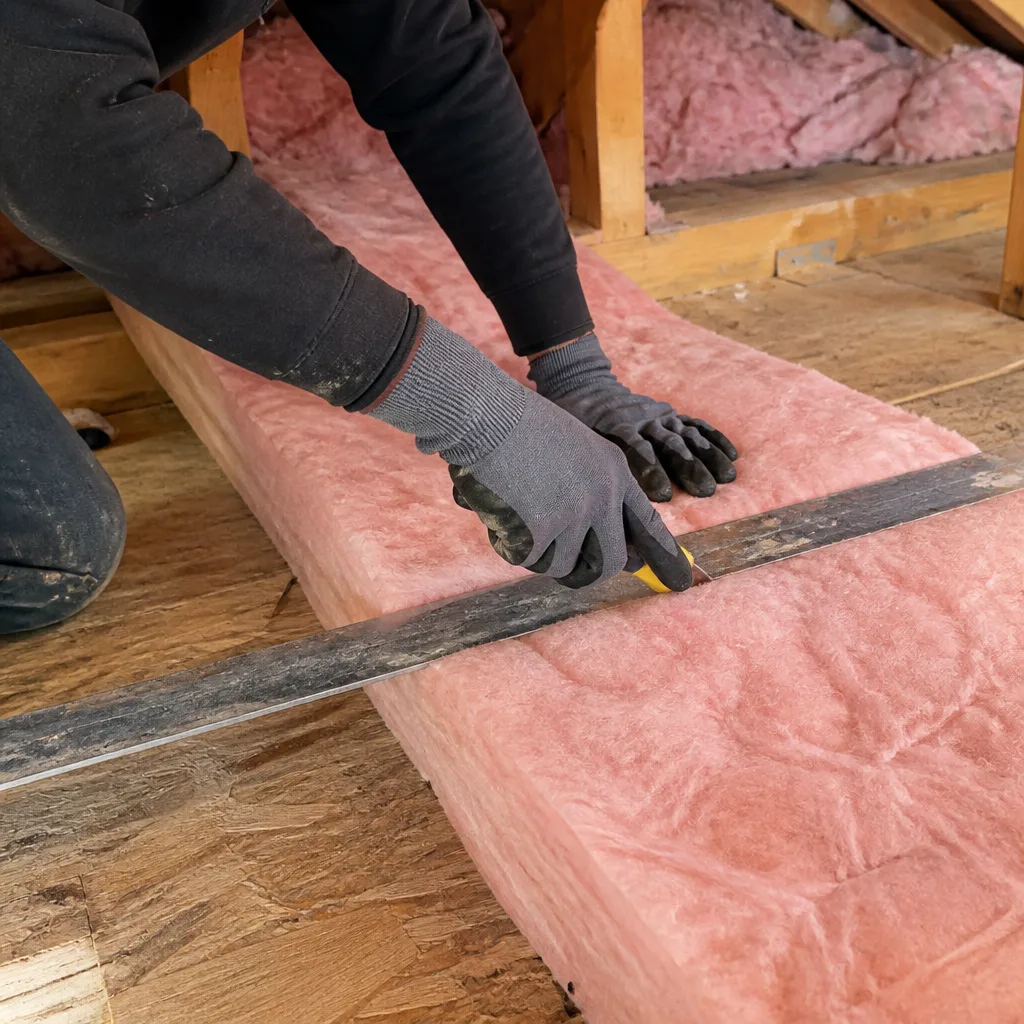
- Ice dams form along the eaves even with R-38 or higher Rockwool in place. Warm air leaking through unsealed top plates melts snow at the roof deck, where it refreezes at the colder eave line. The Rockwool is doing its job; the air is bypassing it entirely.
- You can feel a temperature difference of more than 3 degrees between rooms on the same floor in winter. Uneven leakage at wall top plates creates localized depressurization that pulls cold air into specific rooms. Blower-door readings will show a leakier building envelope than the attic insulation level suggests.
- The attic smells like the house, or worse, like decades of house. Air carries odor. If you can smell last night’s dinner in the attic, conditioned air is moving through the floor assembly in volume. That’s a sealing failure, not an insulation failure.
- Dust streaks or darkened patches appear on both old and new insulation. Air passing through fiber filters out particles. With fiberglass you see it quickly. With Rockwool it takes longer, which is why we document with photos on every visit rather than relying on visual inspection alone.
- Your heating bills stay flat after an insulation upgrade. This is the most common post-Rockwool complaint we hear in Chicago. The insulation R-value went up, but the air leakage unchanged. Sealing first would have changed the bill; insulation alone rarely moves it by more than a few percent on a leaky attic floor.
Replacement Cost & What’s Included
Rockwool attic air sealing in Chicago runs $1,450 to $3,200 installed for a standard single-family home, with the range driven by attic square footage, accessibility (kneewalls and low-slope sections add labor), and how much of the existing Rockwool or other insulation must be temporarily moved to reach the sealing surface. Two-flats and pre-1940 balloon-framed houses run $2,800 to $4,500 because the open stud bays add substantially more linear footage of top-plate sealing.
| Scope Item | Typical Chicago Range |
|---|---|
| Basic top-plate and penetration sealing, 1,200-1,500 sq ft attic | $1,450 – $2,100 |
| Full sealing including can lights, hatch, chimney chase, 1,800-2,200 sq ft attic | $2,200 – $3,200 |
| Balloon-frame or two-flat sealing with open stud bays | $2,800 – $4,500 |
| Sealing plus reset/reinstall of existing Rockwool batts | Add $350 – $700 |
| Blower-door test before and after (included on applicable jobs) | Included |
The price you get is the price on the written scope, before anyone lifts a tool. Haven Standard Clause 1: flat price, written scope, written warranty. No hourly billing, no change-order games. Every air sealing job includes a documented photo record of the sealing locations and, on applicable jobs, printed before-and-after blower-door readings. The 365-Day Done Right Promise covers the work: if a seal fails or we missed a penetration, we come back and fix it.
DIY or Call Us?
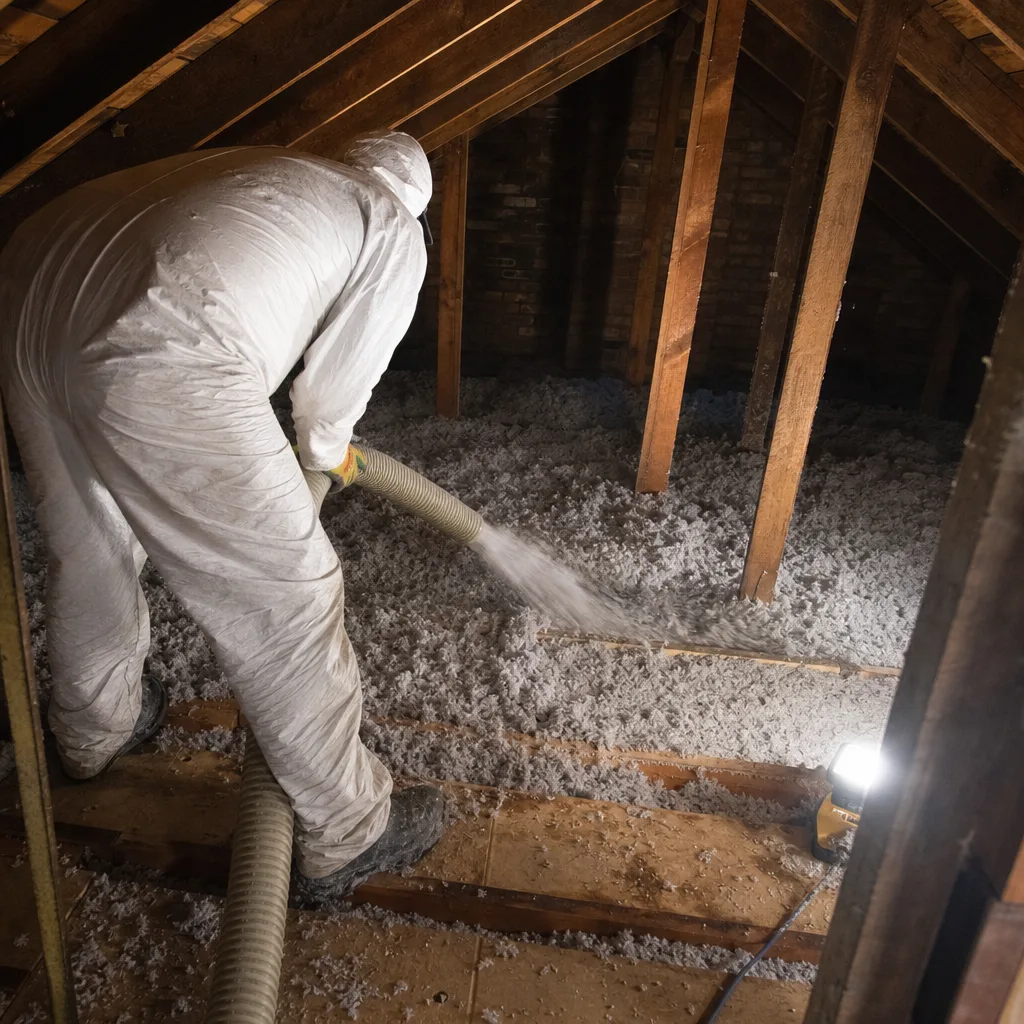
What you can safely do yourself: inspect your attic hatch weatherstripping, look for visible gaps around plumbing vents and electrical penetrations, and check whether old can lights are sitting in insulation without a sealed cover. These are inspection tasks, and documenting what you find with your phone camera is genuinely useful before you make calls. What you should not DIY: the actual air sealing. It requires working in tight soffits and low-slope sections, often around knob-and-tube wiring that should not be sealed over with foam, and doing it wrong creates a new problem: trapped moisture and condensation inside wall cavities. We’ve corrected enough DIY foam jobs around recessed lights to say this plainly: sealing an attic floor from above is tedious, physically awkward work, and the risk of an improper seal around electrical components is not worth the savings of skipping the blower-door verification. Call us at (218) 261-7714 and Wes Okafor will walk through what we found, what it costs, and what the numbers should look like when we’re done. Written price first. Always.
Frequently Asked Questions
Properly installed attic air sealing with quality sealants lasts 20 to 30 years, which is the expected service life of the Rockwool batts above it. The sealant materials we use, caulk and foam rated for high-temperature and plumbing-penetration contact, are stable in Chicago’s temperature swings from -10°F attic winters to 140°F attic summers. What shortens sealing life is movement: if your house settles or a plumbing repair disturbs a penetration, that seal can open. The 365-Day Done Right Promise covers our work, and we recommend a re-check whenever a major attic renovation happens. Call (218) 261-7714 for a re-seal quote.
Most Chicago attics have never had any air sealing, so the honest answer is that it’s a first-time installation, not a repair. If you have old sealing that’s failing, usually visible as dried, cracked caulk around top plates from a 1980s weatherization program, we can spot-seal the failed areas in a half-day visit rather than doing the full scope. The question is always whether the existing seals were placed correctly in the first place. We’ll know within the first hour on site. Call (218) 261-7714 for a written assessment.
A standard attic air sealing job in a Chicago single-family home takes one full day, typically 6 to 8 hours with a two-person crew. Balloon-frame and two-flat attics with open stud bays run 1.5 to 2 days. The blower-door test adds about 45 minutes total across the before and after readings, and it’s included on applicable jobs. You’ll have the printed report in hand when we leave, not emailed to you three days later.
Yes. Our trucks carry Owens Corning, Johns Manville, Knauf, Rockwool, CertainTeed, Icynene, Demilec, GreenFiber, and Reflectix-compatible sealing materials and accessories, so same-week installation is standard for attic air sealing. There’s no proprietary product lock-in. If your attic has Rockwool already, we match the sealing approach to that material’s density and fire rating. If you’re replacing old insulation with Rockwool, we order the exact batts or boards for your joist spacing and R-value target, and they arrive before we start. Call (218) 261-7714 for a free estimate and a written scope.
Seal the holes first. Then add the R-value. The numbers will tell you whether it worked.
Written by Wes Okafor, Owner & Lead Building Envelope Technician, Topside Attic Insulation at Topside Attic Insulation, serving Chicago and nearby areas.