
Rockwool Wall Insulation in Chicago: What to Know First
Rockwool wall insulation in Chicago typically costs $2,800 to $7,400 for a full exterior wall project on a standard two-flat or single-family home, with most jobs completed in one to three days. As an independent Rockwool service provider, Topside Attic Insulation installs, repairs, and retrofits Rockwool wall insulation in Chicago homes, and we write the price down before any work starts. This page covers what actually goes wrong with Rockwool in Chicago walls, what repair costs look like, and what we do differently from other contractors.
Call (218) 261-7714 for a free estimate, or keep reading to understand your options first.
How Rockwool Products Fail - and How We Fix Them
- Rockwool Comfortbatt R-15 in 2×4 wall cavities loses R-value when compressed. Comfortbatt is designed to friction-fit into standard framing, but Chicago homes built before 1980 often have true-dimension lumber, not nominal. A 2×4 from 1955 is actually 2 inches by 4 inches, and squeezing an R-15 batt made for a 3.5-inch cavity crushes the fibers, dropping effective R-value by 15 to 20 percent. We see this in bungalows across Jefferson Park, Portage Park, and Belmont Cragin. The fix is either a different Rockwool density or a cavity measurement pass before ordering material.
- Rockwool Safe’n’Sound in interior walls holds moisture against old plaster. Safe’n’Sound is a soundproofing batt, not a thermal batt, and it has no vapor barrier facing. In Chicago’s humid summers, interior walls on masonry row houses pull moisture from the brick, and Safe’n’Sound will hold that dampness against wood lath and plaster. The result is mold inside the wall cavity that nobody sees until the plaster starts crumbling. We pull the affected batts, address the moisture source, and re-insulate with a product matched to the wall’s actual vapor profile.
- Rockwool Comfortboard 80 on exterior walls loses attachment when installed with the wrong fasteners. Comfortboard 80 is a rigid mineral wool board rated for exterior continuous insulation, but it requires specific washers and screw patterns. In Chicago’s wind-driven rain and freeze-thaw cycles, boards fastened with generic washers or too few fasteners cup and pull away from the sheathing. We re-secure or replace the boards using Rockwool’s specified fastener schedule and add an air gap detail where the original install skipped it.
- Gaps around Rockwool batts in rim joist applications let conditioned air bypass insulation entirely. In older Chicago homes, rim joists above the foundation were rarely insulated. When homeowners or handymen stuff Rockwool batts into rim joist cavities without sealing the framing first, air moves around the batt edges. A blower-door test on a home in Norwood Park showed 4,200 CFM50 before sealing and 2,100 after we sealed top plates, rim joists, and can light penetrations. The insulation was secondary. We seal first, then insulate, every single time.
- Rockwool Comfortbatt in balloon-frame walls allows stack-effect air movement from basement to attic. Chicago’s pre-1940 housing stock includes thousands of balloon-frame homes where wall cavities run uninterrupted from foundation to attic. Rockwool batts installed from the top of the wall do nothing to stop the chimney effect inside those continuous stud bays. We fix this by air-sealing the top plates and any accessible cavity breaks before adding or replacing insulation. The batts are only part of the solution.
Our Rockwool Wall Insulation Process
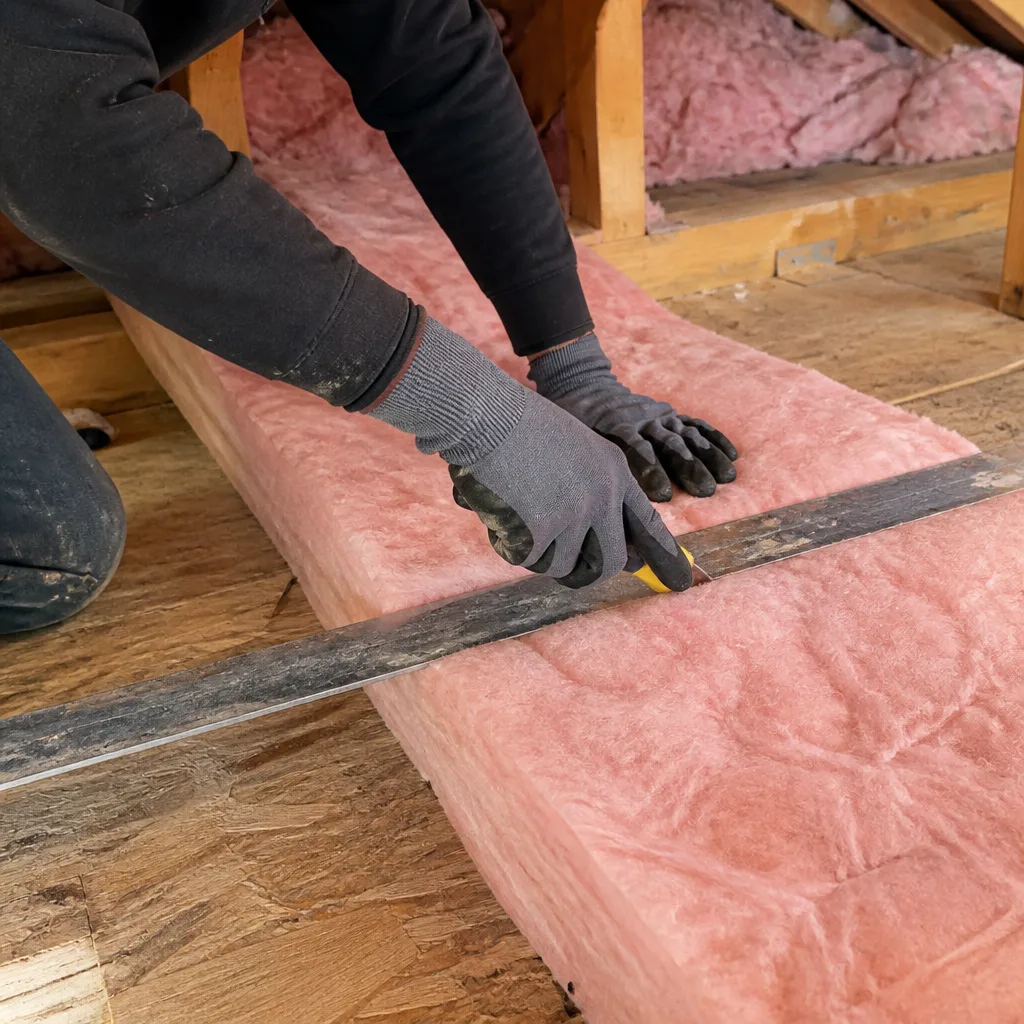
Every Rockwool job follows the same sequence, documented start to finish:
- 1
Call and written estimate. You call (218) 261-7714. We schedule a walkthrough and send a written price with a written scope before anyone lifts a tool. That’s Haven Standard Clause 1, and it’s non-negotiable.
- 2
Blower-door test before any material goes in. Wes Okafor runs a pressurization reading on every applicable wall job to document how much air your envelope is losing. The number is printed on your report.
- 3
Air sealing first. We seal top plates, rim joists, can light penetrations, and any accessible framing gaps before insulation goes in. Insulation without air sealing is a thermal bandage.
- 4
Rockwool installation or repair. We measure each cavity, match the right product (Comfortbatt, Safe’n’Sound, Comfortboard, or an appropriate alternative), and install to manufacturer spec. We do not lock you into one brand. If your situation calls for injection foam or a different material, we’ll say so and write it down.
- 5
Post-installation blower-door reading and documentation. We run the test again, compare the numbers, and hand you a printed report with before and after ACH50, R-values by zone, and a photo log of sealed locations.
- 6
365-Day Done Right Promise. If it’s not done right, we make it right. That’s in writing too.
What Rockwool Wall Insulation Costs in Chicago
For a standard 1,200-square-foot Chicago bungalow or two-flat, here’s what we write on estimates:
- Interior wall soundproofing with Safe’n’Sound: $1,800 to $3,200 per floor, depending on wall count and access.
- Drill-and-fill with Rockwool or comparable blown material in closed walls: $2,200 to $4,800 for a typical single-family home.
- Full exterior wall insulation retrofit with Comfortboard 80 plus air sealing: $5,500 to $8,900 on a two-flat, including sheathing prep and fastener correction where needed.
- Rim joist sealing and Rockwool batts in a basement or crawl space: $900 to $2,400, with the blower-door test included on applicable jobs.
What moves the price: wall access (finished drywall vs. open framing), how much air sealing the blower-door test reveals, and whether old insulation needs removal first. Call (218) 261-7714 for a written quote. Estimates are free, and we’ll read a competing estimate with you at no charge.
Why Chicago Homeowners Call Topside Attic Insulation for Rockwool Work
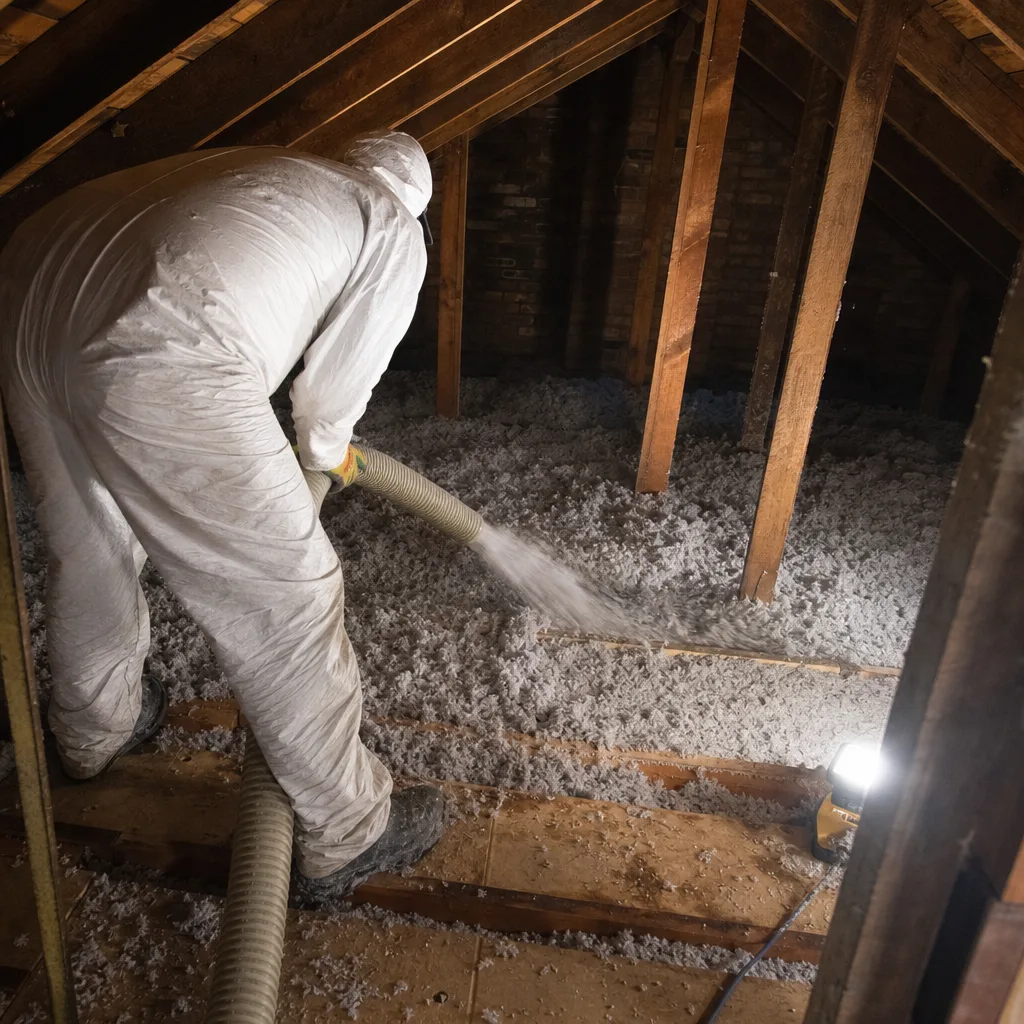
We’ve sealed and insulated more than 9,000 Chicago homes since 2016, and every one of them got a written price before work started and a documented record when the crew left. Our technicians are background-checked and uniformed, and the person who answers the phone works here, not at a call center. We install Rockwool, but we also work with Owens Corning, Johns Manville, Knauf, CertainTeed, Icynene, Demilec, GreenFiber, and Reflectix for radiant barrier applications. That means we match the material to the job, not the other way around. Under Haven Standard, you get before-and-after blower-door numbers on every applicable job so you can see the performance change you actually paid for.
FAQs
Rockwool costs 20 to 30 percent more than fiberglass batts, but in Chicago’s freeze-thaw climate it resists moisture, doesn’t sag over time, and provides better sound control, which makes it a solid choice for two-flats and row houses. The bigger factor is whether air sealing is done first. At Topside Attic Insulation, we won’t install insulation over unsealed cavities. Call (218) 261-7714 for a written quote specific to your walls.
Yes, we use drill-and-fill methods to install Rockwool or comparable blown material in closed walls, but only after we’ve verified the cavity condition and sealed accessible gaps. The process involves drilling small access holes, filling the cavity, and patching. You’ll get before-and-after blower-door numbers on applicable jobs so you can verify the result.
Most Rockwool wall insulation jobs in Chicago are scheduled within five to ten business days of the estimate, and a live person answers the phone 24/7, including weekends. If you need a same-week estimate, call (218) 261-7714 and we’ll tell you the earliest available walkthrough time.
Yes, all completed work carries our 365-Day Done Right Promise: if it’s not done right, we make it right. The warranty is written, and you receive it before we start. Rockwool carries its own manufacturer warranty on the product; our warranty covers the installation and air sealing.
Repair is cheaper when damage is localized, such as moisture-soaked batts in one wall section or detached Comfortboard on one elevation. If the blower-door test shows widespread air leakage across the envelope, replacement with proper air sealing gives you better long-term performance. We’ll run the numbers and show you both paths. Seal the holes first. Then add the R-value. The numbers will tell you whether it worked.
Written by Wes Okafor, Owner & Lead Building Envelope Technician, Topside Attic Insulation at Topside Attic Insulation, serving Chicago and nearby areas.