
CertainTeed Vapor Barrier Installation: The Chicago Owner’s Guide
CertainTeed vapor barrier replacement in Chicago typically runs $1.85 to $3.40 per square foot installed, with most crawl space and basement jobs landing between $1,600 and $4,200 depending on square footage, access clearance, and whether the existing barrier needs full removal first. We stock CertainTeed-compatible vapor barrier membrane on our trucks and can usually install the same week we inspect. Most Chicago homeowners discover the problem the way you just did: a musty smell that won’t quit, condensation beading on the crawl space walls, or a humidity reading upstairs that spikes every time the furnace kicks on.
Key takeaways:
- Installed cost: $1.85-$3.40/sq ft in Chicago, most jobs $1,600-$4,200
- We stock CertainTeed-compatible barrier and can typically install same-week
- Written price before any work starts, per Haven Standard Clause 1
- Before-and-after moisture readings documented on every job
Which CertainTeed Models This Applies To
CertainTeed doesn’t sell vapor barrier as a standalone consumer product line the way they sell MemBrain or SmartBreather. What most Chicago owners have is a crawl space or basement vapor barrier that was specified as part of a larger CertainTeed insulation package, or a barrier that the previous contractor matched to CertainTeed’s residential spec sheet. The compatibility question that actually matters is permeability: CertainTeed’s standard below-grade barrier is a 10-mil or 12-mil polyethylene with a perm rating under 0.1, which is what you want under a Chicago slab or over a crawl space floor.
Look at the edge of the existing barrier. If you can peel back a corner, you’ll often find the mil thickness printed right on the poly. If it says 6-mil, that’s builder-grade and it was undersized for Chicago’s freeze-thaw cycle before it was ever laid. We replace it with 10-mil or 12-mil reinforced poly, lap the seams 12 inches, and seal every seam with poly tape plus mechanical fastening at the walls. CertainTeed’s thermal and moisture control specs assume that barrier is continuous; gaps at seams, columns, and penetrations undo the whole assembly.
Signs Your CertainTeed Vapor Barrier Installation Is Failing
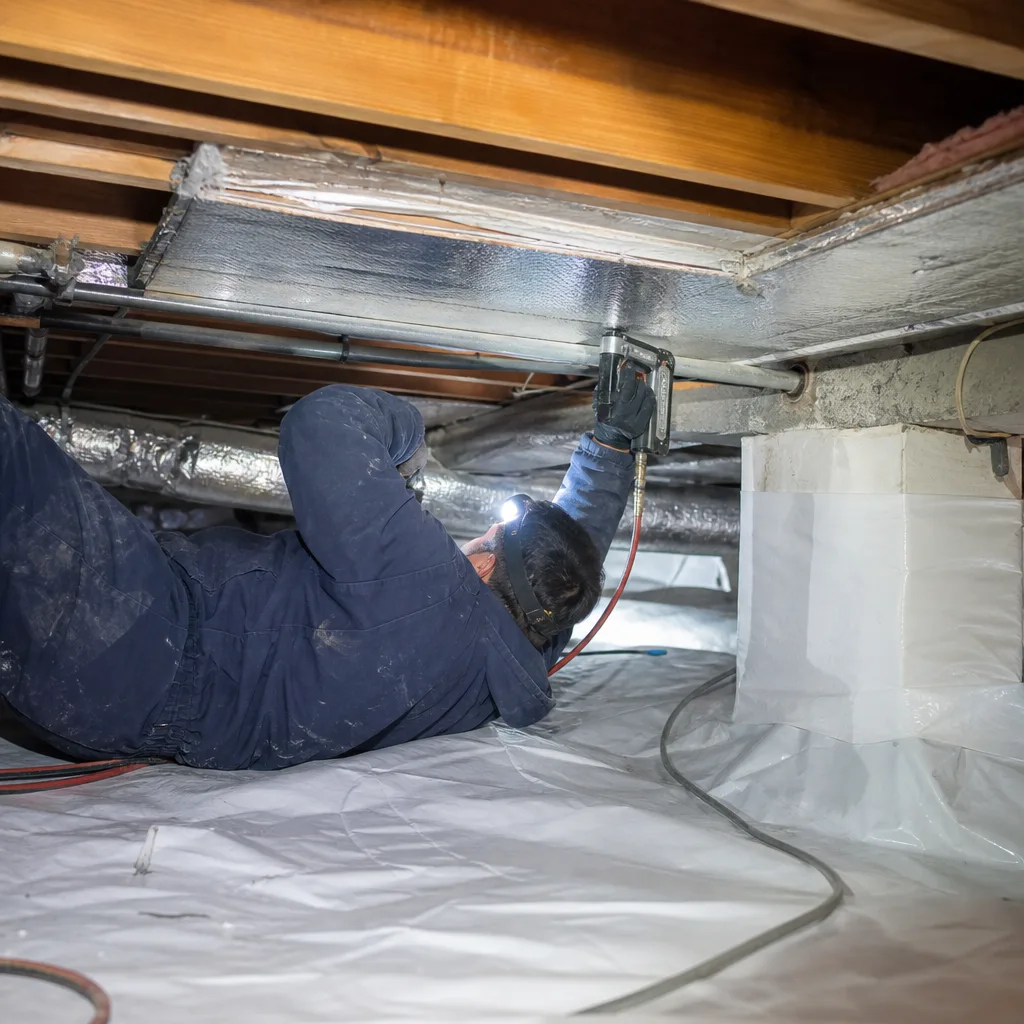
- Musty odor that moves with the seasons. A barrier that’s still intact holds ground moisture below the poly. When you smell mildew strongest in spring and after heavy rains, the barrier has tears or the seams have opened and soil moisture is evaporating into the crawl space air.
- Condensation on foundation walls or rim joists. Warm Chicago basement air hits cold concrete, and if the barrier isn’t doing its job, that moisture has nowhere to go. You’ll see water beading or dark staining at the sill plate.
- Insulation batting that’s soaked or sagging. Fiberglass batts in the rim joist or crawl space ceiling that feel damp or hang loose are absorbing moisture the barrier should have stopped. It’s the insulation equivalent of leaving a window open all January.
- Humidity readings above 60% in the basement or crawl space. A working vapor barrier keeps below-grade humidity in the 45-55% range. When it creeps past 60, the barrier has failed somewhere even if you can’t see it from the hatch.
- Visible tears, gaps at the walls, or pooling water on top of the poly. The barrier should be flat, continuous, and mechanically fastened up the foundation wall at least 6 inches. If water sits on top, it’s either torn below or the perimeter seal is gone.
Replacement Cost & What’s Included
For a typical Chicago crawl space of 700 to 1,000 square feet, full CertainTeed-compatible vapor barrier replacement runs $1,300 to $3,100 including the barrier material, seam tape, mechanical fasteners, and disposal of the old poly. Basement floor installations, where the barrier goes under framing or before a finished floor, run higher because the barrier has to be lapped and sealed around every wall, column, and penetration. We don’t charge for the estimate and we don’t start any work without a written price.
Every installation includes a documented photo record of the entire process: old barrier removed, floor prepped, new barrier laid and seamed, fasteners and tape in place. On applicable jobs, we take before-and-after moisture readings with a digital hygrometer so you can see the actual humidity change, not just our word that it’s better. The work is covered by our 365-Day Done Right Promise: if it’s not done right, we make it right.
DIY or Call Us?
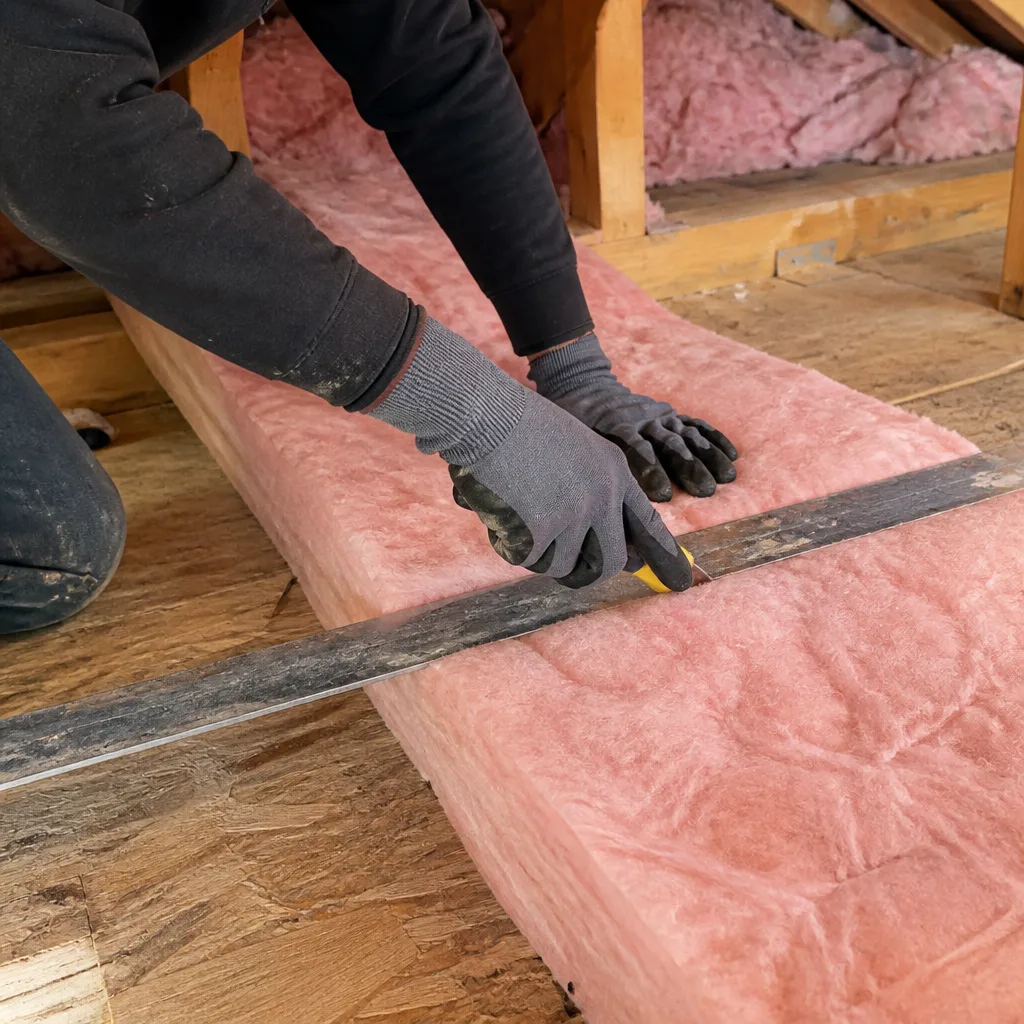
If you want to assess the damage yourself, you can safely do that. Put on a respirator and gloves, crawl to the hatch, and photograph what you see. Look for standing water, tears in the poly, and seams that have pulled apart. That inspection data helps us give you a faster, more accurate written quote.
Where DIY goes wrong fast is the install. Vapor barrier work means working in a confined crawl space with limited clearance, often around plumbing, electrical, and ductwork. A tear you can’t see now becomes a mold problem you can smell in August. Every job we do includes the barrier mechanically fastened to the foundation wall, not just laid on the floor and left to shift. If you’d rather not spend your Saturday under the house, call us at (218) 261-7714. We’ll inspect it, photograph it, and put the written price in your hand before anyone lifts a tool.
FAQs
A properly installed 10-mil or 12-mil vapor barrier in a Chicago crawl space should last 15 to 20 years. The Chicago-specific variable is freeze-thaw cycling: ground moisture rises in spring, the soil contracts in winter, and any barrier that wasn’t mechanically fastened to the walls will shift and tear at the seams well before the poly itself fails.
Small tears near the hatch or at a single seam can often be patched with compatible poly tape and a heat-welded patch, which we stock. But if the barrier is 6-mil builder-grade poly, or if it’s pulling away from the foundation wall in multiple places, patching just delays the swap by a year or two. Call us at (218) 261-7714 and we’ll tell you honestly which situation you’re in. The estimate is free either way.
Most Chicago crawl space vapor barrier replacements take one day for the crew to complete, plus a few hours for moisture readings and photo documentation afterward. Larger basements or jobs with significant old-barrier removal can run two days. We’ll give you a time window in writing before we schedule anything.
We stock CertainTeed-compatible 10-mil and 12-mil reinforced poly vapor barrier on our trucks, along with seam tape and mechanical fasteners. We also carry Reflectix products for radiant barrier applications. If your job requires a material we don’t have on hand that day, we’ll note it in the written scope before any work starts.
If your CertainTeed vapor barrier is failing, we’ll inspect it, document it, and give you a written price before anything happens. Call Topside Attic Insulation at (218) 261-7714 for a free estimate. We answer the phone 24/7, and a live person picks up, not a voicemail loop.
Written by Wes Okafor, Owner & Lead Building Envelope Technician, Topside Attic Insulation at Topside Attic Insulation, serving Chicago and nearby areas.