
Icynene Spray Foam Insulation in Chicago: What to Know First
We install and service Icynene spray foam insulation throughout Chicago as an independent Icynene service provider, with most open-cell and closed-cell jobs completed in one to two days. A typical rim joist spray foam job in a Chicago bungalow runs $900 to $1,800, while a full attic roof deck with closed-cell Icynene lands between $5,500 and $11,000 depending on square footage and depth. This page is for homeowners who already have Icynene or are comparing it against other spray foam brands and want specifics, not a brochure. Call (218) 261-7714 and a live person answers, 24/7.
How Icynene Products Fail - and How We Fix Them
Over twenty years of pulling back drywall and crawling rim joists in Chicago, we’ve seen the same Icynene failure patterns repeat. Here’s what actually goes wrong, by product line.
- Icynene Classic (open-cell, light-density): This is the original water-blown formula, and in Chicago attics it tends to shrink slightly at the edges where it meets framing after five to eight years of thermal cycling. That hairline gap becomes an air channel. We see it most often on attic knee walls in Portage Park and Jefferson Park bungalows. The fix is cutting back the loose edge and applying a fresh open-cell pass, not just caulking over it, because caulk doesn’t match the expansion profile.
- Icynene ProSeal (closed-cell): ProSeal is a good product, but it’s unforgiving if the substrate temperature is below about 40 degrees during application. In Chicago, that means installs done in November through March without proper substrate heating can develop weak adhesion at the rim joist, and the foam eventually separates from the concrete or sill plate. We fix this by removing the delaminated section, prepping the surface, and re-spraying with substrate temperature control. That’s a documentation point we include in your photo record.
- Icynene ProSeal LE (low-emitting, closed-cell): This line was marketed heavily to Chicago homeowners with chemical sensitivities, and it is lower-VOC than standard ProSeal. The failure mode we encounter is installer error, not the product: sprayed too thick in a single pass, the exothermic reaction scorches the core, leaving a dark, brittle center with reduced R-value. We see this in attics where a crew rushed the job. The fix is cutting out the scorched section and re-spraying in proper lift thicknesses, which we document with photos showing the corrected pass depth.
- Icynene MD-C-200 (medium-density, closed-cell): This is the spray foam most Chicago builders spec for roof decks. Its weak point is UV exposure. If a roofer leaves the foam exposed on an unvented deck for more than a few months before the roof goes on, the surface chalks and degrades. When we find this on a remodeling inspection, we shave the oxidized surface and verify the remaining R-value with a core sample before deciding whether to add a fresh pass or remove and start over.
- Icynene open-cell in rim joists (all open-cell lines): Open-cell foam in a rim joist cavity that never had the sill plate air-sealed first will still pass air through the foam itself, because open-cell is air-permeable. This is the most common Icynene failure we diagnose in Chicago: a homeowner paid for spray foam, got open-cell at the rim, and the blower-door number barely moved. The fix is not more foam. It’s pulling the open-cell back, sealing the sill plate and rim penetrations with closed-cell Icynene ProSeal or a compatible air-sealing membrane, then re-insulating. We run the blower-door before and after so the number tells you whether it worked.
Our Icynene Spray Foam Insulation Process
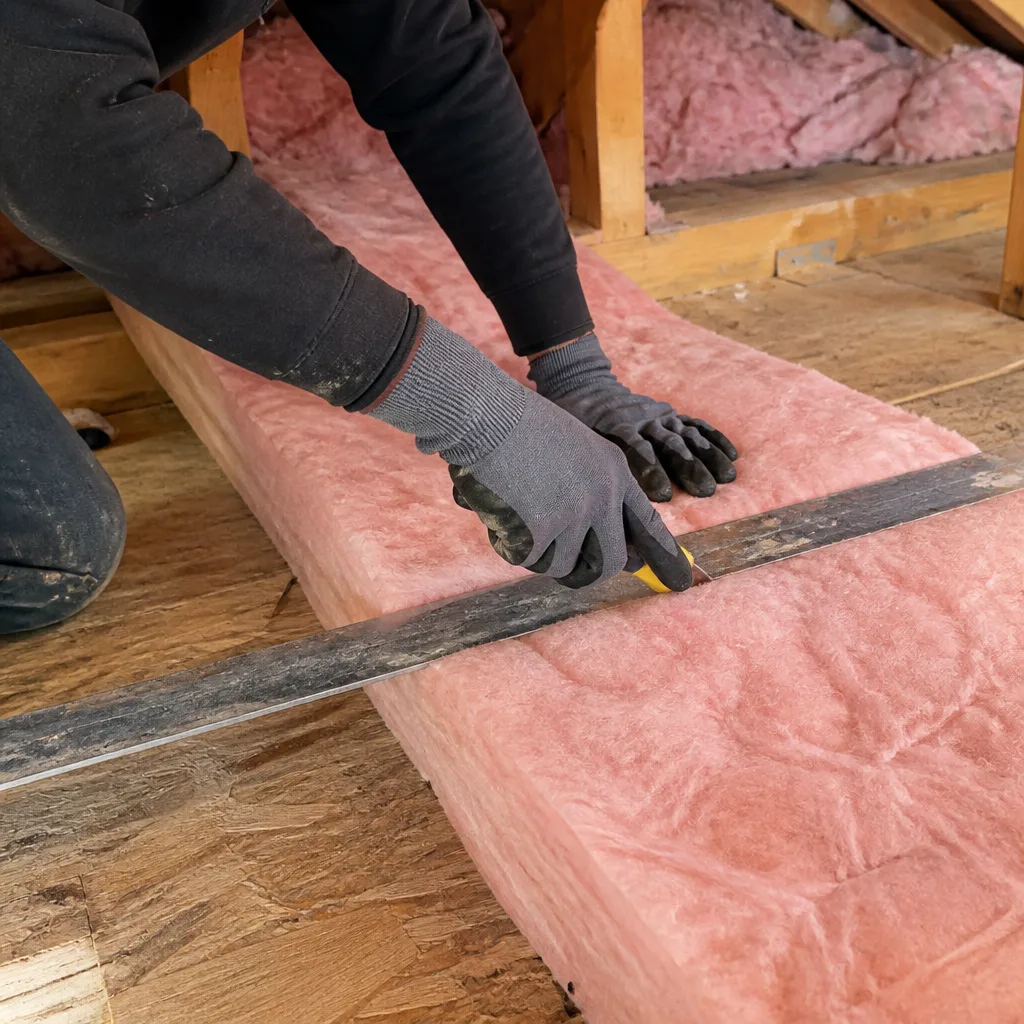
Every Icynene job at Topside Attic Insulation follows the same sequence, and it starts before any material leaves the truck. Here’s how a typical Chicago spray foam job runs.
- 1
Written price and scope. You call (218) 261-7714. We schedule a site visit, measure, and hand you a written price with a written scope of work before anyone lifts a tool. This is Haven Standard Clause 1, and it’s not optional.
- 2
Diagnostics first. On any job where air sealing matters, we run a blower-door test before we spray. The pre-installation ACH50 reading tells us how much air the building envelope is losing, and it tells us where to focus the air sealing. Sealing holes before adding R-value is the entire point.
- 3
Air sealing before foam. We seal top plates, can light penetrations, rim joist gaps, and any chase or plumbing penetration we can access. Then we spray. If the job is a rim joist, we spray closed-cell Icynene ProSeal unless the scope specifies otherwise and you’ve seen the trade-off in writing.
- 4
The spray. We use Icynene product lines with OEM nozzles and follow the manufacturer’s lift-thickness and substrate-temperature specs. For closed-cell, that means no more than 2 inches per pass. For open-cell, we watch for the proper rise and trim back overfill before drywall goes up.
- 5
Post-installation blower-door. We run the test again and print the before-and-after numbers. A rim joist job that reads 3,800 CFM50 before sealing and 1,900 after is a documented improvement. You don’t have to take our word for it.
- 6
Documented photo record. You get photos of every air-sealed location, the installed R-values by zone, and the blower-door readings. The 365-Day Done Right Promise is in writing, and the warranty is in your file before the crew leaves.
What Icynene Spray Foam Insulation Costs in Chicago
Here’s what we charge for Icynene work in Chicago, in real dollar ranges. No “call for pricing.” The price is on the page.
- Rim joist spray foam (Icynene ProSeal closed-cell, 2 inches): $900 to $1,800 for a typical Chicago bungalow with 12 to 18 rim bays. Crawl space rims run higher if access is tight.
- Garage ceiling / floor above unconditioned space (Icynene Classic open-cell, 5.5 inches): $1,400 to $2,800 for a standard two-car garage.
- Attic roof deck (Icynene ProSeal closed-cell, 4 to 5 inches at the roof deck): $5,500 to $11,000 for a 1,000 to 1,500 square foot attic in a vintage Chicago frame house. The spread depends on depth, access, and whether we’re removing old insulation first.
- Open-cell attic (Icynene Classic, 10 to 12 inches at the attic floor after air sealing): $3,800 to $7,500 for a full attic in a bungalow or two-flat.
What moves the price: square footage, depth, whether we’re removing old insulation, and whether the job needs prep work like rodent remediation or deck sheathing repair. Estimates are free. Call (218) 261-7714 and we’ll give you a written price before any work starts.
Why Chicago Homeowners Call Topside Attic Insulation for Icynene Work
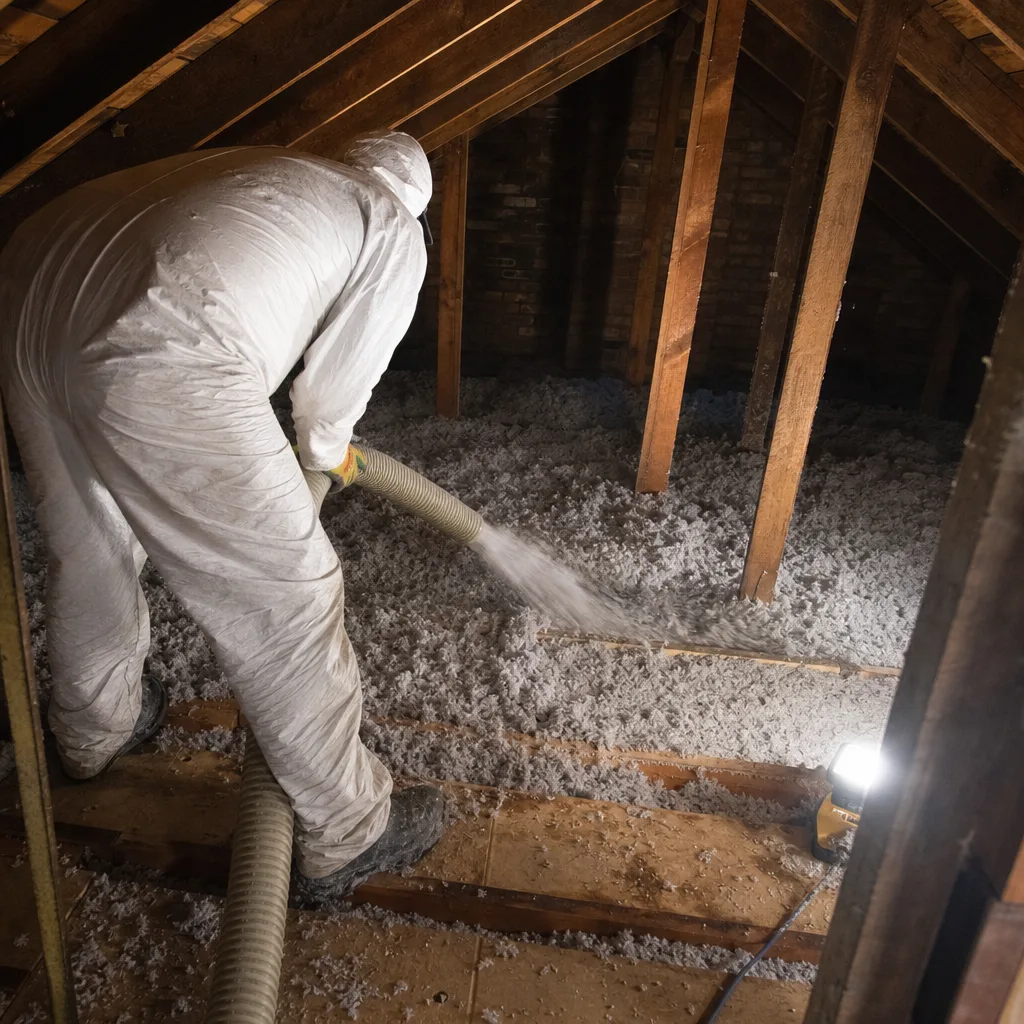
We run a blower-door test before any insulation goes in, because air sealing is a prerequisite, not an upsell. The number you get after the job is the number you paid for. Since 2016, we’ve sealed and insulated 9,000+ Chicago homes under The Haven Standard, and every one of them left with a written price before work started and a documented record when the crew left. If your Icynene job isn’t done right, the 365-Day Done Right Promise means we make it right. We also service Reflectix radiant barrier when a Chicago attic calls for it, so you’re not stuck with a single-brand contractor. Wes Okafor, our owner and lead building envelope technician, grew up six blocks from the Portage Park field house and has been running blower-door diagnostics in Chicago for over twenty years. He’s the one who reads the numbers with you.
FAQs
Yes, closed-cell Icynene ProSeal is worth it in Chicago’s climate if the air sealing is done first, because foam without sealing still lets conditioned air escape through the gaps. Open-cell Icynene Classic is worth it only in specific applications like interior sound control or attic floors over sealed ceilings. Call (218) 261-7714 and we’ll tell you which one fits your house, in writing.
No, we remove the old insulation before spraying Icynene, because foam sprayed over loose-fill traps moisture and hides air leaks we need to see. This is standard practice for every Icynene job we do in Chicago, and it’s in the written scope. The cost of removal is included in any quote we give you for spray foam.
Most rim joist Icynene jobs take one day, and a full attic roof deck takes two days, including prep and cleanup. Your written scope will give you the exact timeline before you book. Call (218) 261-7714 for a free estimate and we’ll put the dates in writing.
Closed-cell Icynene ProSeal at 2 inches or more acts as its own vapor barrier, so no separate barrier is required in Chicago rim joists or roof decks. Open-cell Icynene Classic does not act as a vapor barrier, and in a Chicago attic it should always be paired with proper air sealing and, where required by code, a separate vapor retarder. Wes Okafor can walk you through this at your site visit with the blower-door numbers in hand.
The manufacturer’s material warranty on Icynene products is separate from our labor warranty, and our 365-Day Done Right Promise covers the installation work in writing. If something isn’t right within the first year, we come back and fix it. No fine print, no claim number. Call (218) 261-7714 and ask for the written warranty language before you decide.
Written by Wes Okafor, Owner & Lead Building Envelope Technician, Topside Attic Insulation at Topside Attic Insulation, serving Chicago and nearby areas.