
Icynene Blown-In Insulation in Chicago: What to Know First
Icynene blown-in insulation work in Chicago typically runs $1,800 to $4,600 for a standard attic top-up or dense-pack wall job, and most homes are finished in one day. We’re an independent Icynene service provider, not an authorized dealer, which means we make decisions based on what the blower-door numbers tell us, not what a single manufacturer’s spec sheet says. If you own a home with existing Icynene foam and need blown-in cellulose or fiberglass added, removed, or reworked, call (218) 261-7714 and we’ll give you a written price before anyone lifts a tool.
This page is for Chicago homeowners who already have Icynene spray foam in their attic, walls, or rim joists and now need blown-in insulation to complete the thermal boundary. It covers where Icynene products fail around here, what it costs to fix, and why we run a blower-door test before any material goes in.
How Icynene Products Fail - and How We Fix Them
Icynene open-cell and closed-cell foams behave differently in Chicago’s climate than they do in a spec sheet. Here’s what we actually see when we open up attics and walls in the city and inner suburbs:
- Icynene Classic (open-cell, ~0.5 lb density) shrinks and pulls away from framing in freeze-thaw cycles. After five to eight Chicago winters, open-cell foam can develop hairline separations at the top plates and around can lights. The foam looks fine from the hatch, but a blower-door test shows air moving through those gaps. The fix is air sealing those separation points, then blowing cellulose over the foam to restore the full R-value and cut the air pathway.
- Icynene ProSeal (closed-cell) makes roof deck top-ups tricky. Closed-cell foam on the underside of a roof deck creates a vapor-impermeable layer. If you blow cellulose directly on top of it without accounting for the moisture dynamics, you can trap condensation in the roof assembly during a Chicago January. We check the roof deck’s condition and the existing foam’s thickness before adding blown-in material, because the wrong top-up on top of ProSeal can rot a roof deck in three seasons.
- Icynene open-cell absorbs airborne dust and oil from balloon-frame walls. Chicago’s older homes with balloon framing run stud bays from basement to attic. Open-cell foam in those bays acts like a filter over decades, accumulating soot and oil vapor from old heating systems. When blown-in dense-pack cellulose goes in next to dirty foam, the cellulose fibers won’t fully compact. We vacuum out the contaminated foam first, then dense-pack the cavity clean.
- Homes with Icynene in the rim joists often have uninsulated attic floors above them. This is the one we see most often in bungalows and two-flats on the Northwest and Southwest Sides. The previous owner sealed the rim joists with foam, which is good, but the attic floor above the top plates was never air sealed or topped up. The rim joist fix can’t do its job if the attic is the weak point. We seal the top plates, can lights, and penetrations, then blow to the attic’s target R-value.
- Icynene foam under a roof deck hides rodent damage. In neighborhoods like Portage Park, Irving Park, and Jefferson Park, squirrels and rats chew through open-cell foam at the fascia and soffit line. The damage sits behind the foam, invisible from the attic floor. When we’re adding blown-in insulation, we check the perimeter for entry points first. If we find them, we note it in the photo log and recommend rodent proofing before the insulation goes in, because new cellulose is just nesting material.
Our Icynene Blown-In Insulation Process
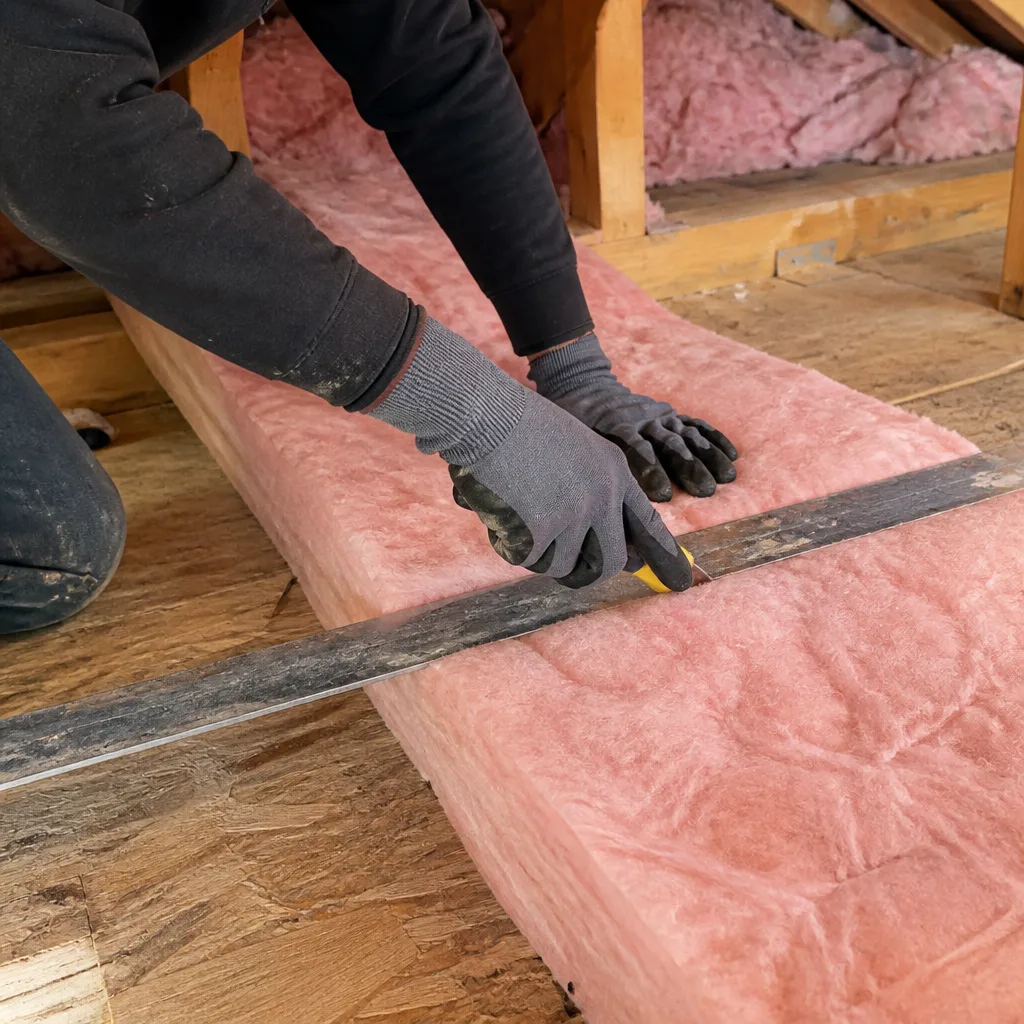
Every Icynene job in Chicago follows the same sequence, because the sequence is what determines whether the work actually performs:
- 1
Call and scope: You call (218) 261-7714, describe the house and what you think the problem is. We ask about the year built, the attic access, and whether you have a blower-door number from a previous audit.
- 2
Blower-door test before anything else: We set up the fan, measure ACH50, and record the baseline. This is the number that tells us where air is moving, not where we assume it’s moving.
- 3
Written price and scope: Flat price, written scope, written warranty. No work starts until you’ve seen it. Under the Haven Standard, that’s non-negotiable.
- 4
Air sealing first: Top plates, can lights, penetrations, and any Icynene separation gaps get sealed. We don’t blow insulation over unsealed holes.
- 5
Blown-in insulation installed to target R-value: For 95% of Chicago attics, that’s R-49 to R-60. For dense-pack walls, it’s as much as the cavity allows without over-pressurizing.
- 6
Post-work blower-door test and documentation: We run the test again, record the new ACH50, and hand you a printed report: pre and post numbers, installed R-values by zone, and a photo log of every air-sealing location.
What Icynene Blown-In Insulation Costs in Chicago
Here are the numbers we quote most often on Icynene homes in Chicago. These are real ranges, not teaser prices:
| Job Type | Typical Cost | What Moves the Price |
|---|---|---|
| Attic top-up over existing Icynene (1,200 sq ft attic) | $2,200 – $3,400 | Depth to reach R-49 or R-60, access, air sealing scope |
| Dense-pack wall insulation (Icynene removed from bays) | $4,500 – $7,800 | Number of storys, lathe and plaster removal, balloon-frame access |
| Full attic removal of damaged Icynene + re-blow | $3,800 – $6,200 | Cubic yards of foam removed, disposal, rodent damage repairs |
| Blown-in top-up + rim joist air sealing | $1,800 – $3,000 | Basement ceiling accessibility, joist bay count |
What moves the price: the size of the attic or wall cavity, the condition of the existing Icynene, whether we’re removing old foam or just adding on top, and how much air sealing the blower-door test reveals. We give you one written price that doesn’t change when the crew shows up. Call (218) 261-7714 for a free estimate read from the actual numbers.
Why Chicago Homeowners Call Topside Attic Insulation for Icynene Work
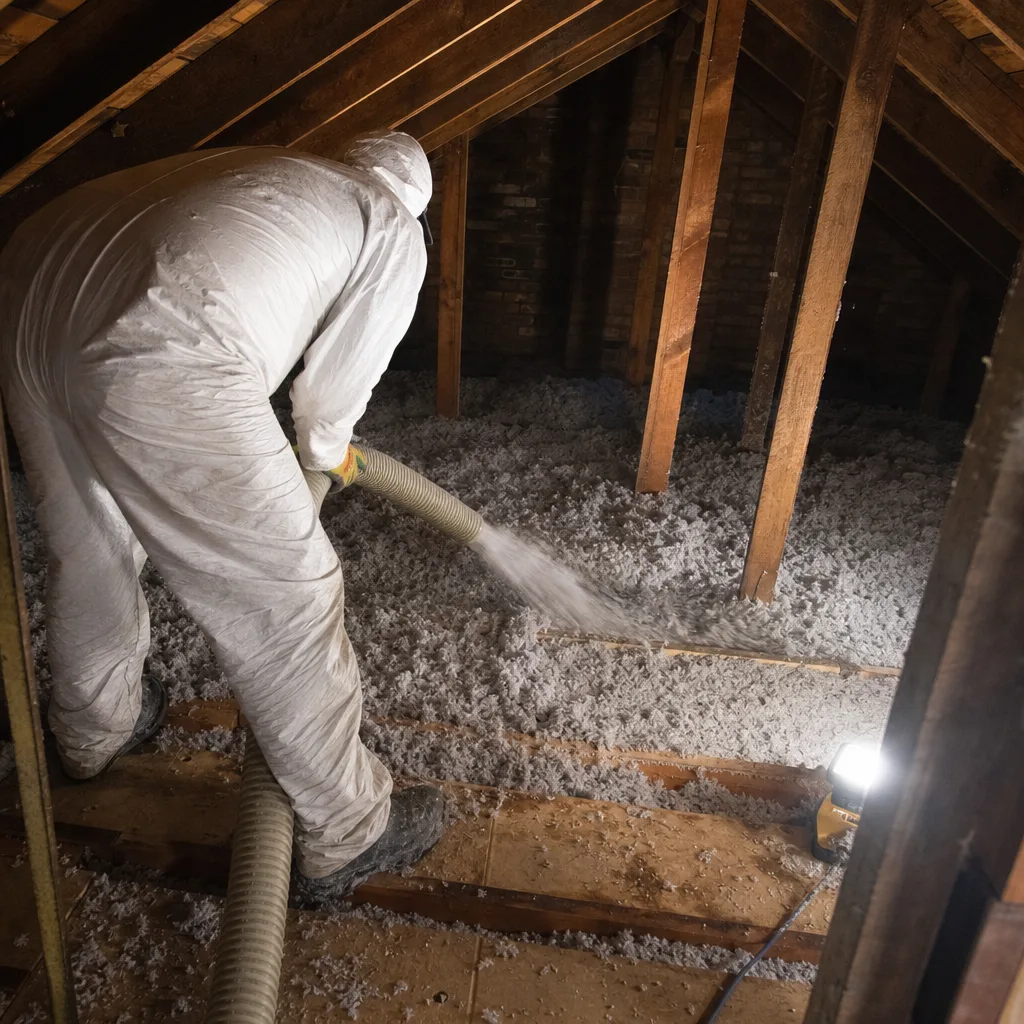
Most of the calls we get started with a blower-door test from someone else, or an energy audit that flagged a problem but didn’t fix it. Wes Okafor, who has been doing insulation work in Chicago for over twenty years, grew up on the Northwest Side near Portage Park and learned air movement and thermal performance at Truman College. He runs a blower-door test before any Icynene material gets touched, and every job closes with a printed report: pre-installation ACH50, post-installation ACH50, installed R-values by zone, and a photo log.
Since 2016, we’ve sealed and insulated 9,000+ homes in the Chicago area under the Haven Standard: written price before work starts, documented record when the crew leaves. The 365-Day Done Right Promise means if it’s not done right, we make it right. We also work with Reflectix and other brands on mixed-material jobs, so we’re not locked into one manufacturer’s product line. We choose what performs, based on the numbers.
FAQs
For most Chicago attics, a top-up over existing Icynene foam costs less than removal and replacement, as long as the foam isn’t contaminated, rodent-damaged, or pulling away from framing. If the existing foam is open-cell and more than ten years old, removal often makes more sense because compression and separation reduce its effective R-value. Call (218) 261-7714 and we’ll give you a written price for both paths so you can decide from real numbers, not speculation.
Yes, in most attics, blown-in cellulose or fiberglass can go directly on top of open-cell Icynene foam. With closed-cell Icynene ProSeal on a roof deck, we evaluate the moisture dynamics first before adding material to avoid trapping condensation. The blower-door test tells us if the existing foam is still air-sealing or if we need to fix separation gaps before blowing.
Most attic top-ups are done in one day. A full dense-pack wall job or foam removal can run two to three days depending on access and contamination. We schedule by the job, not by the week. Call (218) 261-7714 for a written price and a date that sticks.
Adding blown-in cellulose or fiberglass on top of Icynene foam does not void any Icynene manufacturer warranty. However, Icynene warranties cover the foam itself, not the air-sealing or the thermal performance of the whole assembly. We document everything with photos and blower-door numbers so you know exactly what changed, regardless of what any manufacturer’s paperwork says.
Yes. Seal the holes first. Then add the R-value. The numbers will tell you whether it worked. Blowing insulation over an unsealed attic floor in Chicago means the new material is filtering warm air, not stopping it. Our process always air seals top plates, can lights, and penetrations before any blown-in material goes in. That’s the Haven Standard, and it’s why we publish before-and-after blower-door numbers on every applicable job. Call (218) 261-7714 for a free estimate.
Written by Wes Okafor, Owner & Lead Building Envelope Technician, Topside Attic Insulation at Topside Attic Insulation, serving Chicago and nearby areas.