
Icynene Radiant Barrier Installation: The Chicago Owner’s Guide
Radiant barrier installation paired with Icynene spray foam in Chicago typically costs between $2,200 and $4,800 for a standard attic, with most jobs completed in one day. We stock foil-faced radiant barrier rolls and Icynene-compatible accessories on our trucks, so the work doesn’t stall waiting on a parts order. Most homeowners discover the issue when their attic feels hotter than it should in July, or when the radiant barrier has torn, sagged, or delaminated from the roof deck after a few Chicago freeze-thaw cycles.
The radiant barrier itself is straightforward: a reflective foil that blocks radiant heat transfer from the roof deck into the attic. What complicates matters in Chicago is how it interacts with Icynene open-cell or closed-cell foam already on the roofline or attic floor. We see failures where the barrier was stapled too tight and the foil split at the staple line, or where condensation formed because the barrier trapped moisture against the decking. The fix is usually a re-install with proper ventilation spacing and the right fastening pattern, not a full replacement.
Which Icynene Models This Applies To
Radiant barrier work applies to homes with Icynene Classic (open-cell), Icynene ProSeal (closed-cell), or Icynene MD-C-200 (medium-density closed-cell) foam already installed, regardless of whether the foam sits on the attic floor or the roofline. The radiant barrier itself is a separate layer: a foil-faced material installed under the roof deck, over the existing insulation, or in some cases integrated with a rigid foam board. There’s no Icynene-branded radiant barrier per se, so the “part” is the radiant barrier material and its fastening system, matched to the existing foam’s depth and the roof pitch.
The compatibility gotcha we run into constantly in Chicago: if your Icynene foam was sprayed directly to the underside of the roof deck, you cannot simply staple reflective foil over it. The foil needs an air gap of at least 3/4 inch to function as a radiant barrier. Without that gap, you’ve created a vapor trap, and in a Chicago winter that means frost in the attic in January and mold by March. For those rooflines, we install a different configuration: perforated radiant barrier or a foil-faced foam board that allows moisture to pass. If your attic has Icynene on the floor and a vented attic above, the standard non-perforated foil on the rafters works fine.
We’re an independent service provider, not affiliated with Icynene. We stock radiant barrier from Reflectix and other quality manufacturers, and we use fasteners and tapes rated for the temperature swings Chicago attics experience: 130°F in August down to sub-zero in February.
As for OEM versus aftermarket: there isn’t a meaningful “OEM” radiant barrier for Icynene. Icynene makes foam, not foil. The real quality variables are foil thickness (we use 5/16″ double-sided for most Chicago attics), perforation pattern, and tensile strength. Cheaper foil tears at the staple line during installation and sags within two years. We install material rated for at least 15 years, and we tension it properly so it doesn’t belly in the summer humidity.
Signs Your Icynene Radiant Barrier Installation Is Failing
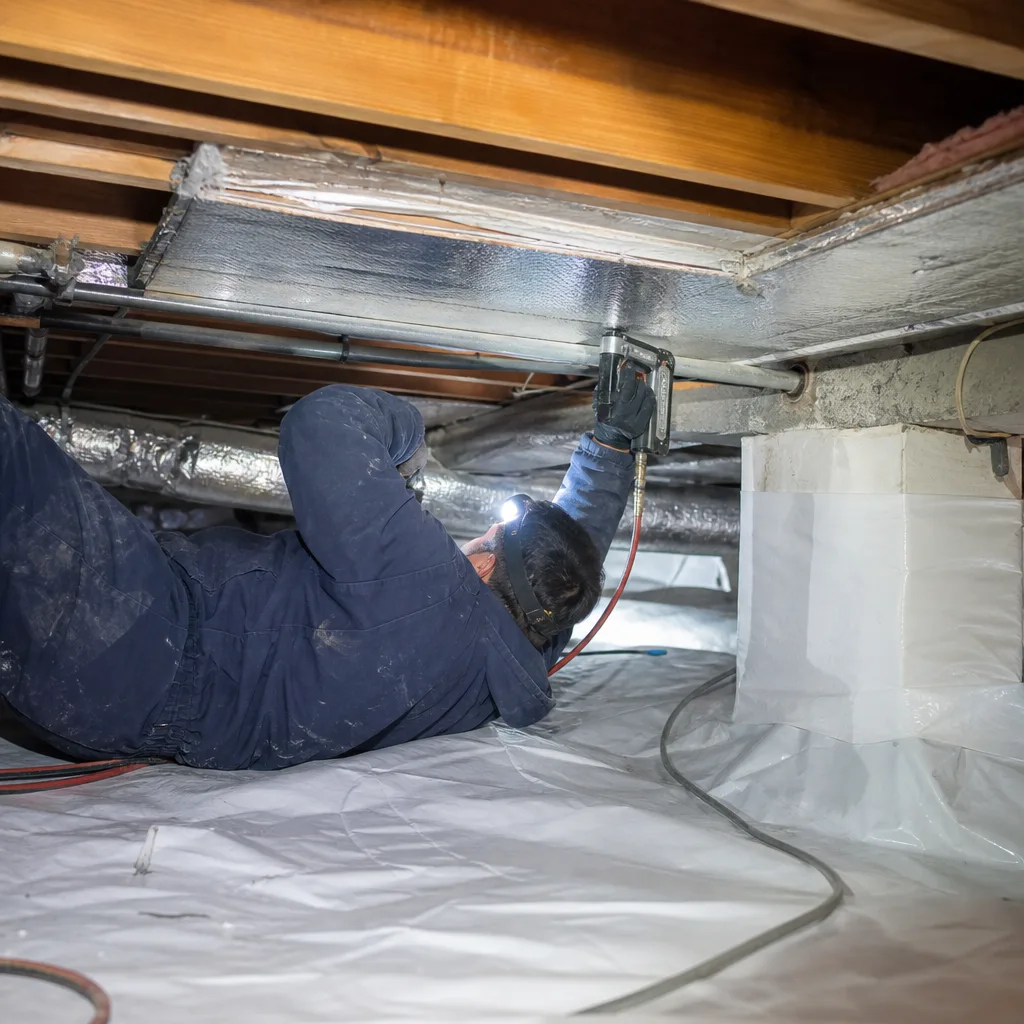
- Sagging or drooping foil between rafters. This happens when the barrier was stapled too far apart or the foil was stretched too tight during installation. In Chicago’s humid summers, non-perforated foil that isn’t tensioned correctly will belly and lose its reflective angle. The fix is re-stapling with the correct spacing, typically every 4 to 6 inches along the rafter.
- Tears radiating from staple points. The foil was pulled too aggressively during install, or the wrong staple gauge was used. Once a tear starts at the staple line, it propagates with roof deck movement. We see this most often in older Chicago bungalows where the rafters flex through the seasons. The section needs to be cut out and replaced, not patched.
- Condensation staining on the barrier or visible moisture on the underside of the roof deck. A non-perforated barrier installed against the decking, or over Icynene foam without an air gap, traps moisture. In a Chicago winter, that moisture freezes against the deck and thaws in spring, leaving water staining on the foil and eventually on your ceiling. This one needs a professional’s eye immediately, because the underlying foam can be wicking water into the framing.
- Dust accumulation on the foil’s reflective surface. Radiant barrier only works if the foil surface stays shiny. Chicago attics with active ventilation pull dust and debris through, and that dust settles on the foil, cutting its reflectivity by up to 40%. If you can write your name in the dust on the foil, its performance has dropped off. We can clean and re-install, or replace the worst sections.
- Hot spots in rooms directly under the attic. If one upstairs bedroom runs 8 degrees warmer than the rest of the house in July, the radiant barrier above that room has an issue: a gap, a tear, or missing coverage from the original install. We use an infrared camera to pinpoint the gap and sound the roof from inside the attic, then replace just the failed section rather than re-doing the whole attic.
Replacement Cost & What’s Included
What you’ll pay for Icynene-compatible radiant barrier replacement in Chicago depends on attic size, roof pitch, and how much of the existing barrier can be salvaged. Here’s what we quote across the metro area:
| Scope | Typical Price Range | Time on Site |
|---|---|---|
| Sectional repair (under 300 sq ft of failed barrier) | $450 - $900 | Half day |
| Full re-install, standard Chicago attic (800-1,200 sq ft) | $1,800 - $3,200 | One day |
| Full re-install with ventilation correction (adding baffles, air-gapping over foam) | $2,800 - $4,800 | One to two days |
| Icynene foam inspection and targeted repair alongside barrier work | $600 - $1,500 added | Same visit |
Every job gets a written price before any tool comes off the truck, per Haven Standard Clause 1. The price includes removal and disposal of failed barrier material, new radiant barrier (non-perforated for vented attics, perforated where vapor flow matters), correct fasteners, and a Documented Photo Record of every section installed. Before-and-after blower-door numbers are included on applicable jobs so you can see the air-sealing result in one figure. The work carries the 365-Day Done Right Promise: if it isn’t done right, we make it right.
DIY or Call Us?
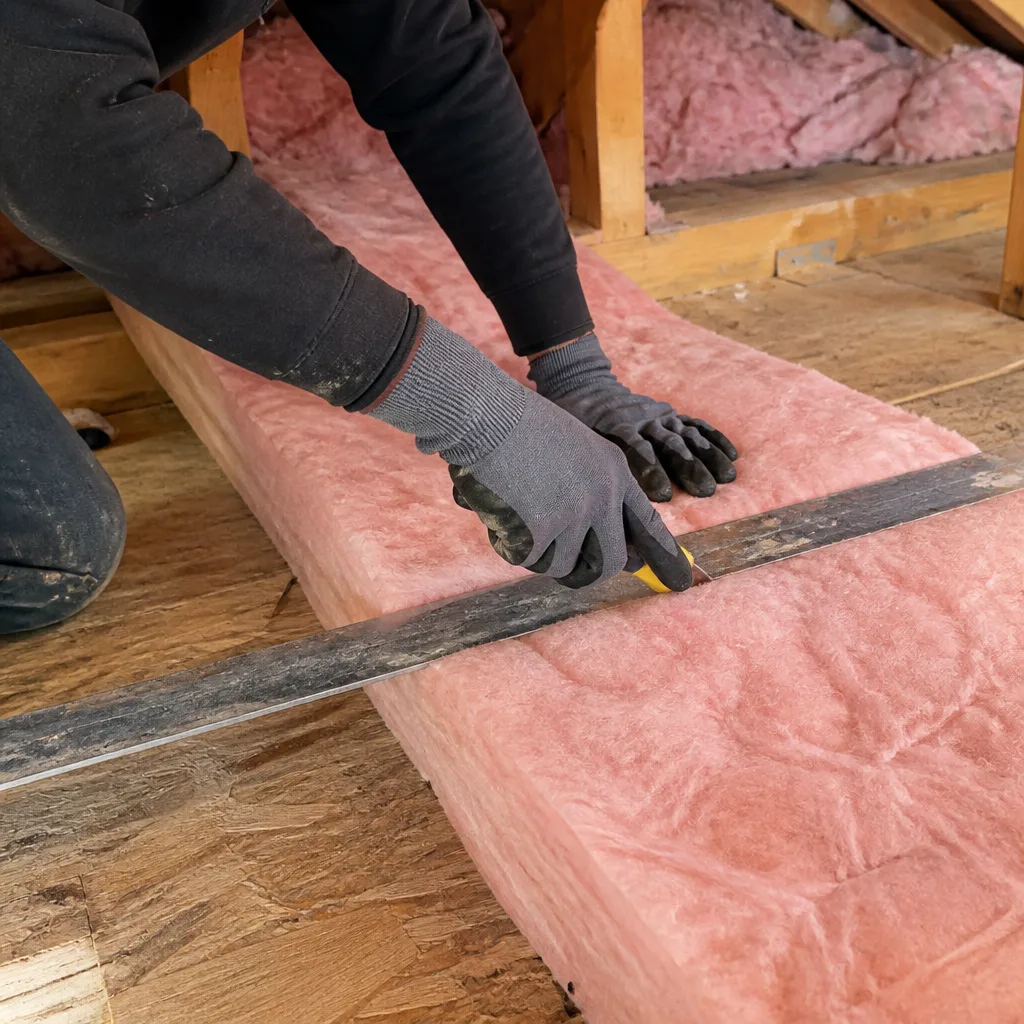
You can safely do a few things yourself before calling us. You can climb into the attic on a cool morning and look for sag, tears, and water staining. You can measure the air gap between the foil and the roof deck, and note whether your attic feels hotter than the rest of the house. You can take photos of what you find, which helps us quote faster. None of that involves touching the barrier or working near wiring.
Here’s where DIY goes wrong: stapling a tear in the foil without restoring tension, installing a non-perforated barrier over a sealed attic and trapping moisture, or working on a hot Chicago roof deck without proper ventilation and a respirator. Radiant barrier work isn’t as dangerous as springs or electrical, but an attic in July hits 130°F, and a misplaced staple into a wire or a slip on a rafter is a real injury. If your attic has Icynene foam on the roofline, the moisture risk from a wrong barrier choice can do thousands in damage. That’s a call to Topside Attic Insulation, not a weekend project. Call (218) 261-7714 and we’ll give you a written price for what we find.
FAQs
Quality non-perforated radiant barrier installed with proper tension and correct fastener spacing lasts 15 to 20 years in Chicago conditions, though the reflective surface slowly loses performance as dust accumulates. Perforated barrier installed over Icynene foam on a roofline typically lasts 10 to 15 years because it’s exposed to more moisture cycling.
Small tears at staple points can sometimes be secured with the correct tape and fasteners, but most tears in Chicago attics mean the foil was over-tensioned or the wrong staples were used, and a patch won’t hold through another freeze-thaw cycle. We’ll tell you honestly whether a sectional replacement is the better call. Call (218) 261-7714 with a photo of what you’re seeing and we’ll give you a straight answer.
Most full re-installs on a standard Chicago attic take one day with a two-person crew. If we’re correcting ventilation, adding baffles, or addressing Icynene foam issues at the same time, it runs two days.
Yes. Our trucks carry non-perforated and perforated radiant barrier rolls from Reflectix and other quality manufacturers, plus the fasteners and tapes we use in Chicago. That means typical replacement work isn’t delayed by a parts order.
Written by Wes Okafor, Owner & Lead Building Envelope Technician, Topside Attic Insulation at Topside Attic Insulation, serving Chicago and nearby areas.