
Icynene Insulation Removal & Replacement in Chicago: What to Know First
Icynene insulation removal and replacement in Chicago typically runs $1,800 to $6,400 depending on attic square footage, access, and whether the foam has failed from moisture or improper installation. Most jobs we schedule are completed in one to two days, and every project starts with a written price before any work begins, under Haven Standard Clause 1. If you own a Chicago home with Icynene spray foam that’s pulling away from the roof deck, holding moisture against the sheathing, or simply wasn’t installed to the depth the original invoice claimed, this page covers what we find, what we do about it, and what it costs. Call (218) 261-7714 to schedule an assessment, or text us photos of the area and we’ll tell you if a site visit is warranted.
Key Takeaways:
- Icynene open-cell and closed-cell foams fail differently in Chicago’s humidity swings; most removal jobs we see involve open-cell foam that has wicked moisture from roof leaks or inadequate ventilation.
- We are an independent Icynene service provider, not a manufacturer-authorized contractor; our recommendations are based on what we measure, not what the brand’s warranty language assumes.
- Before-and-after blower-door numbers are published on every applicable job; you’ll see the ACH50 change in writing.
- Written scope, written warranty, and a Documented Photo Record come with every removal and replacement project.
How Icynene Products Fail - and How We Fix Them
We’ve removed enough Icynene in Chicago to recognize the failure patterns that the manufacturer’s spec sheets don’t advertise. Here’s what we actually encounter:
- Icynene Classic open-cell shrinkage and pull-away: In Chicago attics, open-cell foam expands during summer humidity and contracts in January’s dry air. After enough cycles, Classic loses adhesion at the roof deck, leaving a gap where warm interior air hits cold sheathing. We remove the delaminated foam, assess the sheathing for moisture damage, and replace it with properly applied material, sealing the air leaks first.
- Icynene ProSeal closed-cell with trapped moisture against the sheathing: Closed-cell foam is unforgiving. If it was applied over a roof leak or without addressing existing dampness, the water has nowhere to go. We remove the Icynene to expose the sheathing, correct the moisture source, and re-insulate only after the deck reads dry with a moisture meter. In Evanston and Oak Park, where older colonial roofs shed less than they used to, we see this regularly.
- Undercured or off-ratio ProSeal: Spray foam applied in Chicago’s winter without the substrate heated to spec often cures with a brittle, popcorn-like texture. It lacks the compressive strength the product claims and can fail within three to five years. A simple tap test tells us whether the material cured correctly; if it didn’t, the fix is removal, not patching.
- MD-C-200 pour foam in wall cavities that settled unevenly: Some Chicago two-flats and older bungalows got injection foam retrofits in the 1990s and early 2000s. The top of the cavity is often underfilled while the bottom is over-dense, leaving cold bands that show up as frost lines on interior drywall in February. Removal through small access points is slower than an attic job, but the thermal camera doesn’t lie about where the voids are.
- Icynene Lite Plus in rim joists that has sloughed off under repeated condensation cycles: Icynene markets open-cell Lite for rim joist applications, but Chicago basements with uninsulated foundation walls can reach dew-point conditions where the foam gets damp and sags. We remove the failed material, air-seal the rim joist with closed-cell foam or a sealed rigid board assembly, and document the before-and-after with a blower-door reading.
Our Icynene Insulation Removal & Replacement Process
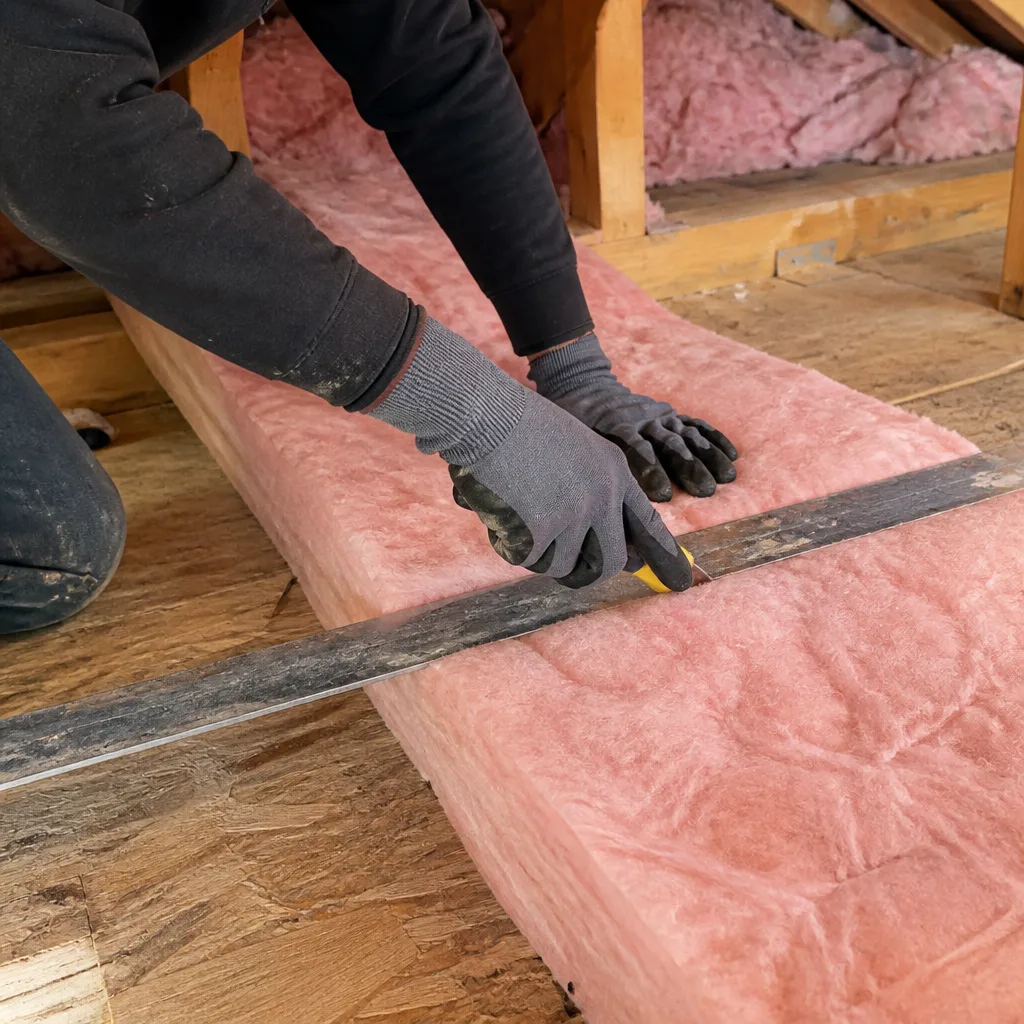
We run Icynene removal and replacement as a measured job, not a guess-and-patch. Here’s what the day looks like:
- 1
Site assessment and blower-door test: Before any material comes out, we run a blower-door test, a pressurization reading that shows in one number how much conditioned air your building envelope is losing. Wes Okafor reads the ACH50 and maps where the air is moving.
- 2
Thermal imaging and moisture scan: We identify the exact sections of Icynene that are failing, delaminated, or holding moisture, and mark them on a diagram for the written scope.
- 3
Written price and scope: You receive a flat price, a written scope describing every step, and the warranty terms. Nothing starts until you approve both.
- 4
Removal: Depending on the foam type and location, removal is done with hand tools, oscillating multi-tools at the sheathing interface, or in select cases a HEPA-filtered vacuum system. We contain the work area and confirm cleanup before we move to re-installation.
- 5
Air sealing and re-insulation: We seal top plates, penetrations, can-light interfaces, and rim joists before new insulation goes in, using materials matched to the assembly: Owens Corning blown fiberglass, Johns Manville batts, Rockwool, CertainTeed, or replacement spray foam, whichever the scope calls for.
- 6
Post-installation blower-door test and photo record: We measure again, hand you the before-and-after ACH50 with installed R-values by zone, and send a Documented Photo Record before the crew leaves the street.
What Icynene Insulation Removal & Replacement Costs in Chicago
Most Icynene removal and replacement jobs in Chicago fall into these ranges:
- Partial attic removal (200-400 sq ft of failed open-cell) + air sealing + blown-in replacement: $1,800 - $3,200.
- Full attic removal (800-1,500 sq ft) + closed-cell or fiberglass re-insulation: $3,500 - $6,400.
- Rim joist removal and sealed replacement per 10 linear feet: $450 - $900.
- Access-dependent extra costs: cathedral ceilings, knee-wall attics, or frozen attic hatches in January add $300 - $1,200 depending on the time and containment required.
What moves the price is access, not the brand name. Tight Chicago attics in bungalows with steep roof pitches take longer than open attics in ranch houses. If the foam is holding moisture, we won’t remove it until the moisture source is identified and corrected, and that work is priced separately. Call (218) 261-7714 with the attic square footage and we’ll send a written price, not a window.
Why Chicago Homeowners Call Topside Attic Insulation for Icynene Work
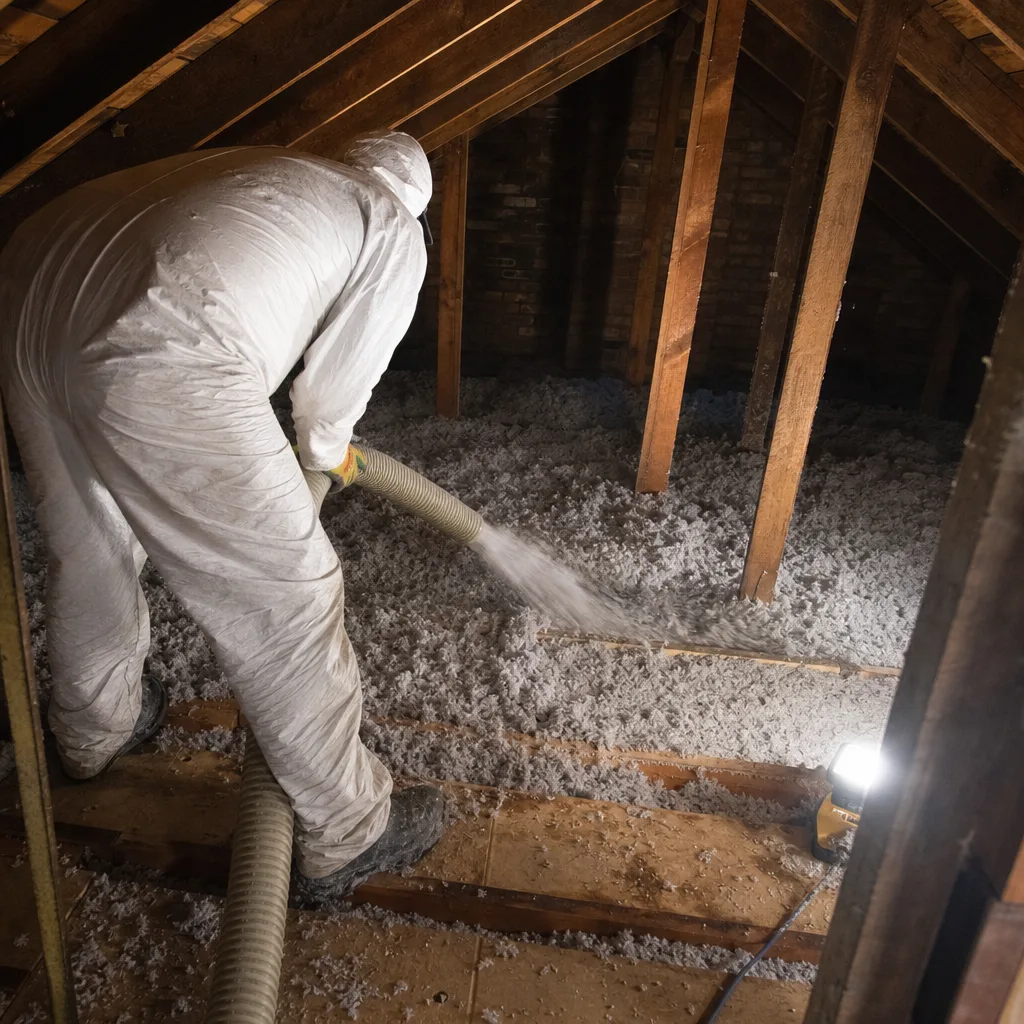
Sealed first, then insulated, in that order. We won’t blow insulation over an unsealed attic floor, and we won’t remove Icynene just to replace it with the same mistake. Under The Haven Standard, which we’ve operated under since 2016, every job begins with a written price and ends with a documented record. That means a printed report: pre-installation ACH50, post-installation ACH50, installed R-values by zone, and a photo log of the air-sealing locations. If the work isn’t done right within 365 days, we make it right, backed by the written warranty you receive before anyone lifts a tool. We service Icynene and also work with Reflectix radiant barrier systems when a home has them. Our technicians are background-checked, uniformed, and you’ll get a text when they’re on the way. A live person answers our phones 24/7 at (218) 261-7714.
FAQs
Icynene’s warranty is tied to the original installer’s workmanship and the product’s performance in the installed assembly. As an independent Icynene service provider, we document removal conditions with photographs and moisture readings; if a warranty claim is open, that documentation is what you’ll need. Once the failed foam is removed, the manufacturer’s warranty no longer applies to that area, but our 365-Day Done Right Promise covers the replacement work in writing.
We can replace Icynene open-cell with open-cell, closed-cell with closed-cell, or move you to a different assembly when the original material choice was the problem. The decision is based on the attic’s ventilation, the roof deck condition, and the measured air leakage, not on brand continuity. Call (218) 261-7714 if you want us to walk through the options on a site visit.
Most removal and replacement jobs are scheduled within five to ten business days of the written scope being approved. The removal itself is typically one full day for a partial attic and two days for a full attic. Emergency work is available; call (218) 261-7714 and tell us what you’re seeing and we’ll confirm whether same-week scheduling is possible.
It depends entirely on the failure mode. Small delamination areas can sometimes be addressed with targeted removal and patching in the $400 to $900 range. But when open-cell foam has wicked moisture over a broad area, patchwork simply leaves a hidden problem behind the drywall. In those cases, removal and replacement is the less expensive option over five years. Bring us a written estimate from any other contractor and we’ll read it with you, free.
A blower-door test pressurizes the house and measures air changes per hour at 50 pascals of pressure (ACH50). It tells you how much conditioned air is leaking through the building envelope overall. When we combine that with thermal imaging on your Icynene, we can see whether the foam itself is the leak source or whether the air is moving around it through unsealed penetrations. That’s the difference between insulating and actually fixing the problem.
Written by Wes Okafor, Owner & Lead Building Envelope Technician, Topside Attic Insulation at Topside Attic Insulation, serving Chicago and nearby areas.