
Icynene Wall Insulation in Chicago: What to Know First
Icynene wall insulation in Chicago homes typically runs between $2,800 and $7,400 for a full exterior wall retrofit, depending on wall depth, access method, and whether we’re drilling from inside or outside. Most Icynene wall jobs in Chicago take one to two days on site, and we publish before-and-after blower-door numbers so you can verify the air-sealing result. We’re an independent Icynene service provider, not a factory-authorized dealer, which means we repair and supplement Icynene systems without pushing you toward a full replacement unless the numbers justify it.
If you own a Chicago home with Icynene foam already in the walls and you’re seeing cold spots, uneven room temperatures, or heating bills that don’t match your insulation’s rated R-value, this page is for you. Call (218) 261-7714 and a live person answers, 24/7.
How Icynene Products Fail and How We Fix Them
Icynene makes two families of foam that show up in Chicago walls: open-cell (Classic, Classic Max, and ProSeal) and closed-cell (MD-C-200 and MD-R-210). They fail differently, and the fix isn’t the same for both. Here’s what we see in Chicago homes:
- Open-cell shrinkage at the top plate. Icynene Classic and Classic Max are low-density open-cell foams. In Chicago’s freeze-thaw cycle, we regularly find a half-inch to full-inch separation between the cured foam and the top plate in exterior walls. That gap is a thermal bypass: conditioned air moves right past the insulation. Our fix is removing the affected band, air-sealing the top plate properly, and re-foaming with a compatible open-cell product. We don’t just caulk it. Caulk doesn’t hold against Chicago winter stack effect.
- Closed-cell delamination on masonry walls. Icynene MD-C-200 sprayed directly on brick or block in older Chicago two-flats can delaminate when the substrate stays damp. Closed-cell foam doesn’t breathe, so trapped moisture breaks the adhesion layer over time. We see this in basements and rim-joist-to-wall transitions in Logan Square and Portage Park homes with fieldstone foundations. The fix is removing the failed section, addressing the moisture source, and re-installing with proper substrate prep. Foam won’t stick to damp masonry, period.
- Rim joist gaps where Icynene was never installed. This is the one we see most in Chicago homes built between 2005 and 2015. The builder insulated the above-grade walls but skipped the rim joists entirely or used fiberglass batts that have since slumped. The rim joist is a two-by-ten band running around the perimeter of each floor where the wall meets the floor framing. An uninsulated rim joist in a Chicago winter is the insulation equivalent of leaving a window cracked open from November through March. We drill-and-fill these with closed-cell foam, and the blower-door test confirms the change.
- Injection foam settling in balloon-frame walls. Older Chicago homes, especially in Irving Park, Albany Park, and Jefferson Park, have balloon framing: wall cavities run continuously from foundation to attic with no fire-blocking between floors. Icynene’s pour-in and injection products (like the LD-C-50, the low-density pour foam) can settle after installation, leaving a void at the top of the cavity. We use a thermal camera to map the voids, then drill strategic access points and re-inject. This is a repair job we do repeatedly in historic Chicago neighborhoods.
- Open-cell foam soaked through from roof leaks. Open-cell Icynene, including Classic and ProSeal, absorbs water like a sponge. If a Chicago roof leak soaks open-cell foam in a kneewall or top-floor exterior wall, the foam loses R-value and stays wet for weeks. We remove the saturated section, document what we found, and let the cavity dry before re-insulating. Installing new foam over wet foam traps the moisture and starts mold behind your walls.
Our Icynene Wall Insulation Process
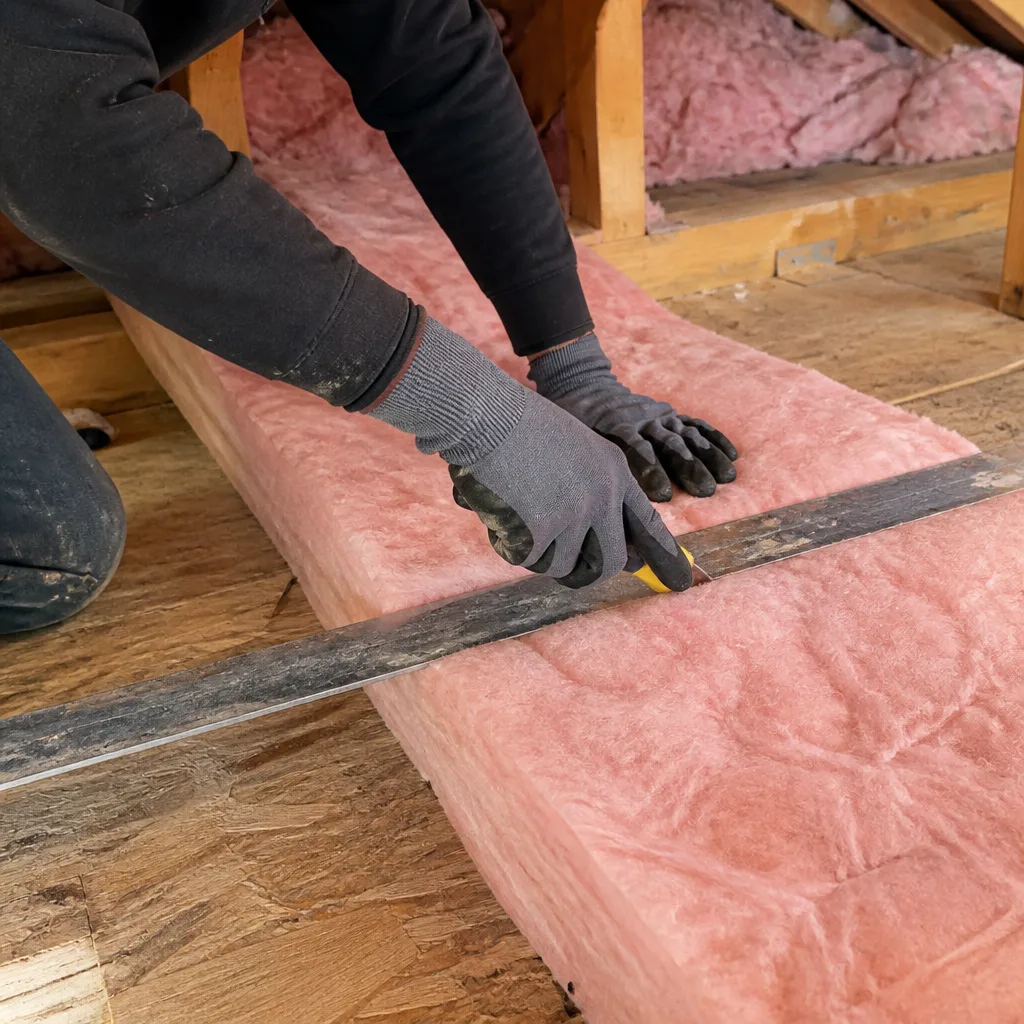
Here’s what a typical Icynene wall job looks like with us, from first call to cleanup:
- 1
Call and site visit. You call (218) 261-7714, speak to a live person, and we schedule a visit. We arrive, look at the walls, and run a blower-door test if it hasn’t been done. That gives us baseline ACH50 numbers before we plan anything.
- 2
Written scope and price. We map the wall cavities, note access points, and write a flat-price scope. Under Haven Standard Clause 1, you get a written price and written scope before any work starts. No exceptions.
- 3
Air sealing first. We seal top plates, rim joists, penetrations, and any gaps found during diagnostics. We never blow or spray insulation over unsealed cavities. Insulation over leaks is just a filter.
- 4
Insulation installation. Depending on the wall and the existing Icynene, we either drill-and-fill, inject, or spray the new material. We match the product to the cavity: open-cell for interior sound control walls, closed-cell for moisture-prone or tight R-value targets.
- 5
Post-installation blower-door test. We re-test and publish the before-and-after numbers. You’ll see the exact ACH50 change, not a summary sentence.
- 6
Documented Photo Record. You get photos of every air-sealed location, the installed material by zone, and the final blower-door readings. That’s your record of what was done, delivered before we leave.
Every step is covered by our 365-Day Done Right Promise. If it’s not done right, we make it right.
What Icynene Wall Insulation Costs in Chicago
Here are real price ranges for common Icynene wall work in Chicago homes. These are flat ranges, not estimates, based on homes we’ve actually measured and insulated:
- Drill-and-fill closed-cell foam, one exterior wall (12-16 feet long): $900 to $1,600
- Full exterior wall retrofit, single-story home (800-1,200 sq ft footprint): $3,200 to $5,800
- Rim joist insulation only (typical Chicago two-flat, all four sides): $1,400 to $2,600
- Void repair and re-injection in existing Icynene walls (per wall section): $700 to $1,400
- Interior wall soundproofing with open-cell foam (12-foot wall): $800 to $1,500
What moves the price: wall depth (2×4 versus 2×6 cavities), access (interior drilling versus exterior removal and re-siding), and how much existing Icynene must be removed first. If you bought a house with Icynene already installed and want to know what’s actually in your walls, ask us about a thermal camera scan. We’ll show you the voids before we quote anything. A written price comes before any work starts, always.
Why Chicago Homeowners Call Topside Attic Insulation for Icynene Work
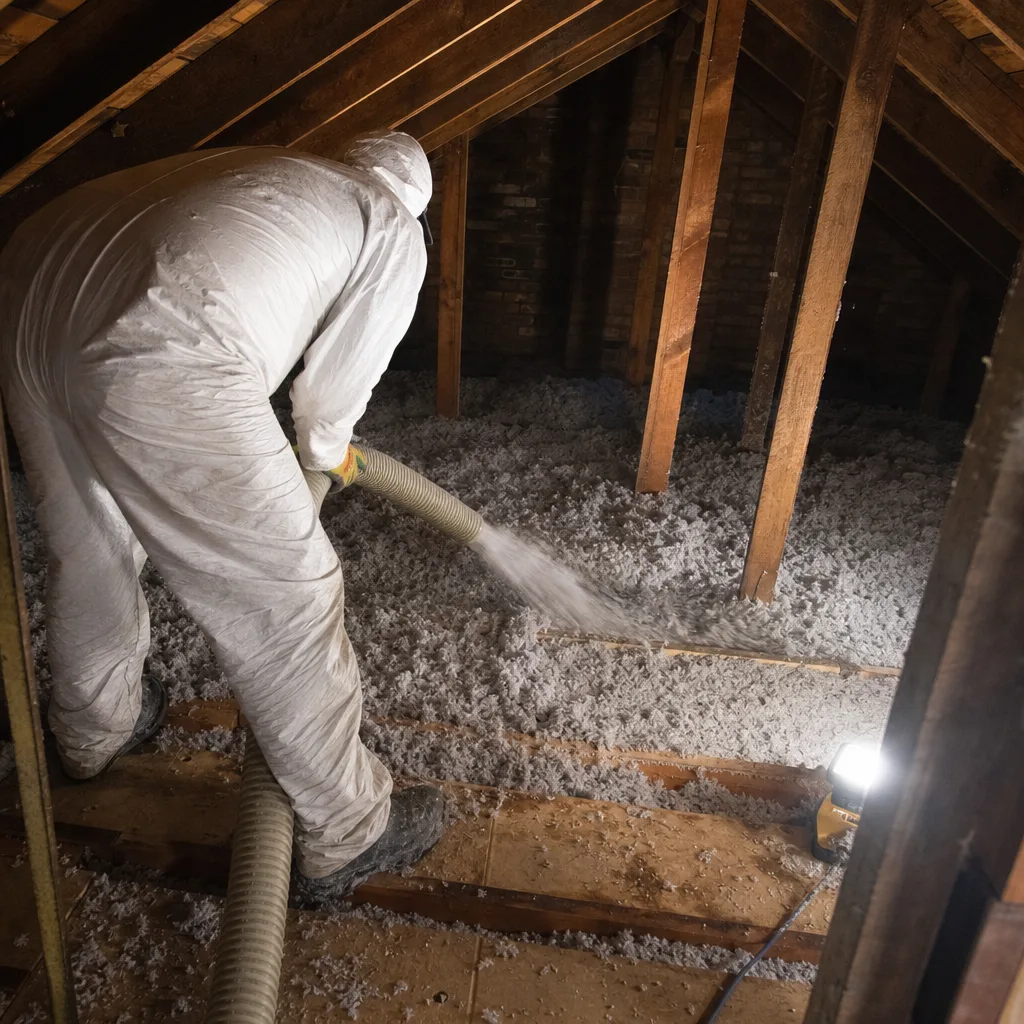
Most insulation contractors in Chicago will add insulation to your walls. We do something different: we measure what’s leaking first, seal it, then insulate, then measure again. That sequence matters, and the blower-door numbers prove it. We’ve sealed and insulated 9,000+ Chicago-area homes since 2016, and every single job ended with a written record of what was done.
We stock and install materials from Owens Corning, Johns Manville, Knauf, Rockwool, CertainTeed, Icynene, Demilec, and GreenFiber. We also work with Reflectix radiant barrier products when a wall or rim joist calls for a reflective layer. No proprietary lock-in. We pick the product that matches the cavity and the climate, not the one we get the best margin on.
And if you already have a written quote from another contractor for Icynene wall work in Chicago, bring it to us. We’ll read through it with you as a second opinion. No charge, no pitch.
FAQs
Icynene’s manufacturer warranty covers product defects, not installation failures, and it generally stays valid as long as the work is done to the manufacturer’s specification. As an independent service provider, we install and repair Icynene products according to those specs, so your manufacturer warranty stays intact. What you get from us is a written warranty under the Haven Standard, delivered before the first tool comes off the truck. Call (218) 261-7714 if you want us to look at your warranty paperwork before we touch anything.
Most Icynene wall repairs in Chicago homes take one to two days on site, and we can often schedule within the same week. If you have an open wall cavity or a void we’ve already mapped, we’ll tell you the exact scope and timeline in writing before you commit.
Repairing Icynene is almost always cheaper than replacing it, especially if the failure is localized to voids, delamination, or rim joist gaps. Full replacement only makes sense when the existing foam is water-damaged, severely settled, or applied too thin to meet Chicago’s code requirements. We’ll show you the thermal images and the numbers before recommending either path. A written price comes with the recommendation.
Yes, we install Icynene open-cell and closed-cell foam in new builds and gut rehabs across Chicago. We’re not manufacturer-authorized, but we install to spec and document everything. If you’re planning new walls, ask about cavity size and R-value targets before framing is finalized. Getting the cavity depth right from the start saves thousands later.
We keep same-day and next-day slots for emergency cases: open walls before a storm, failed inspections, or a buyer’s home inspection flagging wall insulation. Call (218) 261-7714 and a live person answers. We’ll tell you if today is possible, and if it is, you’ll get a named technician and a text when they’re on the way. That’s part of the Haven Standard.
Written by Wes Okafor, Owner & Lead Building Envelope Technician, Topside Attic Insulation at Topside Attic Insulation, serving Chicago and nearby areas.