
Icynene Crawl Space Encapsulation: The Chicago Owner’s Guide
Icynene crawl space encapsulation in Chicago typically runs $4,800 to $9,200 installed depending on square footage, access height, and whether the existing vapor barrier has torn away from the foundation wall. We stock Icynene-compatible closed-cell and open-cell foam, 10-mil and 12-mil reinforced vapor barrier, and the full fastener and sealant set on our trucks, so most Chicago-area encapsulation jobs start within three to five days of the written estimate. The way most homeowners discover their Icynene encapsulation has failed is not dramatic: they notice a musty smell coming up through the floorboards in July, or they see condensation on the crawl space access door in January, or the pest control tech points out a sagging section of liner during a routine termite inspection.
If you’re reading this, you probably already know the Icynene name from the spec sheet on your home, or the canister label in a corner of the crawl space. What you may not know is that the failure point on an Icynene encapsulation system is rarely the foam itself. It’s almost always the seam where the vapor barrier meets the wall, or a puncture from a plumbing repair, or a rim joist bay that was missed during the original install. We’ll get into all of that below, with real prices and real expectations for Chicago’s climate.
Which Icynene Models This Applies To
If your crawl space was encapsulated with Icynene, the product is almost certainly one of three formulations. Icynene Classic (open-cell, half-pound density) is the most common in Chicago homes built between 2005 and 2015. It’s grey-ish yellow when cured, soft to the touch, and typically applied at 3 inches for walls and rim joists. Icynene ProSeal (closed-cell, two-pound density) is the rigid, darker option found on newer builds and on walls where groundwater seepage was a concern. Icynene MD-C-200 is the less common pour-in-place formula, mostly found filling block-wall cores in older Chicago bungalows.
The compatibility gotcha owners hit: if your original installer used open-cell Icynene Classic on the rim joists, you cannot patch it with a closed-cell kit from a home center. Open-cell foam is vapor-permeable; closed-cell is a vapor barrier. Mixing the two creates a moisture trap at the seam, and in a Chicago crawl space that means condensation, then mold, then the smell that brought you here. Our crews identify the formulation by cutting a 1-inch sample cube from an existing section, checking the color and cell structure, and matching it before any new material goes in. The aftermarket reality with Icynene specifically: there is no aftermarket. Icynene is a proprietary two-part formulation. What we carry is Icynene product itself, sourced through the same distribution channel every certified installer uses, plus quality aftermarket vapor barrier liners (Layfield, Americover, Raven), which drop into any Icynene system because barrier film is barrier film, measured in mils, not brand chemistry.
Topside Attic Insulation is an independent service provider. We are not affiliated with Icynene or its parent company, and we install whatever material best fits the condition of your crawl space, sourced from Icynene, Demilec, or another manufacturer as the job requires.
Signs Your Icynene Crawl Space Encapsulation Is Failing
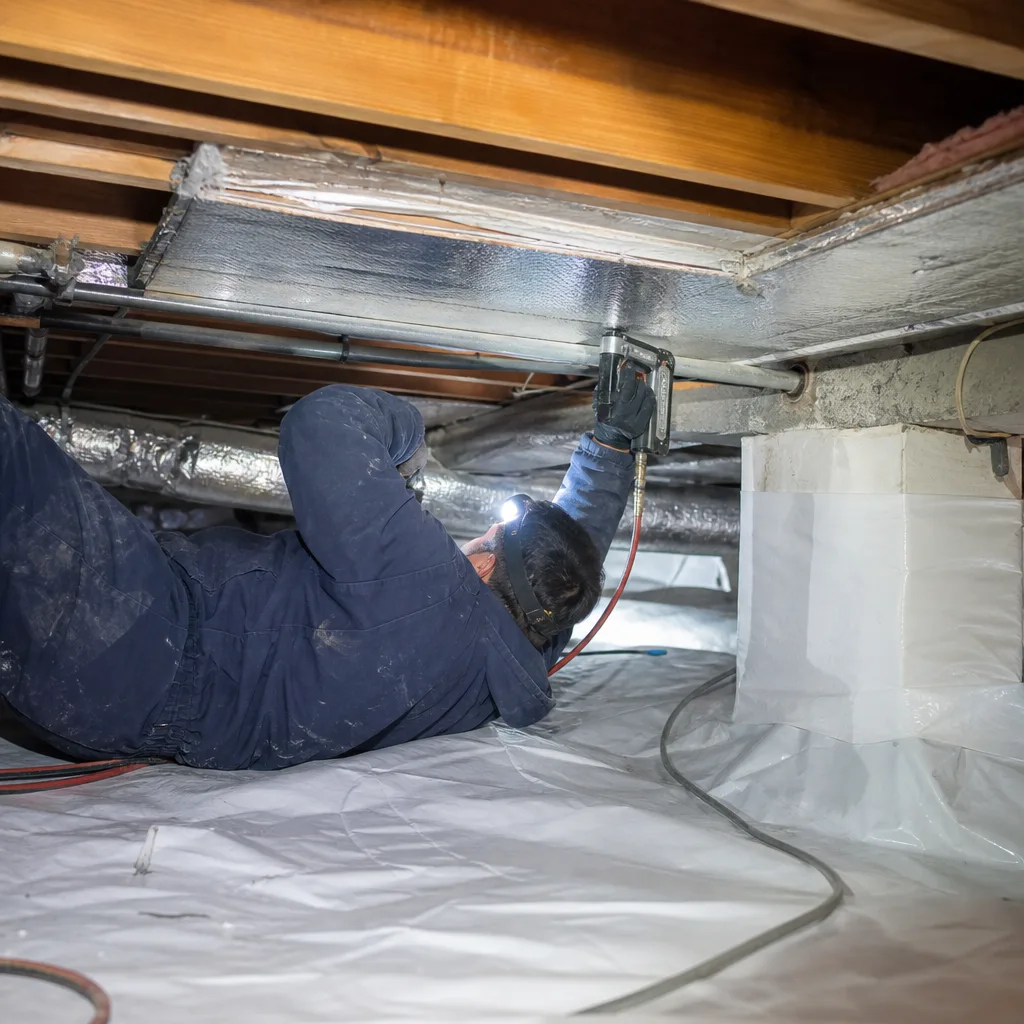
- Musty smell upstairs in summer. The barrier has torn away from the foundation wall somewhere, and humid Chicago air is entering the crawl space, then rising through the floor assembly. The foam may still look intact from the access door.
- Visible water on top of the vapor barrier. This means either groundwater is entering through a wall crack and pooling on the liner, or warm humid air is condensing on the cool liner surface. The fix depends on which one, and they look different in person.
- Fiberglass batts falling from the rim joist bays. Icynene doesn’t fail this way, but many Chicago encapsulation jobs paired Icynene walls with fiberglass rim joists. When that fiberglass sags and falls, the rim joist becomes a direct air and moisture path.
- Pest droppings or nests on top of the liner. Rodents chew through vapor barrier at the foundation seam. The entry point is usually outside, but the damaged liner needs patching or the pathway stays open.
- Floor feels cold in winter despite “encapsulated” crawl space. The foam on the walls is failing at the sill plate joint. Cold air moves through that gap, chills the floor joists, and the home’s heating system works harder. If your gas bill climbed 18% year over year with no other change, this is the first place we look.
Replacement Cost & What’s Included
For a typical 1,200 to 1,600 square foot Chicago crawl space with 36 to 48 inches of access height, a full Icynene encapsulation replacement runs $4,800 to $7,400. Larger or lower crawl spaces go higher, up to about $9,200. Here’s the breakdown we give every Chicago homeowner before any work starts:
- Tear-out and disposal of failed barrier or foam: $400 to $900
- Wall foam (Icynene Classic or ProSeal, matched to existing): $1,800 to $3,400
- Rim joist air sealing and foam (if not done previously): $900 to $1,600
- 12-mil reinforced vapor barrier, seams taped, secured to walls: $1,100 to $2,300
- Foundation crack repair (if groundwater is the source): $400 to $1,100 per crack
Every line item is written out, not ballparked. Under the Haven Standard, Clause 1, you get a flat price and a written scope before anyone lifts a tool, and the price on that scope is the price you pay. We also include a Documented Photo Record of the entire job: before, during, and after, every seam and every wall. The work carries our 365-Day Done Right Promise, and the materials have their own manufacturer warranties we’ll register on your behalf.
DIY or Call Us?
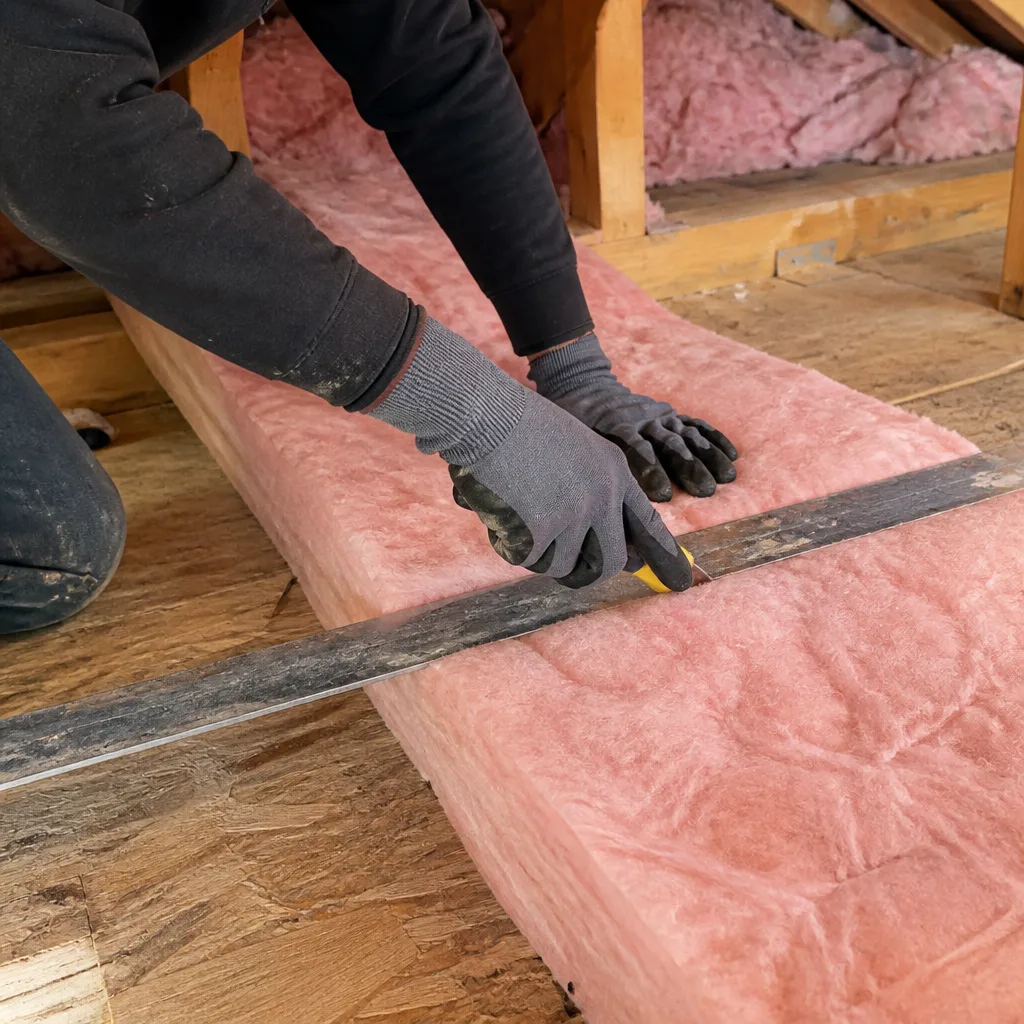
Spray foam application is not a DIY task, and we’ll be honest about the reason: the two-part chemical reaction runs at 130°F to 160°F during application, and the off-gassing during the first 24 hours is not something you want in an enclosed crawl space without full PPE and ventilation. That’s not scare language; it’s the same warning on the Icynene technical data sheet. What an owner can safely do is identify the failure: bring a flashlight onto the crawl space floor, look for gaps at the wall-to-liner seam, check the rim joists for fallen batts, and note any standing water on the liner. Snap photos with your phone. Then call us at (218) 261-7714. We’ll match the material to what’s already there, give you a written scope and a flat price, and schedule the crew. The actual repair takes one day for most Chicago crawl spaces; larger ones run two.
FAQs
A properly installed Icynene encapsulation in a Chicago crawl space should last 20 to 30 years on the foam itself, while the vapor barrier liner typically needs replacement or patching every 10 to 15 years due to foot traffic from plumbers, electricians, and pests. The Chicago variable is freeze-thaw cycling against the foundation wall, which puts mechanical stress on the barrier attachment points. If the original install used a 6-mil liner, that lifespan drops sharply; we see 6-mil liners failing in under five years in Chicago’s humidity swings. Call (218) 261-7714 and we’ll tell you what mil liner is in there now and whether it’s worth saving.
Yes, in most cases the failure is isolated: a torn seam, a punctured liner section, a rim joist bay that was missed, or a wall foam pull-away at the sill plate. Repair runs $400 to $1,800 depending on what we find. If the foam itself is wet and has lost adhesion to the wall, spot repair is not viable; the wet section comes out and gets re-foamed. We’ll show you photos of what we found before we quote a repair versus a replacement.
One day for most Chicago crawl spaces under 1,600 square feet. Two days if we’re also pulling wet fiberglass from the rim joists or repairing foundation cracks. You don’t need to vacate the house, and the crawl space is accessible same-day after the foam cures, which is about 24 hours for full cure but safe to be near within 4 to 6 hours with ventilation.
Yes. We carry Icynene Classic and ProSeal kits, 10-mil and 12-mil reinforced barrier, seam tape, and the mechanical fasteners, on our Chicago trucks. We also stock Reflectix as a radiant-barrier liner for crawl spaces where condensation control is the primary issue rather than air movement, and we’ll tell you which one your space actually needs after we test it. If you already have a written estimate from another Chicago contractor, bring it to us; we’ll do a free second opinion and read it with you line by line.
Seal the holes first. Then add the R-value. The numbers will tell you whether it worked.
Wes Okafor grew up six blocks from the Portage Park field house and has been doing insulation work in Chicago for over twenty years. He runs a blower-door test on every applicable crawl space encapsulation job before we open a single canister, and you get the pre- and post-installation ACH50 numbers printed in your final report, along with the photo log and the installed R-values by zone. The report is not optional. It’s how the job closes.
Written by Wes Okafor, Owner & Lead Building Envelope Technician, Topside Attic Insulation at Topside Attic Insulation, serving Chicago and nearby areas.