
Demilec Blown-In Insulation in Chicago: What to Know First
We’re an independent Demilec service provider in Chicago, and we handle blown-in insulation jobs on homes where Demilec foam is already present, whether it’s a top-up over existing open-cell, a dense-pack cavity fill beside sealed foam, or a full removal-and-reblow after foam failure. Most Demilec blown-in jobs in Chicago take one day on site, and pricing lands between $1,800 and $4,600 depending on square footage and what we find when we open the access. You’ll get a written price before any work starts, and before-and-after blower-door numbers if air sealing is part of the scope. If you own a Demilec-insulated home in Chicago and you’re reading this because something doesn’t feel right, call us at (218) 261-7714 and we’ll tell you what we’d check first.
This page is for homeowners who already have Demilec foam in their attic or walls and want to understand how blown-in insulation works alongside it, what fails, and what it costs to fix in Chicago’s climate. If that’s you, read on. If you’re brand new to insulation altogether, that’s fine too, everything below still applies.
How Demilec Products Fail - and How We Fix Them
- Heatlok HFO Pro shrinkage at the roofline. We see this more in Chicago attics than anywhere else we work. Demilec’s closed-cell line can pull back from rafters after a few freeze-thaw cycles, especially when it was sprayed in cold conditions. That leaves a gap between foam and wood, which becomes a thermal bypass. We open the void, air-seal the seam with canned foam or caulk, then blow fiberglass or cellulose tight against the closed-cell face to restore the assembly. The foam stays in place; the blown-in material does the filling.
- Sealection 500 open-cell full of water after a roof leak. Open-cell Demilec absorbs moisture like a sponge. A leak near a chimney flashing or vent boot saturates the foam, the R-value drops, and it never dries on its own in a Chicago winter. We cut out the wet section, let the cavity dry, verify the roof leak is stopped, then dense-pack the bay with blown-in cellulose at 3.5 pounds per cubic foot. Cellulose carries a borate treatment that helps manage moisture if a small leak recurs.
- Improperly mixed Heatlok HFO that never cured right. Demilec two-component foam depends on a precise A/B ratio. When a previous installer’s pump was out of calibration, the foam cures brittle and crumbly, and it sheds dust into the attic. We see this in maybe one out of twelve Demilec jobs we inspect in Chicago. The fix is full foam removal, then a complete blown-in system replacement. We can’t salvage under-cured closed-cell, and we won’t blow insulation over it because the crumbling will continue underneath.
- Demilec foam combined with settling blown-in fiberglass on the attic floor. A common Chicago retrofit: someone had the rim joists foamed with Demilec, then years later another contractor blew fiberglass over the attic floor without air-sealing first. The fiberglass settles, the air leaks continue, and the homeowner blames the foam. We air-seal the top plates and penetrations, then blow fresh insulation to the full depth. The Demilec at the rim was never the problem; the air moving through the attic floor was.
- Dense-pack walls beside Demilec flash-and-batt assemblies. This happens in Chicago two-flats and bungalows where part of the wall is flash-and-batt and part is an empty stud cavity. The empty cavity gets cold in January, and condensation forms where it meets the foamed section. We dense-pack those open bays with blown-in cellulose, then verify with an infrared scan that the wall is uniform. The Demilec stays where it is; we’re filling what the original install missed.
Our Demilec Blown-In Insulation Process
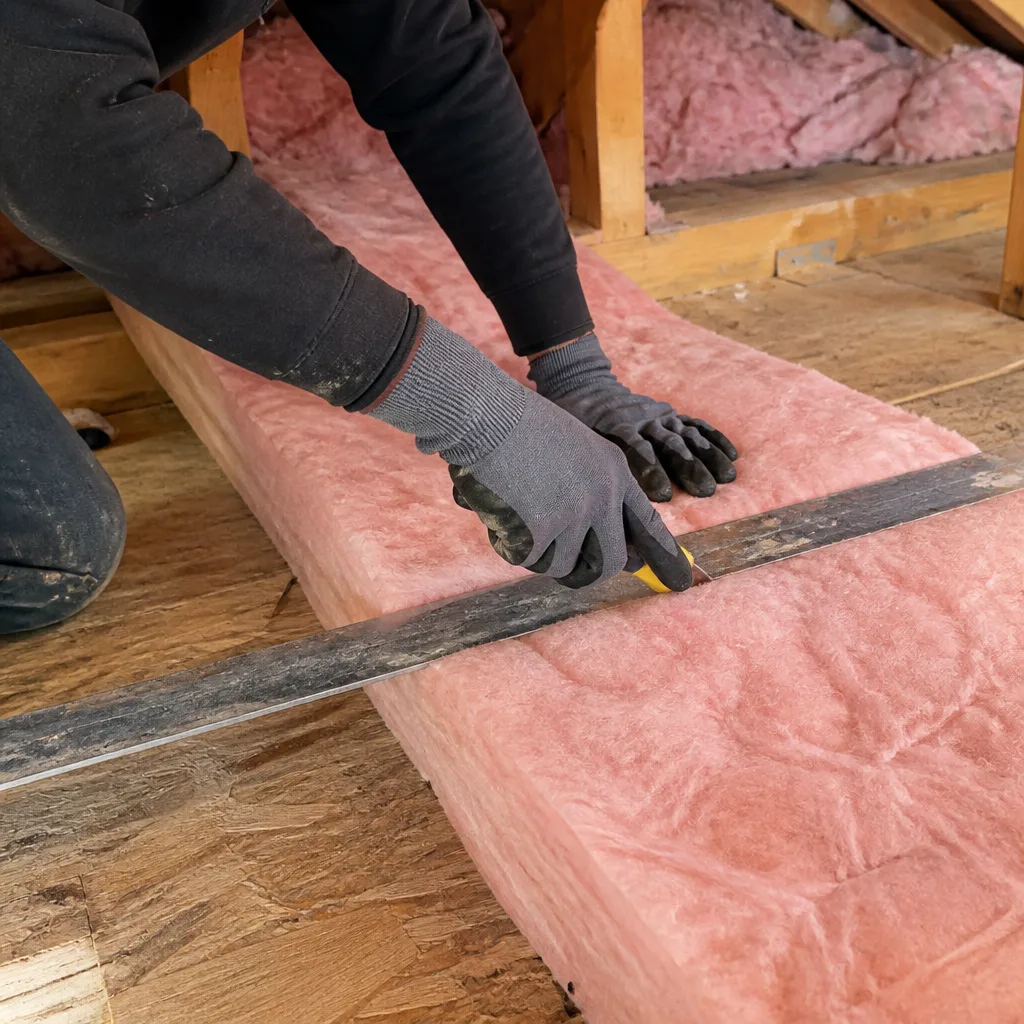
- 1
Call and photo review. You call (218) 261-7714, a live person answers, and we ask you to text photos of the attic access, the foam, and anything that looks wrong. We’ll tell you realistically what we think before anyone drives out.
- 2
Site inspection and blower-door test. We run a blower-door reading, which is a pressurization measurement that shows, in one number, how much air your building envelope is losing. This tells us whether the Demilec is functioning as the air barrier or whether the blown-in insulation will be doing two jobs instead of one.
- 3
Written scope and price. You get a flat price, a written scope, and a written warranty before anyone lifts a tool. Haven Standard Clause 1. No work starts without it.
- 4
Air sealing, then insulation. We seal top plates, can lights, and penetrations first. Every time. Then we blow the insulation to the specified depth and density, whether that’s a top-up over existing Demilec or a full replacement.
- 5
Post-installation blower-door reading. We run the test again and print the numbers. You’ll see the ACH50 before and after on one page, along with installed R-values by zone.
- 6
Photo log and done. Every visit ends with a Documented Photo Record of the air-sealing locations and the final insulation depth, plus your warranty. This is what leaving looks like.
What Demilec Blown-In Insulation Costs in Chicago
Most blown-in jobs on Demilec-equipped Chicago homes run as follows. Here are the numbers we quote most often:
- Attic top-up over existing Demilec (loose-fill fiberglass or cellulose to R-49): $1,800 to $2,800 for a typical 1,200 to 1,800 square foot attic.
- Full Demilec foam removal and blown-in replacement: $3,200 to $4,600 depending on foam depth, accessibility, and disposal. Foam removal is slower than fiberglass removal.
- Dense-pack wall insulation beside existing Demilec assemblies: $2,200 to $3,800 for a full exterior wall retrofit on a standard Chicago bungalow or two-flat.
- Air sealing before any of the above: $1,000 to $2,200 depending on the number of can lights, top plates, and penetrations. We don’t skip this step and we won’t quote insulation without it.
What moves the price: depth of existing foam, whether there’s a roof leak to resolve first, how many can lights need sealing, and whether the Demilec is under-cured and has to come out. Estimates are free, written, and yours to keep. Call (218) 261-7714 and you’ll have a number before we leave the property.
Why Chicago Homeowners Call Topside Attic Insulation for Demilec Work
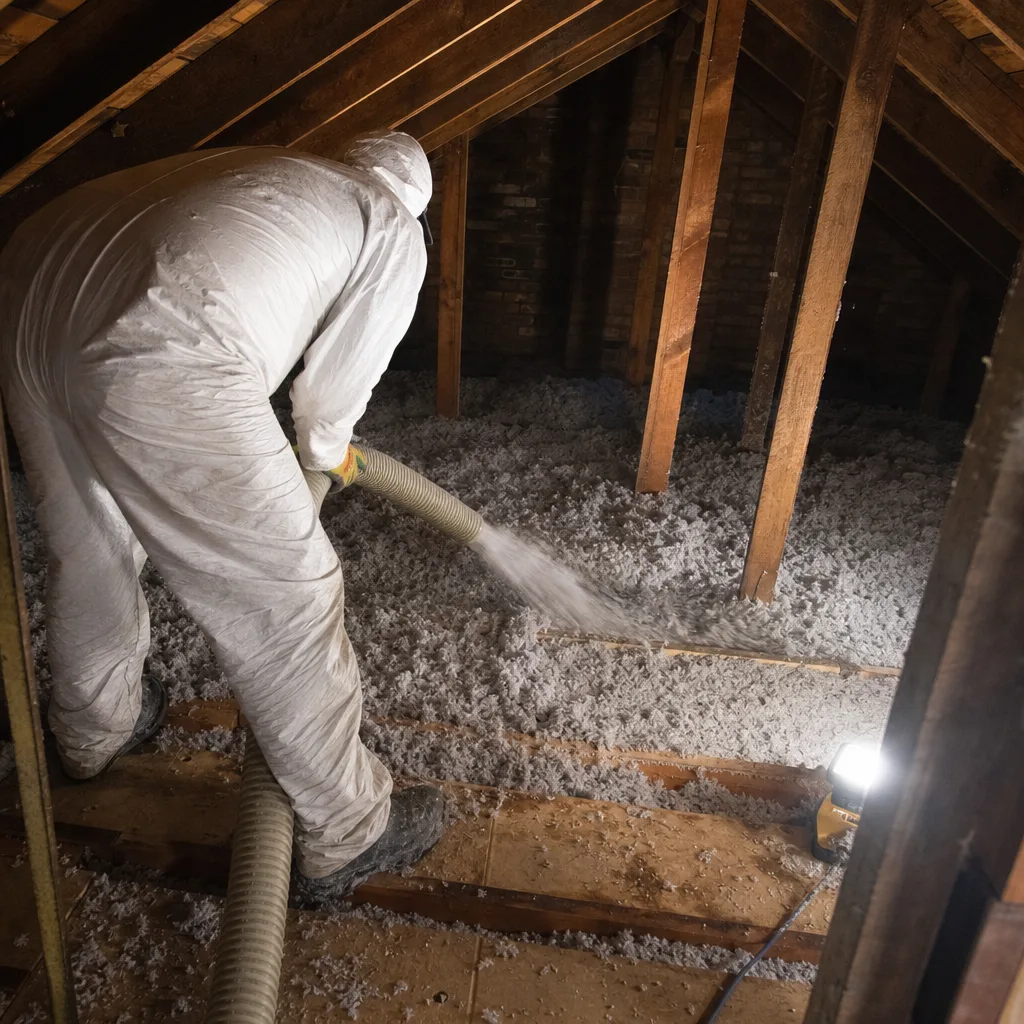
We’ve sealed and insulated more than 9,000 Chicago homes since 2016, every one with a written price before work started and a documented record when the crew left. That’s the Haven Standard, and it’s not a sales slogan; it’s Clause 1. Our technicians are background-checked and uniformed, and we run a blower-door test before any material goes in so the scope of work is measured, not guessed. We are multi-brand. If a Demilec job calls for a top-up, we blow Owens Corning, Johns Manville, Knauf, CertainTeed, or GreenFiber. If radiant barrier is part of the solution, we’ll tell you honestly whether Reflectix makes sense or whether you’d be better off spending that money on more R-value. The 365-Day Done Right Promise covers all completed work, and if a competing estimate has you confused, bring it in. We’ll read it with you, free.
And one thing we will not do: blow insulation over an unsealed attic floor. Not on a Demilec job, not on any job. Seal the holes first. Then add the R-value. The numbers will tell you whether it worked.
FAQs
No. Blown-in insulation installed on top of or beside properly cured Demilec foam does not void the foam manufacturer’s warranty, provided we don’t alter the foam itself. We never cut into or chemically treat Demilec product unless it’s being removed because it already failed. If the foam is under-cured or saturated, the warranty on that section is already compromised, and we’ll document it with photos before we touch anything.
For small failures, repair is cheaper. A wet open-cell patch or a shrinkage gap at the roofline runs a few hundred dollars to fix with foam, caulk, and a blown-in top-up. Full removal and replacement is the right call when the Demilec is under-cured, saturated beyond a few bays, or crumbling, and that’s typically $3,200 and up. We’ll show you the failure in photos and tell you which path makes sense. Call (218) 261-7714 for an exact quote, estimates are free.
Most Demilec top-up jobs are completed in one day. A full foam removal and blown-in replacement takes two days. We schedule within a week in most Chicago neighborhoods, and if you need it sooner, a live person answers the phone 24/7 and we’ll tell you our next available slot without a callback window.
In most cases, yes. Inspection visits are available same-day in Chicago and the near suburbs when you call before 3 p.m. The inspection includes a blower-door test, a thermal scan of the problem areas, and a written price for any work we recommend. You keep the documentation whether or not you hire us.
Fiberglass is lighter and settles more, which means it needs more depth to hit the same R-value. Cellulose settles less and carries a borate treatment that resists moisture and pests. Around Demilec foam, we generally prefer cellulose for dense-pack cavities and fiberglass for open attic floors where depth is not a constraint. The choice depends on your specific assembly, and it’s spelled out in the written scope before we start.
Yes. Bring us any written estimate from another Chicago insulation contractor and we’ll read it with you, line by line, free of charge. If the scope is right and the price is fair, we’ll say so. If something’s missing, like air sealing or a specified R-value, we’ll point that out. Our job is to make sure you know what you’re paying for.
Written by Wes Okafor, Owner & Lead Building Envelope Technician, Topside Attic Insulation at Topside Attic Insulation, serving Chicago and nearby areas.