
Demilec Crawl Space Encapsulation: The Chicago Owner’s Guide
We stock and install Demilec-compatible crawl space encapsulation materials throughout Chicago, with most installations running between $6,500 and $13,000 depending on square footage, access height, and how much of the existing liner has failed. Our crews keep the common Demilec liner gauges, tapes, and sealants on the truck, and we can typically start within three to five business days of your written price being signed. Most Chicago homeowners discover a problem the same way: a musty smell that won’t quit, a vapor barrier that’s torn or pulling away from the foundation walls, or a rim joist that’s sweating in July.
Which Demilec Models This Applies To
The Demilec crawl space system goes in as a multi-layer assembly, not a single part. You’ve typically got a 10-mil or 12-mil reinforced poly liner on the floor, a separate wall liner that runs up the foundation and fastens with termination bars, seam tape at every overlap, and closed-cell spray foam at the rim joist band. Demilec’s Heatlok HFO and Sealection 500 lines show up most often in Chicago crawl spaces, but the failure we’re usually chasing isn’t the foam itself. It’s the liner seams and terminations. When we show up, the first thing we check is whether the existing encapsulation uses Demilec-spec accessories (their seam tape and liner mastic) or a mix of whatever was on sale at the home center. Mixed-material jobs fail faster because the adhesives don’t share the same expansion characteristics. As an independent service provider, we’re not affiliated with Demilec, but we know which aftermarket tapes and liners actually hold up against their foam chemistry, and which ones peel within two Chicago seasons.
Signs Your Demilec Crawl Space Encapsulation Is Failing
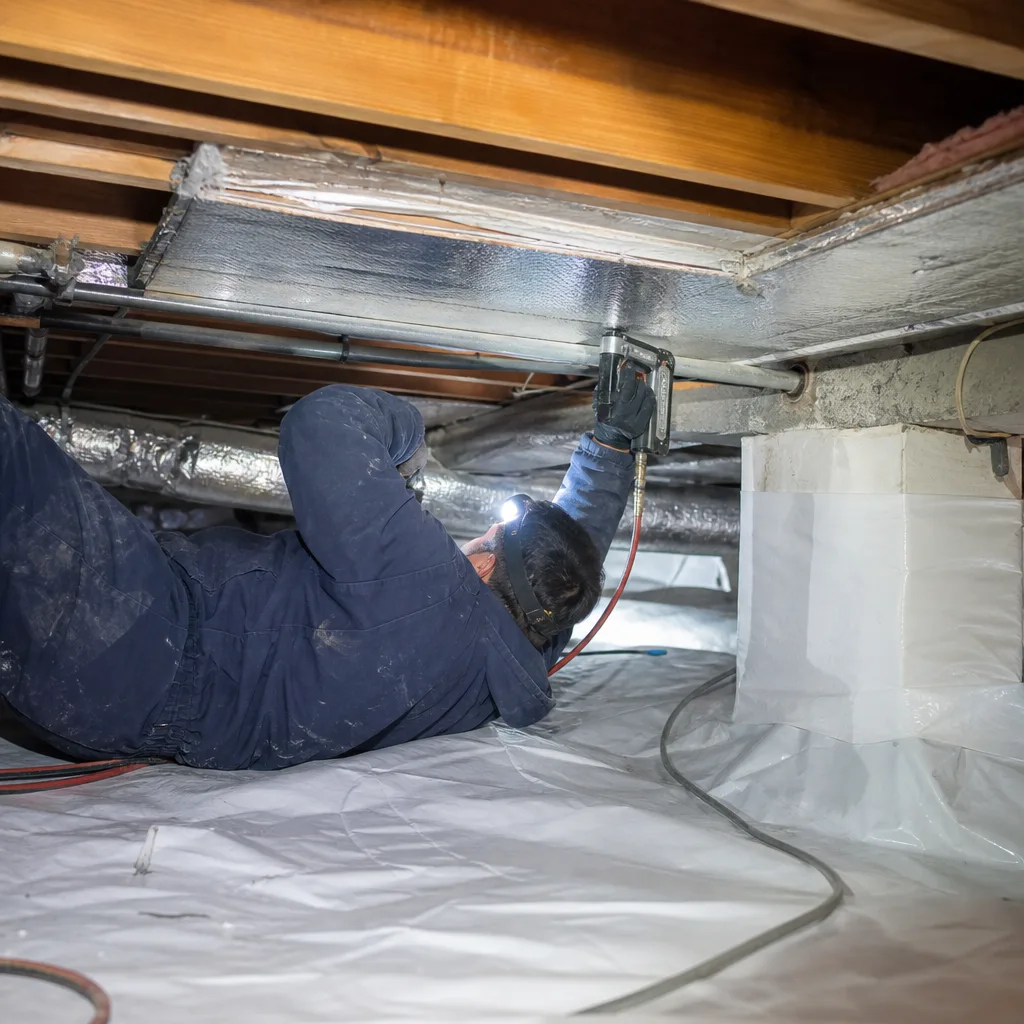
- Condensation on the liner surface. Water beads on top of the floor liner mean the ground vapor is finding its way around the edges. The liner may be intact, but the perimeter seal has let go.
- Seam tape peeling or brittle. Chicago crawl spaces swing from 85% relative humidity in August to bone-dry in January. Cheap tape can’t take that cycle, and once a seam opens, the assembly stops being an encapsulation.
- That musty smell upstairs. Odor moves up through floor cavities and plumbing chases. If the crawl space reads damp when you check it with a basic humidity meter, the encapsulation is no longer doing its job.
- Rim joist foam pulling away from the band board. Closed-cell foam that wasn’t applied to a clean, dry substrate will delaminate. We see this on the north-facing rim joists of Chicago brick bungalows more than anywhere else.
- Visible tears or animal intrusion. Raccoons and rats don’t respect a vapor barrier. Torn sections need to be cut out and patched with matching-mil material, not duct tape.
Replacement Cost & What’s Included
A full Demilec-compatible crawl space encapsulation in Chicago runs $6,500 to $13,000 installed, and the range isn’t guesswork. A 900-square-foot crawl with four feet of headroom comes in on the lower end. A 1,500-square-foot space with 30 inches of access and a failing sump needs to get to the higher end, because the labor hours climb fast when a crew works on their knees. We break the quote down by line item: liner material, seam tape, termination bar, foam at the rim, and labor, so you can see exactly where the money is going before you sign. Every job carries our 365-Day Done Right Promise, and under the Haven Standard, you get the written scope and warranty in hand before anyone lifts a tool.
DIY or Call Us?
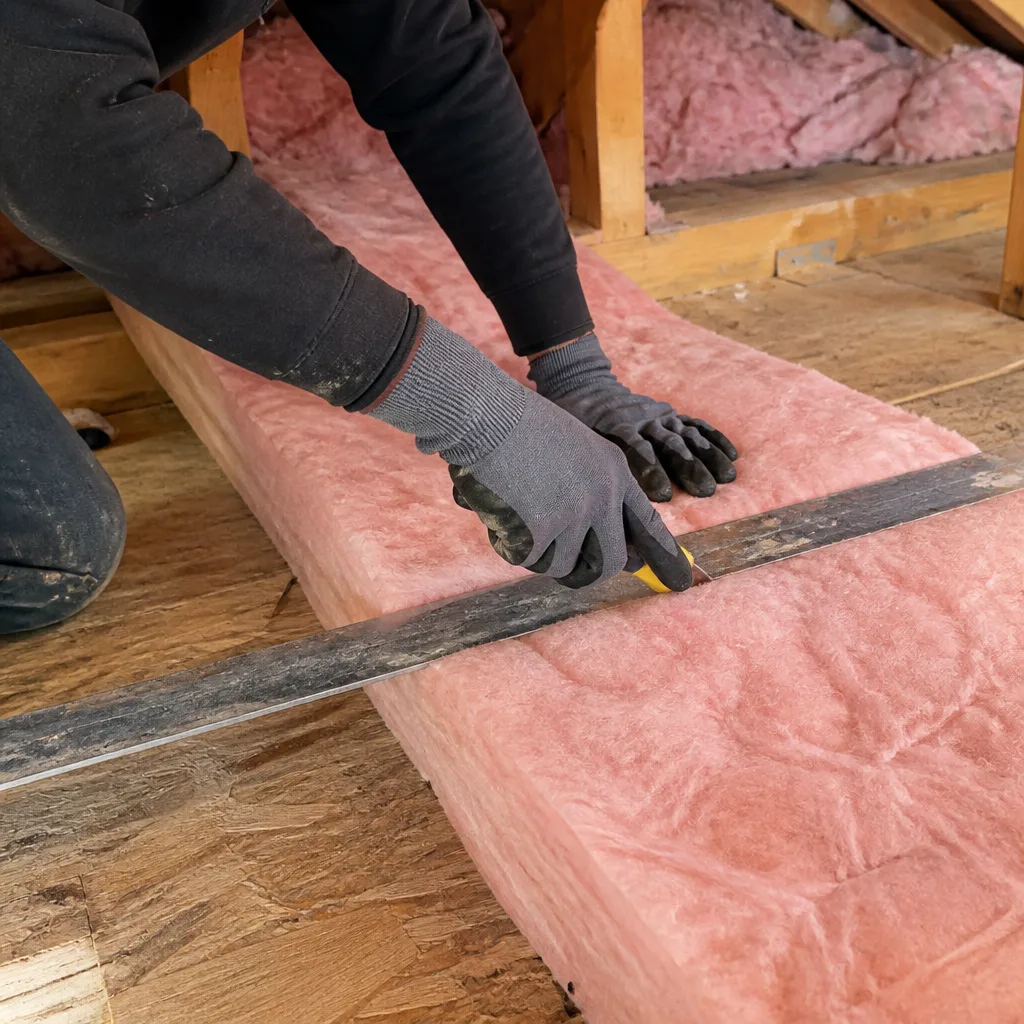
What you can safely check yourself: run a humidity meter (we install one on every job as part of the documented record), look for torn liner, test whether seam tape has hardened or peeled, and check that termination bars are still tight against the wall. What you should not do yourself: work inside a crawl space with exposed fiberglass or standing water that masks whatever you can’t see until you’re already in it. A confined, low-clearance space with poor air quality and hidden hazards isn’t where you want to spend your Saturday. If you’ve done the visual check and found spot failures, we can patch and re-seal rather than replace the whole assembly. Call (218) 261-7714 and we’ll tell you before we show up whether this looks like a repair or a re-do.
FAQs
In Chicago’s climate, a properly installed Demilec-compatible encapsulation typically lasts 15 to 20 years before it needs meaningful repair, though seam maintenance and sump pump service are usually required before then. The freeze-thaw cycle puts more stress on the foundation-liner bond than most people realize. Call (218) 261-7714 for an inspection if yours is over a decade old.
Yes, isolated failures like split seams, torn liner sections, or loose termination bars can usually be patched and re-taped for a few hundred dollars, provided the underlying vapor drive hasn’t saturated the insulation above. Once water has wicked through the assembly into floor joist cavities, a patch won’t solve it. We’ll tell you which situation you’re in when we do the assessment.
Most Chicago crawl spaces with Demilec-compatible materials can be fully encapsulated in one to two days, depending on square footage and access. Rim joist foam work adds a second day for cure and inspection. We don’t rush the seam work, but we also don’t camp out at your house.
We stock 10-mil and 12-mil reinforced liners, Demilec-spec seam tape, termination bar, liner mastic, and the common closed-cell foam systems. We don’t stock everything for every Demilec line, but the failure points in a Chicago crawl space are predictable enough that we can usually start the same day we diagnose. We also carry Reflectix for the radiant-barrier interfaces on jobs that need it. Call (218) 261-7714 with your floor dimensions and we’ll give you a written price range before we even schedule the visit.
Written by Wes Okafor, Owner & Lead Building Envelope Technician, Topside Attic Insulation at Topside Attic Insulation, serving Chicago and nearby areas.