
GreenFiber Blown-In Insulation in Chicago: What to Know First
We install, top up, and correct GreenFiber blown-in cellulose and fiberglass insulation across Chicago, typically completing most attic top-ups in a single day. For a standard Chicago bungalow or two-flat attic, blown-in GreenFiber work usually runs between $1,800 and $4,200 depending on square footage, depth, and how much air sealing the structure needs first. This page is for homeowners who already have GreenFiber products or are considering them and want to know what actually happens when we get on site. Call (218) 261-7714 and a live person answers, day or night.
We are an independent GreenFiber service provider. We are not affiliated with or authorized by GreenFiber, but we work with their product lines daily and we know where they succeed and where they fail in Chicago’s climate.
How GreenFiber Products Fail - and How We Fix Them
GreenFiber makes a few product lines that show up regularly in Chicago homes: SANCTUARY (blown-in cellulose with a borate fire retardant), InsulFill (a more economical cellulose), and Nu-Wool Premium (their dense-pack formulation). Each has a distinct failure pattern we see in attics from Rogers Park to Beverly. Here’s what we find and what we do about it:
- SANCTUARY settling in attics. SANCTUARY cellulose settles over a 5 to 10 year span in Chicago because the material is designed to be blown loose-fill, and the freeze-thaw cycle in our attics compacts it faster than in milder climates. We routinely find attics in Portage Park where 12 inches of SANCTUARY has settled to 7 inches, dropping the effective R-value from R-38 to roughly R-23. Our fix is a measured top-up, not just adding more bagged material, because we calibrate the blower density to the existing settled layer’s condition.
- InsulFill moisture wicking at soffit lines. InsulFill lacks the hydrophobic treatment found in higher-tier green products, which means in Chicago’s winter wind-driven snow, moisture entering through vented soffits gets drawn into the cellulose and stays there. Homeowners in Sauganash and Edgebrook see this as a sagging, damp band along the attic perimeter. We pull the contaminated material, correct the baffle issue, and re-blow with a product appropriate for that roof geometry.
- Nu-Wool Premium dense-pack voids behind knee walls. Dense-pack cellulose depends on installation pressure to fill wall cavities completely. In the balloon-frame and half-story homes common in Lincoln Square and Irving Park, we regularly find voids behind existing Nu-Wool work because the original install was done without adequate pressure or without enough access holes. The symptom is a cold upstairs bedroom and a thermal camera showing dark bands at the top of the wall. We re-dense-pack through properly spaced access points and document the before/after.
- Borate leaching in damp Chicago basements. GreenFiber products rely on borate for fire resistance and pest deterrence, but in rim-joist and basement-adjacent applications where humidity runs above 60% for months, the borate slowly migrates out of the cellulose. The material doesn’t burn differently, but it loses pest resistance and the dusty residue attracts moisture. In Albany Park and Jefferson Park, where older limestone foundations wick groundwater, we recommend encapsulation before any cellulose goes near the rim.
- Improper depth markers after DIY top-ups. We see a lot of homeowners in Chicago who bought GreenFiber bags at a big-box store and blew them in themselves without an insulation dam or proper depth gauges. The material looks even from the hatch but varies from 4 to 14 inches across the attic. The fix is not more guesses; it’s a blower-door test to find where the actual heat loss is, then a calibrated depth measurement and a corrective pass.
Our GreenFiber Blown-In Insulation Process
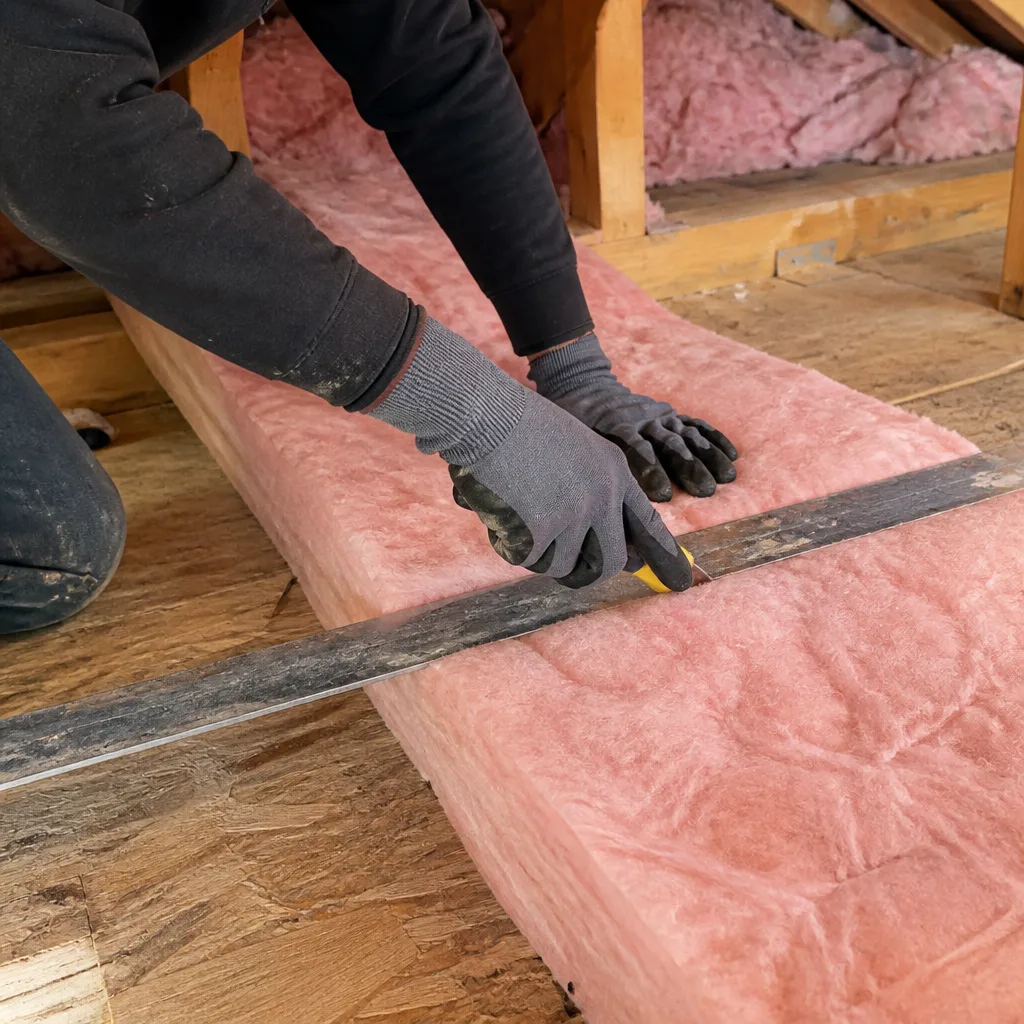
Here is what a GreenFiber blown-in job looks like when we do it in a Chicago home, from first call to final walkthrough:
- 1
Call and scope. You reach a live person at (218) 261-7714. We schedule a site visit. You get a written price for your specific attic or wall assembly before anyone lifts a tool.
- 2
Blower-door test first. Wes Okafor runs a blower-door test before any material goes in. This measures air changes per hour at 50 pascals (ACH50) and tells us whether air sealing is needed before insulation.
- 3
Air sealing, in that order. Top plates, can lights, chimney chases, and any penetration get sealed. We show you the photo log of every sealed location before insulation covers it.
- 4
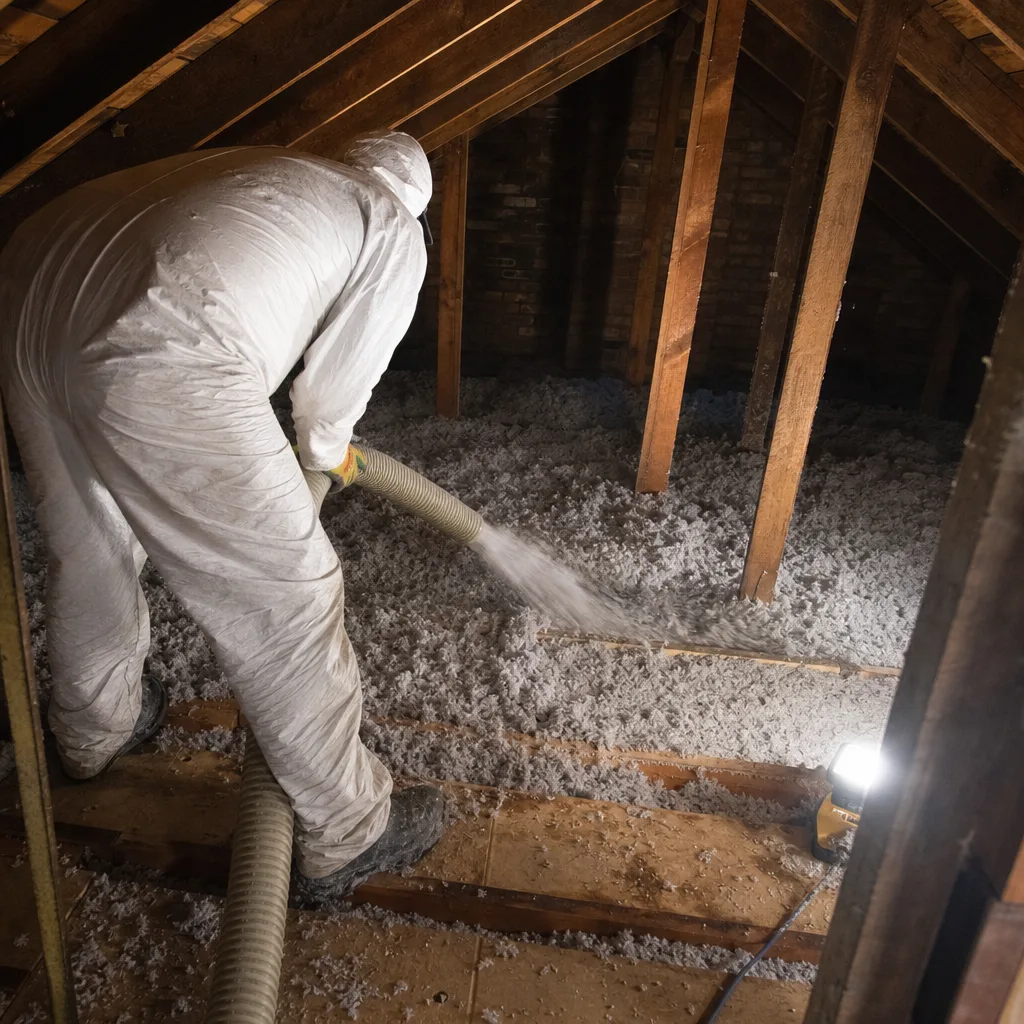
GreenFiber installation. We blow the material at the density the product line calls for: loose-fill with depth gauges for SANCTUARY, higher pressure for Nu-Wool dense-pack.
- 5
Post-installation blower-door test. We run the second reading and put both numbers on your printed report.
- 6
Documentation close. You walk away with installed R-values by zone, pre/post ACH50 readings, a photo log of all air-sealing locations, and your written warranty.
Seal the holes first. Then add the R-value. The numbers will tell you whether it worked.
What GreenFiber Blown-In Insulation Costs in Chicago
For a typical Chicago attic between 900 and 1,400 square feet, a GreenFiber top-up to R-49 runs $1,800 to $3,200, including removal of any contaminated existing material. Full attic removal and re-blow with SANCTUARY runs $3,500 to $6,000 depending on access and whether air sealing is required. Dense-pack wall insulation with Nu-Wool in an average two-flat runs $4,000 to $8,000, because Chicago balloon-frame construction requires more access points than a modern stud wall. What moves the price: attic accessibility, existing material condition, whether we’re air sealing before insulating (we always are), and depth required to meet current code. Call (218) 261-7714 for a written price on your specific property. Estimates are free and there is no charge for a second opinion on a competing quote.
Why Chicago Homeowners Call Topside Attic Insulation for GreenFiber Work
Since 2016, Topside Attic Insulation has sealed and insulated more than 9,000 homes across Chicago under The Haven Standard, which means every job begins with a written price and ends with a documented record. No work starts without it. Our 365-Day Done Right Promise covers all completed work, and our techs carry GreenFiber, Owens Corning, Johns Manville, Knauf, Rockwool, CertainTeed, Icynene, Demilec, and Reflectix so the product recommendation matches the house, not our inventory. Background-checked, uniformed technicians arrive with a named contact and a text when they’re on the way. A live person answers 24/7, no voicemail loops.
FAQs
No. GreenFiber’s limited warranty covers material defects in the product itself and is not voided by adding additional blown-in material on top of existing GreenFiber insulation, provided the existing material is in sound condition and the top-up is installed to the density the product line specifies. We document every job with photos and depth readings, so you have a record if a warranty claim is ever needed.
Most GreenFiber blown-in top-ups in Chicago can be scheduled within 3 to 5 business days, and many attics are completed in a single day. Call (218) 261-7714 and we will give you a real window, not a 4-hour callback promise.
If the existing GreenFiber is dry, free of pest contamination, and not settled below 60% of its original depth, a top-up is almost always the more cost-effective route. If we find moisture wicking, rodent nesting, or borate leaching in a Chicago basement-adjacent application, removal and replacement is the honest call. We will show you why before you spend anything.
We install whatever the house needs. GreenFiber is one of our go-to product lines for cellulose, but we also work with Owens Corning, Johns Manville, Knauf, Rockwool, CertainTeed, Icynene, Demilec, and Reflectix. If a competitor’s quote specifies a different product, bring it to us and we will read it with you line by line at no charge.
Clear a path to the attic access and remove any stored items near the hatch. We will handle the rest: blower-door setup, protection of flooring, and a full photo log before anything moves. If you want to be on site for the pre-installation ACH50 reading, let us know and we’ll walk you through what the number means.
Written by Wes Okafor, Owner & Lead Building Envelope Technician, Topside Attic Insulation at Topside Attic Insulation, serving Chicago and nearby areas.