
GreenFiber Crawl Space Encapsulation: The Chicago Owner’s Guide
We stock and install GreenFiber-compatible crawl space encapsulation systems across Chicago, with most full encapsulations running between $6,500 and $14,000 installed depending on square footage, access height, and how much of the existing liner has failed. Same-week scheduling is available for most Chicago jobs. We are an independent service provider, not affiliated with GreenFiber, but we work with their materials regularly.
Most owners call us after noticing the vapor barrier has pulled away from a foundation wall, or after a musty smell has moved up into the living space and won’t leave. Sometimes they find standing water where the liner has torn. Sometimes they just got a home inspection report back that flagged the crawl space liner as deteriorated and listed it as a repair item before closing.
Which GreenFiber Models This Applies To
GreenFiber’s crawl space encapsulation line uses reinforced polyethylene vapor barriers in 6-mil, 10-mil, and 12-mil thicknesses, plus seam tape, wall fasteners, and a dimpled drainage mat for the floor. The most common failure we see in Chicago homes is the 6-mil product installed by builders who needed to hit a code minimum and nothing more. That material is rated for basic ground moisture control, not standing water, not Chicago’s freeze-thaw cycle, and not the abrasive dust that settles in older crawl spaces in Portage Park, Jefferson Park, and Edison Park.
If you’re matching an existing GreenFiber liner, check the print stamp on the material itself. GreenFiber prints the mil thickness and roll lot code directly on the barrier every few feet. That stamp tells you what you need. If the liner is too deteriorated to read, measure the remaining thickness with a micrometer or match based on the home’s age: most Chicago builds from 2015 onward with builder-grade encapsulation used 6-mil. Upgrades to 10- or 12-mil are almost always the right call when we replace.
The OEM-versus-aftermarket decision here matters less than it does for mechanical parts. GreenFiber’s liners are well made, but the aftermarket options from Stego, Viper, and Raven are also excellent, and we stock several of each. The bigger variable is installation quality: seam overlap, fastener spacing, and how the liner is terminated at the foundation wall. That’s where most failures begin, not in the material itself.
Signs Your GreenFiber Crawl Space Encapsulation Is Failing
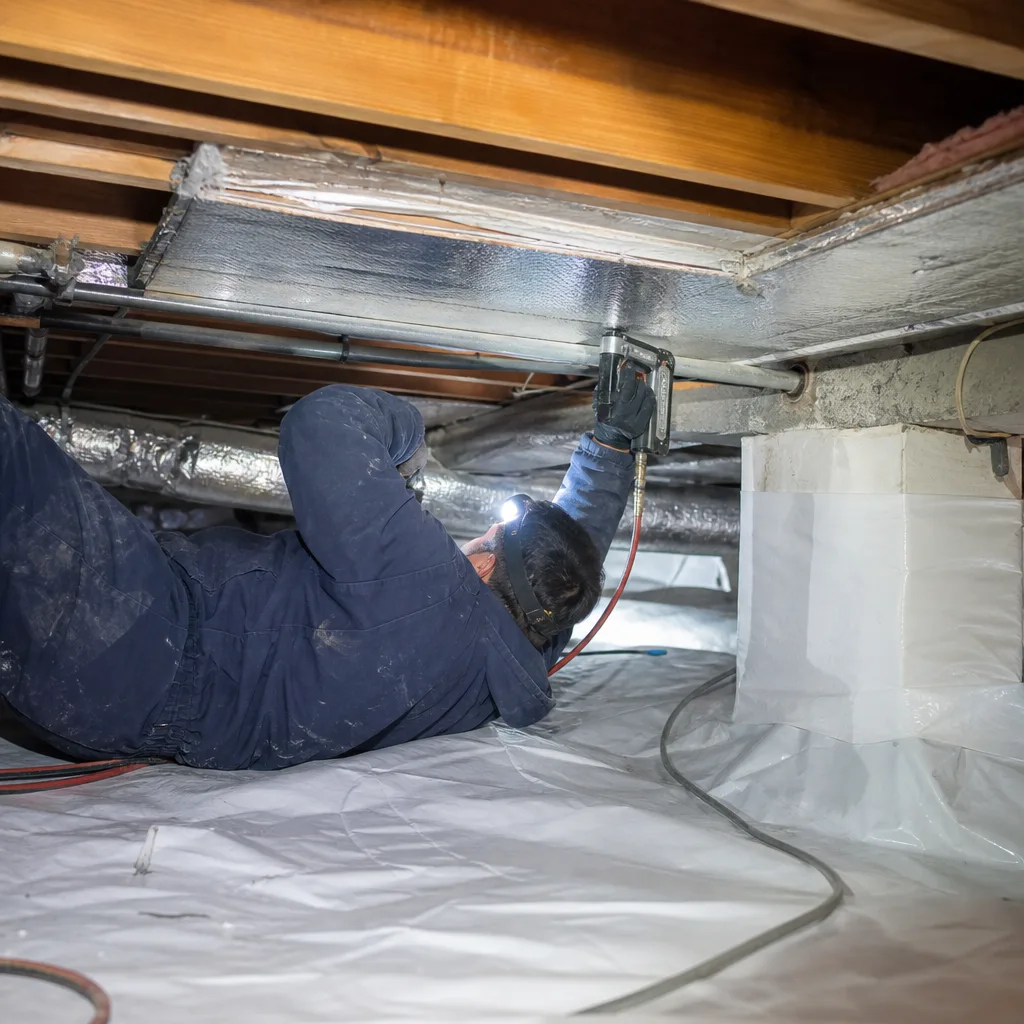
- Musty odor in the living space above the crawl. A compromised liner lets ground moisture evaporate into the crawl space air, and that air migrates upward through floor penetrations and plumbing chases. In Chicago, this is most noticeable in winter when the house is closed up and the furnace is pulling air from below.
- Condensation on ductwork or floor joists. Moisture that should be trapped below the liner is now in the air. We see this often in Chicago basements and first floors where the crawl has a failing 6-mil GreenFiber liner that was never taped at the seams.
- Visible tears, sagging, or liner pulling away from walls. The wall termination is the first place a poorly installed liner fails. If you can see the liner drooping from the foundation wall, moisture is getting under it.
- Standing water where there was none before. A torn floor liner lets groundwater through. Chicago’s spring thaw pushes water against foundation walls and up through floor cracks; if the liner has a breach, you’ll find puddles within days.
- Insulation on the crawl space walls or subfloor is damp or crumbling. The liner’s whole job is to keep moisture away from the building envelope. When the barrier fails, fiberglass and mineral wool absorb that moisture and lose R-value, and you’re now paying to heat wet insulation.
Replacement Cost & What’s Included
Full GreenFiber-compatible crawl space encapsulation in Chicago runs $6,500 to $10,000 for a typical 800- to 1,200-square-foot crawl. Larger or tighter crawls with low clearance run $9,000 to $14,000. A floor-only vapor barrier replacement, where the wall liner is still intact, typically runs $2,800 to $4,500.
Every price we quote is written and flat before any work starts, under Haven Standard Clause 1. That price includes removal of the failed liner, surface prep, new liner installation with taped seams and wall terminations, and a Documented Photo Record of the finished work. On applicable jobs, we run a blower-door test before and after so you can see the air-sealing number change in the printed report. The 365-Day Done Right Promise applies to all encapsulation work.
DIY or Call Us?
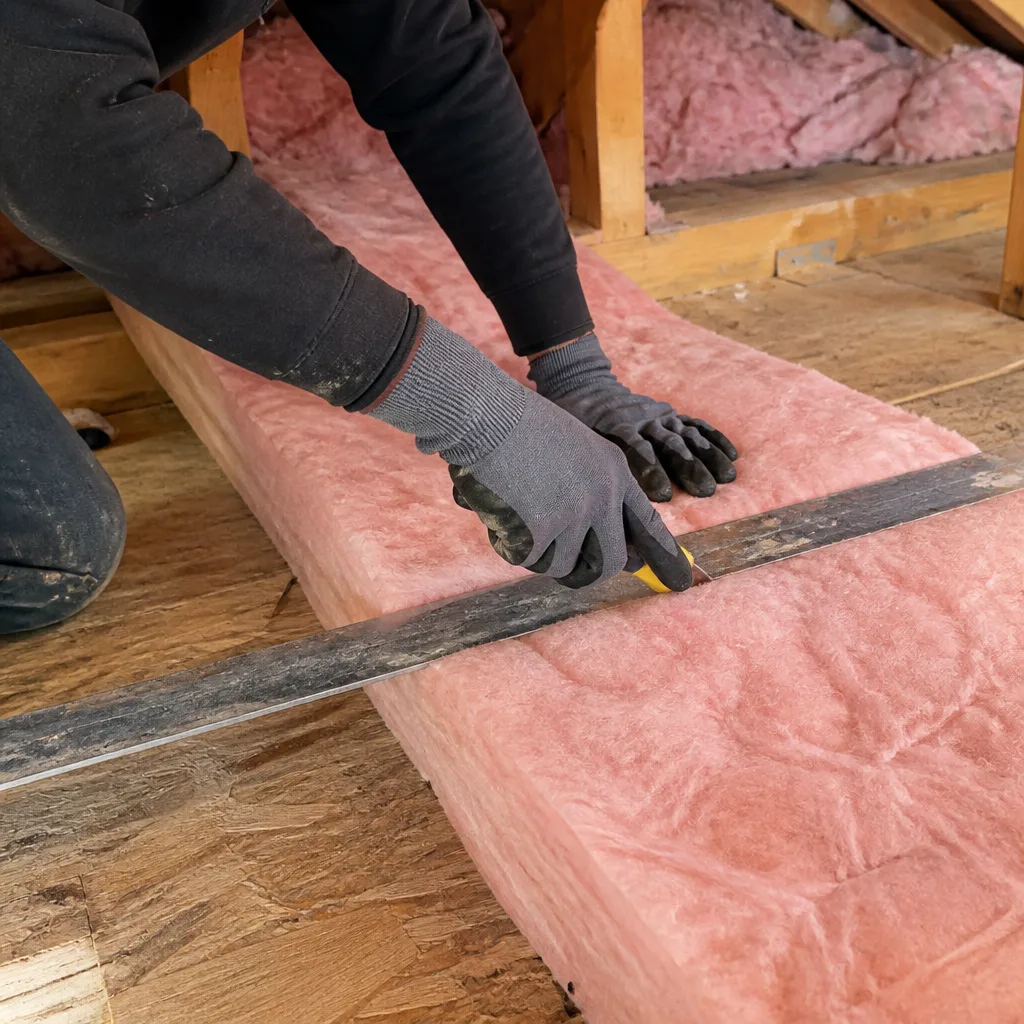
A homeowner can safely inspect a crawl space encapsulation liner: look for tears, check the seam tape at overlaps, and run a hand over the floor liner to feel for moisture pooling underneath. That’s diagnosis, and it’s worth doing before you call anyone.
Installation is a different job. Working in a crawl space means limited ventilation, unknown air quality, and the real possibility of disturbing animal waste, mold, or asbestos. It also requires knowing how to mechanically fasten liner to Chicago foundation walls – typically poured concrete – in a way that won’t pull out in a year. If the access is tight or the existing liner is compromised with standing water, leave it to a trained crew. Call us at (218) 261-7714 and we’ll tell you what we’d do and what it would cost, in writing, before anyone crawls in.
FAQs
A properly installed 10-mil or 12-mil liner in a dry Chicago crawl space lasts 20 to 25 years. A 6-mil builder-grade liner, especially one with untaped seams or loose wall terminations, commonly fails in 5 to 8 years. The installation quality matters more than the mil thickness. Call (218) 261-7714 if you want us to assess what’s under your house before it fails.
Small tears and seam failures can be patched with compatible seam tape and a reinforcing patch, and that’s a $300 to $600 repair for most Chicago homes. But if the liner has pulled from the walls in multiple places or you have recurring standing water, patching buys you six months, not a solution. We’ll tell you which one you have after looking at the liner.
A standard Chicago crawl space encapsulation takes one to two days for our crew, including removal of the old liner, prep, and installation. Low-clearance crawls where technicians work from their backs can take three days. We’ll name the timeline in your written scope before we start.
Our trucks carry 6-mil, 10-mil, and 12-mil liners, GreenFiber seam tape, wall fasteners, and drainage mat, alongside materials from Reflectix and other brands we work with. If your liner matches something we don’t have on the truck, we can typically source it same-day from our Chicago suppliers. Call (218) 261-7714 and we’ll confirm what’s on the truck for your job.
Seal the holes first. Then add the R-value. The numbers will tell you whether it worked.
Written by Wes Okafor, Owner & Lead Building Envelope Technician, Topside Attic Insulation at Topside Attic Insulation, serving Chicago and nearby areas.