
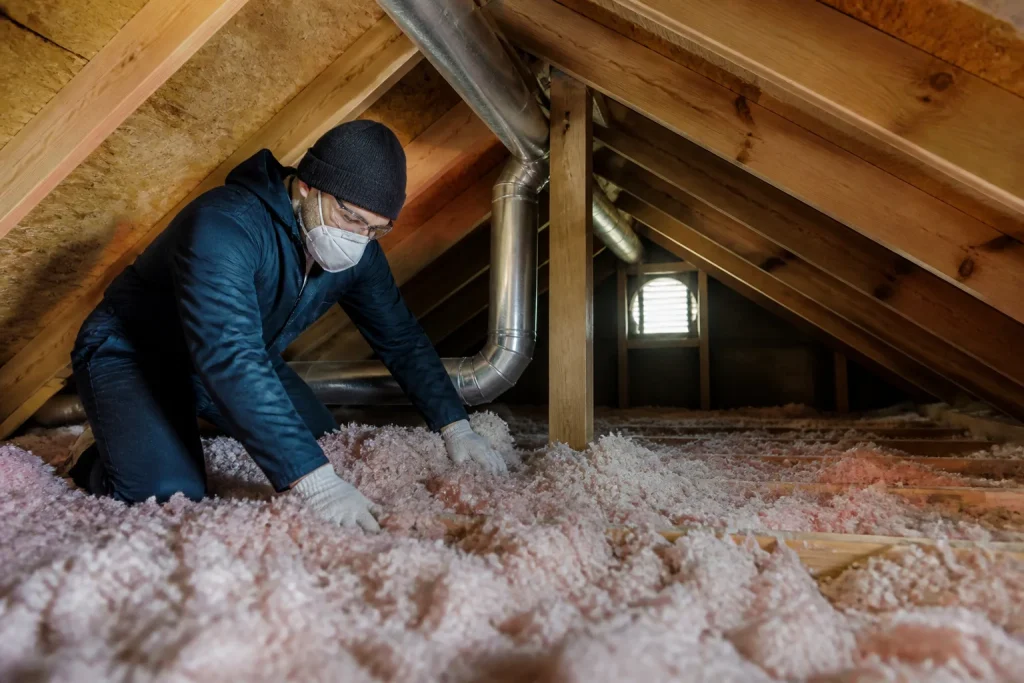
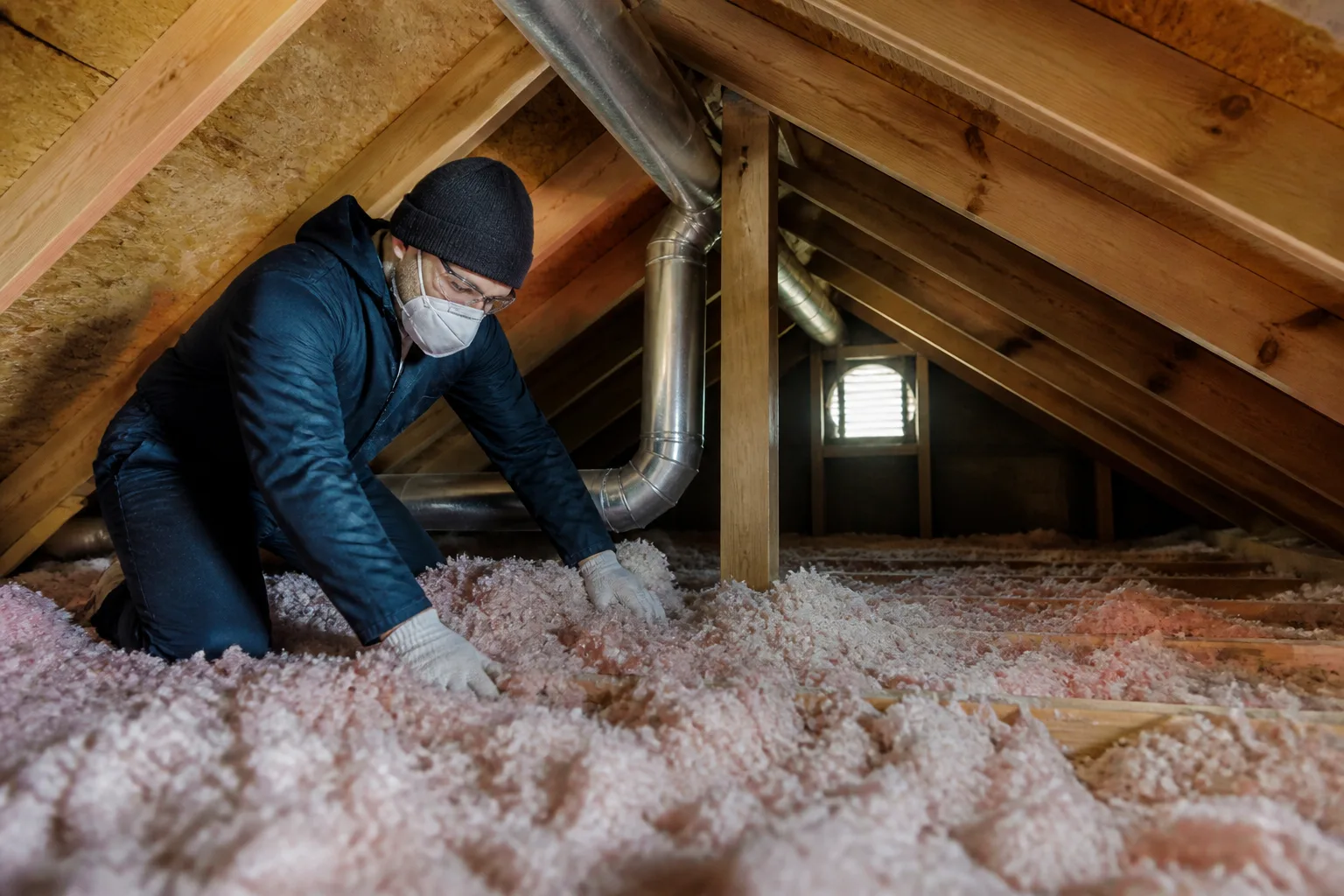
Emergency Attic Insulation Near Me: What Chicago Homeowners Should Do First
If you’re searching “emergency attic insulation near me” in Chicago, here’s the direct answer: most emergencies aren’t insulation failures at all; they’re air-sealing failures that let warm, moist air escape into the attic and cause the visible problem you’re seeing. Before you call anyone, take 15 minutes to document what’s happening with photos and read this guide so you don’t pay for the wrong fix. If you’d rather not sort through it alone, call (218) 261-7714 and a live person will answer.
An ice dam on a Chicago roof in January is not an insulation thickness problem. It’s proof that warm conditioned air is reaching the roof deck, and the path it takes is an air leak, not a gap in the batts. Adding insulation on top of that leak is the most common expensive mistake made under time pressure. We’ve pulled thousands of pounds of damp fiberglass out of attics in Lincoln Square and Beverly where a contractor rushed material in during a cold snap and never sealed the bypasses first.
What Actually Counts as an Attic Insulation Emergency
Maybe 3 out of 10 calls we get labeled “emergency attic insulation near me Chicago” are true emergencies. The rest are urgent-feeling upgrade opportunities. Knowing which one you have changes your first move, and getting it wrong tends to cost between $2,500 and $9,000 in Chicago’s retrofit market.
Here’s how to sort it in 60 seconds:
- Water coming through the ceiling below the attic. This is a real emergency, and it’s usually an air-sealing + ventilation failure that let condensation or ice-dam meltwater build up. The insulation is often the victim, not the cause.
- Ice dams forming along the eaves with visible icicles. Urgent, but not a same-day insulation job. First you stop the warm-air leak; insulation thickness is part two. Adding batts on top of an unsealed attic floor makes the dam worse in some Chicago homes because it hides the bypasses deeper.
- Sudden, dramatic heat loss or a room that won’t hold temperature. If it happened overnight after a storm, you may have lost a vent baffle, a section of roof sheathing, or had material blown out of place by wind-driven snow. Document before you fix.
- A newly exposed attic after storm damage or a contractor left it open. Emergency if moisture is getting in. Cover the opening, take photos, then get a blower-door baseline before anything goes back in.
Here’s what’s not an emergency: an attic that tests at R-19 instead of R-49 in an otherwise dry, well-sealed home. That’s a scheduled upgrade, and treating it like an emergency leads to rushed scopes and skipped diagnostics. In every Chicago neighborhood we work, from Portage Park to Hyde Park, the homes that hold heat longest are the ones where someone sealed the top plates and can lights before adding cellulose or fiberglass.
The First 30 Minutes: Your Triage Protocol
When you’re standing in a cold hallway at 7 a.m. with water staining the ceiling, the urge is to call the first number that comes up and tell them to come right now. Slow down for half an hour. What you do before any contractor arrives determines whether you get a real fix or a rushed material dump.
- Take photos of everything. Get the attic floor if you can safely access it: insulation depth, wet spots, dark staining, icicles visible through gable vents, baffles, the underside of the roof deck. Use your phone flash. These photos become part of your insurance claim file and they’ll tell an honest contractor more than a verbal description ever will.
- Document the depth. A tape measure resting on the attic floor against the insulation tells you what depth you’re dealing with. Most Chicago homes built before 1990 have between 6 and 10 inches of fiberglass (R-19 to R-30). If you see that plus water, you’re looking at an air-sealing failure, not a thickness deficit.
- Check your HVAC settings. If the furnace is running constantly and the upstairs is still cold, turn the fan to “on” not “auto” and set the thermostat 2 degrees lower than normal. This doesn’t fix anything, but it reduces the stack effect, the upward pull that drives warm air into the attic through every unsealed penetration.
- Do not climb on the roof. Chicago’s freeze-thaw cycles make roofs dangerously slick. Roof work is for people with fall protection and insurance. Your job is interior documentation.
- Call at least one contractor who mentions blower-door testing. If they don’t own one or say it’s “not necessary for this,” that’s your signal to call someone else.
Why a Blower-Door Test Goes First, Even in an Emergency
A blower-door test is a pressurization reading that shows, in one number, how much air your building envelope is losing. It takes 45 to 90 minutes on a typical Chicago bungalow or two-flat, and it belongs at the beginning of an emergency job, not after the insulation goes in. Here’s the logic: if you’re losing 4,200 CFM50 (cubic feet per minute at 50 pascals) through attic bypasses and you add 12 inches of blown-in fiberglass on top of those leaks, you’ve buried the problem deeper and made it harder to fix later. You’ve also locked in the moisture damage that caused the emergency.
Our technicians run the test first and show you the number before any material arrives. We published a job last February in Jefferson Park where the attic was soaked, the homeowner had called two other companies, and both quoted insulation replacement only. Baseline blower-door reading: 3,850 CFM50. After sealing top plates, can lights, and the plumbing chase, plus removing wet material and installing new Owens Corning fiberglass to R-60: 1,740 CFM50. The insulation work took one day. The sealing took 4 hours. Skipping the sealing would have meant doing the whole job twice.
If a contractor tells you, “we’ll do the diagnostic after the emergency is under control,” that translates to: you’re about to buy insulation that will fail, and you’ll be calling us in 24 months anyway. Under the Haven Standard, sealing bypasses before installing emergency material is faster than doing two jobs, and we write that sequence into the scope before anyone lifts a tool.
The Frauds and Upsell Patterns That Show Up on Emergency Calls
Emergency searches attract a specific kind of contractor behavior in Chicago. The patterns are predictable once you know them, and they all exploit the same thing: your urgency short-circuiting your normal research habits.
Pressure to skip diagnostics. If a company says they can quote “right now over the phone” without looking at your attic, the quote is a number they made up. A real price requires attic access, a moisture inspection, and a measurement of existing depth. Phone quotes are verbal-only, and verbal-only is exactly what Haven Standard Clause 1 exists to prevent: flat price, written scope, written warranty before anyone lifts a tool.
Same-day quotes without attic access. We’ve seen companies quote $4,800 for “full attic insulation replacement” without ever opening the hatch. Attics in Chicago differ wildly: some have knob-and-tube wiring (which changes material and code requirements), some have vermiculite (which may require testing before disturbance), some have been partially air-sealed already. A written price comes after the inspection, not before.
The “you need all-new insulation” line. Sometimes true, sometimes not. If the material is wet from an ice dam, yes, that section has to come out. If the material is dry but under-depth, you can often add on top after sealing. The companies that always say “rip it all out and start fresh” are padding. Ask directly: “Show me the photos that prove the material is compromised.” If they can’t, get a second opinion. We offer a Free Second Opinion on any written estimate.
The list of questions to ask. Here’s the script we recommend to every Chicago homeowner calling under a ceiling stain:
- “Will you run a blower-door test before quoting insulation?” (Yes is the only acceptable answer for an emergency involving moisture or heat loss.)
- “Will the price, scope, and warranty be in writing before work starts?” (If no, hang up.)
- “Will you seal bypasses, top plates, and penetrations before blowing in material?” (If no, you’re buying the same problem again.)
- “Will I get photos of the work, including before and after the sealing?” (Documented Photo Record, every visit.)
- “Can you send me a named technician and a text before they arrive?” (Under The Haven Standard: arrive on schedule, you get a named technician and a text when they’re on the way.)
Insurance Claims and the Paperwork That Survives an Adjuster
If you’re filing an insurance claim after storm damage, ice-dam water intrusion, or a burst pipe above the attic, your adjuster needs specific documentation, and most Chicago homeowners don’t have it. Here’s what to gather now, before any remediation work happens.
Photographs: the bare minimum. Adjusters need photos of the attic floor before disturbed, the visible moisture pattern on the ceiling below, the insulation depth with a measuring reference, and the exterior roofline showing ice or snow accumulation if applicable. Take 40 photos, not 4. Closer is better for material samples.
Material specifications in writing. If insulation gets replaced, the adjuster needs the material type, depth, coverage area, and R-value on the scope. “R-49 blown-in fiberglass, 500 square feet, GreenFiber” is a claim line item. “Insulation replaced” is a denial waiting to happen.
A blower-door baseline and post-work reading. This is the documentation most homeowners never get, and it’s the single most powerful piece of evidence for an adjuster reviewing whether the damage was incident-related or pre-existing. A sealed, performance-verified attic with before-and-after blower-door numbers published on every applicable job shows exactly what changed and why.
The written scope before work starts. Your adjuster will accept a written scope, written warranty, and price from a contractor. They will not accept a verbal understanding. Under the Haven Standard, every job begins with a written price and ends with a documented record, no exceptions. That’s not marketing language; that’s the paperwork that survives an insurance review in Chicago.
When to call a pro: If you’ve got water actively coming through the ceiling, visible ice buildup at the eaves, or an attic that’s suddenly 20 degrees colder than the floor below, this isn’t a weekend project. Call (218) 261-7714. A live person answers, 24/7, and you’ll get a named technician, a written price before any work starts, and a Documented Photo Record when the crew leaves.
Related services in Chicago: Topside Attic Insulation home covers full Attic Insulation in Chicago, Crawl Space Encapsulation & Vapor Barrier in Chicago, and Spray Foam Insulation in Chicago. If you’re also dealing with a cold floor or musty crawl space, those are worth the look.
The Bottom Line
An attic insulation emergency in Chicago is usually an air-sealing emergency that looks like an insulation problem. The sequence matters: document first, stop the air leak second, then address insulation depth and material condition. Skipping the sealing step and blowing material on top of an unsealed attic floor is the most common expensive mistake made under time pressure, and it’s the one we fix most often in homes across Jefferson Park, Beverly, Lincoln Square, and Portage Park.
The documentation you walk away with matters as much as the material itself: photos, a blower-door baseline, a written scope, and a written warranty. If you’re in Chicago and need help, Topside Attic Insulation offers free estimates, and we will put a number in writing before you commit to anything. Call (218) 261-7714.
Frequently Asked Questions
Same-day in most cases. A live person answers the phone 24/7 at (218) 261-7714, and you’ll get a named technician and a text before they arrive. If you have water actively coming through the ceiling, call immediately. If it’s a heat-loss issue without water, we’ll still book you same or next day and run the blower-door test before quoting anything.
It’s an air-sealing problem first. Ice dams form when warm air from the living space escapes into the attic and warms the roof deck, melting the snow, which refreezes at the cold eaves. The fix is sealing the bypasses (top plates, can lights, plumbing chases), then addressing insulation depth. Adding insulation without sealing makes it worse in some Chicago homes. Call (218) 261-7714 for an inspection that tells you which one you have.
For a typical Chicago bungalow or two-flat, air sealing plus insulation removal and replacement runs between $3,200 and $8,500, depending on square footage, material type, and what’s damaged. Air sealing alone (the part skipped in most “emergency” quotes) is usually $1,200 to $2,400. We put the exact number in writing before any work starts. Call (218) 261-7714 for a free estimate that includes attic access and a blower-door reading.
Before. Document everything with photos, then call your adjuster and start the claim. Have the contractor’s written scope, material specs, and blower-door numbers ready when the adjuster asks. We deliver a Documented Photo Record on every visit and publish before-and-after blower-door numbers on every applicable job, which is exactly the evidence adjusters in Chicago want. Call (218) 261-7714 and we’ll walk you through what your policy needs.
Written by Wes Okafor, Owner at Topside Attic Insulation, serving Chicago since 2016.
Need Insulation Help?
Call Topside Attic Insulation - licensed & insured, here with fast after-hours help in Glendale.
(218) 261-7714