

Trusted Spray Foam Insulation for Chicago Homeowners
Spray Foam Insulation in Chicago typically costs $3,200 to $7,800 for a full attic application in a 1,500 to 2,500 square foot home, with closed-cell foam running higher than open-cell. Most jobs are completed in one to two days, and we schedule Chicago installations year-round, including winter work when air-sealing leaks become most visible. Since 2016, Topside Attic Insulation has sealed and insulated over 9,000 homes across the Chicago metro, and every job begins with a written price before any work starts and ends with a documented photo record of what we did. If you’re reading this because your upstairs bedrooms won’t hold heat in January or your cooling bill doubled last August, call (218) 261-7714 and we’ll walk through what’s actually going on in your attic before anyone quotes you a number.
We work differently than most insulation contractors in Chicago. Air sealing comes first, always. We won’t blow or spray insulation over an unsealed attic floor, because that’s how you end up with a warm attic and a cold bedroom six months later. Under The Haven Standard, every job we do includes a written scope, a written warranty, and before-and-after blower-door numbers on applicable jobs, so you can see the performance change in a single figure rather than taking our word for it.
What Our Spray Foam Insulation Service Includes
Spray foam is not one product applied one way. It’s a family of applications, each with a specific job. Here’s what each one does and when it’s the right call for a Chicago home.
Open-Cell Spray Foam
Open-cell foam is a lighter-density polyurethane that expands aggressively on application, filling odd-shaped cavities around rafters, wiring, and plumbing. In Spray Foam Insulation in Skokie attics, it’s most often the better choice for the roofline or the attic floor in homes where air movement, not just conductive heat loss, is the primary problem. We use open-cell when the home has a vented attic and the goal is air sealing plus insulation in one pass. Because open-cell is vapor-permeable, it lets moisture move through the assembly, which matters in a city that swings from 95% summer humidity to sub-zero wind chills.
Closed-Cell Spray Foam
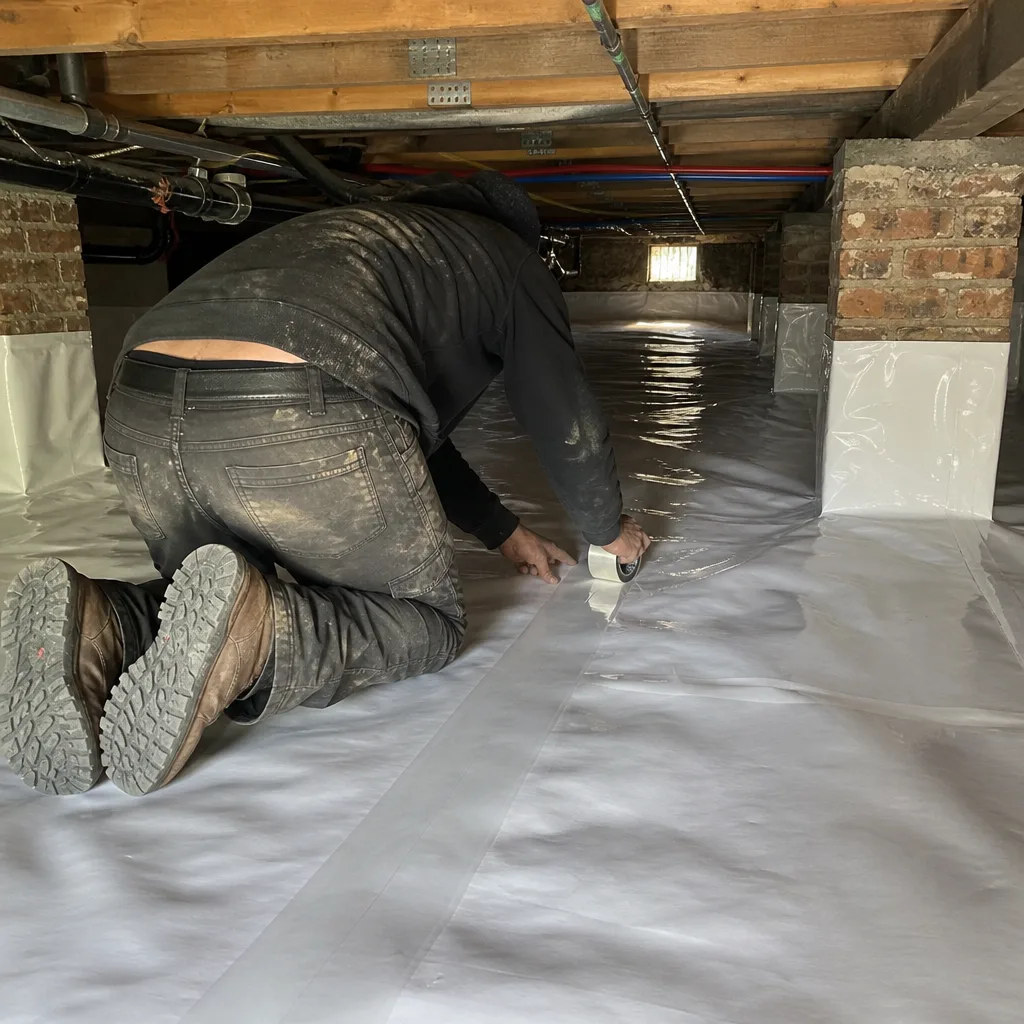
Closed-cell foam is denser, structurally stiffer, and acts as its own vapor barrier. We specify it for rim joists, crawl space walls, and unvented roof decks in Chicago, where condensation and air intrusion are steady, year-round problems. It costs more per board foot than open-cell, but it insulates at roughly R-6.5 per inch versus R-3.7, which means you need less of it to hit the same R-value. Topside Attic Insulation applies closed-cell with a temperature-monitored rig so the substrate stays within the manufacturer’s application window, even in February.
Rim Joist Spray Foam
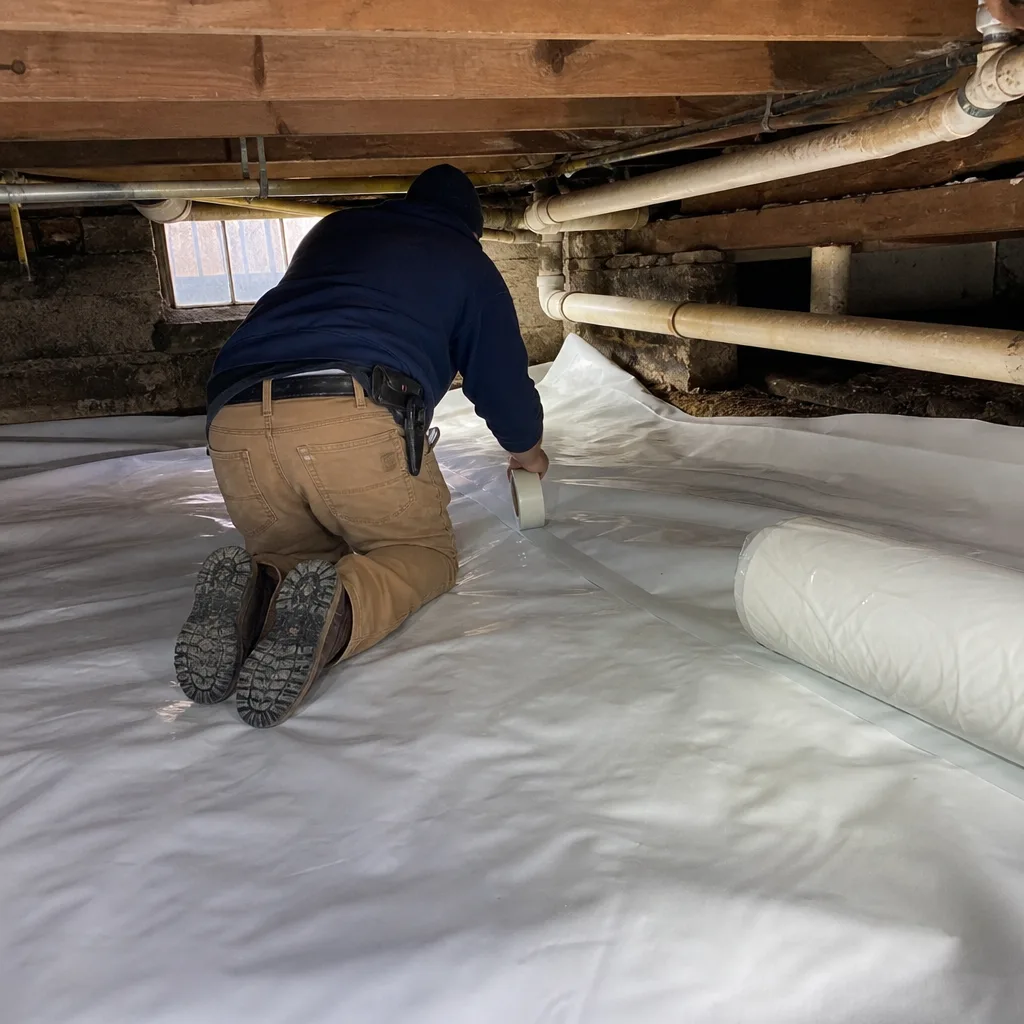
The rim joist, the band of framing where your floor meets the foundation wall, is one of the leakiest parts of any Spray Foam Insulation in Oak Lawn home. Cold air pours through the gaps in winter, and in summer the same path pulls humid outdoor air into the basement. We spray closed-cell foam across the entire rim joist perimeter to air seal and insulate in one application. When we finish, you’ll get a photo record of every bay we treated, labeled clearly so you can see the coverage.
Garage Ceiling Spray Foam
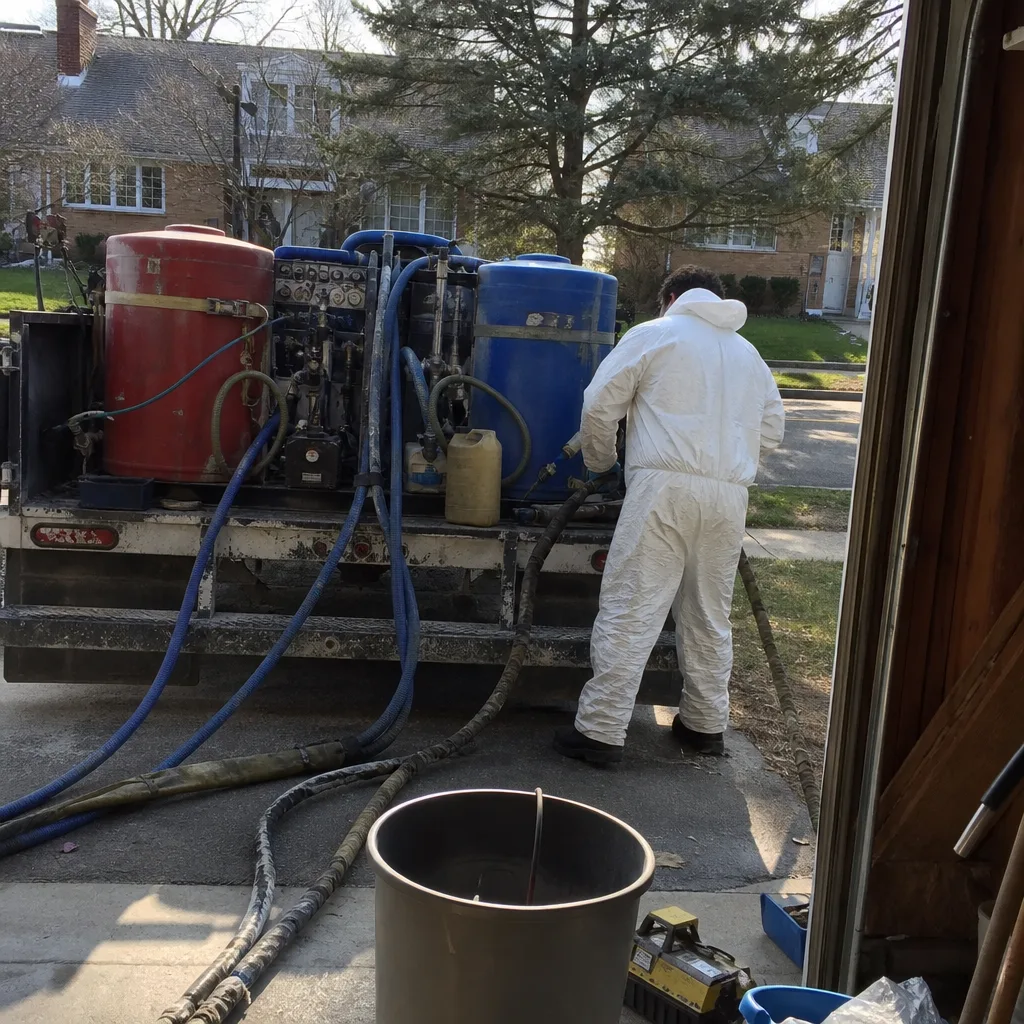
If there’s living space above your garage, there’s a good chance the garage ceiling is leaking heat into the driveway and fumes into the bedroom. We apply closed-cell foam to garage ceilings in homes where the garage is under conditioned space, sealing the floor system and cutting the stack effect that pulls garage air upward. In Chicago bungalows and two-flats with rear stairwells over garages, this is one of the highest-return air sealing jobs we do.
Spray Foam Roof Deck
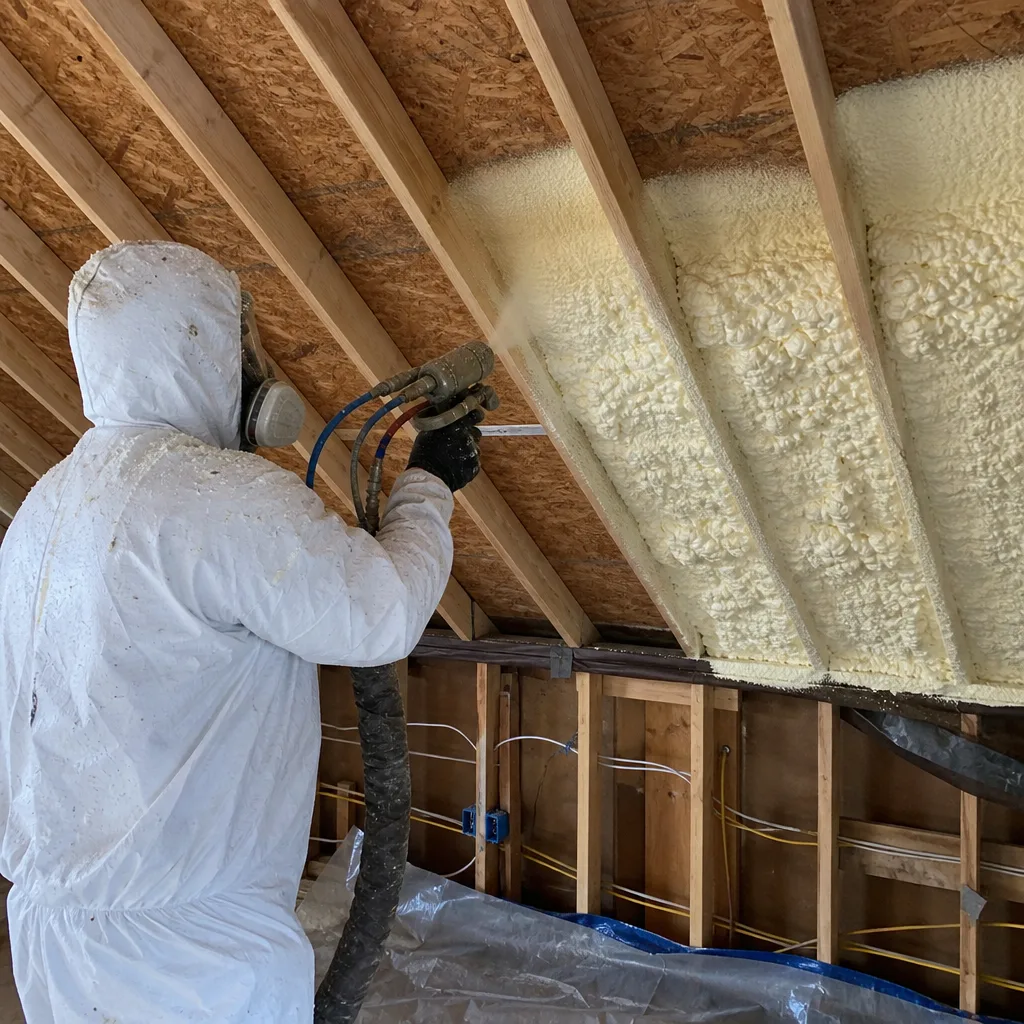
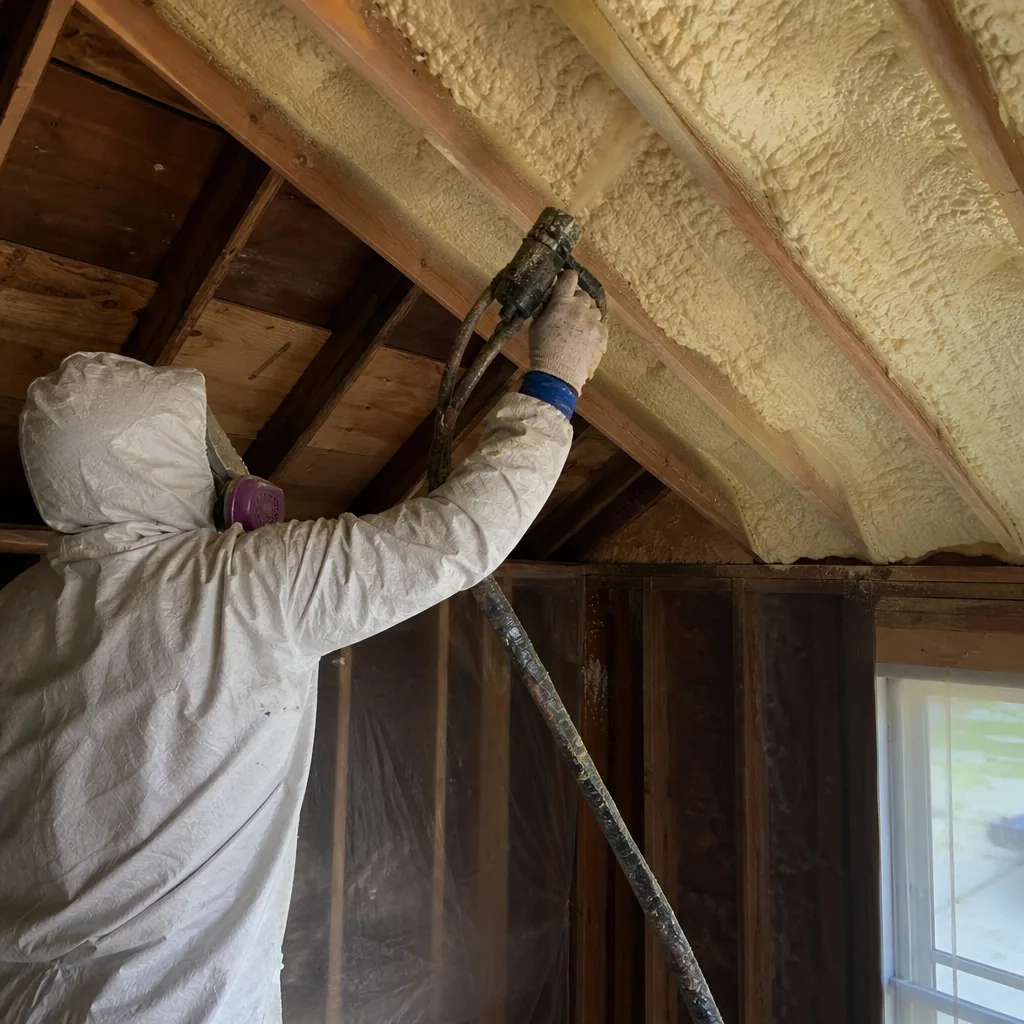
In unvented attic assemblies common in Chicago’s cathedral-ceiling rehabs and mid-century ranches, spray foam goes directly against the underside of the roof sheathing. That turns the attic into conditioned space and moves the home’s thermal boundary to the roof deck. We spray closed-cell for roof decks because its vapor resistance protects the sheathing from wintertime condensation. Before we quote a roof deck job, we inspect the existing shingles and sheathing from inside and out; foam locks in whatever is there, so a compromised deck needs to be addressed first.
What happens when you call
- 1
A real person answersNo phone trees - you reach a local pro.
- 2
You get an upfront price rangeHonest numbers before anyone is dispatched.
- 3
A background-checked tech heads outLicensed & insured, dispatched right away.
- 4
You approve before work beginsNothing starts until you say go.
Brands We Service for Spray Foam Insulation
We source spray foam materials from Owens Corning, Johns Manville, and Knauf, and we are vendor-trained on the application parameters for each. Owens Corning’s closed-cell products have specific substrate temperature requirements and expansion profiles we’ve dialed in across hundreds of Chicago installs, from Lakeview attics to Naperville rim joists. We’ll match the foam to the assembly, not the other way around.
Johns Manville and Knauf open-cell formulations cover the mid-range density applications we do most often, and our crews know the difference in rise time and trim behavior between them. Whether your home’s existing insulation is from Owens Corning, Johns Manville, Knauf, or an older product we can’t identify without a sample, we’ll assess what’s there before recommending what goes in. You don’t need to know the brand of the foam in your walls to get a straight answer from us.
Signs You Need Spray Foam Insulation Right Now
- Upstairs rooms that won’t hold heat in winter. If your second floor is consistently 8 to 10 degrees colder than the first floor in January, the problem is usually air movement through the attic floor, not thin insulation. Spray foam air seals and insulates in one pass, which addresses the root cause instead of piling more fiber on top of it.
- Ice dams forming at the roof edge after snow. Ice dams in Chicago are caused by warm attic air melting snow at the roof deck, which refreezes at the eave. Air sealing the attic floor with spray foam stops the warm air from reaching the sheathing. Insulation alone will not fix an ice dam, and adding insulation before sealing makes it worse.
- Cold floors over the garage or crawl space. If the floor above your garage or crawl space reads 55 degrees on a winter morning while the center of the room reads 68, the floor assembly is leaking. Rim joist and floor-deck spray foam both seal and insulate, which is what this specific condition calls for.
- Basement or crawl space that smells musty all summer. Warm, humid Chicago summer air entering through rim joist gaps condenses on cool foundation walls and feeds mold. Closed-cell spray foam at the rim joist blocks that air path. This is a documented problem we fix with before-and-after blower-door numbers to prove the change.
- Energy bills that keep climbing despite a newer furnace. A high-efficiency furnace can’t compensate for a leaky building envelope. If your ComEd and Peoples Gas bills have trended up over three consecutive years while usage patterns stayed flat, the air leaks are likely growing. A blower-door test gives you the number, and spray foam at the right locations brings it down.
Our Spray Foam Insulation Process - Step by Step
- 1
Written assessment and scope. We inspect the attic, rim joist bays, or roof deck, and we run a blower-door test to measure how much air the home is losing, reported in CFM50, the cubic feet per minute of air moving through the building envelope at 50 pascals of pressure. You get a written price with a written scope before any work starts. No number changes unless the scope changes, and you approve that change in writing first.
- 2
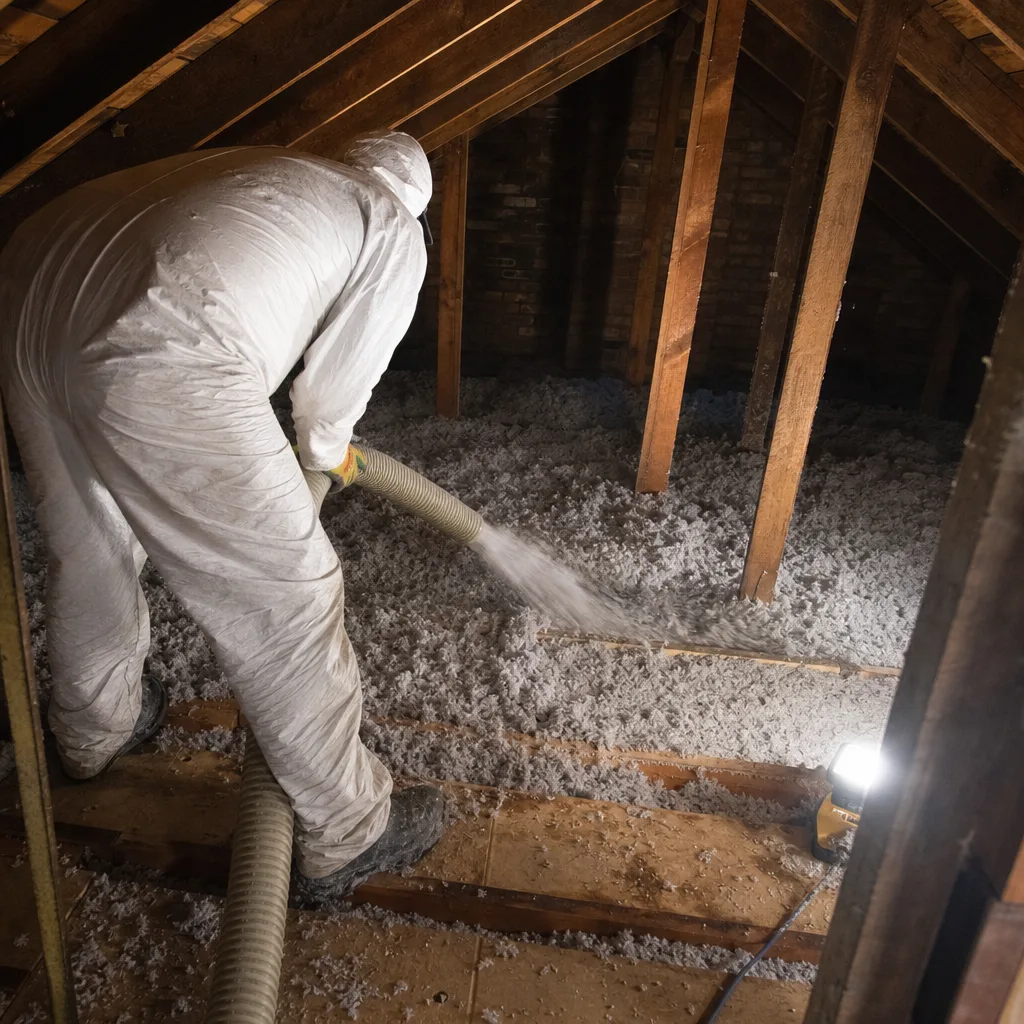
Air sealing prep. We seal top plates, wiring penetrations, can light housings, plumbing chases, and any other gap we find before foam or insulation goes in. This is the step most contractors skip because it’s tedious and invisible after the fact. It’s also the step that determines whether your blower-door number actually drops. Under The Haven Standard, we don’t insulate an unsealed cavity.
- 3
Spray foam application. Our crews apply the specified foam at the proper temperature and depth, monitoring substrate temp and foam rise throughout. For closed-cell roof decks and rim joists, we spray in lifts to control expansion and avoid cracking the substrate. For open-cell attics, we fill to the specified depth and then trim flush so you can still move through the attic.
- 4
Documentation and verification. We run a second blower-door test on every applicable job and give you both numbers, before and after, so you can see the exact CFM50 change you paid for. You also receive a photo record of every treated surface, labeled by location. This documentation is included on every visit, not available on request.
- 5
Warranty handoff. You walk away with a written warranty and a written scope, both in your hand before our crew leaves. If anything isn’t done right, the 365-Day Done Right Promise applies, and we make it right. A live person answers our phones 24/7, and you’ll have the name of the technician who did your work if you need to reach us afterward.
How Much Does Spray Foam Insulation Cost in Chicago?
In Chicago, open-cell spray foam for an attic floor typically runs $4,800 to $7,200 for a 1,200 to 1,800 square foot attic, depending on depth and the amount of air sealing required. Closed-cell rim joist work on a standard Chicago basement perimeter costs between $1,400 and $2,600. A closed-cell roof deck application on a single-story ranch runs $7,500 to $11,000. These are real, written ranges from work we’ve priced across the city, from Rogers Park to Beverly.
What changes the price: the surface area being sprayed, the thickness required to hit your target R-value, access conditions (kneewall attics cost more than open attics), and how much air sealing is needed before foam goes in. What should not change the price: the salesperson’s read on how much you can afford. That’s why our written price is the only number we ever quote, and it’s based on measured square footage, not a guess.
To avoid overpaying in Chicago, get a written scope from every contractor you talk to. If their scope says “spray attic to R-38” but doesn’t mention air sealing, the price is lower because the work is incomplete. Foam over an unsealed attic floor will not deliver the performance you paid for. If you already have a written estimate from another Chicago contractor, bring it to us. We’ll read it with you line by line and give you a Free Second Opinion. Call (218) 261-7714 and we’ll schedule it.
Spray Foam Insulation Near Chicago - Our Service Area
We work throughout the Chicago metro and collar counties, including Evanston, Oak Park, Skokie, Cicero, Berwyn, Naperville, Schaumburg, Arlington Heights, and Orland Park. Most Chicago jobs are scheduled within 7 to 10 days of the written assessment, and our crews arrive with a named technician and a text when they’re on the way. If you’re outside the immediate metro, call us and we’ll confirm coverage. You can also compare our approach with our work in other markets, including Spray Foam Insulation in Houston and Spray Foam Insulation in Dallas, where we apply the same air-sealing-first standard. And if you’re just getting oriented, start at our home page for the full service line.
Serving Chicago, IL - Our Local Coverage Area
We’re based in the Chicago area and know this community well. Use the map below to see our service coverage - if you’re nearby, we can almost certainly help.
Frequently Asked Questions - Spray Foam Insulation in Chicago
Spray foam insulation is a liquid polyurethane that expands on application and hardens into a continuous air-sealing and insulating layer. In a Chicago home, it does two jobs at once that traditional fiberglass batts cannot: it stops air movement through gaps and cracks, and it insulates the surface it’s sprayed on at a higher R-value per inch than most other materials. We use open-cell for ventilated attics and closed-cell for rim joists, crawl spaces, and roof decks.
Most Chicago spray foam jobs take one to two days on site, including prep, application, and cleanup. Rim joist work is usually a single day; a full attic floor or roof deck can run two days. After application, closed-cell foam is typically ready for re-entry within a few hours, and we’ll tell you the specific re-entry window for the product we use before we start. Call (218) 261-7714 to confirm scheduling for your specific job.
In Chicago, open-cell attic applications typically run $4,800 to $7,200, closed-cell rim joists run $1,400 to $2,600, and closed-cell roof decks run $7,500 to $11,000. Your exact price depends on measured square footage, target R-value, and how much air sealing is needed first. We give you a written price before any work starts, and that number doesn’t change unless the scope changes and you approve it in writing.
Yes. We assess what’s already in your attic or walls, identify the existing material, and determine whether spray foam is the right addition or replacement. We source from Owens Corning, Johns Manville, and Knauf, but we’re not locked into any one product and we won’t sell you foam where it’s not the right tool. If you’re unsure what you have, we’ll identify it during the assessment.
The foam-related problems we treat as urgent in Spray Foam Insulation - Hammond are rim joist air leaks causing frozen pipes and ice dams actively damaging the roof. We keep assessment slots open for these conditions and will get a technician out quickly when a live problem is putting water in your house. For emergency service, call (218) 261-7714 and a person answers, 24/7.
Every job comes with a written warranty delivered before work begins, plus the 365-Day Done Right Promise: if it’s not done right, we make it right. Under The Haven Standard, that promise is backed by a written scope and a written price, so there’s no ambiguity about what was agreed. If a manufacturer product warranty applies to the foam we used, we’ll pass that documentation to you as well.
Clear access to the attic hatch, rim joist bays, or garage ceiling area you’ve been discussing with us, and move anything fragile away from the work zone. Our crew will mask off the work area and run a hose from the rig outside, so we need a clear path from the entry to the work site. We’ll send you a short preparation checklist with your written scope so there are no surprises on install day.
Schedule Your Spray Foam Insulation Service in Chicago Today
We’ll assess your home, run a blower-door test, and give you a written price before any work starts. No pressure, no phone tag, and no voice message loops. Call (218) 261-7714 to schedule your spray foam assessment in Chicago, or bring us a written estimate from another contractor and we’ll read it with you for free.
Written by Wes Okafor, Owner at Topside Attic Insulation, serving Chicago since 2016.