
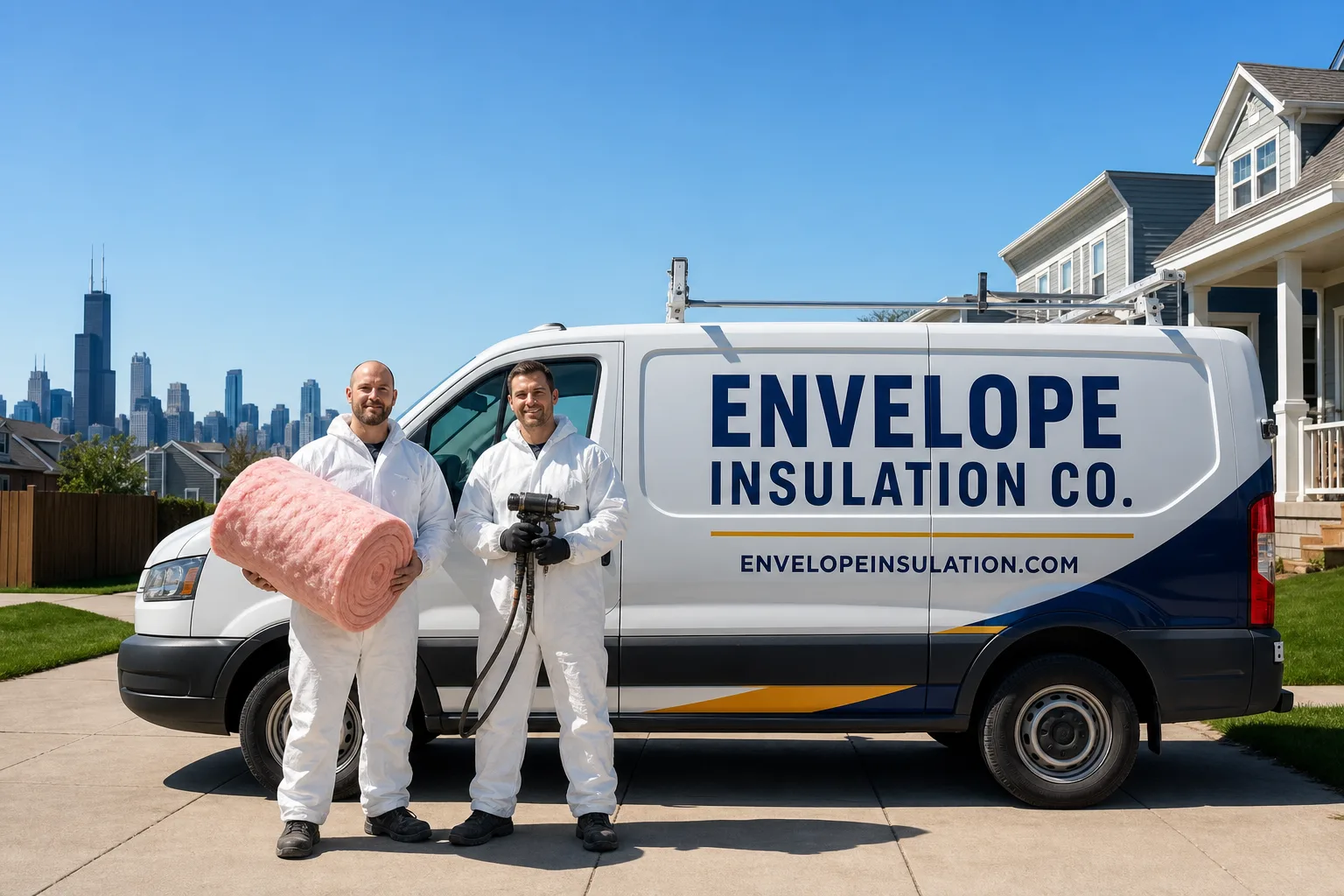
Insulation in Chicago, IL
Spray foam insulation in Chicago solves a problem that fiberglass and cellulose struggle with: sealing the gaps in 80,000 Chicago Bungalows and brick two-flats where winter air leaks through knee walls, rim joists, and top plates. This page covers the eight insulation services we perform across Chicago, with straightforward price ranges and the local conditions that change how each job goes. Call (218) 261-7714 for a written price before any work starts.
Why Chicago Homes Are Different
Chicago’s housing stock is dominated by pre-WWII masonry construction: brick bungalows built between 1910 and 1940, brick two-flats and three-flats, and greystones with original plaster walls and zero wall cavity insulation. These homes were framed for coal heat and open windows, not for airtight envelopes. The city’s roughly 80,000 Chicago Bungalows have a particular failure point we see on nearly every job: the half-story knee wall, typically bare or stuffed with collapsed fiberglass batts, with the attic kneespace behind it open to outside air. That single defect can drive 30-40% of a bungalow’s total heating load.
Climate compounds it. Chicago’s polar vortex events push temperatures to -20°F and below; the January 2019 event hit -23°F. Lake Michigan’s winter winds along the lakefront corridors from Rogers Park to Hyde Park force air through every envelope gap, which is why air sealing matters as much as R-value in Chicago. Attic insulation in Chicago needs R-49 to R-60, above code minimums in neighboring Midwest markets. Dense-pack blown-in cellulose into existing stud cavities is the workhorse retrofit technique across the masonry housing stock here, and it works differently in solid brick than in frame walls.
Our Main Chicago Services
Two services draw the most calls from Chicago homeowners: attic insulation retrofits in older masonry homes, and crawl space encapsulation in the flat-roofed courtyard apartment buildings common on the north and south sides.
Attic Insulation in Chicago
Most Chicago attics we inspect have some insulation but no air sealing. The result is a ceiling that measures R-30 but performs like R-15 because conditioned air moves through top plates and can lights. We seal those penetrations first, then bring the attic to R-49 or R-60 depending on the home and the ComEd energy program requirements. In bungalows, the attic plane isn’t flat: the half-story knee wall and sloped ceiling sections need a different treatment than the flat attic floor. Our full breakdown lives on the Attic Insulation in Chicago page.
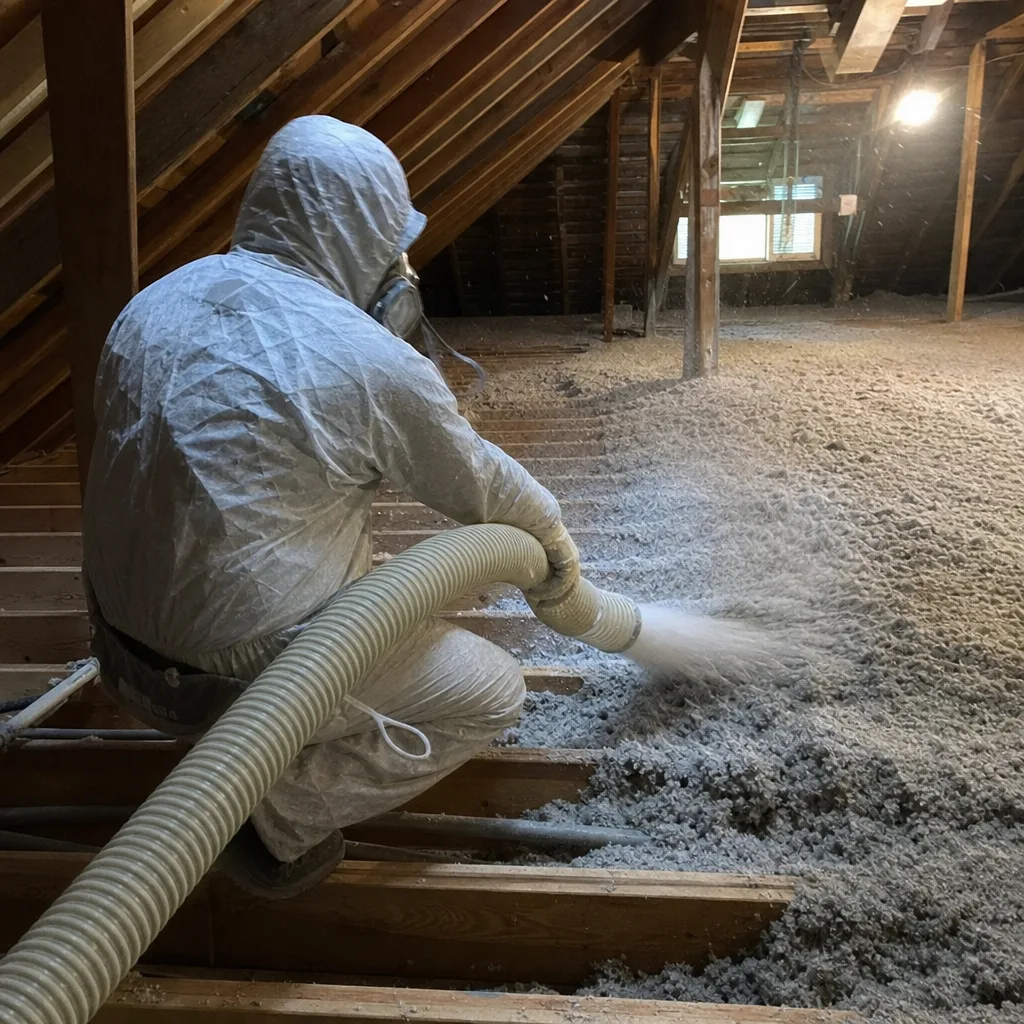
Crawl Space Encapsulation & Vapor Barrier in Chicago
Chicago’s post-WWII flat-roofed courtyard apartments and many frame homes have shallow crawl spaces that hold moisture through every freeze-thaw cycle. A wet crawl space doesn’t stay in the crawl space: it moves moisture into floor joists and living areas, and it makes every insulation job above it perform worse. We install vapor barriers, seal rim joists, and condition the space so the floor above stops losing heat. See the full scope on the Crawl Space Encapsulation & Vapor Barrier in Chicago page.
What happens when you call
- 1
A real person answersNo phone trees - you reach a local pro.
- 2
You get an upfront price rangeHonest numbers before anyone is dispatched.
- 3
A background-checked tech heads outLicensed & insured, dispatched right away.
- 4
You approve before work beginsNothing starts until you say go.
Spray Foam Insulation in Chicago
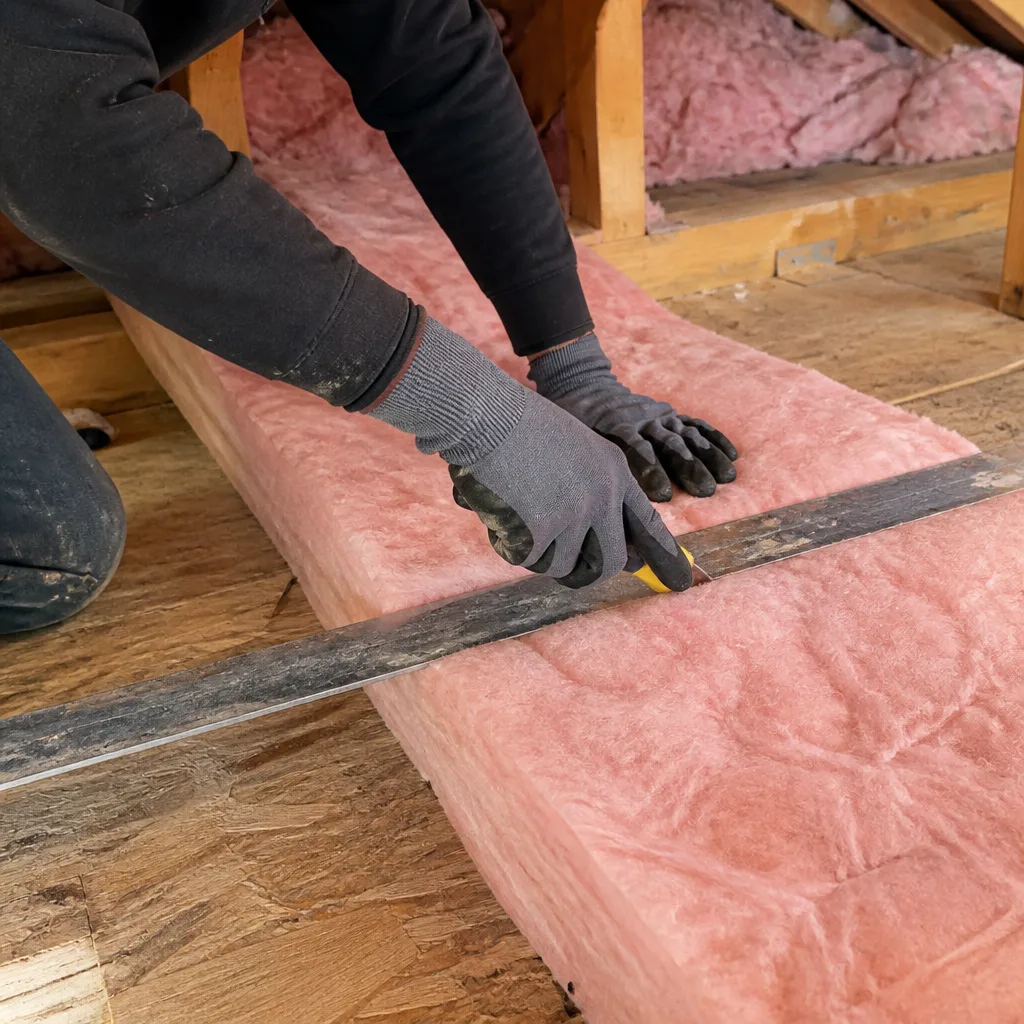
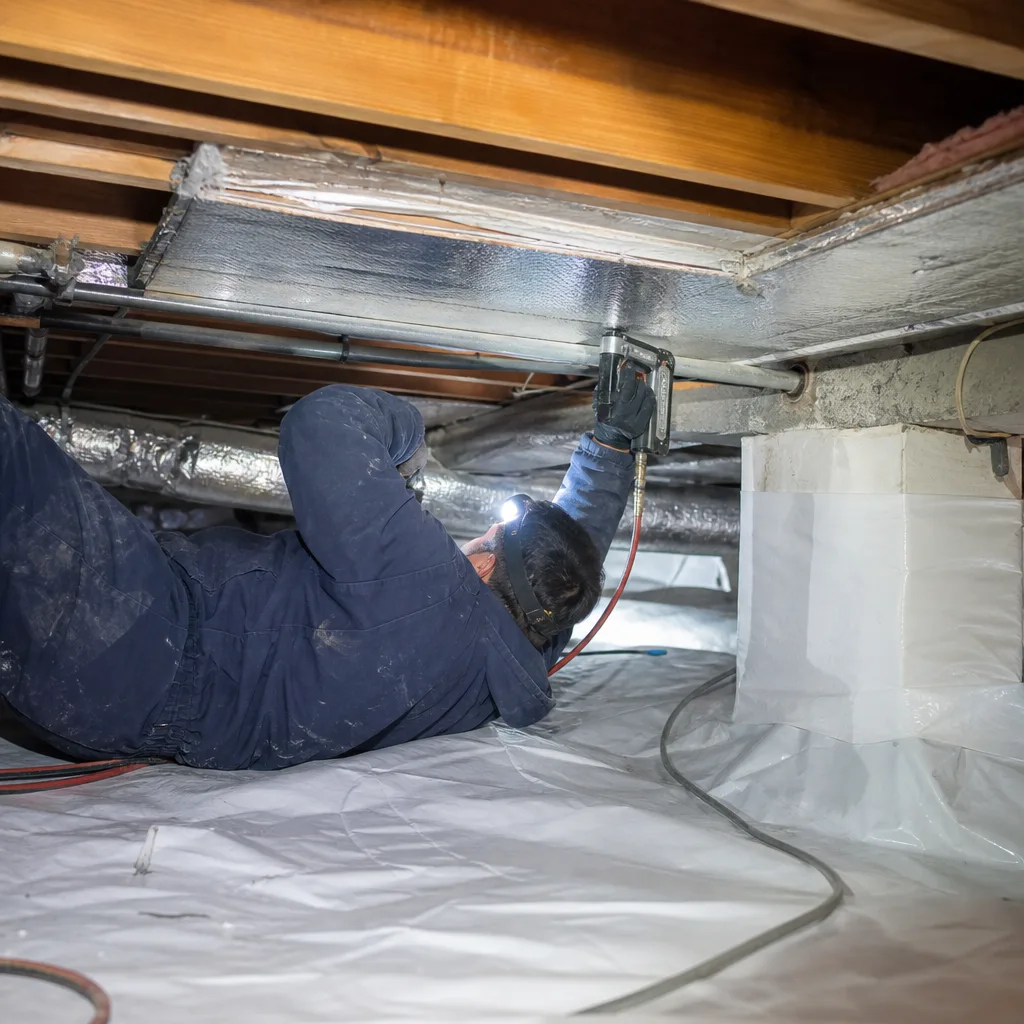
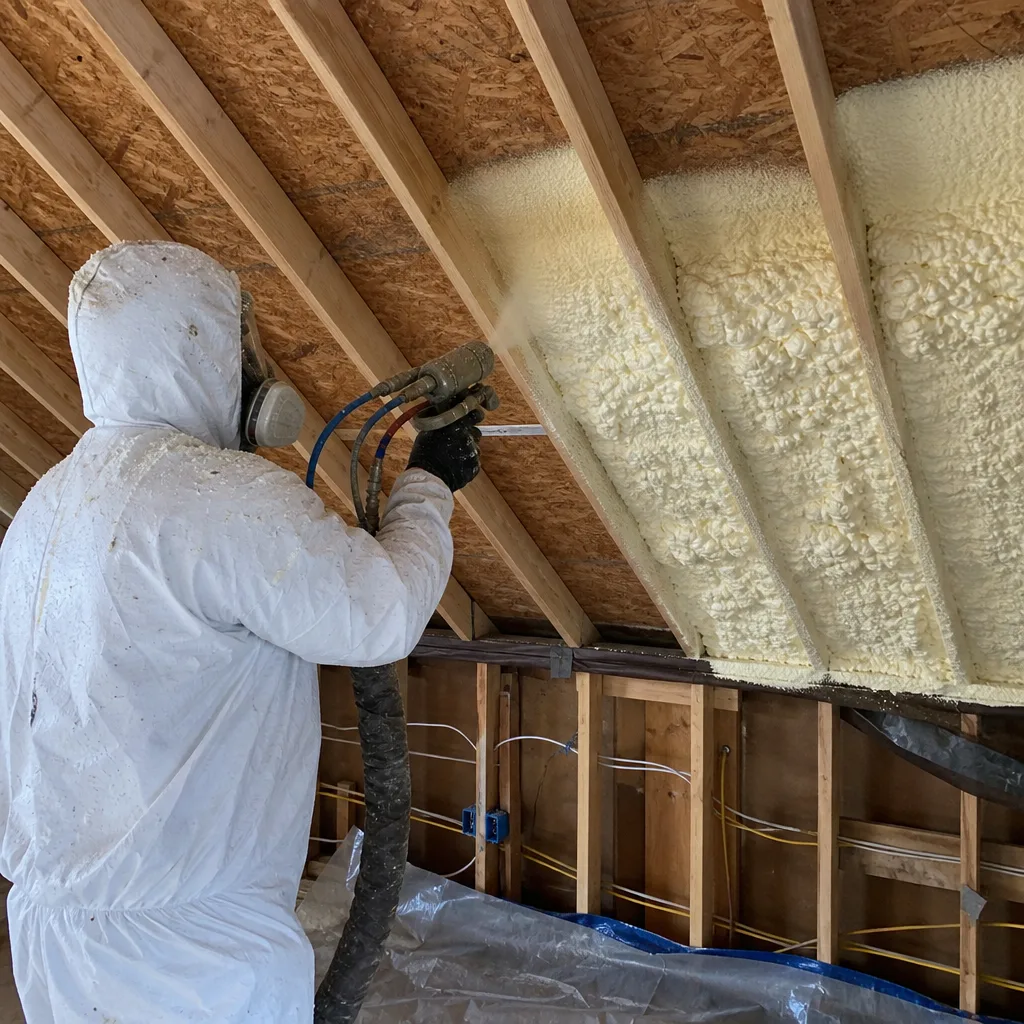
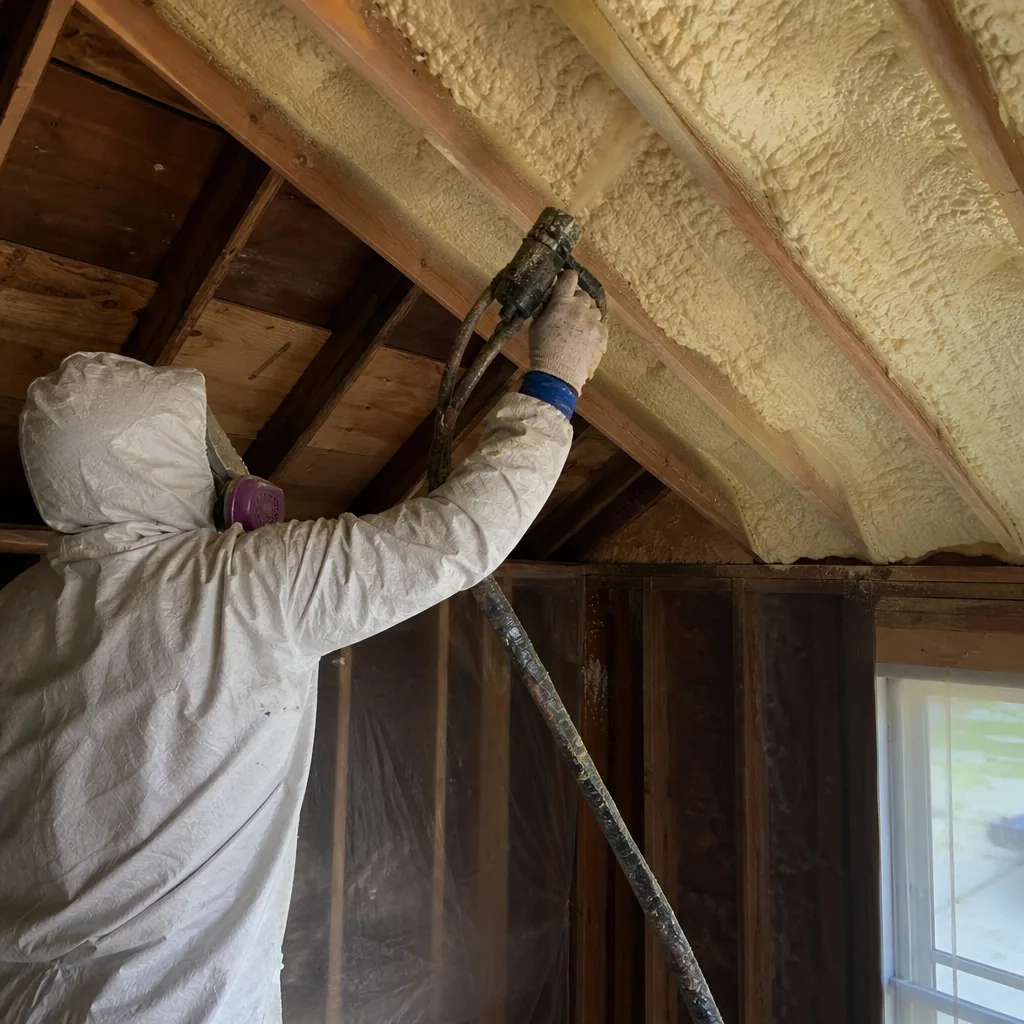
Spray foam insulation in Chicago is the only material that insulates and air-seals in one step, which matters in a city where -20°F air finds every gap in a 1920s brick bungalow’s rim joist. We apply open-cell and closed-cell foam from brands like Icynene where the building science calls for it: rim joists, knee walls, and roof decks on flat-roofed courtyard apartments. Our Spray Foam Insulation process always starts with a written scope.
Open-Cell Spray Foam
Signs you need it
Your attic floor is insulated but the second floor of your Chicago bungalow still drops 10 degrees overnight in January.
What it costs in Chicago
Open-cell spray foam in Chicago typically runs $1.80-$2.50 per board foot installed, which puts most full attics between $4,500 and $9,000.
How we do it
We mask the work area, spray the foam to the specified depth, let it cure, then document the finished thickness with photos.
Rim Joist Spray Foam
Signs you need it
You can feel cold air at the baseboard of your first floor even with the furnace running, and your rim joist bay is insulated with nothing or a single fiberglass batt.
What it costs in Chicago
Rim joist spray foam in Chicago typically costs $800-$2,500 depending on how many linear feet of rim joist the home has.
How we do it
We access each rim joist bay from the basement or crawl space, spray two inches of closed-cell foam into the bay, and check the seal around every pipe and wire penetration.
What Spray Foam Insulation Costs in Chicago
| Item | Typical range in Chicago |
|---|---|
| Open-cell spray foam (attic floor) | $4,500 - $9,000 |
| Closed-cell spray foam (rim joists) | $800 - $2,500 |
| Closed-cell spray foam (roof deck) | $6,000 - $14,000 |
Is spray foam safe for a 1920s Chicago bungalow?
Yes, when applied by a trained crew who knows masonry construction. We verify the wall assembly before recommending foam; closed-cell against brick needs a drainage path or it can trap moisture.
Can you spray foam my attic in winter?
Yes. Chicago winter work is routine for us; closed-cell foam can be applied down to about 20°F substrate temperature, and we schedule around the coldest stretches. Call (218) 261-7714 to check current scheduling.
Blown-In Insulation in Chicago
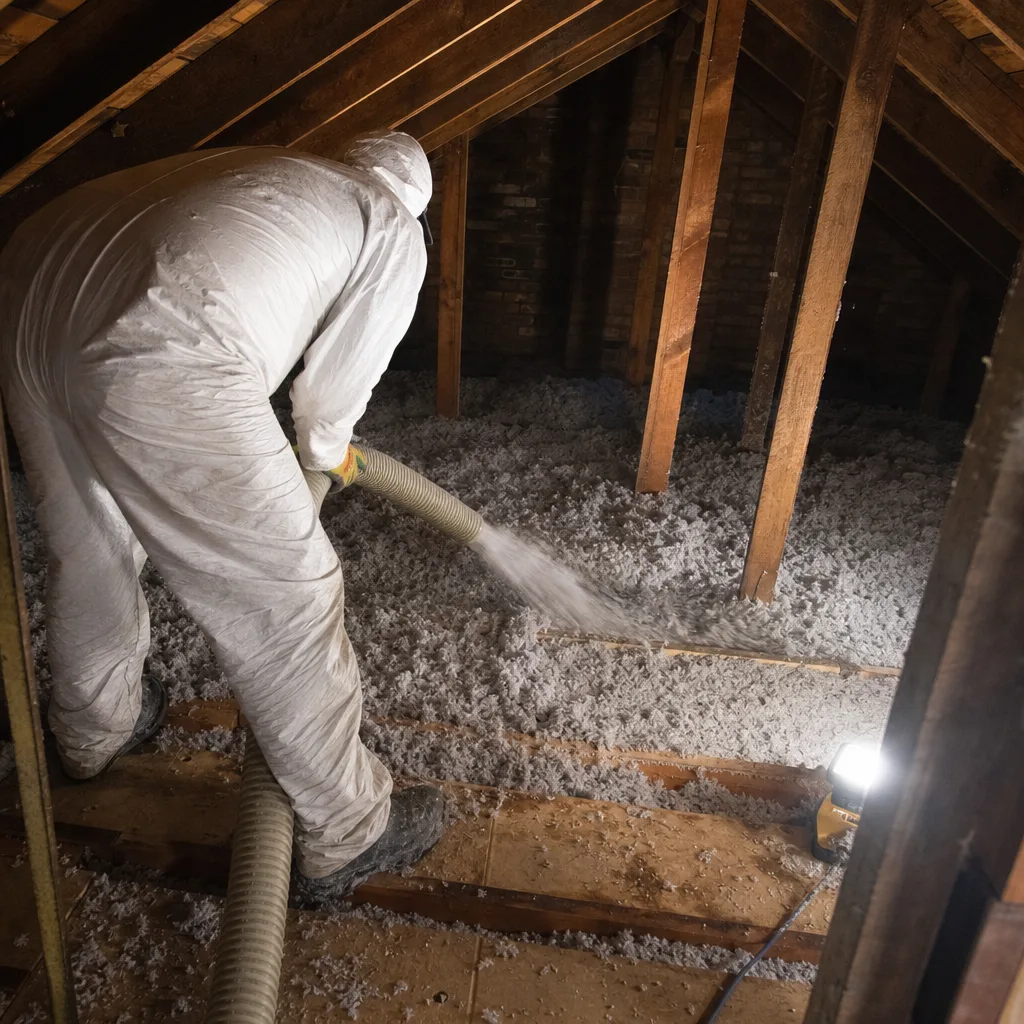
Blown-in insulation is the workhorse retrofit for Chicago’s masonry housing stock, because dense-pack cellulose can fill the empty stud cavities in brick bungalows and two-flats without tearing out plaster walls. In a city where most pre-1940 homes have zero wall cavity insulation, this technique delivers the fastest thermal improvement per dollar. Our Blown-In Insulation work always starts with air sealing, never before it.
Blown-In Cellulose
Signs you need it
Your Chicago bungalow’s exterior walls read cold on a thermal camera and you can feel drafts at outlets on exterior walls.
What it costs in Chicago
Blown-in cellulose in Chicago typically runs $1.50-$2.50 per square foot of attic floor, or $2,200-$5,500 for a standard bungalow attic.
How we do it
We drill access holes, blow cellulose to the specified density, plug and patch the holes, and leave you with a depth check at every access point.
Dense-Pack Wall Insulation
Signs you need it
Your brick two-flat still has original plaster walls, no wall insulation, and heating bills that spike every January.
What it costs in Chicago
Dense-pack wall insulation in Chicago typically costs $2.50-$4.00 per square foot of wall area, which puts most two-flats between $6,000 and $12,000.
How we do it
We drill small holes through siding or mortar joints, blow cellulose at 3.5 pounds per cubic foot into each stud bay, then patch and paint-match the holes.
What Blown-In Insulation Costs in Chicago
| Item | Typical range in Chicago |
|---|---|
| Blown-in cellulose (attic) | $2,200 - $5,500 |
| Dense-pack wall insulation | $6,000 - $12,000 |
| Blown-in fiberglass (attic top-up) | $1,800 - $4,200 |
Does blown-in insulation settle over time in Chicago’s freeze-thaw climate?
Dense-pack cellulose does not settle when installed at the correct density. Loose-fill attic cellulose can settle about 10% in the first year; we account for that in the installed depth.
Can you blow insulation into my existing walls without removing the plaster?
Yes, that’s exactly what dense-pack is for. We drill from the exterior or interior, pack the cavity, and patch the holes so they disappear. Call (218) 261-7714 for a written price.
Radiant Barrier Installation in Chicago
Radiant barrier installation in Chicago is most useful in homes where the attic gets direct summer sun on a flat or low-slope roof and the second floor overheats by late afternoon. Chicago’s hot, humid July and August weeks push attic temperatures past 140°F, and a foil radiant barrier reflects much of that heat before it reaches your insulation. Our Radiant Barrier Installation work is typically paired with attic air sealing and ventilation checks.
Attic Radiant Barrier
Signs you need it
Your second floor runs 10 degrees hotter than the first floor in July, and your attic feels like a sauna at 2 p.m.
What it costs in Chicago
Attic radiant barrier in Chicago typically costs $900-$2,800 for a single-family attic, depending on roof area and access.
How we do it
We staple or lay the foil across the attic floor or rafters with the reflective side facing the air gap, then photograph the finished coverage.
Radiant Barrier Roof Deck
Signs you need it
Your Chicago bungalow’s half-story ceiling is uninsulated at the roof slope and the room is unusable in summer.
What it costs in Chicago
Radiant barrier roof deck installation in Chicago typically runs $1,200-$3,500, depending on slope and access.
How we do it
We attach the foil to the underside of the roof deck, leaving a consistent air gap between the barrier and the roof sheathing.
What Radiant Barrier Installation Costs in Chicago
| Item | Typical range in Chicago |
|---|---|
| Attic floor radiant barrier | $900 - $2,800 |
| Roof deck radiant barrier | $1,200 - $3,500 |
| Radiant barrier with ventilation upgrade | $2,000 - $5,000 |
Does radiant barrier help with Chicago’s winter heating costs?
Radiant barrier is primarily a summer cooling measure. It reflects radiant heat, not conductive heat, so its winter benefit is minimal in Chicago. Pair it with air sealing for year-round gains.
Is radiant barrier worth it in Chicago’s climate?
It depends on your attic exposure. A flat-roofed brick courtyard apartment with direct sun and a hot second floor sees the most benefit. Call (218) 261-7714 and we’ll review your specific roof orientation.
Insulation Removal & Replacement in Chicago
Insulation removal and replacement in Chicago usually starts with one of three findings: rodent contamination, vermiculite that may contain asbestos, or insulation that was never air-sealed underneath and has been doing half a job for decades. Chicago’s older housing stock means we regularly remove 1950s and 1960s loose-fill from attics in Jefferson Park and Clearing that was installed over unsealed top plates. Our Insulation Removal & Replacement process includes a full written scope before any material comes out.
Attic Insulation Removal
Signs you need it
Your attic has old fiberglass batts that are compressed, mouse-soiled, or missing entirely over large sections of the floor.
What it costs in Chicago
Attic insulation removal in Chicago typically costs $2,000-$4,500 for a standard single-family attic, before new insulation goes in.
How we do it
We run a HEPA-filtered vacuum line from the attic to a truck-mounted collection bag, remove every trace of old insulation, then inspect the air-sealing layer underneath.
Vermiculite & Old Insulation Removal
Signs you need it
Your attic contains gray-gold pebbly material labeled as vermiculite, and you’re planning any work that would disturb it.
What it costs in Chicago
Vermiculite removal in Chicago typically runs $3,500-$8,000 because of the asbestos testing and abatement protocols involved.
How we do it
We test first, then follow Illinois EPA handling procedures with full containment and HEPA filtration, and we document every step with photos.
What Insulation Removal & Replacement Costs in Chicago
| Item | Typical range in Chicago |
|---|---|
| Attic insulation removal | $2,000 - $4,500 |
| Vermiculite removal | $3,500 - $8,000 |
| Full removal and replacement (attic) | $5,000 - $11,000 |
Do I need a permit for insulation removal in Chicago?
Most insulation removal jobs do not require a city permit, but vermiculite removal triggers EPA and state handling rules that we manage on your behalf. We’ll tell you exactly what applies to your address.
How long does attic insulation removal take in a Chicago home?
Most single-family attics take one day to remove and one day to re-insulate. Vermiculite jobs run longer. Call (218) 261-7714 with your address and we’ll give you a written timeline.
Attic Air Sealing in Chicago
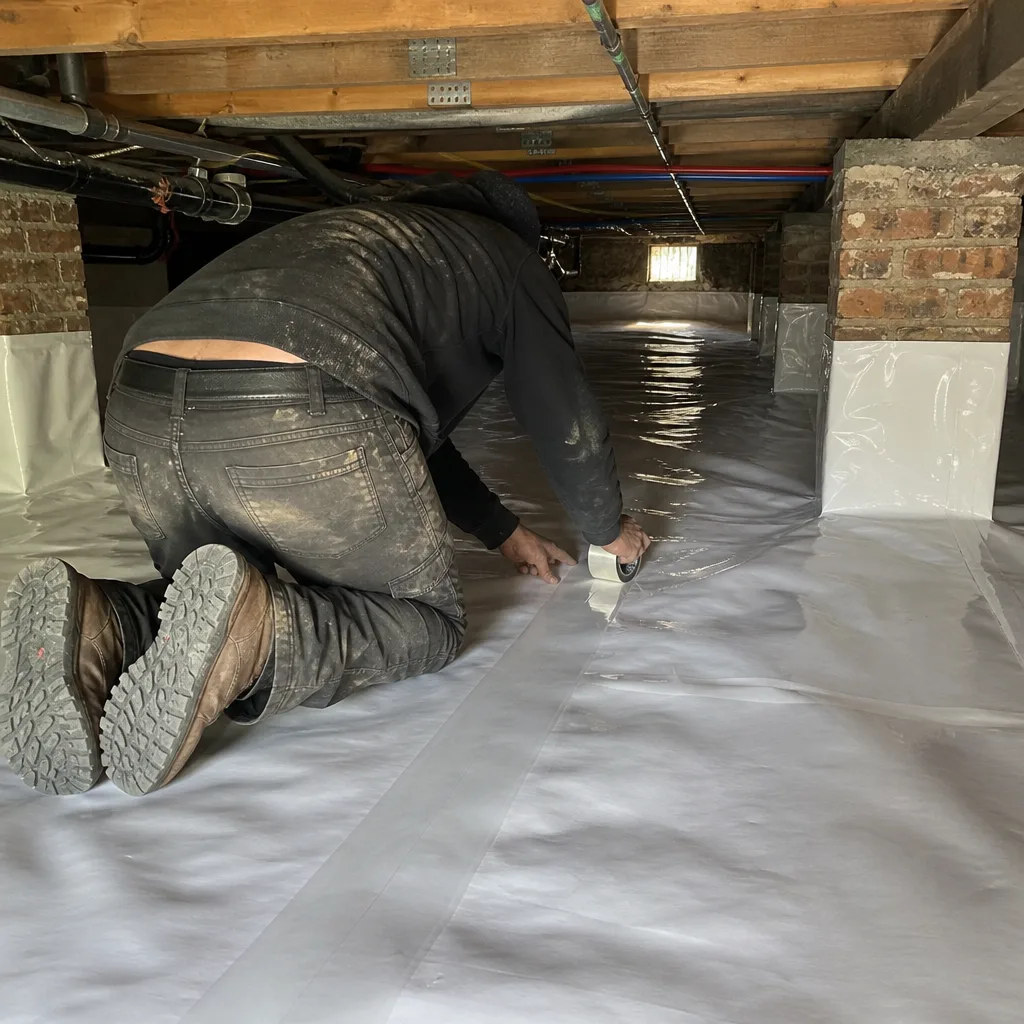
Attic air sealing in Chicago is the single highest-return insulation upgrade for a pre-1940 home, because sealing top plates, can lights, and chase penetrations stops the stack effect that pulls heated air out of the living space all winter. In lakefront neighborhoods from Rogers Park to Hyde Park, winter winds push that stack effect harder. We never blow insulation over an unsealed attic floor; sealing comes first, every time. Learn more about our Attic Air Sealing method and the blower-door numbers we publish after every job.
Top Plate & Penetration Sealing
Signs you need it
Your attic insulation is clean and adequately deep, but rooms below still feel drafty in winter and your heating bills keep climbing.
What it costs in Chicago
Top plate and penetration sealing in Chicago typically costs $1,200-$2,800, depending on attic size and access.
How we do it
We pull back insulation at each wall top plate, apply foam or caulk to every gap and penetration, then run a blower-door test to verify the drop in CFM50.
Can Light & Duct Boot Sealing
Signs you need it
Your recessed can lights feel warm in summer and cold in winter, and airflow moves through them into the attic.
What it costs in Chicago
Can light and duct boot sealing in Chicago typically runs $400-$1,200, depending on how many fixtures and boots need work.
How we do it
We install rated covers over non-IC cans, seal around IC fixtures with high-temperature caulk, and seal every duct boot to the drywall.
What Attic Air Sealing Costs in Chicago
| Item | Typical range in Chicago |
|---|---|
| Top plate and penetration sealing | $1,200 - $2,800 |
| Can light and duct boot sealing | $400 - $1,200 |
| Full attic air sealing (blower-door verified) | $2,500 - $5,000 |
How do I know if my Chicago attic is already sealed?
Look for foam or caulk at every top plate, can light, and pipe penetration. If the insulation has been pulled back and you see daylight or gaps, it hasn’t been sealed. We verify with a blower-door test.
Does air sealing really matter if I already have R-49 insulation?
Yes. Unsealed top plates can cut the effective R-value of your attic in half by allowing conditioned air to bypass the insulation entirely. Call (218) 261-7714 for a blower-door reading on your home.
Wall Insulation in Chicago
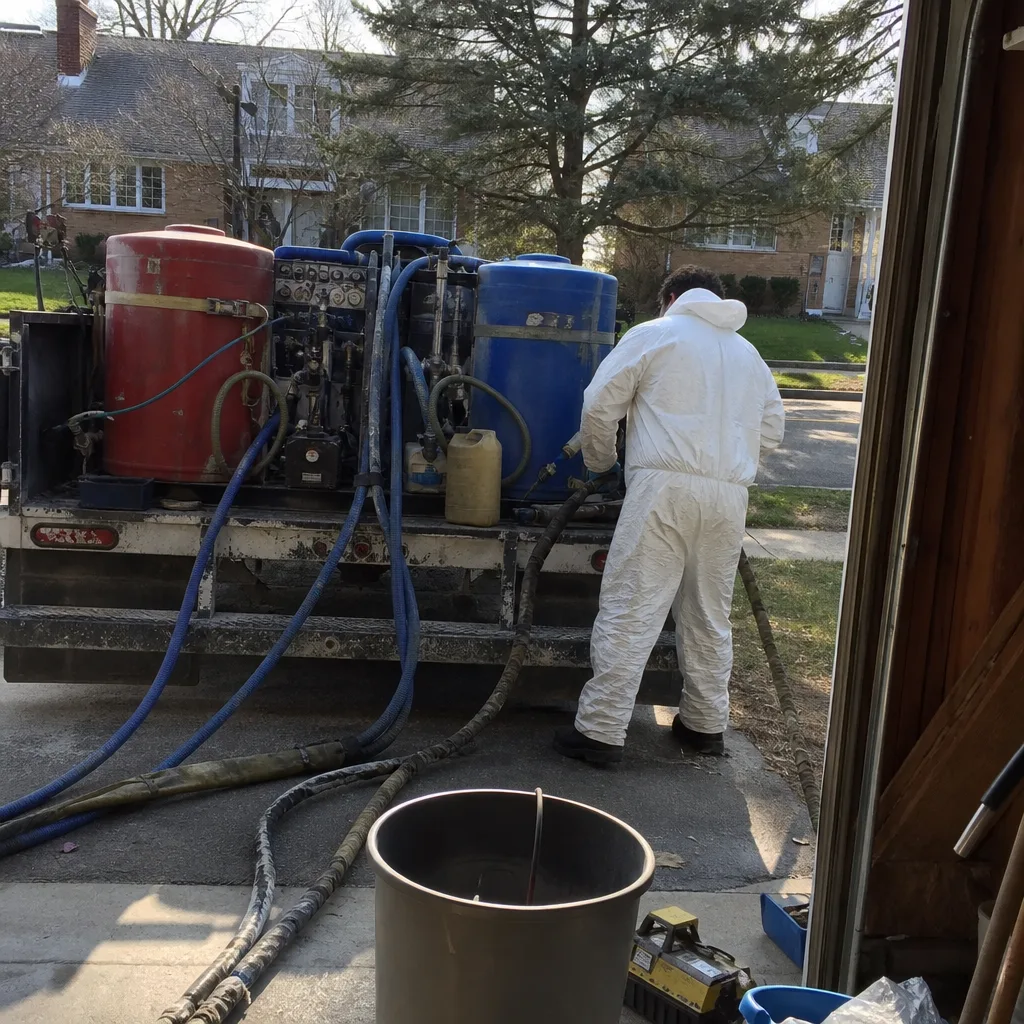
Wall insulation in Chicago is dominated by dense-pack retrofits into the empty stud cavities of pre-1940 brick bungalows, two-flats, and greystones. These masonry-walled homes were built without any wall cavity insulation, and Chicago’s polar vortex winters make that cavity loss the largest single line item on a heating bill. Our Wall Insulation methods are chosen by wall assembly: what works in a brick bungalow’s exterior wall is not what works in a frame addition off the back.
Drill & Fill Wall Insulation
Signs you need it
Your exterior walls feel cold to the touch in winter, and a thermal camera shows empty stud bays behind the plaster.
What it costs in Chicago
Drill and fill wall insulation in Chicago typically costs $2.50-$4.00 per square foot of wall area, or $6,000-$12,000 for a standard bungalow.
How we do it
We drill access holes at each stud bay, dense-pack cellulose to 3.5 pounds per cubic foot, then patch and color-match the holes.
Injection Foam Wall Insulation
Signs you need it
Your walls have irregular cavities or old partial insulation that makes dense-pack difficult, and you want a foam that fills every void.
What it costs in Chicago
Injection foam wall insulation in Chicago typically runs $4.50-$7.00 per square foot, or $10,000-$18,000 for a full two-flat.
How we do it
We inject slow-rise foam through small holes into each cavity, monitoring fill with a thermal camera to confirm the cavity is fully packed.
What Wall Insulation Costs in Chicago
| Item | Typical range in Chicago |
|---|---|
| Drill & fill (cellulose) | $6,000 - $12,000 |
| Injection foam | $10,000 - $18,000 |
| Interior wall soundproofing | $2,000 - $6,000 |
Will drilling holes damage my Chicago brick exterior?
We typically drill through mortar joints, not brick faces, and we patch with color-matched mortar. Holes are small and disappear after patching. We document every patch with photos.
How long does wall insulation take in a Chicago bungalow?
Most single-family bungalow walls take one day. A full brick two-flat can take two to three days. Call (218) 261-7714 for a written timeline on your property.
Attic Cleaning & Rodent Proofing in Chicago
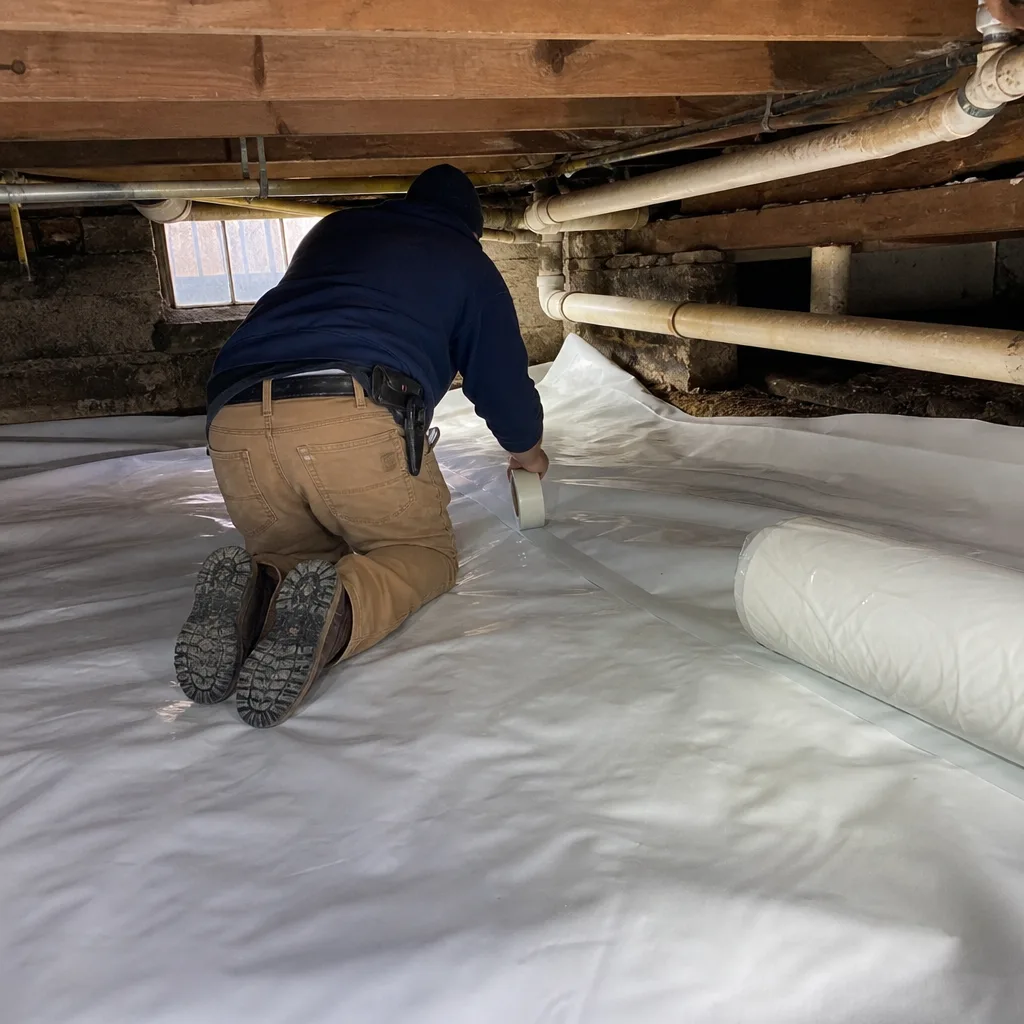
Attic cleaning and rodent proofing in Chicago deals with the reality of the city’s alley-fed neighborhoods: rats, mice, and squirrels find their way into attics through gap teeth in brick, open roof vents, and utility line penetrations. Chicago’s dense housing means a rodent problem in one building quickly becomes a block-wide issue, and a contaminated attic makes every insulation upgrade after it less effective and less safe. Our Attic Cleaning & Rodent Proofing process includes full removal, sanitizing, and exclusion work.
Attic Cleanout
Signs you need it
Your attic has visible droppings, nesting material, or decades of accumulated dust and old insulation that needs to come out before new insulation goes in.
What it costs in Chicago
Attic cleanout in Chicago typically costs $1,500-$3,500 for a standard single-family attic, before sanitizing or new insulation.
How we do it
We vacuum out all debris with HEPA filtration, bag and dispose of everything, and document the condition of the attic floor before and after.
Rodent Proofing & Exclusion
Signs you need it
You hear scratching in the ceiling at night, find droppings in the attic, or see evidence of gnawing on wiring or framing.
What it costs in Chicago
Rodent proofing and exclusion in Chicago typically runs $800-$2,500, depending on how many entry points need sealing.
How we do it
We identify every entry point, seal them with steel mesh and foam, install or repair vent screens, and document every exclusion point with photos.
What Attic Cleaning & Rodent Proofing Costs in Chicago
| Item | Typical range in Chicago |
|---|---|
| Attic cleanout | $1,500 - $3,500 |
| Rodent proofing & exclusion | $800 - $2,500 |
| Attic sanitizing & decontamination | $600 - $1,400 |
Do I need to remove all my insulation if I had a rodent problem?
Yes. Rodent urine and droppings contaminate insulation and create a health hazard. The material has to come out before sanitizing and new insulation. We test and remove it all.
How fast can you get to a Chicago attic with rodents?
We schedule attic cleanouts within days, not weeks, and our team is background-checked and uniformed. Call (218) 261-7714 with your address and we’ll get you on the board.
Home Energy Audit in Chicago
A home energy audit in Chicago measures what’s actually leaking: blower-door CFM50, thermal camera images of empty wall cavities, and duct leakage percentages. In a city where two identical-looking bungalows can have completely different envelope performance, the audit turns guesswork into a numbered, documented work list. Our Home Energy Audit report includes the blower-door number, thermal images, and a written scope for any recommended work.
Blower Door Test
Signs you need it
You want to know, in one number, how much conditioned air your Chicago home is losing right now.
What it costs in Chicago
A standalone blower door test in Chicago typically costs $250-$500, and it’s included with every full home energy audit.
How we do it
We mount the blower door in an exterior door frame, depressurize the house to 50 pascals, and record the CFM50 reading before and after any sealing work.
Thermal Imaging Inspection
Signs you need it
Rooms run wildly different temperatures, or you suspect missing wall insulation but don’t want to open walls to find out.
What it costs in Chicago
A thermal imaging inspection in Chicago typically costs $200-$450 as a standalone, or is included in a full audit.
How we do it
We scan every exterior wall, ceiling, and floor with a thermal camera while the home is under blower-door depressurization, then mark cold spots and air leaks in the report.
What Home Energy Audit Costs in Chicago
| Item | Typical range in Chicago |
|---|---|
| Blower door test (standalone) | $250 - $500 |
| Thermal imaging inspection | $200 - $450 |
| Full home energy audit | $450 - $900 |
What does a Chicago energy audit tell me that I don’t already know?
It gives you exact CFM50 numbers and thermal images that show which specific cavities are empty or leaking. You get a written work list ranked by payback, not a vague feeling about your home.
Will the audit be valid for ComEd or gas company rebate programs?
Our audit documentation meets the requirements for most Illinois and ComEd programs. We provide the written report and blower-door numbers you need to file. Call (218) 261-7714 for details.
Brands We Service in Chicago
We install and service insulation from Knauf, Rockwool, CertainTeed, and Icynene, and we stock common replacement parts locally for faster turnaround on Chicago jobs. See our brands for the full material list and what each one is best suited for.
Pricing for Insulation in Chicago, IL
| Service | Typical range in Chicago |
|---|---|
| Open-cell spray foam (attic floor) | $4,500 - $9,000 |
| Closed-cell spray foam (rim joists) | $800 - $2,500 |
| Blown-in cellulose (attic) | $2,200 - $5,500 |
| Dense-pack wall insulation | $6,000 - $12,000 |
| Attic radiant barrier | $900 - $2,800 |
| Attic insulation removal | $2,000 - $4,500 |
| Full attic air sealing | $2,500 - $5,000 |
| Drill & fill wall insulation | $6,000 - $12,000 |
| Attic cleanout | $1,500 - $3,500 |
| Full home energy audit | $450 - $900 |
Prices in Chicago push higher when access is tight, vermiculite testing is required, or the home is a masonry two-flat with no existing wall cavities to work from. Every job starts with a written price before any work begins, and that written price is the one you pay.
Neighborhoods We Serve in Chicago
Our Chicago crews work the north, northwest, and south sides regularly. We schedule by neighborhood cluster to cut travel time and keep response times short.
- Portage Park and Jefferson Park
- Hyde Park and South Shore
- Rogers Park and Edgewater
- Bridgeport and McKinley Park
- Archer Heights and Clearing
Typical response time for a Chicago appointment is same-week, with faster scheduling available for emergency rodent exclusion or water-damaged insulation.
Service Area - Cities Near Chicago
We serve Chicago’s neighboring suburbs as well. If you’re in Oak Lawn, IL, Skokie, IL, Des Plaines, IL, or Orland Park, IL, the same written-price guarantee and documented photo record apply.
Serving Chicago, IL - Our Local Coverage Area
We’re based in the Chicago area and know this community well. Use the map below to see our service coverage - if you’re nearby, we can almost certainly help.
FAQs About Insulation in Chicago
Most Chicago appointments are scheduled within the same week. Emergency work, like active rodent entry or water-damaged insulation, can often be scheduled faster. A live person answers calls 24/7 at (218) 261-7714, no voicemail loops.
Most insulation retrofit work does not require a city of Chicago building permit. Spray foam on certain roof decks and vermiculite removal can trigger additional requirements. We review your specific project and tell you exactly what applies before any work starts.
On applicable jobs, we publish before-and-after blower-door numbers so you can see the CFM50 drop in writing. Every job also includes a documented photo record, and the written scope you approved is what we deliver. Call (218) 261-7714 to start with a free estimate.
What happens when you call
- 1A real person answersNo phone trees - talk to a local insulation pro.
- 2You get an upfront price rangeHonest numbers before anyone is dispatched. No surprises.
- 3A background-checked tech heads outLicensed & insured, typically within 1-hour.
- 4You approve before work beginsNothing starts until you say go.
What Chicago Customers Say
"Crawl space encapsulation done properly. Photographs of the vapour barrier at every seam, and the damp smell in the hallway is gone."
- Ainsley P."The winter gas bill dropped by about a third. They had estimated a quarter, so they under-promised."
- Genevieve R."Two other companies quoted to blow more insulation on top of what was there. These were the only ones who said the existing material had to come out first, and explained why."
- Clifford E.