
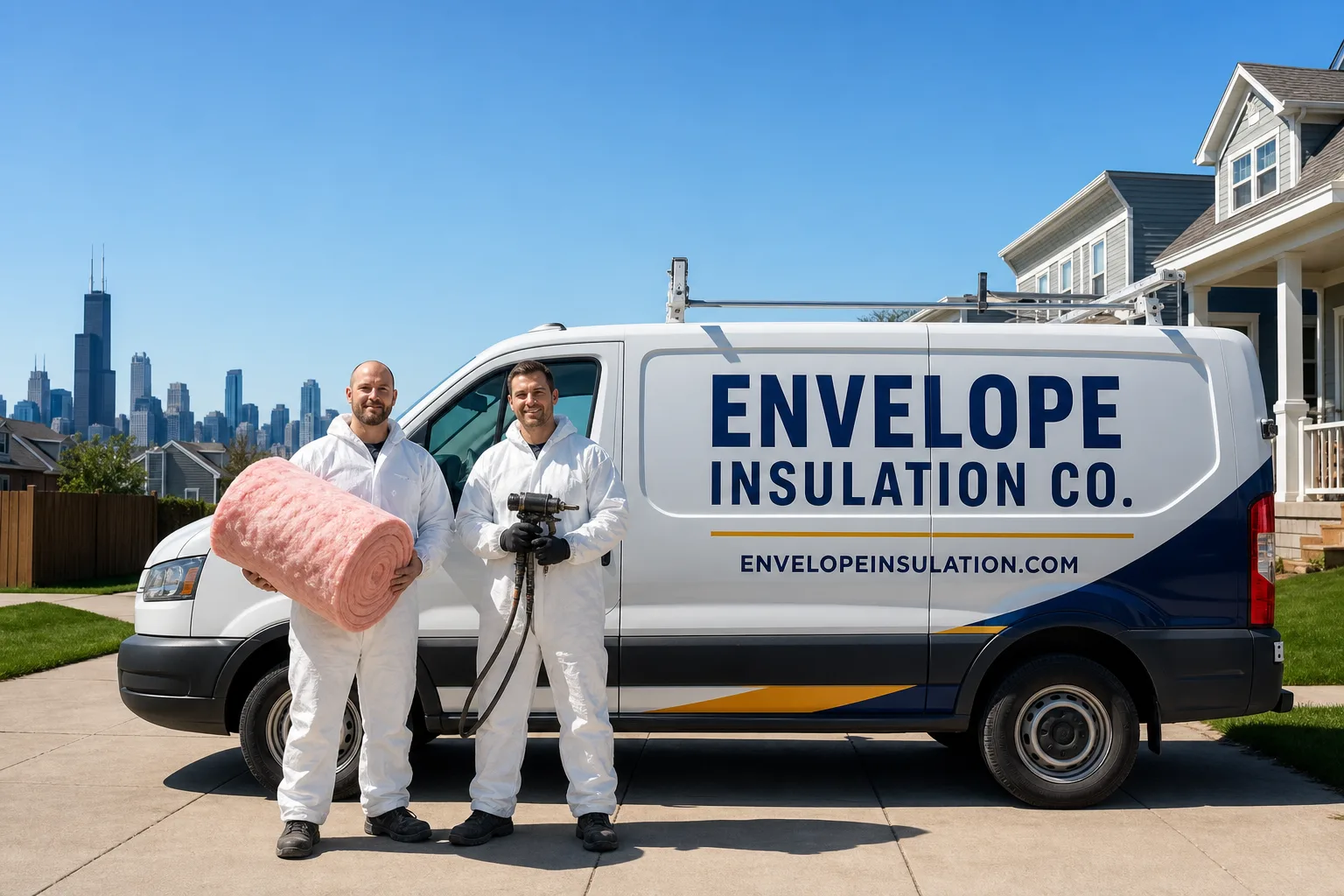
Fast, Reliable Attic Insulation Across Garland
Most homes in Garland built before 1980 are running attic insulation at R-8 to R-11, against a Climate Zone 3 code minimum of R-38. That gap shows up as a second-floor bedroom that won’t cool in July, a furnace that runs through February, and a February 2021 electric bill nobody wants to repeat. Our crews work in Garland neighborhoods every week, and we publish before-and-after blower-door numbers on every applicable job, so you can see the air-sealing result in a single figure before and after the work. Call (218) 261-7714 and a live person answers, 24/7.
Why Topside Attic Insulation Is Garland’s Preferred Attic Insulation Company
Garland’s housing stock does something most other DFW cities don’t: it concentrates tens of thousands of slab-on-grade brick ranch homes built between 1955 and 1978, nearly all with the same attic profile. That profile is settled blown fiberglass averaging under 3 inches, unsealed top plates around the entire perimeter, and soffit vents buried or blocked. We see it in the streets off Belt Line Road, around Firewheel, in the neighborhoods west of 78 and east of Saturn Road. That consistency means we’re not guessing at what your attic holds, we’re confirming a pattern we’ve measured thousands of times. Wes Okafor, who leads our crews, will tell you the same thing the blower-door test does now, then prove it before we leave.
Since 2016, Topside Attic Insulation has sealed and insulated 9,000+ homes, every one starting with a written price before any work begins and ending with a Documented Photo Record of what was done. Under our 365-Day Done Right Promise, if it’s not done right, we make it right. For Garland homeowners, we also offer a Free Second Opinion on any written estimate. Bring us a competing quote and we’ll read it with you, line by line.
Our Attic Insulation Services in Garland
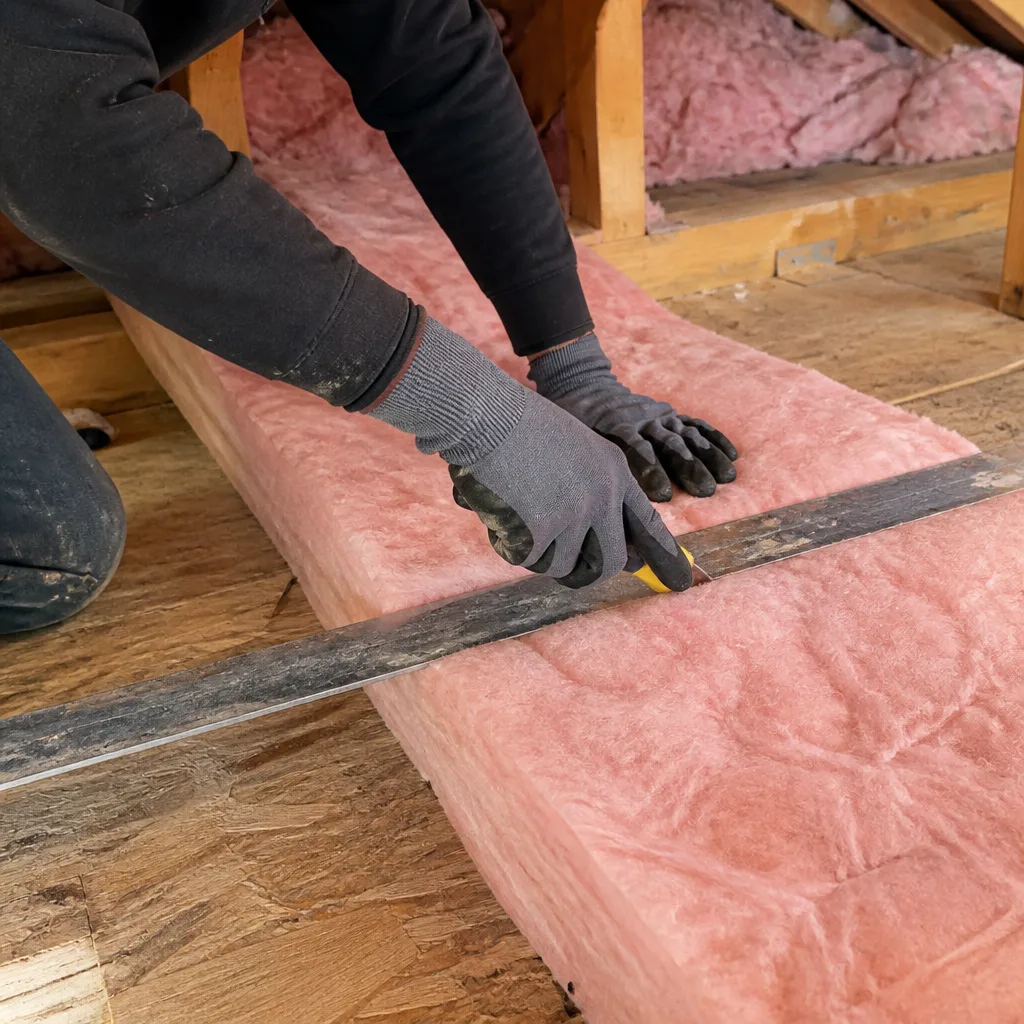
We treat air sealing as a hard prerequisite, not an upsell. No insulation goes in until the top plates, can lights, and penetrations are sealed. That’s the entire point of adding insulation to a Garland attic, and skipping it is why so many older homes here still struggle after a fresh blow-in. Our Attic Insulation team handles each project in that order, every time.
Blown-In Attic Insulation
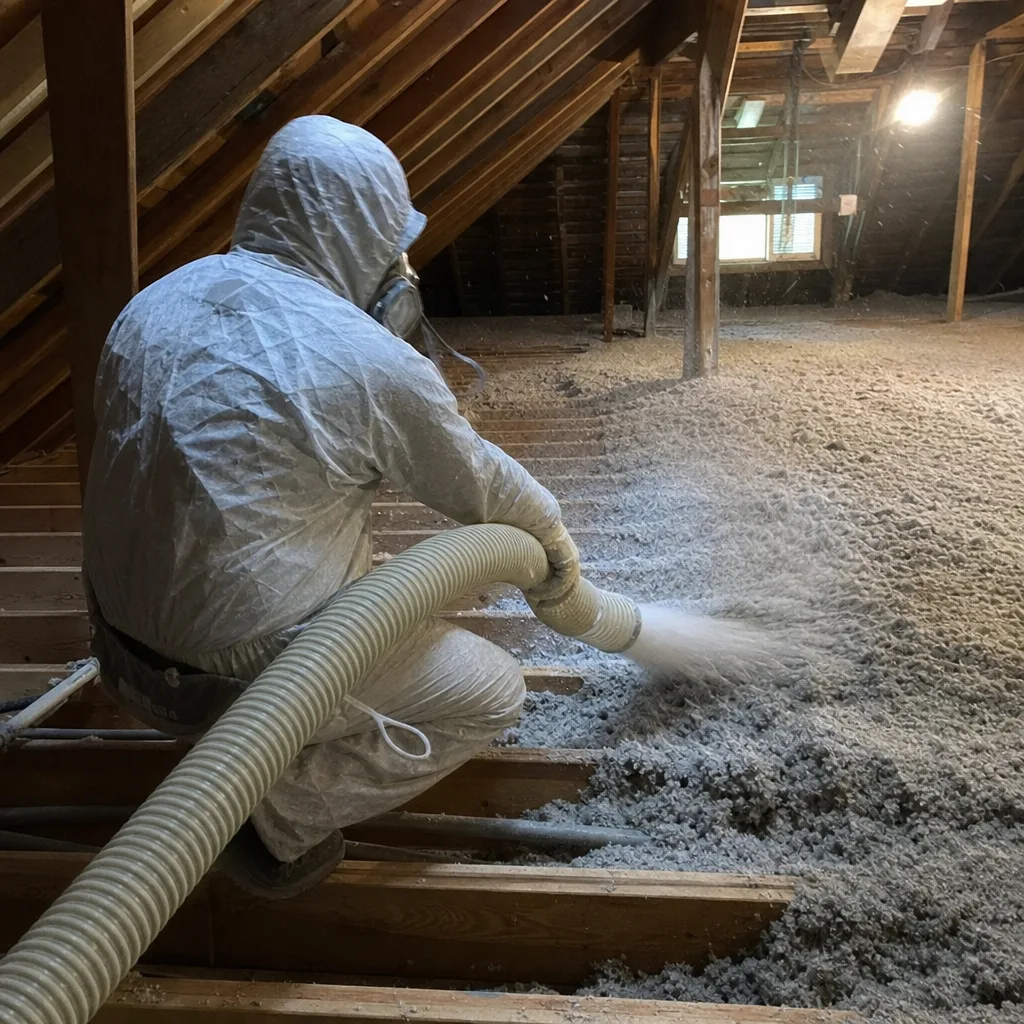
For most Garland slab ranch homes, blown-in fiberglass is the right retrofit. We typically blow Owens Corning AttiCat or Johns Manville Climate Pro to R-38, covering the full attic floor including over the top plates that were never sealed. In Garland’s Climate Zone 3A swing, from 140°F+ attics in August to single-digit outdoor temperatures in a hard freeze, that depth matters in both directions. A typical blown-in job in a 1,400 to 1,800 square foot Garland ranch runs $2,200 to $3,400, depending on existing depth and access.
Attic Batt Insulation
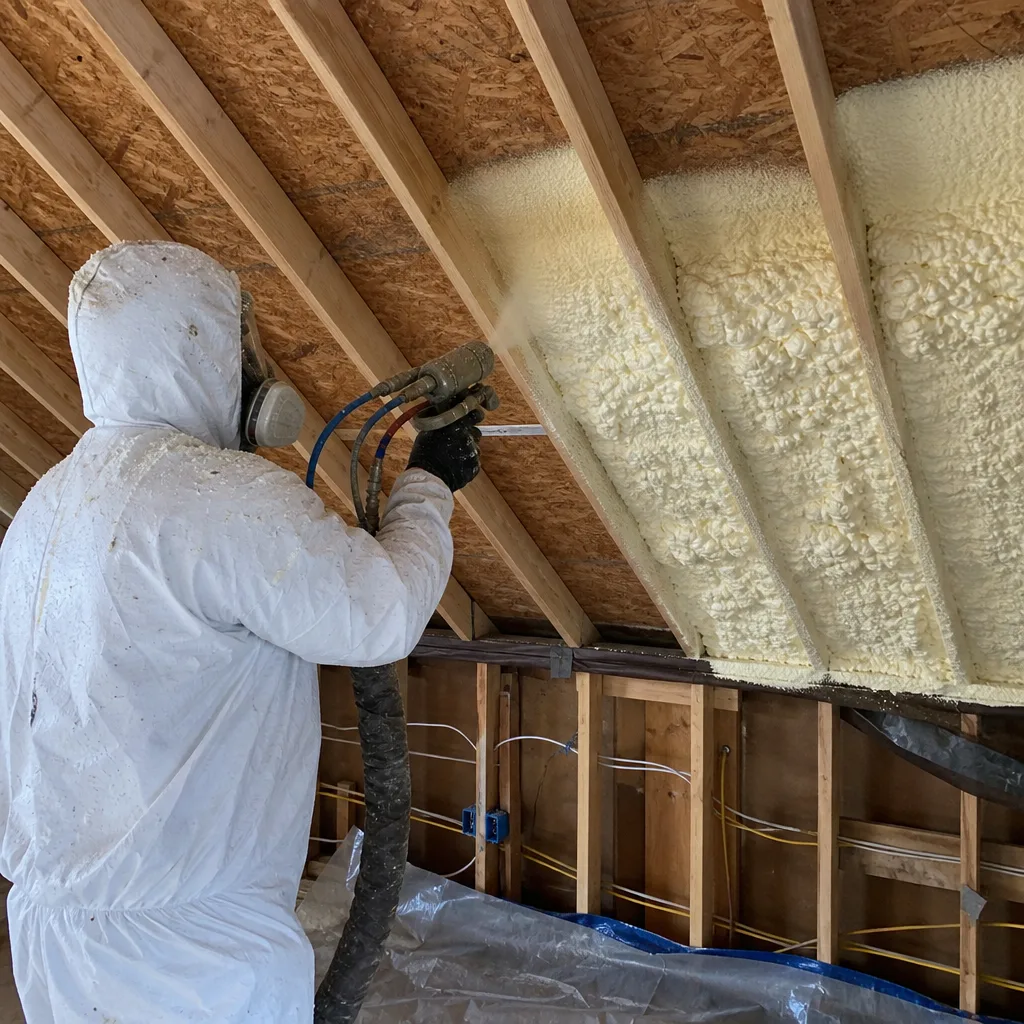
Batt insulation makes sense in specific Garland situations: knee-wall attics, vaulted ceiling cavities, or areas where blown material would block a future storage deck. We use Knauf or CertainTeed batts cut to actual bay width, not the nominal width that leaves side gaps. In older Garland homes with 2×4 wall framing, batts in the attic get paired with air sealing at every top plate before anything is placed.
Attic Insulation Top-Up
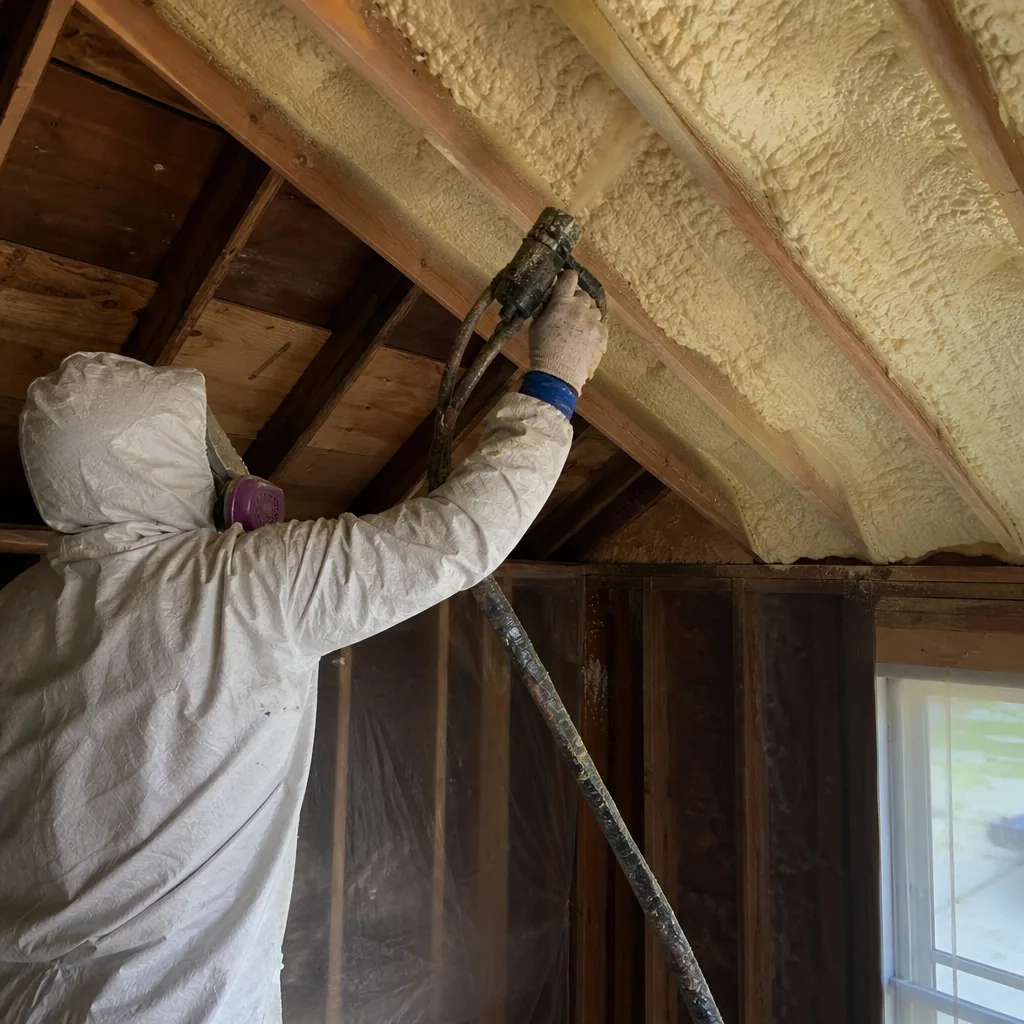
If your existing blown fiberglass is dry, uncontaminated, and at least 6 inches deep, a top-up can take it to R-38 without removal. In Garland, top-up jobs are common in homes built in the early 1980s that got a thin code-minimum blow-in at construction. A top-up in Garland typically runs $1,400 to $2,100, depending on attic size. We only recommend a top-up after confirming the existing material isn’t compacted, water-damaged, or rodent-contaminated.
Attic Insulation Replacement
In central and eastern Garland, we regularly remove original 1960s and 1970s blown fiberglass that has settled to 2 to 3 inches and hardened into a dense mat. That material has an effective R-value of R-8 to R-11 and it’s doing almost nothing. Replacement in a Garland ranch home typically runs $3,800 to $5,600 for removal, disposal, air sealing, and new R-38 blown material. We’ll walk you through the written scope before anyone lifts a tool.
Attic Baffles & Ventilation Prep
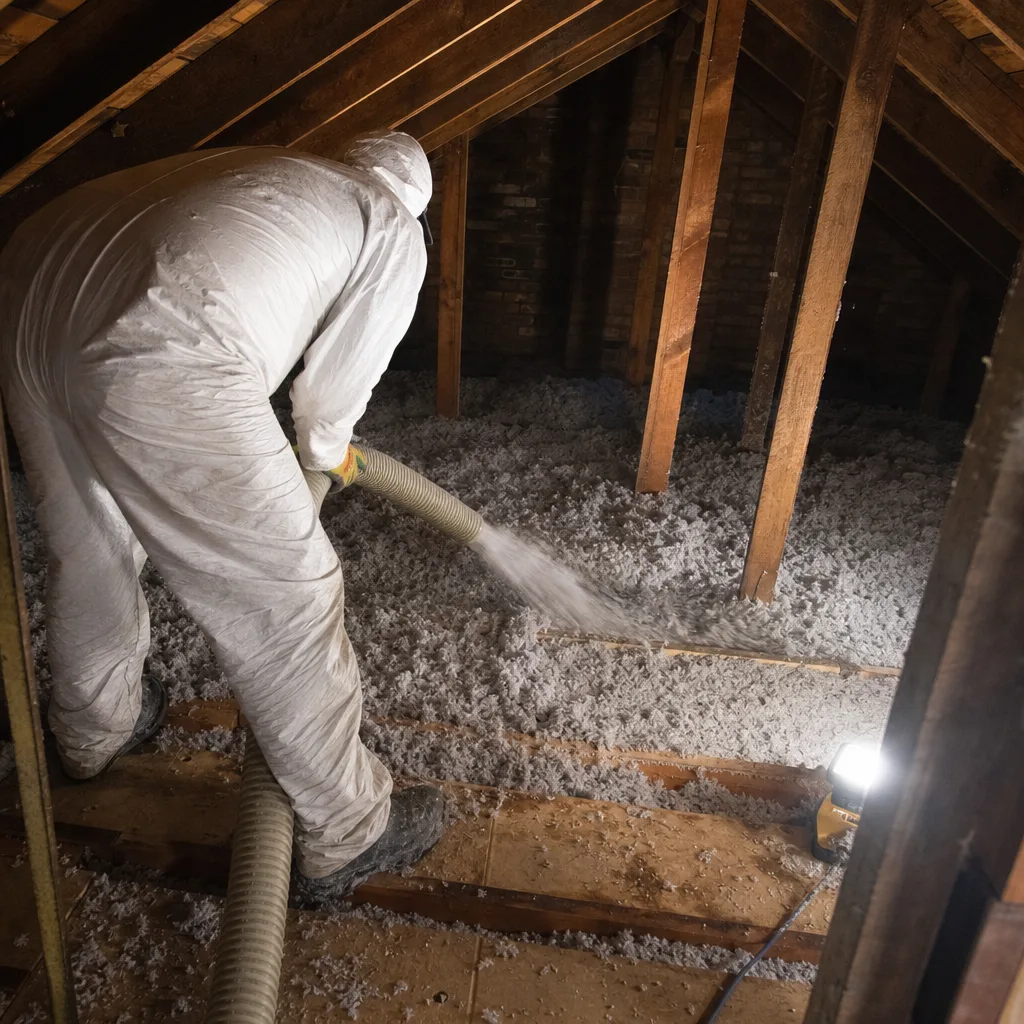
In Garland’s slab-on-grade homes, missing or blocked soffit baffles are a baseline finding, not an exception. Insulation from decades of blow-ins covers the eave vents, trapping heat and moisture against the roof decking. We install baffles in every soffit bay before any new insulation goes in. A typical baffle-and-vent prep in Garland runs $700 to $1,300, and it’s the difference between an attic that breathes and one that cooks its own roof deck.
What happens when you call
- 1
A real person answersNo phone trees - you reach a local pro.
- 2
You get an upfront price rangeHonest numbers before anyone is dispatched.
- 3
A background-checked tech heads outLicensed & insured, dispatched right away.
- 4
You approve before work beginsNothing starts until you say go.
Trusted Brands We Service in Garland
We stock materials from Owens Corning, Johns Manville, Knauf, Rockwool, and CertainTeed, and we’ll specify the material that fits your attic, not whatever’s on the truck. For Garland homeowners, that means fast turnaround on common specs and no proprietary product lock-in. We’ll tell you exactly which material is going in, and you’ll see it in the Documented Photo Record before we leave.
Common Attic Insulation Problems We See in Garland Homes
- Settled original blow to R-11 or less. Homes built between 1955 and 1978 in Garland got whatever insulation was cheap at the time, and decades of gravity and heat have pressed it down to under 3 inches. The attic you think has R-30 is often running at R-8 to R-11 effective.
- Unsealed top plates and can lights. The perimeter of the attic floor, where framing meets drywall, is usually open in these homes. Add recessed lights from the 1980s and 1990s, and you have a continuous chimney pulling conditioned air into the attic. We seal these before any insulation is added.
- Blocked soffit vents. Garland’s heat and humidity make attic ventilation non-negotiable. When insulation covers the eave vents, heat and moisture get trapped, accelerating decking rot and keeping the attic at 140°F+ well into the evening.
- The Uri problem, still unaddressed. February 2021 exposed how badly Garland’s older housing stock performed in a sustained freeze. Many homeowners fixed a pipe and forgot the attic. Three years on, the same R-8 attics are still venting heat, now at higher utility rates.
Pricing for Attic Insulation in Garland, TX
Here are honest ranges for Garland’s market, based on homes we’ve actually measured this year. A blown-in top-up in a 1,400 to 1,600 square foot ranch runs $1,400 to $2,100. Full replacement including removal of old material, air sealing, baffles, and new R-38 blown runs $3,800 to $5,600. New blown-in over a bare or nearly bare attic floor runs $2,200 to $3,400. What moves the price: attic square footage, how much old material has to come out, access from the interior, and whether we’re sealing a few penetrations or the entire top plate perimeter. Every Garland job gets a written price before any work starts. Call (218) 261-7714 and we’ll schedule the first visit.
We Also Serve Cities Near Garland
Beyond Garland, our crews work regularly in Richardson, Mesquite, Plano, and Allen. The housing stock changes as you move north and west, with more post-1980 construction and more crawl spaces, but the same air-sealing-first standard applies everywhere we work.
Serving Garland, TX - Our Local Coverage Area
We’re based in the Garland area and know this community well. Use the map below to see our service coverage - if you’re nearby, we can almost certainly help.
FAQs - Attic Insulation in Garland
Because Texas had no statewide residential energy code until 2001, and Garland’s post-war building boom, from roughly 10,000 residents in 1950 to over 100,000 by the late 1970s, produced tens of thousands of homes built with minimal insulation as a cost decision. Those homes got whatever blown fiberglass was cheap at framing, and five to seven decades of gravity and 140°F+ attic heat have compacted it to under 3 inches. The current IECC Climate Zone 3 minimum is R-38, meaning most of Garland’s central and eastern ranch homes are running at a quarter of code. Call (218) 261-7714 and we’ll measure yours with a blower-door test before quoting anything.
Uri turned an energy-efficiency problem into a survival problem. Garland dropped to single digits for consecutive days in February 2021, and homes with R-11 attics lost heat through the ceiling so fast that furnaces ran nonstop and indoor temperatures still fell into the low 60s inside occupied homes. Since then, we’ve seen sustained demand for deep blow-in retrofits and full perimeter air sealing, specifically in Garland’s 1955 to 1978 slab ranch stock. The priority shift is measurable: air sealing now precedes insulation on every job we do here.
It starts with a blower-door test to establish the baseline airflow number, then air sealing at every top plate, can light, and penetration, then baffle installation in every soffit bay, then blowing new material to R-38 across the entire attic floor. In a 1962 brick ranch off Saturn Road near Central Garland, our crew found original blown fiberglass settled to 2.5 inches with daylight visible through unsealed top plates. We sealed everything, installed baffles, and blew Owens Corning AttiCat to R-38, dropping the attic temperature from 147°F to just over 110°F the following August. That’s the job, documented before and after.
Yes, and it matters more than most homeowners expect. In slab-on-grade construction, there’s no floor insulation to worry about and no crawl space to condition, so the attic is where almost all the heat exchange happens. Garland’s slab ranch homes built between 1955 and 1978 concentrate their entire building-envelope weakness in one place: the attic floor and top plates. Homes in Richardson or Plano with crawl spaces and pier-and-beam foundations have different loss patterns, which is why generic insulation advice often misses the mark here. We’d rather measure your specific house than guess.
If the old material is dry, uncontaminated, and at least 6 inches deep, topping up is usually the right call. If it’s original 1960s or 1970s blown fiberglass compacted to under 3 inches, hardened, or contaminated with rodent activity, removal is the honest answer. In Garland’s older neighborhoods, we recommend removal more often than not, because the settled mat blocks air sealing at the top plates and can hide moisture damage at the decking. We’ll show you what we find with the Documented Photo Record, then let the written scope reflect what the attic actually needs.
Contact Topside Attic Insulation in Garland
If your Garland attic hasn’t been measured in the last decade, it’s probably running somewhere between R-8 and R-19. Call (218) 261-7714 and we’ll schedule a visit, run the blower-door test, and give you a written price before any work starts. We serve all of Garland, from Firewheel to Central Garland to the neighborhoods along Belt Line Road. Under The Haven Standard, every job starts with a written price and ends with a documented record. No exceptions.
Written by Wes Okafor, Owner at Topside Attic Insulation, serving Garland and the Dallas-Fort Worth metro since 2016.
Attic Insulation in Nearby Areas