
Attic Insulation Stopped Working
What’s Happening
When attic insulation stops working, the cause is almost always one of two things: the insulation has degraded, settled, or been damaged to the point it can no longer resist heat flow, or the air barrier beneath it was never properly sealed and conditioned air has been escaping through gaps in the attic floor all along. Either way, the insulation is no longer doing the job you paid for.
Here is the thing most homeowners do not hear: insulation slows the movement of heat through a solid surface, but it does nothing about air moving through a gap. If your attic floor has unsealed top plates, open can-light housings, or gaps around plumbing and wiring penetrations, warm air in winter and hot air in summer will flow right past even a full layer of insulation. The result feels identical from inside the house – rooms that never reach the right temperature, heating and cooling equipment that runs constantly, and energy bills that keep climbing. The insulation did not necessarily fail. It may have been working against the wrong problem from day one.
Why It Happens
The Insulation Has Settled or Thinned Over Time
Blown-in cellulose and fiberglass both settle with age, and batts can compress under foot traffic, stored boxes, or even their own weight over many years. When insulation compresses, its R-value drops. A layer that was installed to R-38 may be performing closer to R-20 after enough settling. You can get a rough sense of this yourself: look for a ruler or measurement tab stapled near the attic hatch – if the insulation surface is well below that marker, settling is likely your problem.
The Air Barrier Was Never Sealed Underneath
This is the most common finding on homes built before 2000, and it is genuinely common in newer construction too. Top plates – the framing members at the top of your interior walls – run the full perimeter of every room and are often open to the attic above them. Can lights, bath fan housings, and plumbing chases add more openings. Conditioned air pressurized by your HVAC system finds every one of those gaps and pushes through. The tell: rooms directly below the attic feel drafty or temperature-inconsistent even when the insulation looks full from above.
Moisture Has Gotten In
A roof leak, ice dam, or poorly vented bath fan exhausting into the attic rather than through the roof can saturate insulation. Wet fiberglass loses most of its insulating value immediately and can harbor mold if it stays damp. Look for staining, clumping, or a musty smell near the attic hatch. Discolored or matted areas in blown-in insulation are another sign. If you find this, stop and call before doing anything else – wet insulation sometimes signals an active moisture intrusion that needs to be identified before any new material goes in.
Pests Have Disturbed or Contaminated the Material
Rodents nest in insulation, compress it into tunnels, and contaminate it with waste. Squirrels, mice, and rats are all documented in attics across a wide range of climates and home ages. Signs include visible trails or nesting material, droppings near the hatch or visible from the access point, and unexplained odors. Insulation that has been heavily disturbed by pests no longer performs reliably and typically needs full removal before replacement – pushing new material over contaminated insulation is not an acceptable repair.
What to Do Right Now
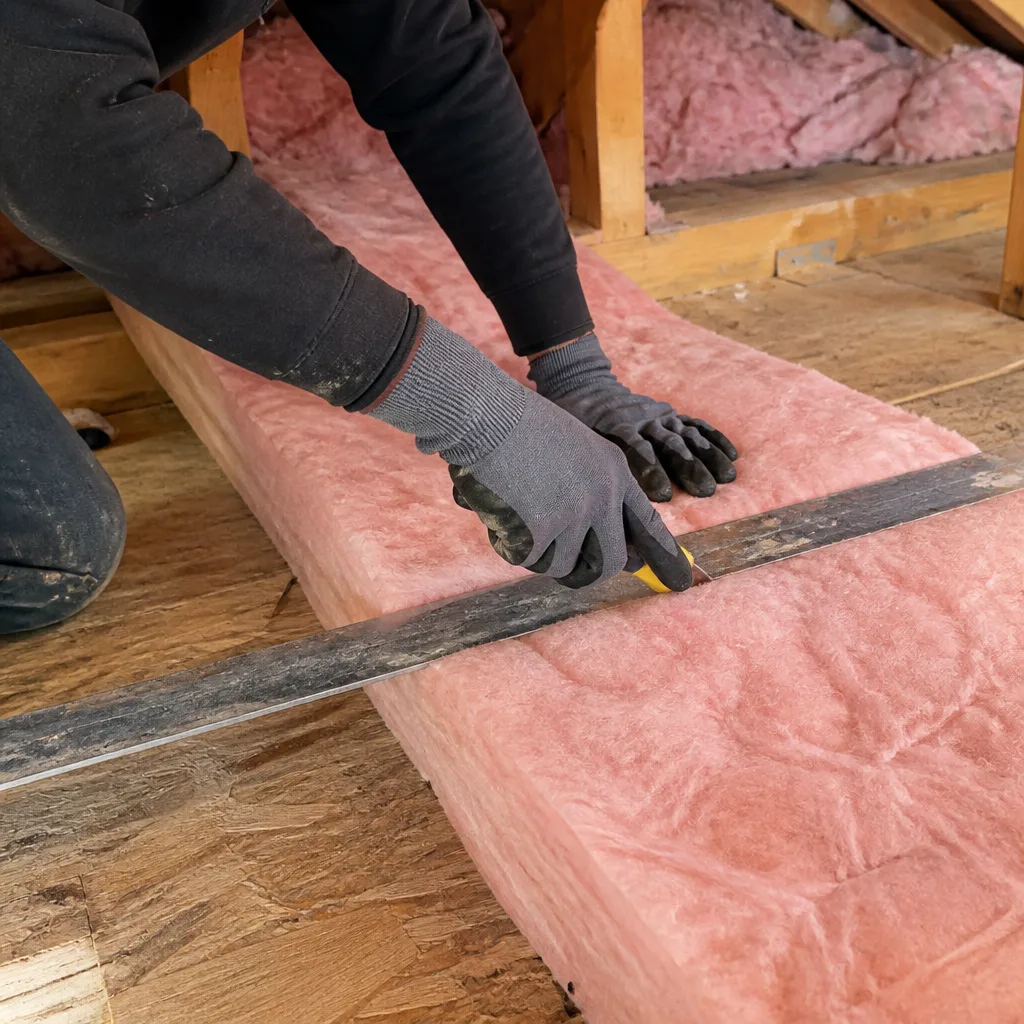
- Note what you can see from the hatch without going in. Look at the depth and condition of the insulation visible near the opening. If it looks thin, matted, wet, or disturbed, photograph it before anything is moved or touched. That photo is useful to any technician who arrives.
- Check your utility bills for the last three months. A sharp increase in heating or cooling costs with no change in usage habits is one of the clearest signals that your thermal envelope has degraded. Pull the bills now so you have the numbers handy.
- Do not add insulation yourself before getting a professional assessment. Blowing insulation over an unsealed attic floor locks in the air leakage beneath it and makes the underlying problem harder to fix later. New material on top of compromised or contaminated insulation does not restore performance.
- If you suspect rodent activity, do not enter the attic space. Rodent droppings and nesting material can carry pathogens. Leave the hatch closed and call for a professional inspection that includes proper protective equipment and a documented assessment.
- If you find wet or stained insulation near a roof penetration or exterior wall, stop and call. Active moisture intrusion needs to be identified and stopped before insulation work begins. Adding new material over a live leak is a short path to a mold problem.
How We Fix It
When your local Topside Attic Insulation team arrives, the first thing on the job sheet is a blower-door test. That pressurization reading gives us a single number that describes how much conditioned air your home is losing – before we touch anything. That number goes in the job record.
From there, a technician walks the attic floor and documents what is actually there: insulation depth, condition, any moisture or pest evidence, and every penetration that is open to conditioned space below. Air sealing of top plates, can-light housings, and plumbing and wiring chases comes first, always. Topside will not blow insulation over an unsealed floor – that is the founding principle of how this company works, and it has not changed since 2016.
Once the air barrier is verified, insulation is brought up to the appropriate depth using materials from Owens Corning, Johns Manville, Knauf, or GreenFiber depending on what the job calls for. A second blower-door reading closes the job record. You get both numbers in writing, alongside the before-and-after photo documentation that is included on every visit.
The services involved are typically Attic Air Sealing and Blown-In Insulation, sometimes combined with Insulation Removal and Replacement if existing material is contaminated or severely degraded. The scope, the price, and the written warranty are delivered before anyone starts – that is Haven Standard Clause 1, and it applies to every job without exception. Most jobs of this type are completed in a single visit. The 365-Day Done Right Promise covers the completed work.
Frequently Asked Questions
Degraded insulation does not cause structural damage on its own, but it is not a neutral problem. Every day your air barrier is unsealed or your insulation is underperforming, your HVAC system works harder than it should and your home loses conditioned air you have already paid to heat or cool. If moisture is involved, waiting creates real risk – wet insulation that stays wet can lead to mold in the attic structure within weeks depending on conditions. If you found any staining, clumping, or odor, call (218) 261-7714 today rather than scheduling it for next month.
A live person answers at (218) 261-7714 around the clock, every day of the year – no voicemail, no callback window measured in business days. Your local Topside Attic Insulation team will get you scheduled and confirm the technician’s name and arrival window before they head your way. Call now and we will tell you exactly when someone can be there.
It depends on what the inspection finds. If the existing material is dry, structurally intact, and free of contamination, topping it up after air sealing is often the right call. If it is wet, heavily compressed, or contaminated by pests, removal and full replacement is the cleaner and more durable repair. We document what we find and give you a written price for the specific scope before any work starts – you decide from there.
The honest answer is that the price depends on your attic’s square footage, the depth of insulation needed, how much air sealing work the floor requires, and whether any removal is involved. Those variables differ from house to house, and we do not quote from the driveway. What we do is give you a flat written price after the inspection, before anyone lifts a tool – that is Haven Standard Clause 1. Call (218) 261-7714 to set up your free written estimate.
Get It Fixed
Call (218) 261-7714 – a live person answers every hour of every day. Your local Topside Attic Insulation team will schedule a visit, confirm who is coming and when, and deliver a written price before any work begins. The 365-Day Done Right Promise covers everything we do.
Written by Wes Okafor, Owner and Lead Building Envelope Technician at Topside Attic Insulation, independently owned and operated under The Haven Standard since 2016.
What Our Customers Say
"The winter gas bill dropped by about a third. They had estimated a quarter, so they under-promised."
- Genevieve R."Two other companies quoted to blow more insulation on top of what was there. These were the only ones who said the existing material had to come out first, and explained why."
- Clifford E."Fixed price, clean work, and they hauled the old material away as agreed."
- Todd M.