
CertainTeed Attic Insulation: The Chicago Owner’s Guide
We stock and install CertainTeed attic insulation across Chicago, with most whole-attic replacements running between $1,800 and $4,200 depending on square footage, existing depth, and whether air sealing is included before we blow anything in. If your CertainTeed insulation has failed, you’re usually noticing one of three things: a spike in your heating bill that didn’t match the weather, cold spots in rooms directly below the attic, or visible settling when you stick your head through the hatch. We carry CertainTeed InsulSafe and TrueComfort blown-in fiberglass on the truck, and we can be in most Chicago neighborhoods within 48 hours of your call to (218) 261-7714.
Most homeowners discover failed attic insulation in January, not June. The furnace runs longer than it should, the upstairs bedrooms never quite warm up, and the snow on the roof melts in patches while the neighbors’ roofs hold a clean white blanket. That patchy melt is a big tell: heat escaping through thin or settled insulation is warming the roof deck from below. In Chicago’s climate, where attics swing from -10°F in winter to 140°F-plus in summer, insulation that has compacted or gotten wet stops performing long before anyone notices a problem from inside the house.
Which CertainTeed Models This Applies To
CertainTeed makes two primary blown-in fiberglass products for attics: InsulSafe and TrueComfort. InsulSafe is the workhorse, rated at R-30 at 10.25 inches of settled depth. TrueComfort is the newer formulation, with slightly better coverage per bag and a softer fiber that installers like working with. If your home has CertainTeed batts instead, you’re looking at either the ComfortTherm or R-Series line, typically installed in attics with accessible joist bays rather than open blow zones.
Here’s the compatibility detail most guides skip: CertainTeed blown-in fiberglass is not interchangeable with their batt products at the same R-value. If your original contractor blew InsulSafe to R-49 and one section settled to R-25, you can’t just lay R-24 batts over that zone and expect the numbers to work out. The batts will bridge unevenly across the settled material, leaving air gaps that defeat the purpose. The right move is to fluff the existing material with a rake, verify depth, and add more blown-in fiberglass to hit the target depth uniformly. We’ve walked into Chicago attics where someone tried to patch blown-in with batts and the blower-door reading told the story: the patched zone was leaking heat at nearly the same rate as before.
Wes Okafor, our owner and lead building envelope technician, grew up on the Northwest Side about six blocks from the Portage Park field house and has been reading blower-door numbers in Chicago homes for over twenty years. When we evaluate your attic, we document the existing R-value by depth, identify the product (the bag label is usually still stapled to a rafter or lying under the loose fill), and write the scope around what’s actually there, not what the home inspector guessed it was.
Signs Your CertainTeed Attic Insulation Is Failing
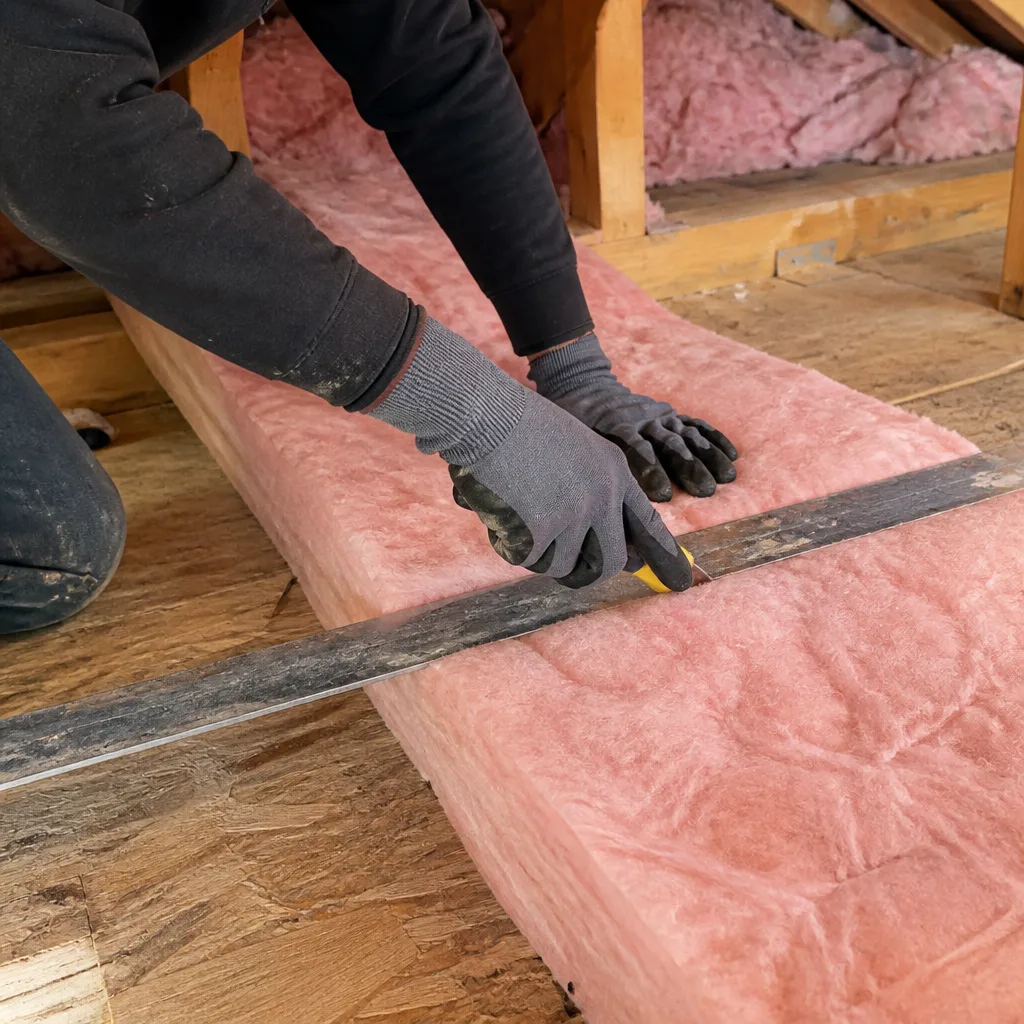
- Ice dams forming on the roof edge during cold snaps. Heat escaping through thin or settled insulation melts snow at the roof deck, and the water refreezes at the cold eave line. In Chicago, we see these form on north-facing roofs within two or three winters of insulation settlement.
- Upstairs rooms run 6-10 degrees colder than the main floor and won’t hold heat. This is the most direct symptom: your thermostat reads 72, but the bedrooms under the attic read 64. The furnace is working harder than it should, and the shortfall is going straight up through the ceiling.
- Attic insulation looks flat, matted, or has dark streaks running through it. Fiberglass loses R-value when it compacts, and dark streaks almost always mean air is moving through the material. Moving air filters dust and carries moisture, which matts the fibers and cuts performance by 30-40%.
- Moisture staining on the underside of the roof sheathing or rust on exposed roofing nails. Warm, moist air from the house is condensing inside the attic in winter. This is a building envelope failure, not an insulation failure alone; it usually means the floor wasn’t air sealed before the CertainTeed went in.
- An insulating job that was fine for 8-10 years but now isn’t. Chicago attics are hostile: heat, cold, humidity swings, and occasional roof leaks all take a toll. CertainTeed fiberglass doesn’t rot or mold, but it does settle, and once it’s down 20-25% from its installed depth, you’ll feel it in the rooms below within a season or two.
Replacement Cost & What’s Included
For a typical Chicago single-family home with 1,000 to 1,400 square feet of attic floor, a complete CertainTeed blown-in fiberglass replacement runs between $1,800 and $3,400 installed. That includes removal of the old material if it’s wet, moldy, or rodent-damaged, plus new blown-in InsulSafe or TrueComfort to R-49 (the DOE-recommended level for our climate zone). If the attic floor needs air sealing before the new insulation goes in, add between $600 and $1,200 for top plates, can-light covers, and penetration sealing.
Here’s the number we give most Chicago homeowners over the phone before we’ve seen the attic:
| Scope | Typical Range |
|---|---|
| Top-up existing fiberglass to R-49 (no removal) | $900 – $1,600 |
| Full removal and replacement, 1,000-1,400 sq ft | $1,800 – $3,400 |
| Air sealing before insulation (top plates, penetrations, hatch) | $600 – $1,200 |
| Rodent damage remediation (droppings, nesting removal, sanitation) | $400 – $900 |
Every one of these jobs gets a written price before work starts, a written scope, and a written warranty, under Haven Standard Clause 1. The price on the paper is the price you pay, not an estimate that moves after we open the hatch. And per Topside’s 365-Day Done Right Promise: if it’s not done right, we make it right.
DIY or Call Us?
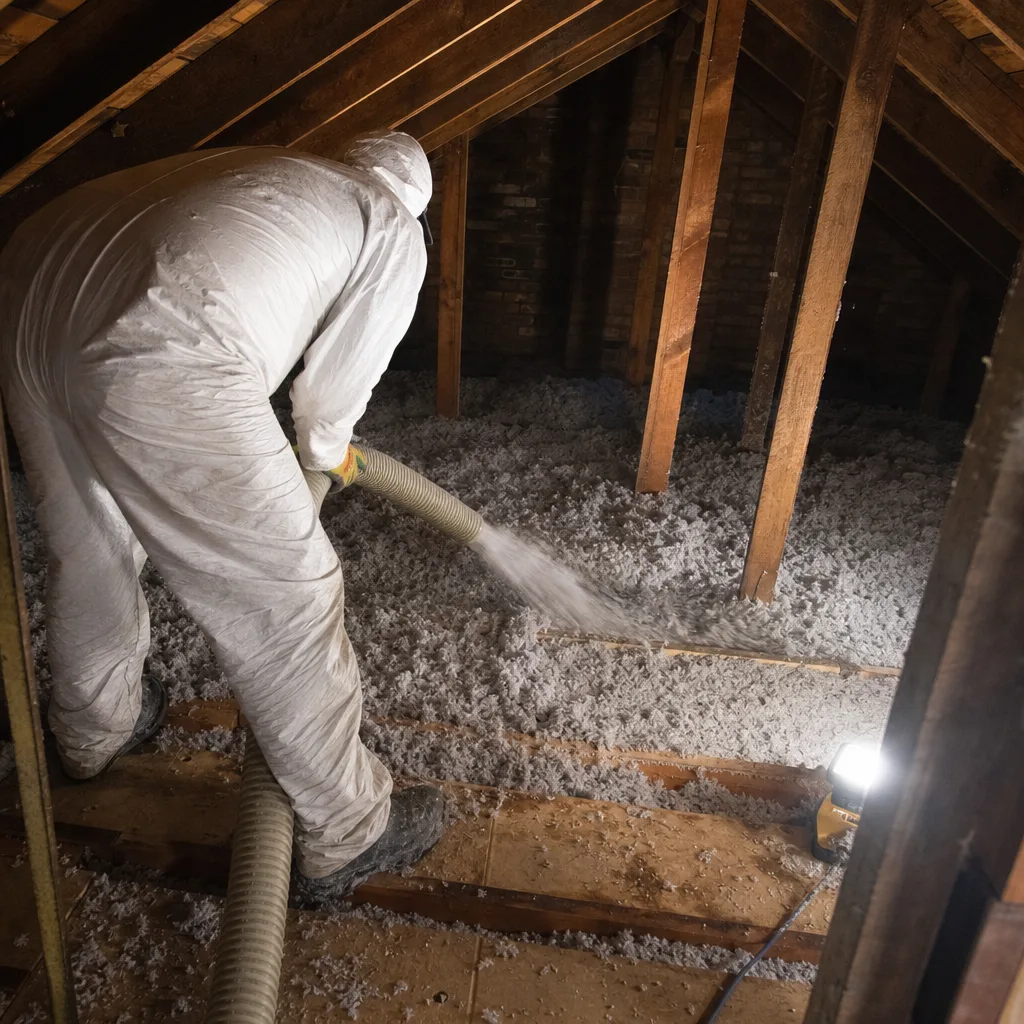
You can safely check three things from the attic hatch without a contractor: the depth of your existing insulation (bring a ruler), whether the material feels damp or crusty, and whether you can see dark staining or daylight around can lights, plumbing penetrations, or the chimney chase. Those observations tell you what you’re dealing with, and they’ll make any phone call to a contractor shorter and more honest.
What you shouldn’t attempt is removing wet or rodent-soiled fiberglass without a plan, or blowing new insulation over an unsealed attic floor. Fiberglass dust and rodent droppings are respiratory irritants, not benign dust. More importantly, if the attic floor hasn’t been air sealed, the new CertainTeed will perform like the old CertainTeed within eighteen months. The air leaks through the top plates and penetration gaps will move moisture right through the blown material, and you’ll be back where you started, just $2,000 lighter. In a Chicago attic, you’re also working in a hot, cramped space with exposed roofing nails punched through the sheathing. That’s a puncture and a tetanus shot waiting to happen. If you’d rather skip it, call us at (218) 261-7714 and we’ll handle it end to end.
FAQs
CertainTeed blown-in fiberglass, correctly installed and protected from roof leaks and rodent activity, carries its R-value for 20 to 30 years in a Chicago attic. The material itself doesn’t degrade; what fails is the installation environment. Settlement, air movement through the floor, and moisture from unsealed penetrations are what shorten the effective lifespan. We’ve pulled blower-door readings on homes where the insulation was only eight years old but the top plates had never been sealed, and the effective performance was closer to R-25 than the R-49 on the bag. Call (218) 261-7714 and we’ll check yours.
Yes, if the material is dry and rodent-free. We rake and fluff settled fiberglass, verify the depth against the target, and top it up to the right R-value. Cost for this runs $900 to $1,600 for a typical Chicago attic. If the material is wet, moldy, or full of droppings, fluffing won’t fix it; the whole layer needs to come out. Either way, we give you a written price before any work starts.
Most Chicago attic replacements take one full day, including removal, air sealing, and blowing the new CertainTeed. Larger attics or jobs with rodent remediation can run into a second day. We’ll tell you the timeline in the written scope, and per Haven Standard, you’ll know your named technician and get a text when the crew is on the way.
We stock CertainTeed InsulSafe and TrueComfort on the truck and in our shop, along with Reflectix radiant barrier and materials from Owens Corning, Johns Manville, Knauf, Rockwool, Icynene, Demilec, and GreenFiber. For most Chicago jobs we’re able to start within 48 hours of your call. We’re an independent contractor, not affiliated with CertainTeed, which means we install what’s right for your attic, not what we’re locked into selling.
Written by Wes Okafor, Owner & Lead Building Envelope Technician, Topside Attic Insulation at Topside Attic Insulation, serving Chicago and nearby areas.