
Demilec Attic Air Sealing: The Chicago Owner’s Guide
Demilec attic air sealing in Chicago typically runs between $1,200 and $3,400 for a full floor-and-penetration seal on a 1,200 to 2,400 square foot attic, and we stock Demilec-compatible sealants on the truck for same-week installation. Most homeowners discover they need this work after a blower-door reading puts the house at 3,200+ CFM50, or when the attic hatch shows frost on the nails in February and the second floor still won’t hold 68 degrees. The part that fails isn’t usually a single component you can point to. It’s the system: the gaps around top plates, the unsealed can light housings, the chase that runs from the basement to the attic carrying conditioned air straight out of the house every hour of the heating season.
We’re an independent service provider. We are not affiliated with Demilec and we don’t pretend to be. What we do is match the right Demilec air-sealing strategy to your home’s actual leakage profile, then document the before-and-after numbers so you can see what changed. Here’s what matters, what it costs, and what we’ve learned doing this work in Chicago houses since 2016.
Which Demilec Models This Applies To
Demilec manufactures closed-cell and open-cell spray foam systems under several product lines, and most of the air-sealing we do on Demilec projects involves two specific products: Demilec Heatlok HFO (closed-cell, roughly 2.0 pcf density) and Demilec Sealection 500 (open-cell, roughly 0.5 pcf). If your attic has been treated with Heatlok, the air barrier is the foam itself, and the common failure point is where the foam meets a penetration it never fully sealed - a bath fan duct, a plumbing stack, a wiring chase through the top plate. If your attic has Sealection 500, that product is vapor-permeable by design, which means the air-sealing layer had to come from something else: a separate sealant pass, foam board, or the drywall assembly below. When that secondary layer was skipped, the open-cell foam does exactly what it’s designed to do - it insulates but does not air-seal, and the house leaks around it.
Identifying what you have is straightforward. Heatlok HFO cures to a rigid yellow-tinged cream foam with a smooth skin. Sealection 500 is soft, white to pale yellow, and you can press a finger into it. The label on the drum or the invoice from the original installer will tell you the series; if you don’t have either, we can identify it on site in under ten minutes. For parts and touch-up work, Demilec foam is only available through licensed spray foam contractors, so when an existing Demilec application needs repair, you can’t grab a can from a hardware store and expect it to match. The substrate, density, and expansion characteristics differ, and a mismatched patch will fail at the bond line within a season or two.
Signs Your Demilec Attic Air Sealing Is Failing
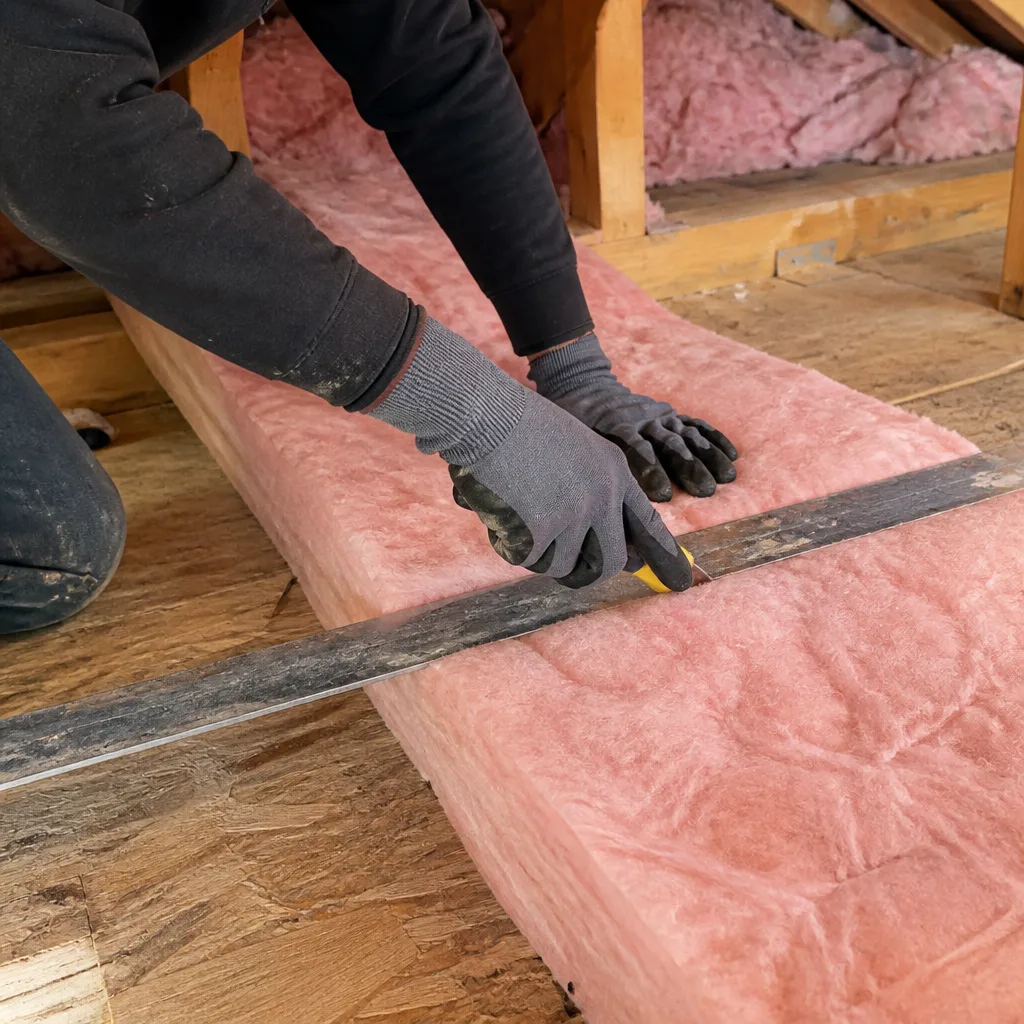
- Second-floor rooms run 4 to 6 degrees colder than the thermostat setting in winter. This is stack effect: warm air rises through unsealed top plates and pulls cold outside air in through every lower leak. The Demilec insulation is doing its job, but the holes it was supposed to seal are still open.
- Frost or dark staining on attic sheathing near penetrations. Moist, warm interior air leaking into the attic hits the cold roof deck and condenses. If you see frost rings around can light housings or plumbing stacks in January, the air seal at those points is incomplete or has failed.
- A blower-door reading above 3,000 CFM50 on a house under 2,000 square feet. Chicago homes built before 1980 often test between 3,500 and 5,000 CFM50 unsealed. A house with a proper Demilec air-sealing pass should land under 2,000. If yours reads high, the seal was never complete or has been compromised.
- Dust streaks on insulation near recessed lights. Air moving through the gap around a can light housing filters dust out of the airstream and deposits it on the insulation surface. This is the single most reliable visual indicator we find on re-inspection jobs.
- Ice dams forming on the roof edge while the attic insulation looks fine. Heat leaking through unsealed penetrations warms the roof deck unevenly, melting snow that refreezes at the eave. The foam can be thick and continuous, but if the air path above it is open, the heat still gets through.
Replacement Cost & What’s Included
For a Chicago attic between 1,200 and 2,400 square feet, a complete Demilec-compatible air-sealing job runs $1,200 to $3,400 installed. On the low end, you’re sealing top plates, can light housings, the attic hatch, and obvious penetrations. On the high end, you’re also building or rebuilding the hatch weather seal, sealing the chase, treating knee walls, and applying sealant to every plumbing and electrical penetration. What drives the range is the condition of the existing attic: how many can lights, how accessible the top plates are, how much old insulation needs to be pulled back and re-spread.
Every job includes a written price before we touch a tool, a written scope, and a written warranty. The crew documents the sealing locations with photos, then runs a blower-door reading before and after. You leave with the numbers: pre-installation CFM50, post-installation CFM50, and a photo log. That’s the Haven Standard, and it’s been the operating rule since 2016: seal the holes first, then add the R-value, and the numbers will tell you whether it worked.
DIY or Call Us?
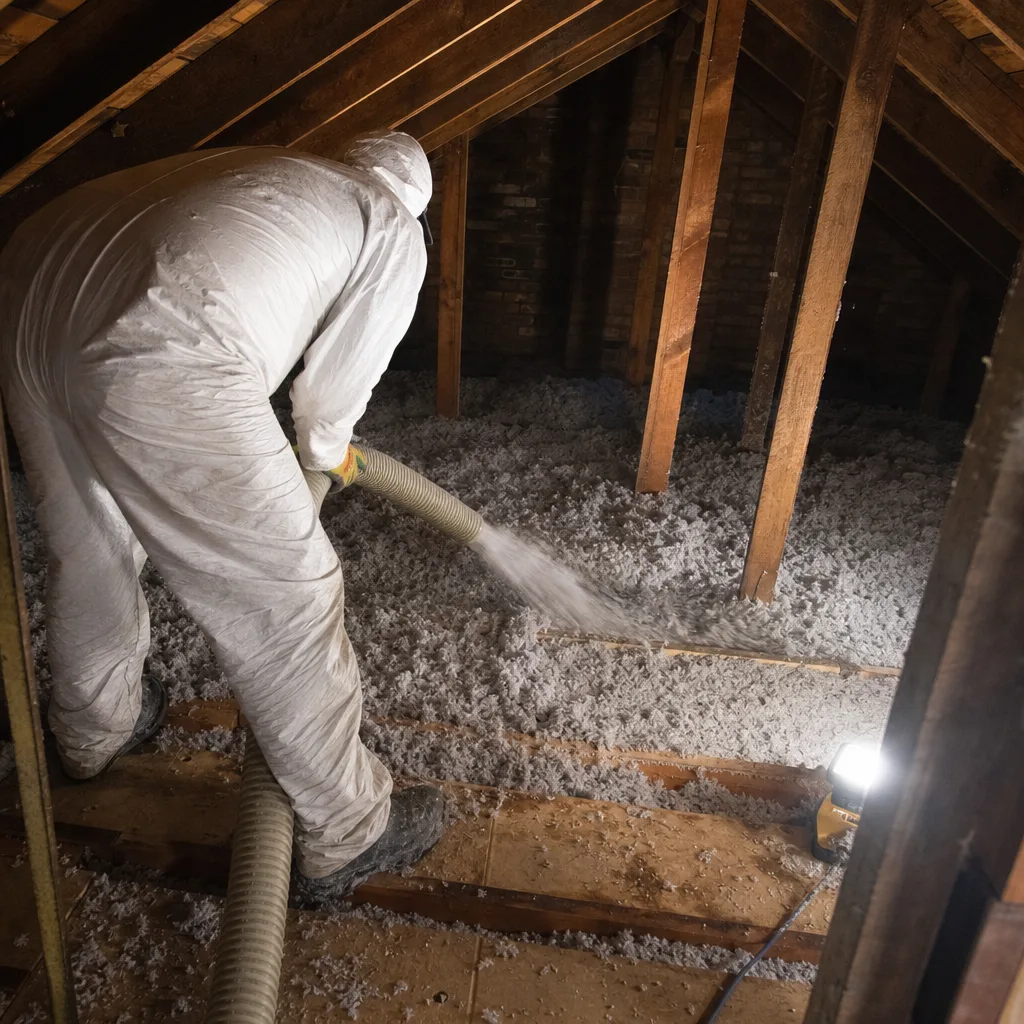
You can safely inspect your own attic and gather useful information. Carry a flashlight, walk the floor joists, look for the dust streaks and frost patterns described above, and take photos through the hatch if you’d rather not climb in. That’s worth doing before you call anyone. What’s not worth doing yourself is the sealing pass. Doing air sealing properly means pulling back insulation to expose top plates, working around recessed light housings that can retain heat (an unsealed can light with the wrong sealant choice can become a fire hazard), and handling two-part spray foam touch-up where the chemistry and expansion rate have to match the existing Demilec product. We’ve fixed enough DIY attempts to say plainly: a partial seal can be worse than no seal if it traps moisture in a wall cavity. If you want the job done right and documented, call us at (218) 261-7714 and we’ll give you a written price before any work starts.
FAQs
A correctly installed Demilec foam air seal lasts 25 to 40 years in a Chicago attic, but the connection points at top plates and penetrations can fail much sooner if the house shifts seasonally or if the original spray was applied to a dusty or damp substrate. The foam itself is stable; the bond line is what lets go.
Yes, in most cases. If the original Demilec foam is intact and the problem is limited to failed seals at penetrations, we can re-treat those specific points with a compatible sealant and retest with the blower door to confirm the improvement. If the original application was incomplete or improperly bonded, a partial repair won’t hold, and the honest fix is a full re-treat. Call (218) 261-7714 for an honest on-site read.
Most Chicago attics take one full workday: prep, sealing, re-spreading insulation, and the before-and-after blower-door readings. Larger attics or ones with extensive can-light work can take two days. We’ll put the schedule in the written scope before we start.
Yes. Our trucks carry sealants and foams compatible with Demilec Heatlok HFO and Sealection 500 systems, along with hatch gasketing, can-light covers, and spray foam guns calibrated for the correct expansion rates. We also stock parts for Reflectix radiant barrier applications in attics where that’s part of the assembly. If we diagnose your attic on Tuesday, we can usually seal it that same week.
Written by Wes Okafor, Owner & Lead Building Envelope Technician, Topside Attic Insulation at Topside Attic Insulation, serving Chicago and nearby areas.