
Demilec Spray Foam Insulation in Chicago: What to Know First
We install and service Demilec spray foam insulation throughout Chicago, and most jobs go from first call to finished work in two to five business days. For a typical rim joist or open-cell attic job, Chicago homeowners should expect to pay between $2,500 and $6,800 depending on square footage, foam type, and how much air sealing the space needs before foam goes in. That range covers the majority of single-family homes in the city, from bungalows in Portage Park to two-flats in Irving Park. If your Demilec insulation is underperforming, we can test it, document what we find, and give you a written price before any work starts.
This page is for Chicago homeowners who already have Demilec foam in their home, or are researching whether it’s the right product for their attic, rim joists, or garage ceiling. Call (218) 261-7714 to talk through what you’re seeing.
How Demilec Products Fail and How We Fix Them
Demilec’s Heatlok and Sealection lines are common across Chicago homes, and when they’re installed correctly they perform well. But we see the same failure modes repeat on this brand more than others, and they usually trace back to installation conditions rather than the chemistry of the foam itself. Here’s what we find and what we do about it.
- Sealection 500 open-cell shrinkage at rim joists. Open-cell Demilec needs a specific substrate temperature range to cure and adhere properly. On Chicago rim joists in January, when the concrete foundation is 34°F and the installer didn’t warm the surface, the foam skins over but doesn’t fully bond. Six months later you get gaps at the edges. We’ve pulled back foam on Demilec rim joist jobs where air was moving freely behind the insulation. The fix is removal, surface prep, and reapplication at the correct temperature with documented blower-door numbers before and after.
- Heatlok HFO Pro shrinkage in closed-cell roof decks. This is the high-R closed-cell line Demilec pushes for unvented attic roofs. The known issue with HFO-blown closed-cell is that if the two chemical components aren’t heated to spec before spraying, the foam cures too fast and shrinks away from rafters over the first heating season. In Chicago, where attics swing from 20°F to 130°F, that shrinkage opens air channels at the rafter edges. Our fix: cut out the affected sections, re-spray with proper component temperatures, and run a blower-door test to verify the air seal.
- Sealection 500 odor complaints after install. We get these calls most often in the first 90 days after another contractor’s job. It’s usually an off-ratio application: too much of the A-side ISO. The smell fades but never fully cures out. We test the foam density, document the off-ratio areas, and remove and replace what’s needed. No amount of ventilation fixes a bad ratio.
- Heatlok Soy-based early formulations losing R-value over time. Demilec marketed soy-based polyol content early on, and some Chicago homeowners have Heatlok Soy in their homes from installs done between 2011 and 2015. The aging blow agent slowly escapes the closed cells, and the real-world R-value drifts down. It’s not a catastrophic failure, but if you’re wondering why your second-floor bedroom doesn’t hold temperature the way it did in 2014, this is often the answer. We can sample a core, evaluate the cell structure, and tell you whether it’s time to add a layer or replace.
- Poor intercoat adhesion on multi-pass Demilec jobs. When installers spray a thick lift of closed-cell, let it cure fully, then come back days later to spray a second pass, the second layer can delaminate if the first pass wasn’t sanded or wiped down. We see this most on Demilec garage ceiling jobs where the contractor split the work across two visits. The fix is mechanical removal of the delaminated layer and an even recoat with the right pass timing.
Our Demilec Spray Foam Insulation Process
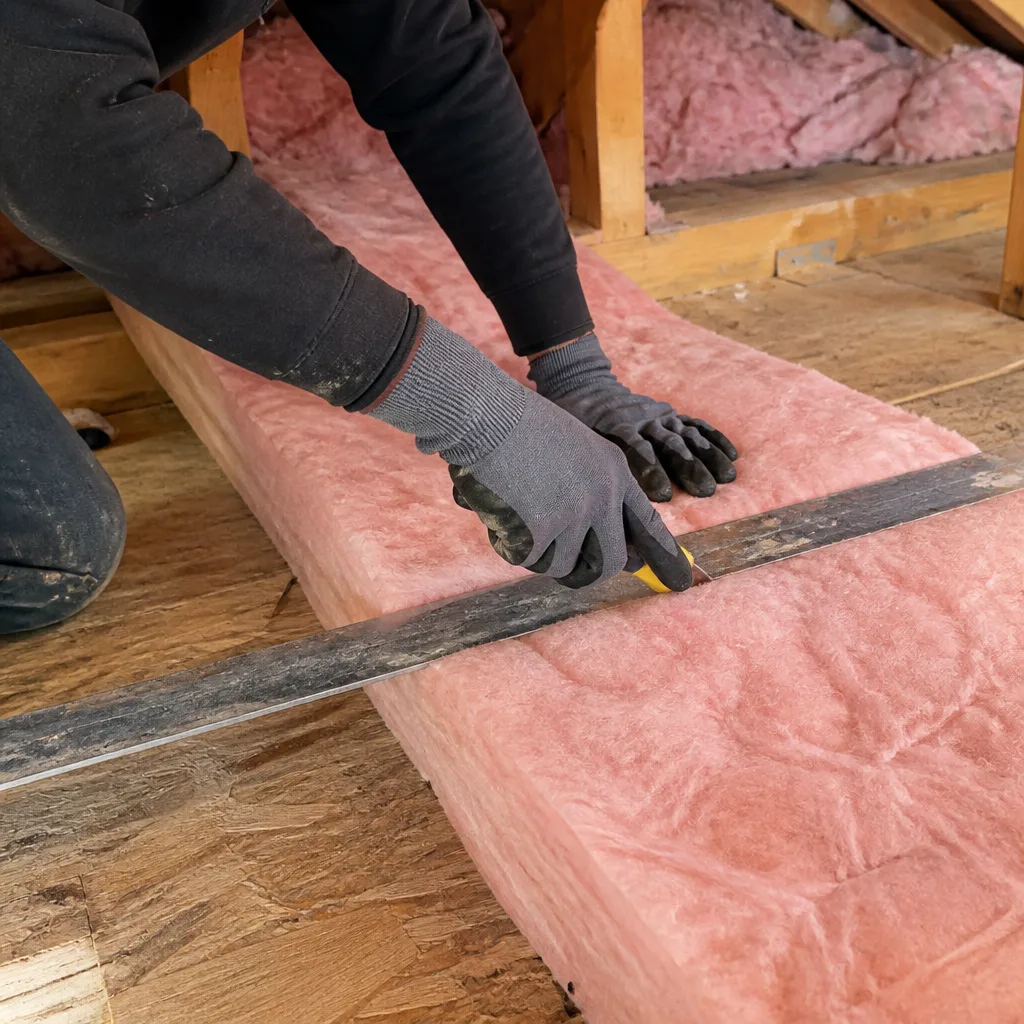
Every Demilec job we do in Chicago follows the same sequence, and you’ll get the paperwork at the end to prove what was done.
- 1
Call and site visit. We check the actual space, not just photos. You’ll know the square footage, access points, and whether the existing foam needs removal before we leave the first appointment.
- 2
Blower-door test before anything else. We pressurize the house and record the CFM50 and ACH50 numbers. This tells us where air is actually moving through the envelope, not where we assume it is.
- 3
Air sealing first. Top plates, can lights, penetrations, and rim joist gaps get sealed before foam goes in. Foam over an unsealed envelope is just decoration.
- 4
Demilec application. We run proper component temperatures, correct pass depths, and verified mix ratios. For Chicago winters, that means pre-warming surfaces and scheduling roof-deck work when ambient conditions allow it.
- 5
Blower-door test after. We compare the numbers. You see the before and after in a single figure.
- 6
Written documentation. You get the pre and post ACH50 readings, installed R-values by zone, a photo log of sealed locations, and the written warranty before we consider the job closed.
What Demilec Spray Foam Insulation Costs in Chicago
Here are real ranges we’ve priced across Chicago homes in the last two years.
- Rim joist spray foam (Heatlok HFO Pro, closed-cell, band joist around a full basement): $1,800 to $3,400 for a typical Chicago bungalow or two-flat.
- Open-cell attic spray foam (Sealection 500, roof deck, unvented attic): $4,800 to $8,500 for a 1,200 to 1,800 square-foot attic.
- Closed-cell roof deck (Heatlok HFO Pro, cathedral or unvented roof): $7,500 to $14,000 depending on roof pitch and access.
- Garage ceiling spray foam (open or closed-cell, attached garage with living space above): $2,200 to $4,600.
- Spray foam removal and replacement (failed Demilec job from another contractor): $2,000 to $6,000 on top of the new foam cost, depending on what has to come out.
What moves the price: existing demo work, access (attic scuttle vs. full staircase), whether the space has knob-and-tube wiring that needs addressing, and the condition of what’s already there. We give a written price before any work starts, and estimates are free. Call (218) 261-7714 and we’ll bring the numbers to the site visit.
Why Chicago Homeowners Call Topside Attic Insulation for Demilec Work
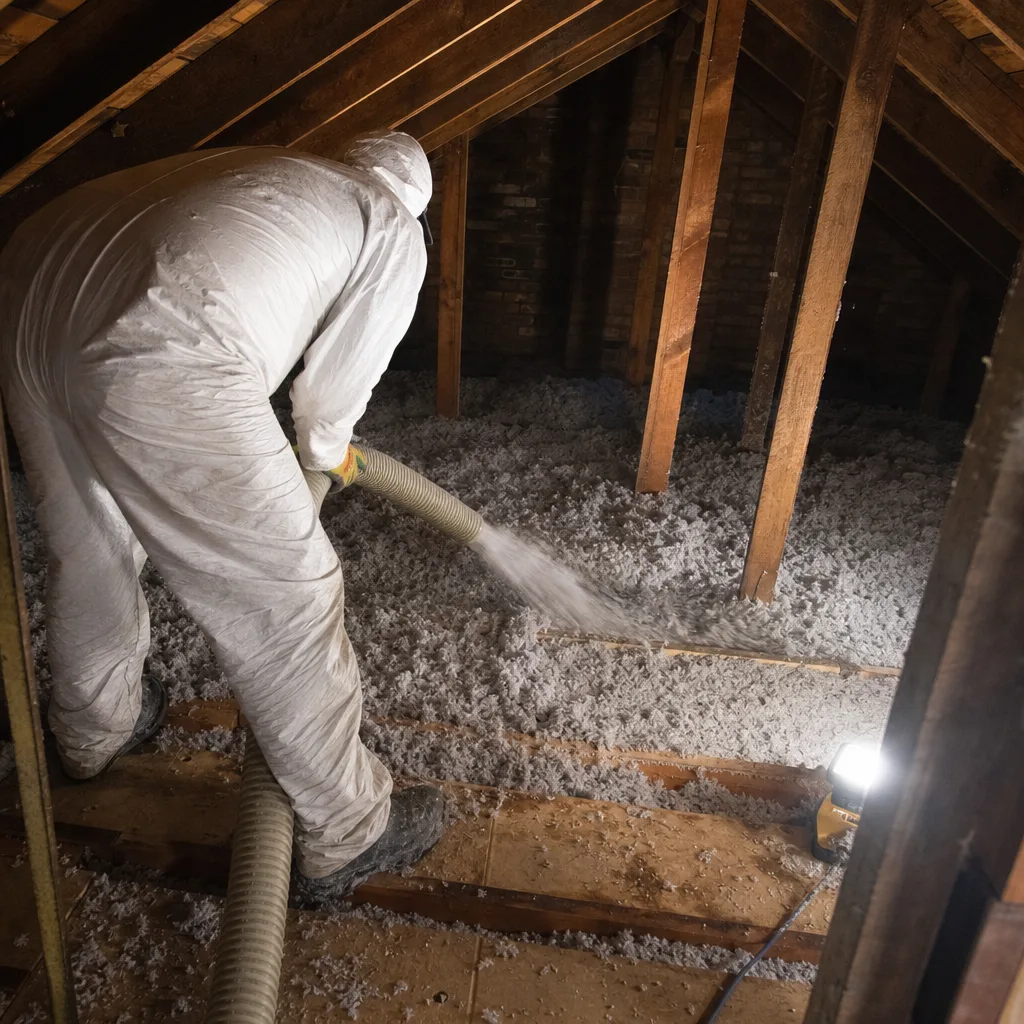
We’re an independent Demilec service provider, not a factory-authorized dealer, which means our loyalty is to the performance of your building envelope, not to moving a particular product. If your Demilec foam is salvageable, we’ll tell you. If it needs replacement, we’ll show you the blower-door data that says why. Since 2016, we’ve sealed and insulated over 9,000 Chicago-area homes, and every one of those jobs left with a written price on the front end and a documented photo record on the back end.
We work across material lines too. If Demilec isn’t the right fit for the repair, we can spec Owens Corning, Johns Manville, Knauf, Rockwool, CertainTeed, Icynene, GreenFiber, or Reflectix radiant barrier. No lock-in. The 365-Day Done Right Promise applies to every completed job, and our technicians are background-checked and uniformed. Wes Okafor runs the blower-door testing himself on complex Demilec jobs, and if you call at 2 a.m. with water dripping through a failed foam roof deck, a live person answers.
FAQs
That depends on the original install date and the documentation you have. If the foam was installed by a certified Demilec contractor within the warranty window and the product itself failed, Demilec may cover material costs but rarely covers removal labor. If we repair or replace foam, we document everything with photos, density readings, and blower-door numbers, which gives you a clear record if you pursue a claim. Call (218) 261-7714 and we can read through your original warranty paperwork with you.
Typical turnaround is two to five business days from first call to completed job for most Demilec spray foam work. Emergency cases, like a failed roof deck leaking into living space, get prioritized. Call (218) 261-7714 and we’ll give you a real arrival estimate, not a callback promise.
For isolated issues like rim joist shrinkage or delaminated sections, repair is almost always cheaper than full removal and replacement. But if we find off-ratio foam, widespread shrinkage, or foam that never cured correctly, patching it just delays the problem. The blower-door numbers tell us which situation you’re in. We’ll show you the data and let you decide with a written price in hand.
Same-day visits are available for Chicago homeowners with active failures, like water coming through a foam roof deck or a section of foam pulling away from the structure. Call (218) 261-7714 and we’ll tell you what’s possible for your location.
The blower-door test measures how much outside air leaks into your home per minute at a standard pressure. If your Demilec foam was supposed to air seal an attic or rim joist, and the test reads 18 ACH50 when a tight Chicago home should run under 4, the foam isn’t doing its job no matter how thick it looks. Wes Okafor grew up on the Northwest Side near Portage Park and has run blower-door tests on Chicago homes for over twenty years. He trusts the numbers before he trusts what the foam looks like. Seal the holes first. Then add the R-value. The numbers will tell you whether it worked.
Written by Wes Okafor, Owner & Lead Building Envelope Technician, Topside Attic Insulation at Topside Attic Insulation, serving Chicago and nearby areas.