
GreenFiber Attic Air Sealing: The Chicago Owner’s Guide
If you have a GreenFiber product in your attic and air sealing that has failed or was never done properly, we stock the materials to fix it and install them daily across Chicago. A complete attic air sealing job in a typical Chicago bungalow or two-flat runs between $1,800 and $3,400, depending on attic size, accessibility, and how many penetrations need work. We carry GreenFiber-compatible sealing materials on our trucks and can usually start within 48 hours of your written estimate.
Most Chicago homeowners discover the problem the same way: they stand under a recessed light in January and feel cold air moving, or they notice the attic hatch sweating in July. Sometimes the insulation looks fine from the hatch, but the real story is in the gaps around top plates, plumbing chases, and can lights that were never sealed before the GreenFiber was blown in. The insulation is doing its job. The air sealing layer underneath it never got put there.
Which GreenFiber Models This Applies To
GreenFiber doesn’t make a standalone “air sealing” product. In a typical Chicago attic, air sealing is the physical work of closing gaps in the attic floor before or alongside cellulose insulation. What most owners mean when they ask about GreenFiber attic air sealing is the sealant, foam, caulk, and blocking materials that work with GreenFiber blown-in cellulose, which is what we install and stock. If you have loose-fill GreenFiber in your attic, whether it’s the Sanctuary, Cocoon, or standard cellulose line, the sealing layer underneath works the same way: top plates get sealed, penetrations get foamed, can lights get covered or replaced with airtight boxes, and the hatch gets weatherstripped.
One compatibility gotcha worth knowing: GreenFiber cellulose settles at a predictable rate, and Chicago homes with balloon-frame construction (common in two-flats and pre-1940 bungalows) leak air vertically through wall cavities, not just through the attic floor. A blower-door test, which measures total building leakage in a single number, will tell you in about an hour whether your real problem is the attic floor or the wall chases feeding it. We run that test before any sealing work begins. The number tells us where to spend your money.
Topside Attic Insulation is an independent contractor. We’re not affiliated with GreenFiber, and we don’t lock you into any single brand. We also stock Reflectix materials for radiant barrier applications. If you have a competing quote that specifies a different approach, bring it in. We’ll read it with you line by line.
Signs Your GreenFiber Attic Air Sealing Is Failing
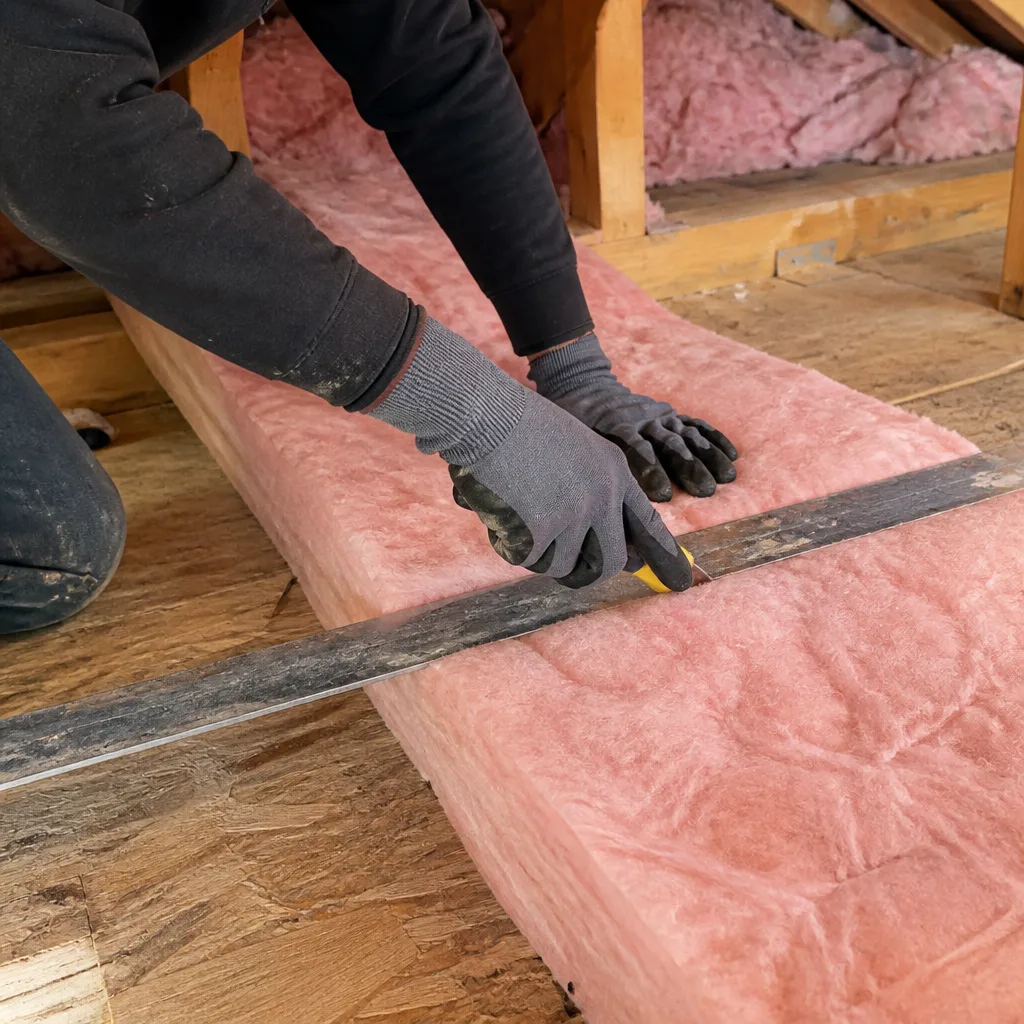
- Cold drafts around recessed lights in winter. Non-airtight can lights act like chimneys. They pull conditioned air straight out of the house, and the fix is an airtight cover rated for insulation contact, not more cellulose on top.
- Uneven bedroom temperatures between floors. In a typical Chicago two-flat in Irving Park or Avondale, the second floor runs 5 to 8 degrees hotter in summer. Stack effect pulls air through the attic and walls, and the sealing layer is supposed to interrupt it.
- Ice dams on the roof edge after snowfall. Warm air leaking into the attic melts snow at the ridge, and it refreezes at the eave. More insulation doesn’t fix this alone. The air moving through the attic floor has to be stopped.
- Attic hatch sweating or frosted over in winter. The hatch is usually the last place anyone seals. An uninsulated, unsealed hatch can leak as much air as a window left open three inches all season.
- Heating bills higher than neighbors with similar homes. A blower-door reading above 3 ACH50 in a Chicago home built in the 1980s or earlier usually means the attic floor air sealing was skipped during construction or renovation.
Replacement Cost & What’s Included
For a typical Chicago bungalow with a 1,000 to 1,400 square-foot attic, full air sealing runs between $1,800 and $2,600 installed. Larger attics in the 1,400 to 2,200 square-foot range, common in newer suburban-style homes in Sauganash or Edison Park, sit between $2,400 and $3,400. If your attic is a crawlspace with limited headroom, expect the lower end. If it’s a finished attic with knee walls, expect the higher end. The price includes material, labor, clean-up, and the written report you get at the end.
You get a written price before any work starts. Not an estimate, not a range, not a “we’ll see how it goes.” The price is flat, the scope is written, and the warranty is written, all under Haven Standard Clause 1. Every job also includes a Documented Photo Record, so you can see exactly where the sealing was done, and if your home qualifies, before-and-after blower-door readings so you can see the change in a single number.
DIY or Call Us?
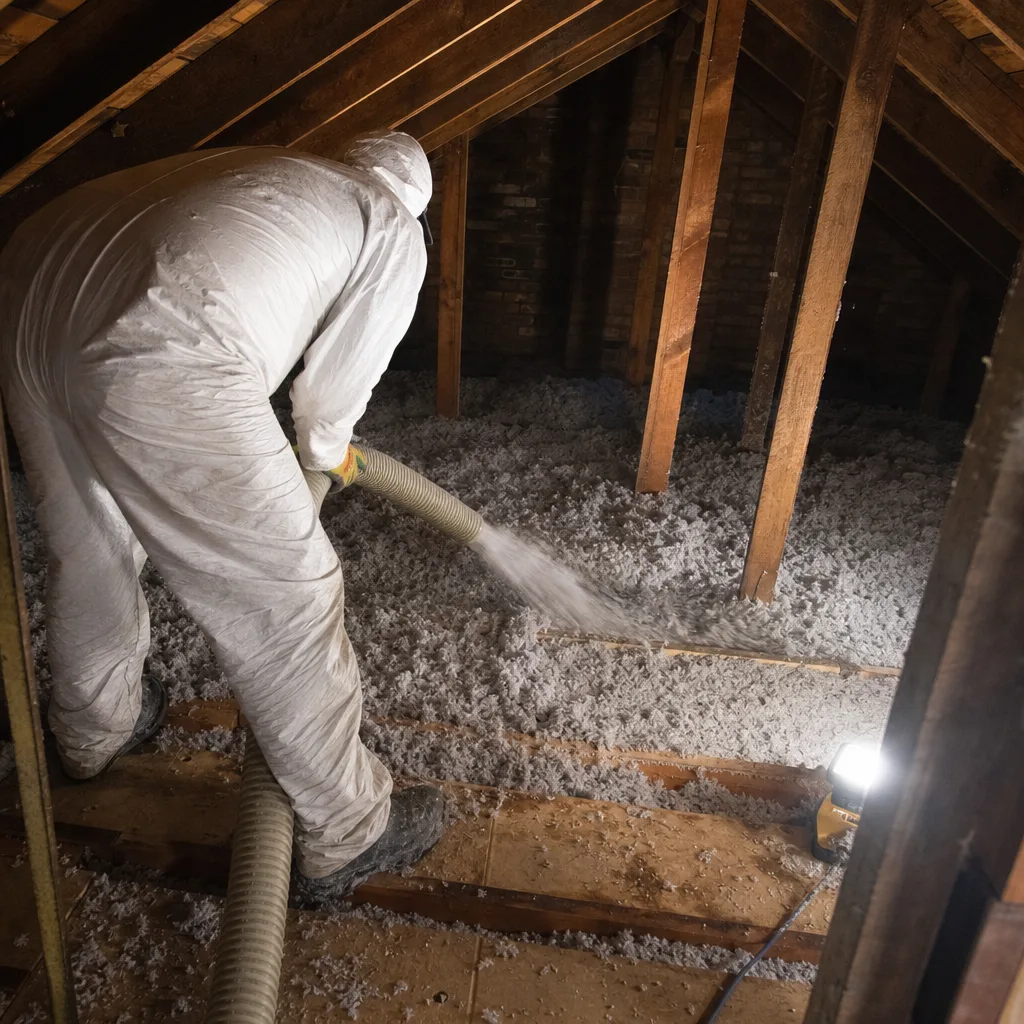
Most attic air sealing involves working in confined spaces around electrical wiring, recessed lights that run hot, and occasionally fiberglass that’s been disturbed by rodents. If you’re comfortable with that, you can seal a hatch or caulk a few top plates yourself. What you cannot safely do without training is run a blower-door test, which requires depressurizing the house and reading differential pressures, and you shouldn’t be moving old insulation if you don’t know whether it contains asbestos or has been contaminated by mice. Those are the jobs where the risk, the mess, and the time spent crawling on joists outweigh what you’d save.
If you want a fast answer on whether your air sealing is actually the problem, call (218) 261-7714 and ask for a written price. We’ll come out, run the numbers, and show you exactly what the scope of work should be.
FAQs
Properly installed air sealing materials last 20 to 30 years in a Chicago attic, though the sealant around a hatch may need touching up every decade as weatherstripping compresses. Illinois temperature swings from below zero to above 95 degrees don’t degrade properly applied foam or caulk quickly. What shortens the lifespan is material failure from the start: using the wrong foam around hot can lights, or leaving gaps in the top plates that allow moist air to condense inside the insulation. If the work was done right and documented, the sealing layer should outlive the cellulose above it. Call (218) 261-7714 if you want us to inspect what’s currently in your attic.
Yes, in most cases. If the cellulose is in good shape and only one or two areas were missed, we can pull back just those sections, seal the gaps, and re-blow the same material. What we won’t do is add insulation over an unsealed attic floor, because that buries the problem and makes the eventual repair more expensive. If we find sealing was skipped entirely, the right fix is to remove enough insulation to do the job properly, seal the floor, and reinstall. Request a free estimate at (218) 261-7714 and we’ll give you a flat written price for either scenario.
A typical Chicago attic takes one full day for sealing and reinstallation, though larger attics with knee walls or finished sections can run into a second day. The blower-door test we run before starting adds about an hour to the first visit, and the final test after we’re done adds about 30 minutes. You’ll know the exact timeline on the written scope before any work begins. To see if we can schedule you this week, call (218) 261-7714.
We stock GreenFiber cellulose, the sealants, foams, and hatch weatherstripping we install, plus Reflectix radiant barrier on every truck that services Chicago. If your attic needs something unusual, we order it direct and it’s usually in within two business days. You won’t be told to wait three weeks for a part we could have ordered a month ago. Call (218) 261-7714 for a written price and we’ll include material availability in the scope.
Written by Wes Okafor, Owner & Lead Building Envelope Technician, Topside Attic Insulation, serving Chicago and nearby areas.