
GreenFiber Attic Insulation: The Chicago Owner’s Guide
If you’re searching for GreenFiber attic insulation parts or replacement, here’s the direct answer: Topside Attic Insulation installs GreenFiber cellulose insulation in Chicago attics, with most full-attic blow-in jobs for a standard 1,200 to 1,800 square foot Chicago bungalow or two-flat running $1,800 to $3,400 installed, depending on depth and whether old material needs removal first. We stock GreenFiber SANCTUARY and GreenFiber Cellulose on our trucks for same-week installation in most Chicago neighborhoods. Owners typically discover they need this work after a cold snap, when they poke their head into the attic hatch and realize the existing layer has settled to the tops of the 2×6 joists, or after a utility bill arrives that makes no sense for the square footage.
An attic with GreenFiber that has settled or been disturbed is still fixable. The question is whether you’re topping it off, removing and starting fresh, or dealing with moisture that got in through unsealed penetrations. We’ll walk through all three.
Key takeaways:
- GreenFiber cellulose settles over time. A layer that was R-38 when installed may be R-24 now, just from settling in Chicago’s freeze-thaw cycle.
- We’re an independent installer. We stock GreenFiber among eight insulation brands because it’s a solid product, but GreenFiber itself doesn’t make parts you’d buy at retail; the “part” here is the material and the installation method.
- The most common failure isn’t the cellulose itself. It’s air leaks in the attic floor that were never sealed before the GreenFiber went in.
Which GreenFiber Models This Applies To
GreenFiber sells loose-fill cellulose insulation in two main product lines: GreenFiber SANCTUARY and GreenFiber Cellulose Insulation. Sanctuary is the treated, fire-resistant, pest-deterrent version with a borate-based additive; it ships as dense-packed greenish-gray fiber in compressed bags. The standard Cellulose line is the same fiber without the full Sanctuary treatment package. Both are blown in using the same equipment, and both have an R-value of approximately R-3.5 to R-3.8 per inch. That means R-38 requires about 10 to 11 inches of settled material, and R-49 needs roughly 13 to 14 inches.
The compatibility gotcha most people miss: GreenFiber is not a “part” in the garage-door-spring sense. There is no factory replacement unit. The material is the component, and what fails is either the installation quality, the air sealing beneath it, or the depth of coverage. When you’re replacing or topping off, what matters is matching the installed depth to your home’s R-value target for Chicago’s climate zone (Climate Zone 5A), which is R-49 to R-60 for attics per current code guidance. A 20-year-old attic with R-30 of settled GreenFiber is under-insulated for a Chicago winter, full stop.
As for OEM versus aftermarket: there is no meaningful distinction here. GreenFiber material is the OEM, and any cellulose installed by us is brand-name product in its original packaging. We don’t substitute a house brand and call it equivalent. If the bags say GreenFiber, that’s what goes into the hopper, and the bag count is listed on your written scope before work starts.
Note: Topside Attic Insulation is an independent insulation contractor. We install GreenFiber products but are not affiliated with, sponsored by, or endorsed by GreenFiber or its parent company.
Signs Your GreenFiber Attic Insulation Is Failing
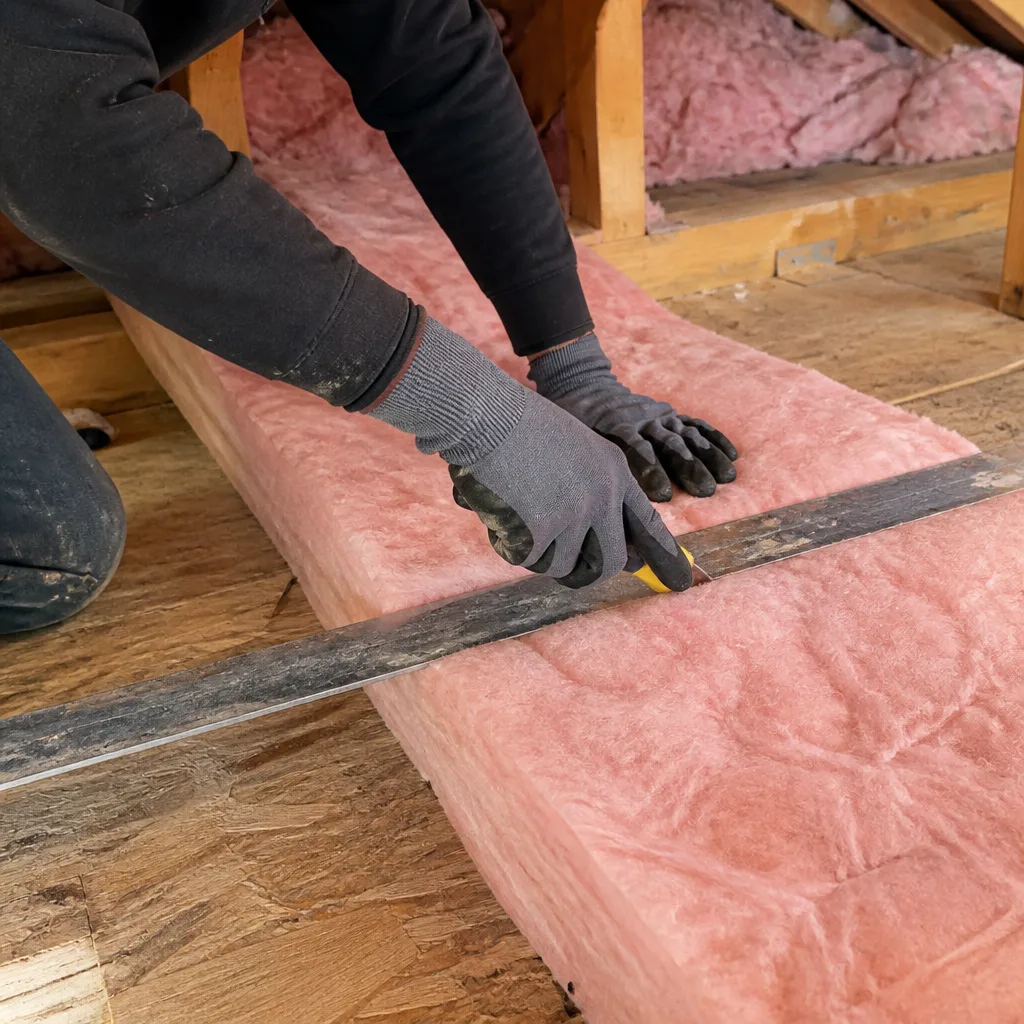
Here’s what we find when a Chicago homeowner calls us about an attic insulation problem. Each symptom points to a specific underlying cause.
- Ice dams forming along the eaves after a snow. Heat is leaking from your living space into the attic, warming the roof deck, melting snow, and refreezing it at the gutter line. In Chicago’s January freeze-thaw swings, this is the number one sign your attic floor is under-insulated or the GreenFiber has settled below the joist tops.
- Upstairs rooms are 5 to 8 degrees colder than the first floor. Insulation has settled or been pushed aside, usually around attic stairs, can lights, and bathroom vent fans. Wet cellulose compresses; dry cellulose drifts. Both reduce R-value well below what the original bags promised.
- You can see joists poking through the insulation when you look in the hatch. If the 2×6 or 2×8 top chords are visible, your attic is at roughly R-19 to R-23 in practical terms, not the R-38 or R-49 you need in Chicago. The material didn’t disappear; it compacted.
- Drafts near ceiling light fixtures or ceiling-wall corners in winter. This isn’t the insulation failing. It’s the air path below it: unsealed top plates, electrical penetrations, and fixture boxes. GreenFiber blocks conductive heat loss but does nothing for air leakage. Air sealing must happen first, then insulation over it.
- Gray dust or cellulose fibers drifting down through gaps in the attic hatch. The hatch itself is unsealed and letting air pull attic fibers into the house. The insulation is intact; the opening around it never got an attic tent or weatherstrip.
Replacement Cost & What’s Included
For a Chicago attic, budget these installed ranges, which include labor, material, equipment, and our full documentation package:
- Top-off over existing insulation (add 6 to 8 inches of GreenFiber to bring settled attics to R-49): $1,200 to $2,100
- Full removal and re-blow (old fiberglass or suspect cellulose removed, air sealing completed, GreenFiber blown to R-49 or R-60): $2,800 to $4,800
- Dense-pack wall injection (GreenFiber blown into enclosed wall cavities from the exterior or interior): $2,200 to $4,000 for a typical Chicago two-flat or single-family home
What drives the range: attic square footage, access difficulty (Chicago attics with narrow scuttle holes are slower to work in), how much old material must be removed, and the condition of the attic floor after removal. A clean, open attic with a standard hatch is the low end. A 1910 balloon-frame two-flat with 100 years of previous repairs is the high end.
Every GreenFiber installation from us includes air sealing before the material goes in. That’s not an add-on line item; it’s the prerequisite we will not skip. If you bring us a competing written estimate, we’ll read it with you and tell you whether air sealing is in there. Under Haven Standard Clause 1, you get a flat price, a written scope, and a written warranty before anyone lifts a tool.
DIY or Call Us?
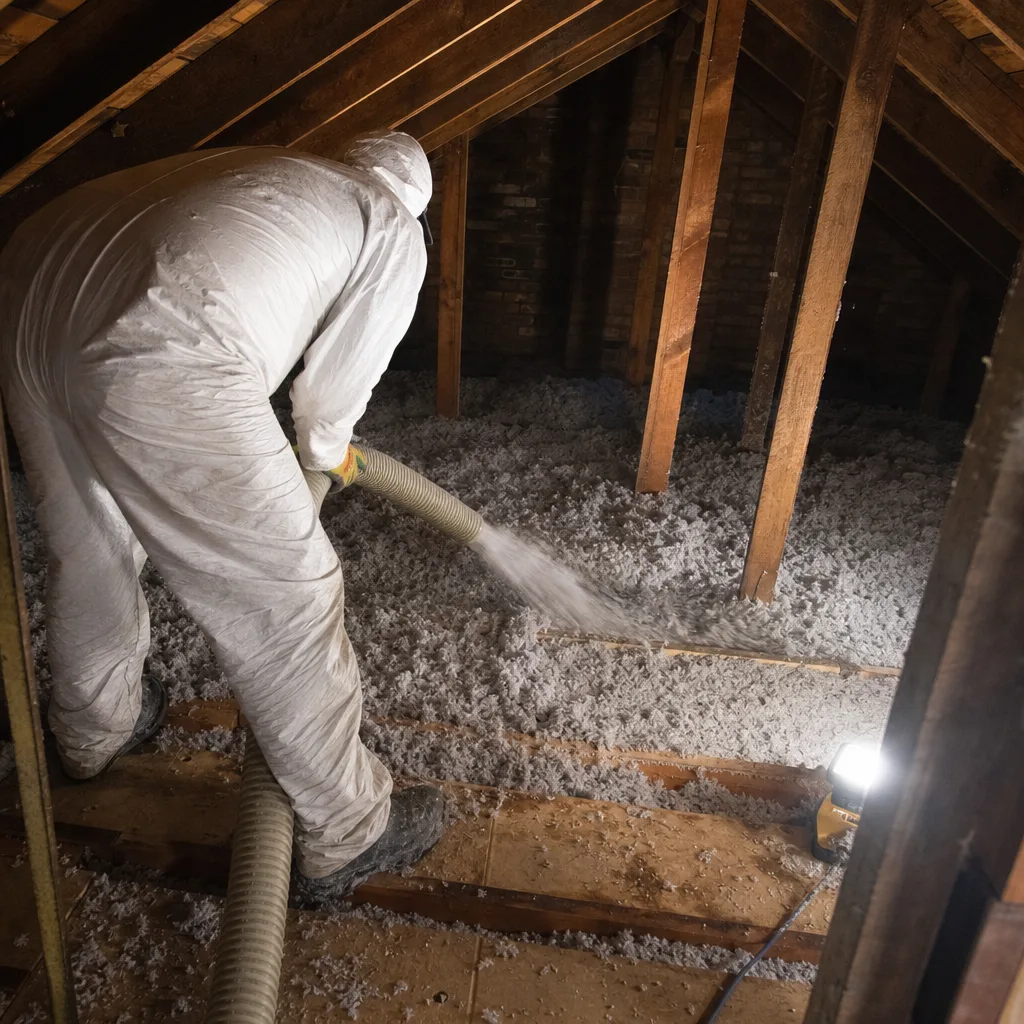
You can safely check your attic’s insulation depth with a tape measure and a flashlight. That’s a ten-minute task, and it tells you a lot: if you’ve got less than 10 inches of settled material, you’re under-insulated for Chicago winters, and no amount of weatherstripping elsewhere will make up for it.
What you can’t safely or effectively do yourself is dense-pack GreenFiber into walls or run a proper blow-in job in a Chicago attic. Rental machines from big-box stores run at low pressure, produce uneven coverage, and won’t get cellulose into tricky soffit and knee-wall areas. The bigger issue is what you can’t see: if you blow fresh material over an unsealed attic floor, you’ve buried the problem and paid for it twice. We’ve pulled blower-door numbers on Chicago attics that were insulated to the right depth but still leaked at 4,200 CFM50 because nobody sealed the top plates first. The material was fine. The air sealing was never done.
Seal the holes first. Then add the R-value. The numbers will tell you whether it worked. If you’d like a blower-door reading as part of the decision, call (218) 261-7714 and we’ll schedule an assessment with a written price before any work starts.
Frequently Asked Questions
GreenFiber cellulose lasts 30 to 50 years when kept dry and protected from roof leaks, but its effective R-value begins to drop from settling within the first few years. In Chicago’s climate, we recommend checking depth every 5 to 7 years and topping off if the settled depth is more than 20% below the original install. Call (218) 261-7714 for a depth check; estimates are free.
Yes, if the material is dry and intact but settled, it can be topped off with additional GreenFiber to restore the original R-value. If the material is wet, moldy, or contaminated by pest activity, removal and replacement is the correct fix. We’ll tell you which one you have after looking at it, and the recommendation is in your written scope.
A standard attic top-off takes one day for our crew; a full removal, air sealing, and re-blow takes two to three days depending on attic size and access. We schedule a specific arrival window, name the technician before they come, and text when they’re on the way.
We stock GreenFiber SANCTUARY and GreenFiber Cellulose on our trucks, along with materials from Owens Corning, Johns Manville, Knauf, Rockwool, CertainTeed, Icynene, Demilec, and Reflectix. We’re not locked to one brand; the right material for your Chicago attic is whatever performs best for the space, and that’s what we install.
If you’re ready to get your GreenFiber attic insulation sorted out in Chicago, call Wes and the team at Topside Attic Insulation at (218) 261-7714 for a free estimate. You’ll get a written price before any work starts, a blower-door reading on applicable jobs, and a documented photo record when the crew leaves.
Written by Wes Okafor, Owner & Lead Building Envelope Technician, Topside Attic Insulation at Topside Attic Insulation, serving Chicago and nearby areas.