
GreenFiber Crawl Space Encapsulation & Vapor Barrier in Chicago: What to Know First
We provide independent GreenFiber crawl space encapsulation and vapor barrier service across Chicago, with most jobs completed in one to two days. A typical GreenFiber crawl space encapsulation in a Chicago home runs between $4,200 and $9,800 depending on square footage, access, and how much of the existing GreenFiber insulation has to come out first. This page is written for GreenFiber owners who need straight answers about failure modes, repair costs, and what a proper encapsulation job looks like in a cold-climate crawl space.
If you have a GreenFiber product in your crawl space and you’re seeing moisture, fiberglass settling, or air leakage, call us at (218) 261-7714. We’ll give you a written price before any work starts and a documented record when we leave. That’s how we’ve operated since 2016 under The Haven Standard.
Key Takeaways
- GreenFiber blow-in products are hygroscopic: they absorb moisture, settle, and lose R-value in humid Chicago crawl spaces.
- We are an independent GreenFiber service provider, not an authorized dealer. That means we tell you what the manufacturer won’t emphasize.
- Every GreenFiber encapsulation job starts with a blower-door reading or crawl-space pressure diagnostic, not a quote.
- Written price before work starts, documented photo record when the crew leaves. Always.
How GreenFiber Products Fail - and How We Fix Them
Most GreenFiber insulation in Chicago crawl spaces is either blown-in cellulose or fiberglass. The failure modes are predictable, and we’ve seen them enough times to name them by their root cause rather than their symptom. Here’s what we find when we get called out to a GreenFiber crawl space job:
- GreenFiber blown-in cellulose absorbs humidity and settles. Chicago’s summer humidity routinely hits 70% in crawl spaces. GreenFiber’s cellulose is treated with borates for fire and pest resistance, but the material itself is paper-based and pulls moisture out of the air. Once the relative humidity in a crawl space stays above 60% for a season, the cellulose compacts and loses between 20% and 35% of its installed R-value. We see this in homes from Beverly to Bucktown, especially under older frame floors with open vents. The fix is not more cellulose: it’s removing the wet material, sealing the vents, and installing a full vapor barrier system before any new insulation goes in.
- GreenFiber fiberglass batts sag and slide in humid conditions. Homeowners sometimes call GreenFiber’s blown fiberglass “loose fill,” but the batts and rolls they sell under the same brand name fail differently. In a damp crawl space, the kraft-facing adhesive breaks down, the batts sag away from the floor joists, and you end up with bare, cold rim joist bays. We pull the slumping batts, air-seal the rim joist with rigid foam or closed-cell spray foam the way we always do, then re-insulate with fresh material after the encapsulation is complete.
- GreenFiber insulation installed without an air seal creates a thermal bypass. This is the one that gets missed on a manufacturer spec sheet. Blowing GreenFiber into a crawl space that hasn’t been air-sealed is like putting a blanket over a drafty window. The cold air still moves through the rim joist, the sill plate, the plumbing penetrations, and the band boards. The fiber slows the air slightly, but it does not stop it. We ran a blower-door test on a Portage Park two-flat a few years back and read 18 ACH50 before sealing, roughly three times the leakiness of a typical 1970s build. The GreenFiber was fine. The air sealing wasn’t there. That’s the difference between insulating and actually fixing the problem.
- GreenFiber blown-in insulation hides moisture damage until the mold is already established. Cellulose sits against the underside of the floor deck. When a plumbing leak drips or the ground moisture rises, the cellulose soaks it up and holds it against the wood. We’ve cut open GreenFiber-filled cavities in Chicago crawl spaces and found rot in the subfloor that had been hidden for two or three years. The homeowner never saw it because the insulation was doing an excellent job of absorbing the water. After we remove the wet GreenFiber and encapsulate the crawl space, we document everything with photos before we put new material back.
- GreenFiber’s loose-fill coverage charts assume a dry, encapsulated space. The coverage numbers on GreenFiber’s bag assume steady conditions: low humidity, no air movement, no settling. A vented Chicago crawl space is none of those things. We regularly find that the installed depth on a GreenFiber job is 30% to 40% less than what the bag chart promised because the material settled or the installer fluffed it. Our fix is to measure the actual installed R-value with a depth gauge before we do anything else, then tell the homeowner what was actually achieved versus what was paid for. You’d be surprised how often those two numbers don’t match.
Our GreenFiber Crawl Space Encapsulation & Vapor Barrier Process
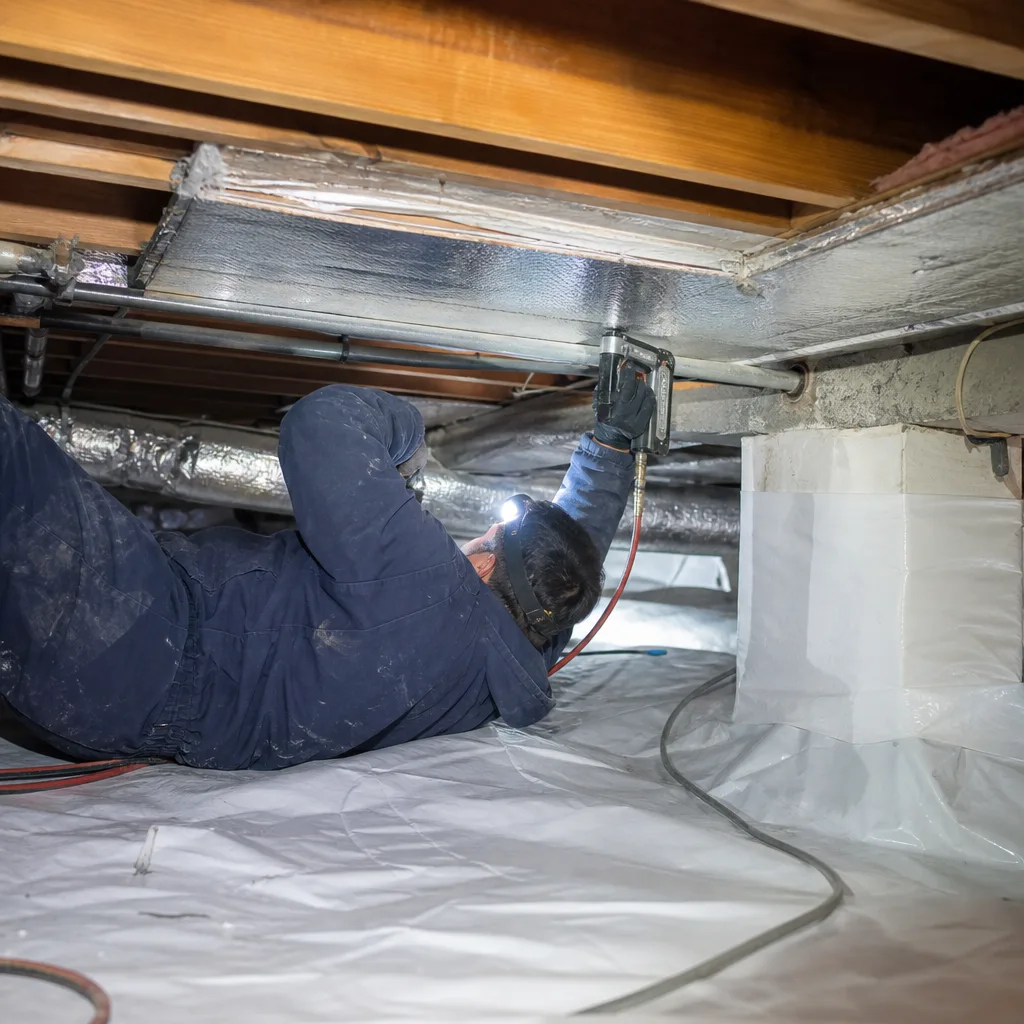
When you call us about a GreenFiber crawl space, here’s what happens. This is the sequence, start to finish, and we don’t skip steps.
- 1
Diagnostic first. We run a crawl space pressure reading and, when the job calls for it, a blower-door test on the house. This gives us a baseline number that tells us how much air is moving through the floor and rim joists. The number, not our opinion, sets the scope.
- 2
Condition report on the existing GreenFiber. We measure installed depth, check for moisture with a wood moisture meter, and determine whether the material stays or goes. If it’s wet or settled, it comes out. We photograph everything.
- 3
Written scope and price. Before anything is moved, you get a flat price, a written scope of work, and a written warranty. This is Haven Standard Clause 1. It applies to every GreenFiber job, no exceptions.
- 4
Air sealing and encapsulation. We seal the rim joists, sill plates, plumbing and electrical penetrations, and any open vents. Then we install the vapor barrier system, seam-taped and sealed to the foundation walls. The GreenFiber only goes back in after the thermal boundary is tight.
- 5
Re-insulation with the right material. Depending on the space and the homeowner’s budget, that’s either fresh GreenFiber blown-in or a more appropriate material for the conditions. We source from Owens Corning, Johns Manville, Knauf, Rockwool, CertainTeed, Icynene, Demilec, and GreenFiber, so we’re not locked into any one product.
- 6
Documented close-out. You get a post-installation reading, installed R-values by zone, and a photo log of every air-sealing location. If we ran a blower-door test, you get before-and-after CFM50 numbers in writing. Most GreenFiber encapsulation jobs in Chicago take one to two days.
What GreenFiber Crawl Space Encapsulation & Vapor Barrier Costs in Chicago
Here are the real numbers for Chicago’s market, based on what we see in homes from Albany Park to Hyde Park to Edison Park:
- Vapor barrier only (600-1,000 sq ft crawl space): $1,800-$3,200
- Full encapsulation with rim joist air sealing: $4,200-$7,500
- Encapsulation plus removal of wet GreenFiber and re-insulation: $6,800-$9,800
- Blower-door test with before-and-after readings: included on applicable jobs, no extra charge
What moves the price: height of the crawl space, whether we’re on hands and knees or kneeling, how much GreenFiber has to be removed, and whether the existing vapor barrier is salvageable or has to come out in pieces. We give you a written price before any work starts, so there’s no “we’ll see how it goes” on a GreenFiber job.
Call (218) 261-7714 for a free estimate and a written scope. And if you have a written estimate from another contractor, bring it in. We’ll read it with you, line by line, and tell you what you’re actually paying for.
Why Chicago Homeowners Call Topside Attic Insulation for GreenFiber Work
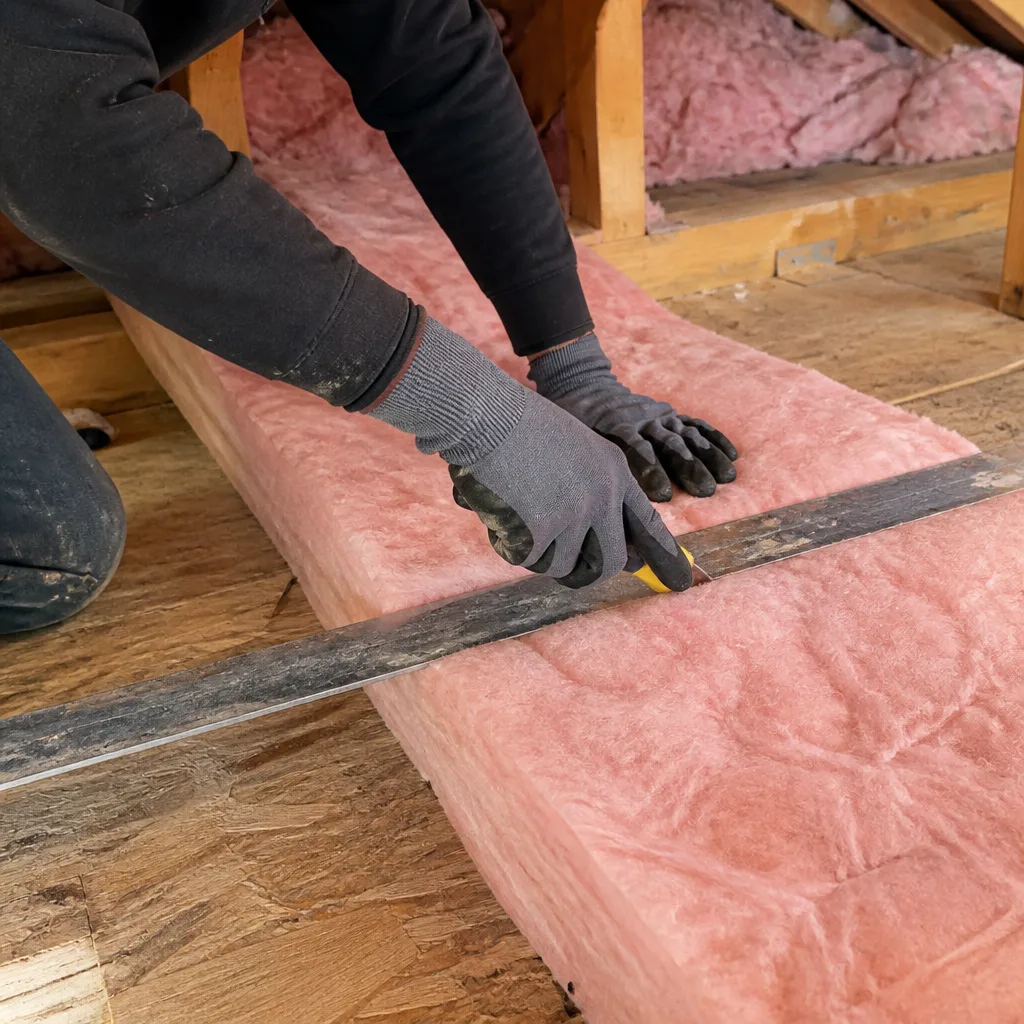
We’re independently owned and operated, and we’ve been sealing and insulating Chicago homes since 2016 under The Haven Standard. On GreenFiber jobs specifically, homeowners call us because we run the diagnostic before we quote the fix. We don’t blow insulation over an unsealed building envelope, and we don’t guess at what’s wrong. We measure it.
Every GreenFiber crawl space job includes a Documented Photo Record, a written warranty, and the 365-Day Done Right Promise: if it’s not done right, we make it right. Background-checked, uniformed technicians arrive on a schedule you set, and a live person answers the phone 24/7. No voicemail loops, no callback windows measured in business days.
We also service other insulation brands, including Reflectix, so if your crawl space has a mix of products from a previous contractor or a previous owner, we handle the whole space without sending you to another company.
Wes Okafor grew up on the Northwest Side, about six blocks from the Portage Park field house, and he’s been doing insulation work in Chicago for over twenty years. He learned how air movement and thermal performance are two sides of the same problem at Truman College, and he’s been running blower-door tests before every material goes in ever since. Seal the holes first. Then add the R-value. The numbers will tell you whether it worked.
FAQs
Most GreenFiber product warranties cover manufacturing defects in the material, not installation or moisture-related failure. Wet or settled GreenFiber in a Chicago crawl space is almost always an environmental failure: humidity, air leakage, or poor installation. As an independent GreenFiber service provider, we recommend reading your warranty terms closely before any work is done, because encapsulation and air sealing don’t void the material warranty, but they also won’t be covered under it. Call (218) 261-7714 for an honest read on your specific situation.
In most cases, a torn or sagging vapor barrier under GreenFiber insulation should be replaced, not patched. Patching creates seams, and every seam in a Chicago crawl space is a potential moisture entry point. We’ll assess the existing barrier during the diagnostic, photograph its condition, and tell you straight whether it’s salvageable. If the GreenFiber above it has been sitting against leaking moisture, the barrier and the insulation both likely need to come out.
For dry GreenFiber that has simply settled, re-blowing to hit the target R-value is usually cheaper than a full removal. For GreenFiber that has absorbed moisture, the answer is always removal: wet cellulose will not dry out in a crawl space that’s still leaking air and moisture. We’ll tell you which situation you have once we run the moisture meter and the pressure reading.
Most GreenFiber encapsulation and vapor barrier jobs in Chicago are scheduled within five to seven business days of the diagnostic. If you have active water in the crawl space or visible mold growth, we’ll prioritize the visit. Call (218) 261-7714 and a live person will answer, day or night.
Yes. Many Chicago crawl spaces have a previous owner’s patchwork: GreenFiber blown-in or batts topped with Reflectix radiant barrier stapled to the joists. We service both, and we’ll map the entire space during the diagnostic to make sure the encapsulation system covers every product and every failure point.
Call (218) 261-7714 for a free estimate on GreenFiber crawl space encapsulation and vapor barrier work in Chicago. Written price before any work starts, documented record when we leave.
Written by Wes Okafor, Owner & Lead Building Envelope Technician, Topside Attic Insulation at Topside Attic Insulation, serving Chicago and nearby areas.