
Johns Manville Insulation Removal & Replacement in Chicago: What to Know First
We remove and replace Johns Manville insulation in Chicago homes, and most jobs are completed in one to two days depending on attic size and accessibility. As an independent Johns Manville service provider, we work on JM fiberglass batts, blown-in loose-fill, and older vermiculite-era materials, with full removal and replacement in a typical 1,200-square-foot Chicago attic running between $2,800 and $5,400. That’s the honest range before anyone sets foot in your attic, and under The Haven Standard, you’ll have a written flat price before any work starts.
This page is for homeowners in Chicago who own a home insulated with Johns Manville products and need that insulation removed and replaced, whether because of rodent contamination, water damage, age, or air-sealing work that can’t be done properly over old material. Call (218) 261-7714 and a live person answers, 24/7.
How Johns Manville Products Fail - and How We Fix Them
- JM Attic Protector blown-in fiberglass settles and loses R-value over time. We see this in Chicago attics where the original install was 12 to 14 inches and ten years later it’s down to 6 or 7. The fix is full vacuum removal and re-blow to a documented R-60, which is what Chicago’s climate actually calls for in an attic floor.
- Rodent contamination is the most common removal trigger, and JM fiberglass holds urine odor worse than most. The paper facing on JM Kraft-faced batts gives rodents nesting material, and once they tunnel through the fiberglass, the ammonia smell penetrates the fibers themselves. Cleaning doesn’t work. We remove it all, sanitize the attic floor, and replace with fresh material.
- JM ComfortTherm batts with the plastic-wrapped facing trap moisture in humid Chicago summers. The poly-encapsulated facing is supposed to reduce itch during handling, but in poorly vented attics it becomes a vapor barrier in the wrong place, trapping condensation against the drywall. We pull it and replace with unfaced or Smart vapor-retarding material, depending on what the blower-door test says about your air movement.
- Older Johns Manville blowing wool from the 1980s and 1990s often contains traces of mold spores in Chicago basements and crawl spaces. JM’s early loose-fill products had no antimicrobial treatment, and once a Chicago basement gets damp, the insulation wicks moisture like a sponge. Removal is the only fix that addresses the spores, not just the visible staining.
- JM spider insulation sprayed into new-build walls can shrink and leave voids in Chicago’s freeze-thaw cycles. We find this in homes built between 2005 and 2015, especially in gable-end walls and behind knee walls in finished attics. The JM Spider product line was a good concept, but the installation window was tight, and crews who missed it left gaps. We open those walls, remove the shrunken material, and re-insulate with blown-in dense-pack cellulose or Rockwool batts.
Our Johns Manville Insulation Removal & Replacement Process
- 1
We test first. Before any removal starts, Wes Okafor or one of our technicians runs a blower-door test to get your pre-installation ACH50 reading. That number tells us how much air your home leaks, which dictates the scope of air sealing before new insulation goes in.
- 2
We document the condition. Photos of the existing Johns Manville material, moisture readings, and any contamination go into your file. You receive these photos, whether or not you hire us for the full job.
- 3
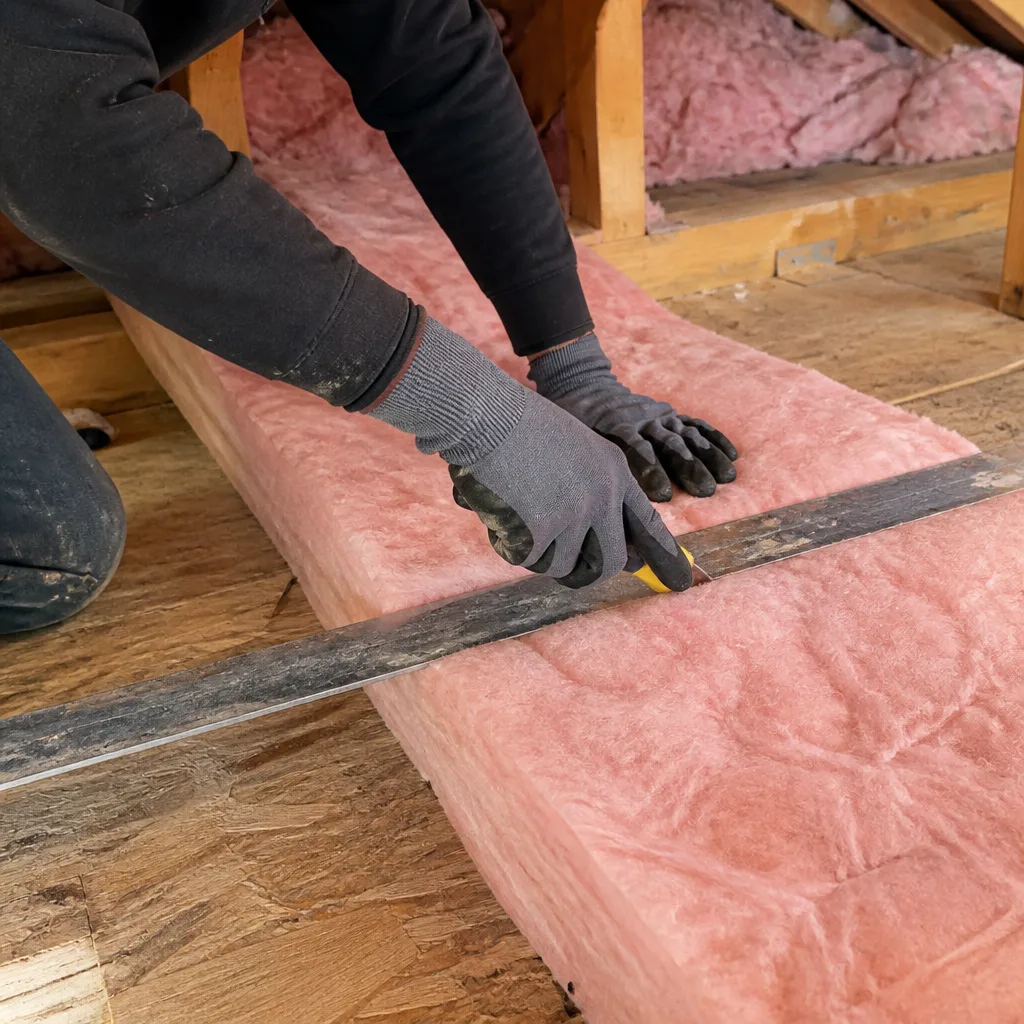
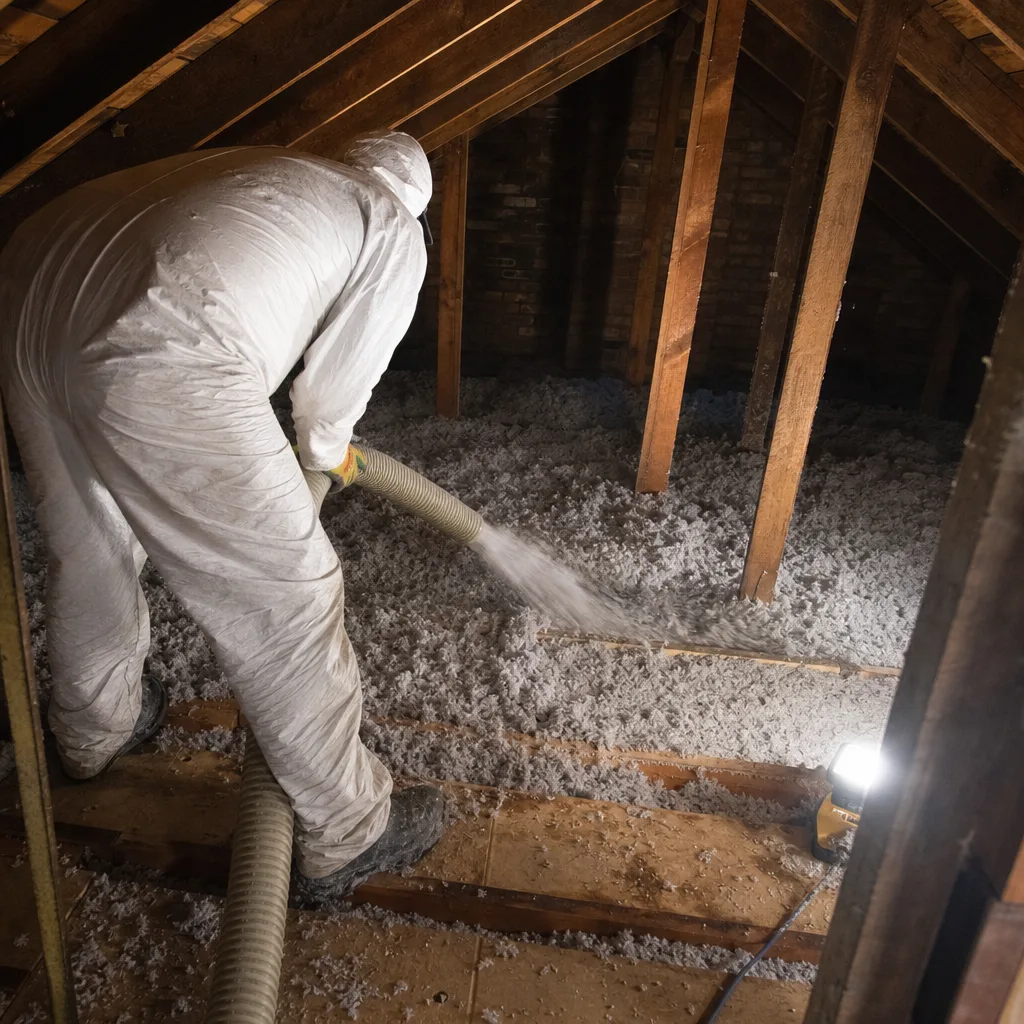
We remove the old material. Commercial HEPA-filtered vacuums pull everything out to the deck. We bag and haul contaminated material, and we don’t track fiberglass through your living space. Drop cloths, negative air pressure, and shoe covers are standard.
- 4
We air seal before we insulate. Top plates, can lights, plumbing penetrations, electrical junction boxes, and the attic hatch all get sealed. Seal the holes first, then add the R-value. The numbers will tell you whether it worked.
- 5
We install the new insulation to documented depth and density. Whether it’s fresh Johns Manville product, Owens Corning, Knauf, or Rockwool, we mark depth gauges and photograph the installed material that shows R-value per zone.
- 6
We test again and hand you the report. Post-installation blower-door reading, ACH50 before and after, installed R-values by zone, and a complete photo log. You walk away with documentation, not a sales pitch.
What Johns Manville Insulation Removal & Replacement Costs in Chicago
Here are our flat-rate ranges for common Johns Manville removal and replacement jobs in Chicago. The price you receive is the price you pay, written before work starts.
- Attic removal and re-insulation to R-60, 1,000-1,500 sq ft: $2,800-$5,400 depending on material, contamination level, and existing depth.
- Rodent-contaminated attic removal only: $1,600-$2,900, includes bagging, hauling, and sanitizing.
- Crawl space or rim joist JM batt removal and replacement: $1,200-$2,700 depending on access and square footage.
- Vermiculite-era removal (pre-1990 homes): $4,000-$9,000 if vermiculite is suspected, pending lab testing for asbestos content. We do not open vermiculite until test results come back.
- Wall cavity JM Spider removal with dense-pack re-insulation: $3,500-$7,800 depending on the number of bays and whether drywall removal is needed.
What moves the price: contamination level, attic access, how many layers of old material are up there, and whether we’re removing from walls or just the attic floor. Estimates are free, and we’ll give you a written flat price, not a range, before any work starts. Call (218) 261-7714.
Why Chicago Homeowners Call Topside Attic Insulation for Johns Manville Work
We remove and replace a lot of Johns Manville product in Chicago, and we’ve seen how that material behaves after ten or twenty years of Illinois winters and humid summers. Wes Okafor, our owner and lead building envelope technician, grew up on the Northwest Side and has been doing insulation work in Chicago for over twenty years. He learned building technology at Truman College, where air movement and thermal performance are taught as one problem, not two.
Every job we do runs under The Haven Standard: a written scope, a written price, and a written warranty before anyone lifts a tool. We publish before-and-after blower-door numbers on every applicable job because the data tells the truth better than we can. If you bring us a competing written estimate, we’ll read it with you, line by line, as a free second opinion. And if it’s not done right within 365 days, we make it right. We also service other brands like Reflectix, but Johns Manville is among the most common we pull out of Chicago attics.
FAQs
No, removal and replacement by an independent contractor does not void a Johns Manville warranty retroactively, but JM’s product warranties typically don’t cover removal or reinstallation labor anyway. As an independent Johns Manville service provider, we’re not authorized by JM, and we won’t pretend to be. What we do give you is a written warranty on our workmanship for 365 days under The Haven Standard.
Sometimes, but not when the old material is contaminated, moldy, or compressed. Blowing new insulation over rodent-contaminated JM fiberglass traps odor and bacteria under a fresh layer, and you’ll smell it every time the attic heats up. If the old material is clean and dry, we can top it off. If not, removal is the only fix that lasts. Call (218) 261-7714 and we’ll tell you which camp you’re in after an inspection.
Most single-family attic removals in Chicago take one day for removal and a second day for air sealing and re-insulation. Wall cavity work like JM Spider removal takes longer, typically three to five days depending on how many bays we’re opening.
Because JM fiberglass is porous, and rodent urine penetrates the fibers, not just the surface. Ammonia binds to the material itself, and no sanitizing spray reaches deep enough to remove it. The only fix that eliminates the odor is full removal down to the deck, followed by sanitizing, air sealing, and new material.
Yes, estimates are free, and they come as a written flat price, not a verbal range. Under The Haven Standard, you’ll have a written scope and a written price before any work begins. Call (218) 261-7714 and a live person answers.
Written by Wes Okafor, Owner & Lead Building Envelope Technician, Topside Attic Insulation at Topside Attic Insulation, serving Chicago and nearby areas.