
Johns Manville Radiant Barrier Installation: The Chicago Owner’s Guide
Radiant barrier installation involving Johns Manville products in Chicago typically runs between $1,800 and $4,200 for a standard attic, depending on square footage and whether the existing barrier needs removal first. We stock Johns Manville-compatible radiant barrier materials on the truck, and most installations are completed same day. The way most homeowners discover their radiant barrier has failed is either a spike in upstairs cooling costs during a Chicago August, or actually seeing the foil delaminating when they go up to grab the holiday boxes.
Here’s the honest picture: a radiant barrier is a foil-faced material stapled to the underside of roof rafters, and its only job is to reflect radiant heat before it soaks into your attic insulation. In Chicago, it works hardest in July and August, when the sun pounds the roof deck and the attic can hit 140 degrees. When the foil tears, separates from its backing, or gets buried under blown insulation, it stops reflecting. You’re then paying to cool air that’s fighting a hot attic floor all afternoon.
Which Johns Manville Models This Applies To
Johns Manville doesn’t sell radiant barrier under a single model name. Their residential line includes JM Radiant Barrier, and they also produce foil-faced insulation products that serve a radiant function alongside their R-value: JM AlumiFlash, JM 80FC foil-faced polyiso, and their foil-scrim-kraft (FSK) facing on batt insulation. The compatibility gotcha most Chicago owners hit is this: if your attic has Johns Manville blown fiberglass on the floor and foil stapled to the rafters, the foil was installed as a separate product line, not as part of the blown insulation purchase. You match the replacement by measuring rafter spacing, not by looking for a model number on the old foil.
For rafter installations, the material comes in 48-inch and 26-inch widths. The 26-inch is for 24-inch on-center rafter spacing, which covers most Chicago bungalows and ranches built before 1980. The 48-inch works for truss attics where stapling to the underside of the top chord gives you a continuous plane. We also carry Reflectix as an alternative when a homeowner wants a foam-core radiant barrier rather than woven polyethylene foil. The decision is OEM Johns Manville versus a quality equivalent: for radiant barriers, the performance difference is negligible because the physics is the same, and the material matters less than how carefully it’s stapled, lapped, and kept free of dust. We’ll give you a straight read on what’s worth paying for.
Signs Your Johns Manville Radiant Barrier Installation Is Failing
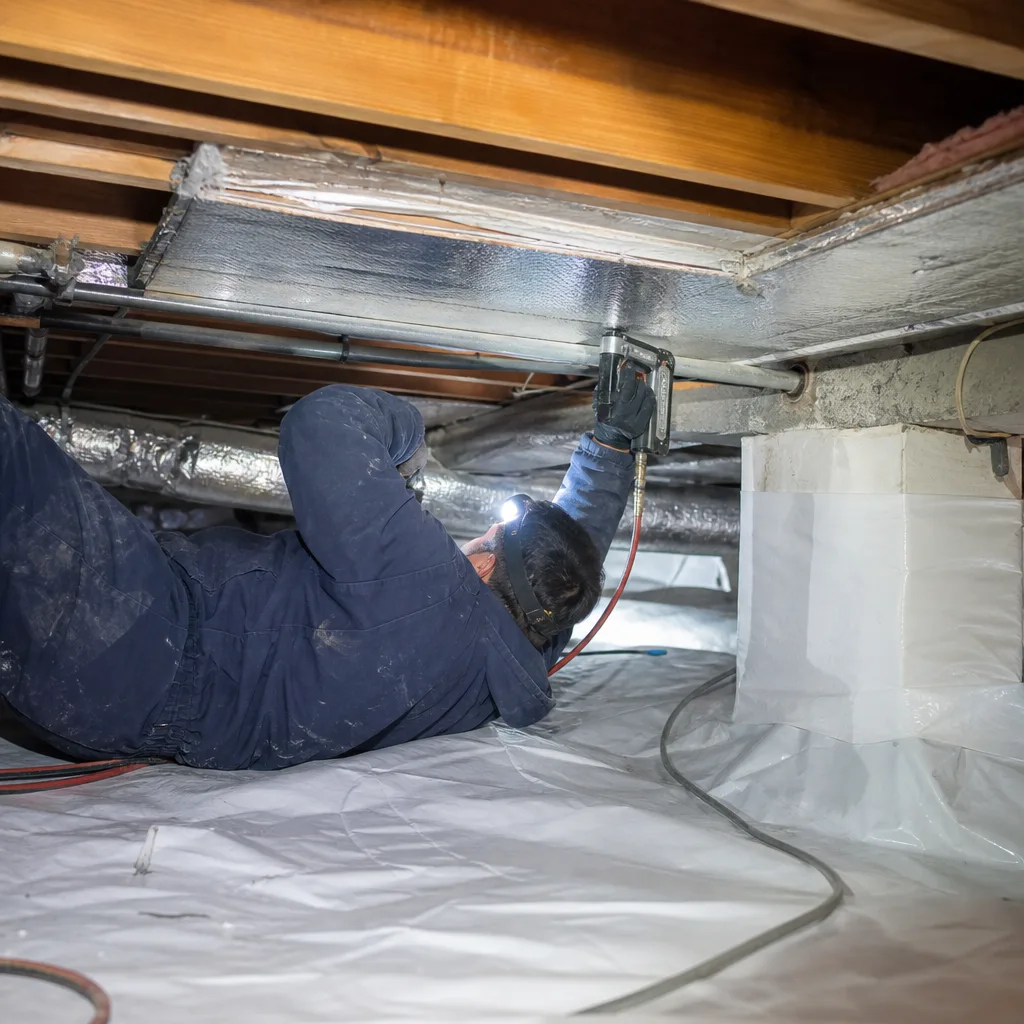
Radiant barrier failure is quieter than a failed furnace, and it rarely announces itself with a bang. Here’s what we see when we get into Chicago attics in July:
- Upstairs rooms run 5-8 degrees warmer than downstairs, every afternoon. The attic floor has become a heat radiator. The barrier’s reflective surface is either covered in dust or has delaminated from its reinforcing scrim.
- Foil is sagging between rafters, not taut. This means the staples have pulled through. In Chicago’s freeze-thaw cycle, staples work loose as the roof deck expands and contracts. Once the foil sags, it loses the air gap that makes it reflect.
- The shiny surface is cloudy, gray, or dusty. Radiant barrier works by low-emissivity: the surface must be shiny to reflect, not absorb. A layer of dust drops reflectivity by half. If you can write your name in the dust on the foil, it’s not reflecting much.
- Attic insulation was blown in after the barrier went up, and now it touches the foil. Conductive contact defeats the purpose. The foil needs a dead air space to reflect heat. If insulation touches it, heat conducts straight through.
- You see torn sections near the ridge or soffit vents. Installers sometimes tear the foil when cutting vent openings, and wind pressure from ridge vents can peel it at the edges. These tears grow over time.
Replacement Cost & What’s Included
In Chicago, radiant barrier replacement on a standard 1,200-square-foot attic runs $1,800 to $2,800 for new material stapled to the rafters, with the old barrier either repaired in place or removed. A larger attic - say 2,500 square feet, common in suburban-style homes on the Northwest Side or in Skokie - runs $2,800 to $4,200. The range moves mostly on three things: attic accessibility, whether old foil needs removal, and whether your rafter spacing is uniform enough to work without custom cutting.
What you get from us, on any quotes for Johns Manville radiant barrier installation in Chicago, is a written scope before work begins. That scope lists the material type and width, the square footage, the installation pattern, and the exact price. No holdbacks, no “we found something else” phone calls. The work is covered by our 365-Day Done Right Promise, and you’ll receive a Documented Photo Record of the installed barrier. If we’re sealing the attic too, you get before-and-after blower-door numbers - a single figure that tells you how much conditioned air the house was losing and how much it’s losing after. That’s how Topside Attic Insulation has operated since 2016, and the founding has never changed.
DIY or Call Us?
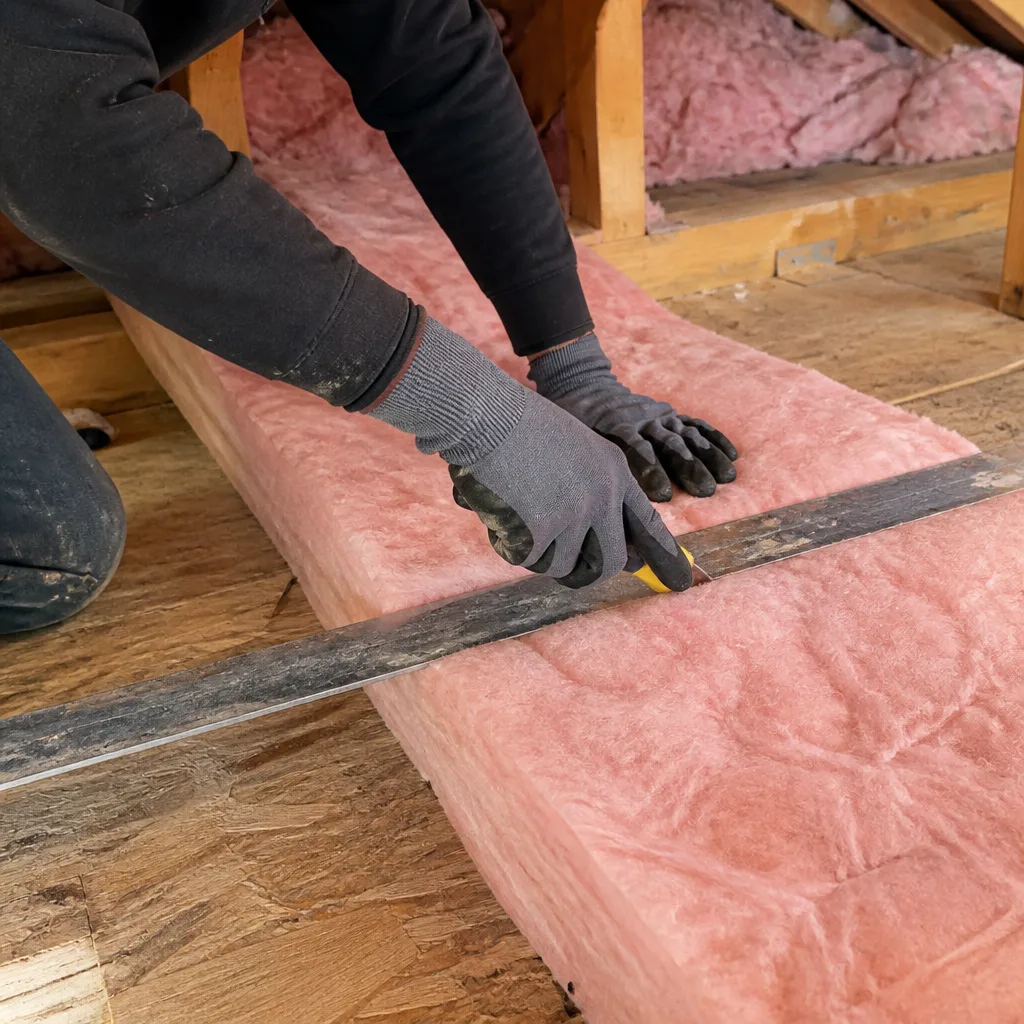
Radiant barrier installation is not a high-tension spring or live electrical panel. It’s foil and staples on a wood roof deck. The dangerous part is the environment: in summer, a Chicago attic can reach 140 degrees, and working on your knees in an unventilated space for three hours is a genuine heat-stress risk. You also need a respirator because old attic dust and fiberglass particles don’t belong in your lungs. Wes Okafor has been in Chicago attics for over twenty years, and the thing he tells homeowners is that the material is simple but the conditions aren’t.
What we see go wrong with DIY jobs is mostly the air gap. A homeowner staples the foil directly against the roof sheathing, leaving no ¾-inch gap for the radiant surface to do its job. Or they staple it tight and flat onto the rafters but leave gaps at the ridge and eaves, which kills the convective airflow that helps the attic cool. If you’ve read this far and you’d rather just have it done right, call us at (218) 261-7714. We’ll give you a written price before anything starts.
FAQs
A Johns Manville radiant barrier installed in a Chicago attic typically lasts 15 to 20 years before the foil starts delaminating or losing reflectivity. The freeze-thaw cycle is harder on staples than on the foil itself, and dust accumulation in a vented attic cuts performance gradually over that span.
Small tears and detached staples can be repaired in place for a few hundred dollars, but if more than about 30% of the foil has delaminated or been buried by insulation, replacement is the honest option. Repairing a barrier that’s lost its reflective surface doesn’t buy you back the performance.
Most Chicago attic radiant barrier installations take 4 to 6 hours for a standard 1,200-square-foot home. Larger attics or jobs where the old barrier must be fully removed run longer, but we schedule them as same-day jobs and leave the attic cleaner than we found it.
Yes, we carry Johns Manville radiant barrier in both 26-inch and 48-inch widths, plus Reflectix for homeowners who want a foam-core alternative. We also stock the right staples and furring strips to establish the air gap, so the truck has everything the job needs without a supply-house run.
Seal the holes first. Then add the R-value. The numbers will tell you whether it worked.
For a written price on Johns Manville radiant barrier installation in Chicago, call (218) 261-7714. You’ll talk to a live person, and you’ll have a flat number before anyone climbs into your attic.
Written by Wes Okafor, Owner & Lead Building Envelope Technician, Topside Attic Insulation at Topside Attic Insulation, serving Chicago and nearby areas.