
Johns Manville Vapor Barrier Installation: The Chicago Owner’s Guide
If you’re researching Johns Manville vapor barrier installation in Chicago, here’s the direct answer: a professionally installed crawl space or basement vapor barrier using Johns Manville material typically runs $1,800 to $4,200 in the Chicago market, depending on square footage, access height, and how much prep work the existing space requires. We stock Johns Manville vapor barrier rolls on our trucks and in our Chicago yard, and most standard installations are completed in a single day. What usually brings an owner to this page is standing in a crawl space doorway staring at a torn, sagging, or mold-streaked sheet of poly that was supposed to keep groundwater vapor out of the floor joists, and realizing the barrier that came with the house wasn’t installed to hold up.
Wes Okafor started measuring exactly how Chicago basements and crawl spaces move moisture after pulling blower-door numbers on a relative’s Irving Park two-flat years ago. The insulation looked fine from the hatch. The air-sealing numbers told a different story, and the vapor barrier situation underneath was worse than either.
Which Johns Manville Models This Applies To
Johns Manville vapor barriers come in a few product families that matter for Chicago homes: the standard 6-mil and 10-mil polyethylene sheeting used in most residential crawl spaces, the reinforced 12-mil and 20-mil products spec’d for tighter basements and high-moisture conditions, and the JM reflective and multi-layer barrier lines that overlap with what some contractors install using Reflectix-style products for rim joist and wall applications. The compatibility question is less about matching a barrier to a “model number” and more about matching the barrier class to the moisture load of the specific space. A 12-mil reinforced JM barrier handles foot traffic across a crawl space floor far better than 6-mil, which tears under a knee or a dropped tool.
Here’s a go-to truth we tell Chicago owners: the barrier thickness you choose changes the failure timeline. In a city where April and May push groundwater vapor hard against crawl space floors, 6-mil might last 6 to 10 years before wear-through in a trafficked area. The 12-mil and 20-mil Johns Manville products are frequently still intact at 15 to 20 years. If you can find the roll label or packing slip, check the mil thickness and the JM product code before you buy anything. If you can’t, we’ll identify it from a photo and a tape-measure check during the estimate.
We’re an independent service provider, not a Johns Manville dealer or affiliate. We install JM products alongside Owens Corning, CertainTeed, and other brands because matching the product to the space matters more than loyalty to one manufacturer.
Signs Your Johns Manville Vapor Barrier Installation Is Failing
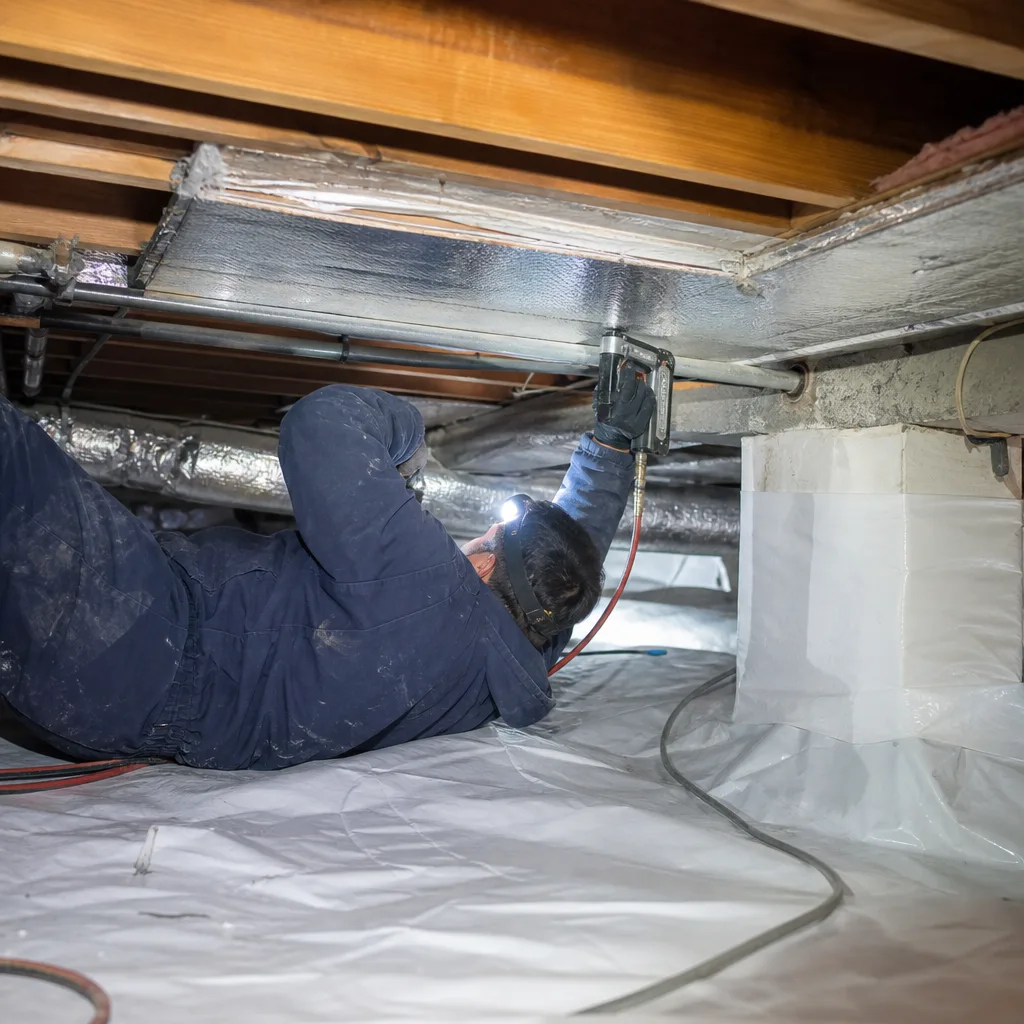
- Tears or punctures in the sheeting, especially at seams and support piers. This is the most common failure we see in Chicago crawl spaces. The original barrier was laid but not protected from the regular foot traffic of HVAC and plumbing service calls. Each tear becomes a path for groundwater vapor to reach the floor joists above.
- Sagging or fallen barrier along foundation walls. Vapor barriers on walls need mechanical fastening, not just friction. When the fasteners pop or the barrier wasn’t extended high enough, the sheet falls away and condensation collects on the masonry behind it, where you can’t see it until the insulation is peeled back.
- Condensation droplets or frost on the underside of floor joists above the crawl space. That moisture is vapor that got past the barrier or was never blocked in the first place. In Chicago’s January cold, that same condensation freezes and expands against the wood, accelerating joist rot.
- Musty odor in the living space above, especially after rain. Groundwater vapor moves upward through the house. A properly installed and continuous JM vapor barrier stops most of it, but a failed one lets that soil-gas smell travel right up through your flooring.
- Evidence of mold growth on framing or insulation in the crawl space. By the time mold is visible on wood, the barrier has been failing for a while. This is where the cost conversation shifts because remediation and material replacement add scope that a simple re-lay doesn’t have.
Replacement Cost & What’s Included
In Chicago, expect to pay $1,800 to $4,200 for a complete Johns Manville vapor barrier installation in a typical 800 to 1,500 square foot crawl space or basement. Smaller spaces and straightforward re-lays with decent access run toward the lower end. Taller spaces, tight access hatches, floor debris removal, sump-pump work, or sections that need wall fastening on masonry block trend toward the higher end.
- Material (Johns Manville 6-mil to 20-mil): $0.35 to $0.80 per square foot.
- Labor and fastening (seams, walls, piers, and perimeter): $1.20 to $2.10 per square foot.
- Prep work (debris removal, floor leveling, old barrier haul-away): $200 to $700 depending on what’s down there.
- Air sealing of rim joists and penetrations (done before the barrier goes in): $400 to $1,100 for most Chicago homes.
Every estimate is a written flat price. That’s Haven Standard Clause 1: no work starts until you have the scope, the price, and the warranty in writing. The 365-Day Done Right Promise applies to completed work, and you’ll get a Documented Photo Record of the installation before the crew leaves. On jobs where air sealing is part of the scope, we publish before-and-after blower-door numbers so you can see, in a single figure, how much air and moisture pathway we closed off.
DIY or Call Us?
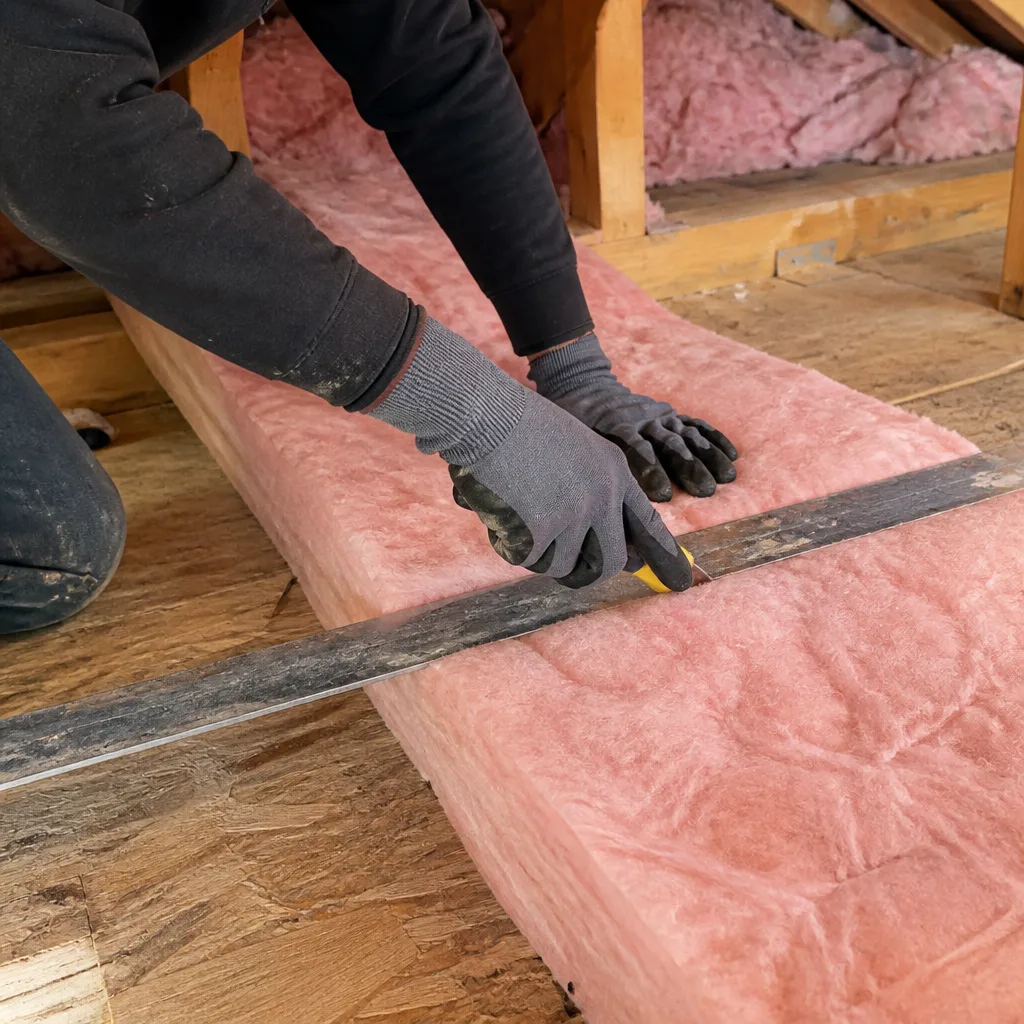
What you can safely do: open the crawl space hatch and take photos. Check whether the barrier is continuous or torn, whether it’s fastened at the walls, and whether the floor joists above show condensation or staining. Send us those photos and we’ll give you an honest read on scope and whether you’re looking at a repair or a replacement.
Where DIY goes wrong: the vapor barrier itself isn’t dangerous to handle, but the conditions around it can be. Low-clearance crawl spaces put you in contact with fiberglass insulation, rodent droppings, spider colonies, and occasionally exposed wiring or old drain lines. A tear you put in a fresh barrier during a self-install becomes the same moisture path you were trying to close. And the truth is, most self-installed barriers fail at the seams and wall terminations because the fastening and overlap details get skipped under a low ceiling with a headlamp on. If you’re in the Chicago area and want it done once, with a written price and a photo record when it’s finished, call us at (218) 261-7714. We’ll schedule a walkthrough and hand you the number before anyone lifts a roll of poly.
FAQs
A 10-mil to 12-mil Johns Manville vapor barrier typically lasts 15 to 20 years in a Chicago crawl space when installed with proper seam overlap and wall fastening, while thinner 6-mil material is more likely to show tearing and wear-through at 6 to 10 years in trafficked areas.
Small tears can sometimes be patched with compatible poly tape or a welded patch, but if the barrier is thin, sagging, or moisture has already reached framing above the tear, patching buys months rather than years in most Chicago basements. We’ll tell you which direction makes sense after one look at the space, and the written price reflects whichever scope is right.
Most Johns Manville vapor barrier replacements in Chicago are completed in one day, including old barrier removal, floor prep, fastening, seam sealing, and photo documentation. Jobs that include rim joist air sealing or sump-pump adjustments may run to two days.
Yes, our Chicago crews carry 6-mil, 10-mil, 12-mil, and 20-mil Johns Manville barrier rolls, plus fastening hardware and seam tape, so standard jobs don’t wait on supply runs or third-party lead times. If your project needs a specialty thickness or a reinforced product, we’ll have it in hand before the scheduled install day.
If you own a Johns Manville vapor barrier that’s failing, or you’re tired of guessing what’s happening under your floors, call (218) 261-7714 for a free estimate and a written price before any work starts. We serve homes throughout Chicago and the nearby suburbs, and every visit ends with documentation you keep.
Written by Wes Okafor, Owner & Lead Building Envelope Technician, Topside Attic Insulation at Topside Attic Insulation, serving Chicago and nearby areas.