
Knauf Radiant Barrier Installation: The Chicago Owner’s Guide
We stock and install Knauf-compatible radiant barrier material throughout Chicago, with most whole-attic installations in the city running between $1,800 and $3,400 depending on square footage, roof pitch, and whether existing insulation needs to come out first. Same-day and next-day installation is available for most Chicago neighborhoods, and we carry the barrier stock on our trucks along with the fastening hardware and seam tape. Most homeowners discover their radiant barrier has failed the same way: they’re up in the attic in July, the space feels like a kiln, and the foil facing is peeling away from the roof deck or sagging between the rafters. By that point, the barrier stopped doing its job months ago.
Radiant barrier is a foil-faced material stapled to the underside of roof rafters that reflects radiant heat back out instead of letting it radiate down into your attic insulation. In a Chicago attic, where summer roof deck temperatures routinely hit 140°F and winter brings the opposite problem entirely, a properly installed barrier reduces the heat load your insulation has to fight. A failed one does nothing except hold dust.
Which Knauf Models This Applies To
Knauf’s radiant barrier line falls under their building envelope products, and in Chicago we see three versions in homes built or renovated between 2000 and 2024: the single-sided foil (foil on one face, kraft or poly on the back), the double-sided foil, and the perforated variant meant specifically for attics where moisture buildup is a concern. The perforated product matters in Chicago’s climate because an attic that can’t breathe will condense moisture against the foil in January, and we’ve pulled down barriers in Lincoln Square and Portage Park that were dripping onto the insulation below. Perforation is how you know the product was rated for northern use.
Identifying which Knauf product you have is straightforward. The roll label usually survives on the facing edge, and it lists the product name, the R-value contribution (radiant barriers do not carry an R-value the way batt insulation does; Knauf’s product sheets list emissivity values, typically 0.03 to 0.05 for the foil face), and the roll width, which is either 48 or 60 inches. If the label is gone, measure the roll width and check whether the foil is perforated. That tells us what to load on the truck. We work with OEM Knauf stock and also carry Reflectix as an aftermarket equivalent when a Chicago homeowner wants a product comparison or needs a faster lead time. Topside Attic Insulation is an independent contractor; we are not affiliated with Knauf, and we stock the barrier material from multiple manufacturers so the install matches the house, not a sales agreement.
Signs Your Knauf Radiant Barrier Installation Is Failing
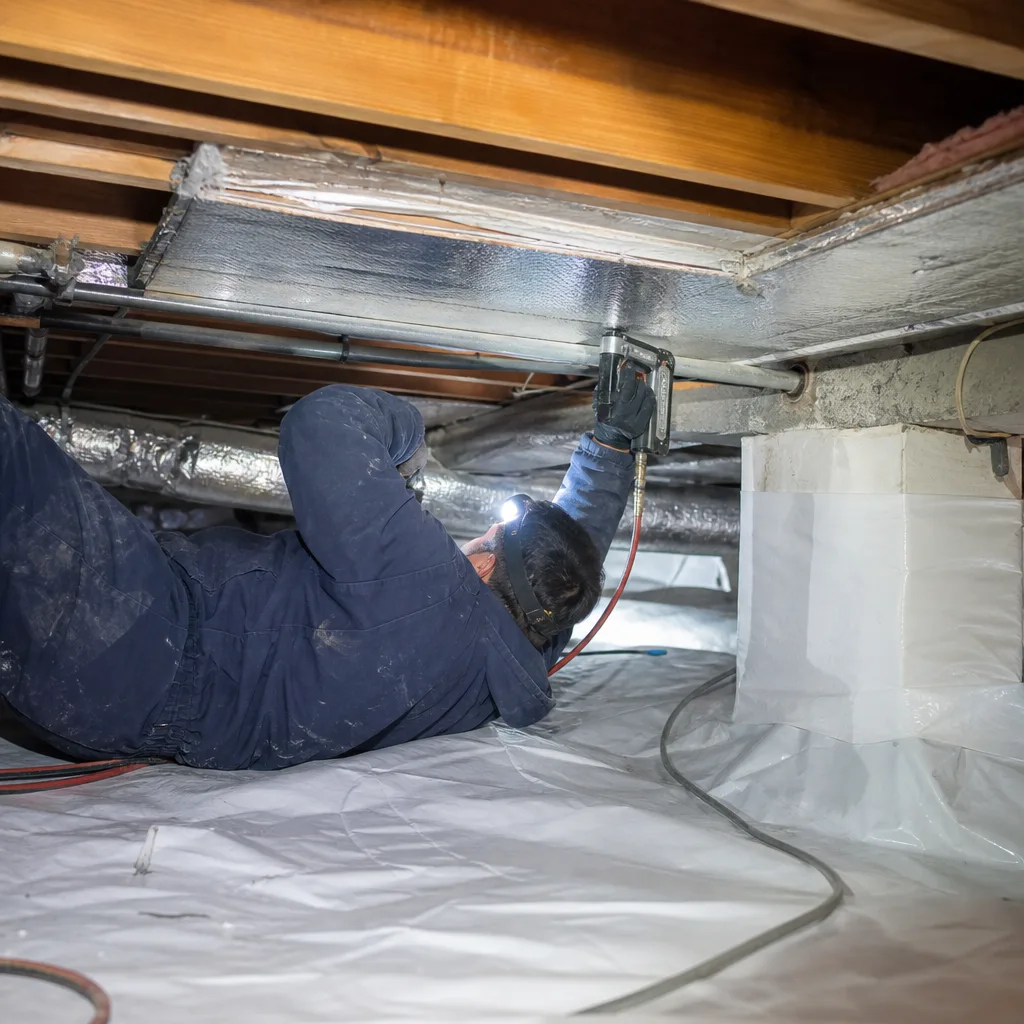
- Sagging or drooping between rafters. This is the most common failure we see in Chicago attics. The staple holes tear through the foil over years of thermal expansion and contraction, and the material loses its flat, tensioned surface. A sagging barrier reflects heat at the wrong angle and traps air pockets that do nothing.
- Tears and punctures along the seams. Seam tape dries out and splits after a handful of Chicago summers. Once a seam opens, heat funnels through the gap and finds the insulation directly, cutting the barrier’s effectiveness by more than half in that zone.
- Dust film coating the foil face. Foil works by reflecting radiant heat off a clean, shiny surface. A thick layer of attic dust acts like a blanket on the foil, absorbing heat instead of reflecting it. We see this constantly in older Chicago homes where the attic floor was never sealed, and decades of air leakage have carried dust up into the rafter bays.
- Moisture staining or condensation beads on the underside. This is a Chicago-specific problem tied to winter. An unperforated barrier installed in a vented attic traps moisture against the cold foil surface, and the resulting drip wets whatever insulation sits below it. Wet insulation stops working, and in a worst case soaks into the drywall.
- You can feel radiant heat standing in the attic in summer. A working radiant barrier keeps the attic noticeably cooler than outside air under the roof deck. If you’re in the attic in August and the heat hitting your face feels like opening an oven door, the barrier has failed or was never performing in the first place.
Replacement Cost & What’s Included
Installed Knauf radiant barrier replacement in Chicago homes runs between $1,800 and $3,400 for a standard attic. Smaller attics in bungalows and two-flats on the Northwest Side can come in around $1,200 to $1,800, while a large attic in a Lincoln Park or Ravenswood Victorian with steep pitch and complicated rafter geometry can push past $3,400. The range is driven by square footage, the roof pitch (steeper pitches are slower to work on and require more material), and whether we’re removing the old barrier first, which adds labor but also gives us a clean surface for the new install.
Every radiant barrier installation from us includes the barrier material, fastening hardware, seam tape, a full written scope before we start, and the Documented Photo Record showing before, during, and after photos of the attic. If the job touches air sealing, you also get before-and-after blower-door numbers. Under The Haven Standard, you receive a flat written price before any work starts, and the install is covered by our 365-Day Done Right Promise.
DIY or Call Us?
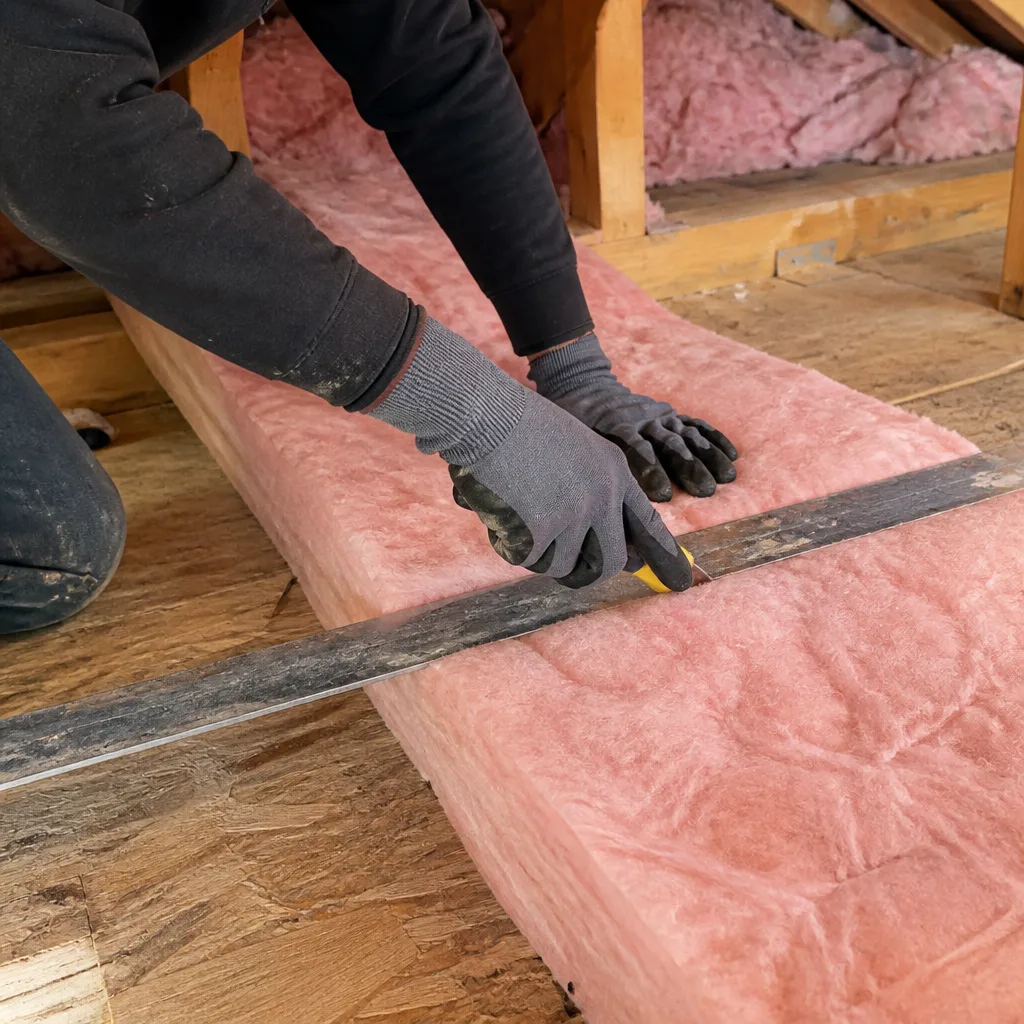
Radiant barrier installation is not dangerous in the way spring or electrical work is, but it is uncomfortable, physical, and genuinely difficult to do well in a Chicago attic. You’re working overhead in a space that hits 130°F in the summer, stapling material to rafters while standing on joists with insulation between them. The step that goes wrong for most homeowners is seam detailing: the barrier only performs when seams are taped flat and the foil is held taut, and a gap of even a few inches between runs destroys the reflective continuity. We regularly fix DIY installs in Chicago where the barrier was stapled loosely, left untaped, or applied over soffit vents by mistake, which chokes off attic ventilation and causes winter condensation.
If you want to check your existing barrier yourself, look for the symptoms above from the attic access point and take photos. If the foil is sagging, torn, or dusty, replacing it properly is a one-day job for our crew, and you’ll have a written price before anyone lifts a tool. Call (218) 261-7714 and we’ll schedule a time that works.
FAQs
A properly installed Knauf radiant barrier lasts 15 to 20 years in Chicago attics, though the staple points and seam tape typically need attention around year 10. Call (218) 261-7714 for an inspection if your barrier is older than a decade - we’ll tell you what’s actually failing before recommending work.
Small tears and loose seams can be repaired with fresh foil tape and additional staples, and we do this when the barrier is otherwise sound. If sagging is widespread or the foil has been dust-coated for years, replacement usually makes more financial sense than chasing repairs across the whole attic. Call (218) 261-7714 for an honest assessment; estimates are free.
Most Chicago attic radiant barrier installations take one day, with larger or steeper attics occasionally running into a second day. We’ll give you a clear timeline with the written scope before work starts.
Yes. Our Chicago crews carry Knauf-compatible radiant barrier stock, seam tape, and fasteners on the truck, so we can typically install the same day or next day once we’ve measured the attic. Call (218) 261-7714 and we’ll confirm what’s on the truck before we arrive.
Written by Wes Okafor, Owner & Lead Building Envelope Technician, Topside Attic Insulation at Topside Attic Insulation, serving Chicago and nearby areas.