
Owens Corning Attic Insulation: The Chicago Owner’s Guide
We stock and install Owens Corning attic insulation throughout Chicago, and most homes we quote run between $1,800 and $4,200 for a full attic top-up or replacement, depending on square footage and the R-value you’re targeting. If you already have Owens Corning fiberglass batts or blown-in product that’s underperforming, we can typically have a crew out within 3 to 5 business days after the written estimate. Homeowners usually discover the problem in stages: a bedroom that won’t hold temperature in February, an upstairs hallway that’s 6 degrees colder than the living room, or an energy bill that climbed 30% over two winters without any obvious cause. By the time someone opens the attic hatch to look, the insulation has often been failing quietly for years.
Key takeaways:
- Owens Corning attic insulation installed in Chicago homes typically costs $1,800-$4,200 for full coverage, with most jobs landing near $2,800.
- Compressed, damp, or rodent-disturbed insulation loses R-value fast, and no amount of new product on top fixes what’s underneath.
- We seal the attic floor before any insulation goes in. That’s the order, every time.
- Every job closes with a written report: pre- and post-installation blower-door numbers, installed R-values by zone, and a photo log.
Which Owens Corning Models This Applies To
We work with the full Owens Corning attic insulation line, but most Chicago homes fall into one of two camps: blown-in fiberglass (ProPink L77 or AttiCat expanding systems) or kraft-faced and unfaced batt insulation (R-19, R-30, R-38 for 2×4, 2×10, and 2×12 framing). The part you’re looking for usually comes down to what’s already in your attic floor. If you see loose pink fiberglass that settles into valleys between joists, that’s a blown-in product, and the most common issue is settling below the R-value printed on the bag. If you see batts with a paper facing, the failure point is almost always compression, gaps around framing, or moisture intrusion through an unsealed penetration.
One compatibility gotcha specific to Chicago’s older housing stock: if your home was built before 1980, the attic floor framing may be true 2×4 rather than nominal 2×4, which means R-19 batts (6.25 inches thick) don’t sit flush and leave air channels along every joist. We measure framing depth before recommending anything. For owner-identifying purposes, the bag or batt facing will have a printed spec; if it’s faded or missing, measure the batt thickness and joist depth, and we can match it in person during the estimate.
Signs Your Owens Corning Attic Insulation Is Failing
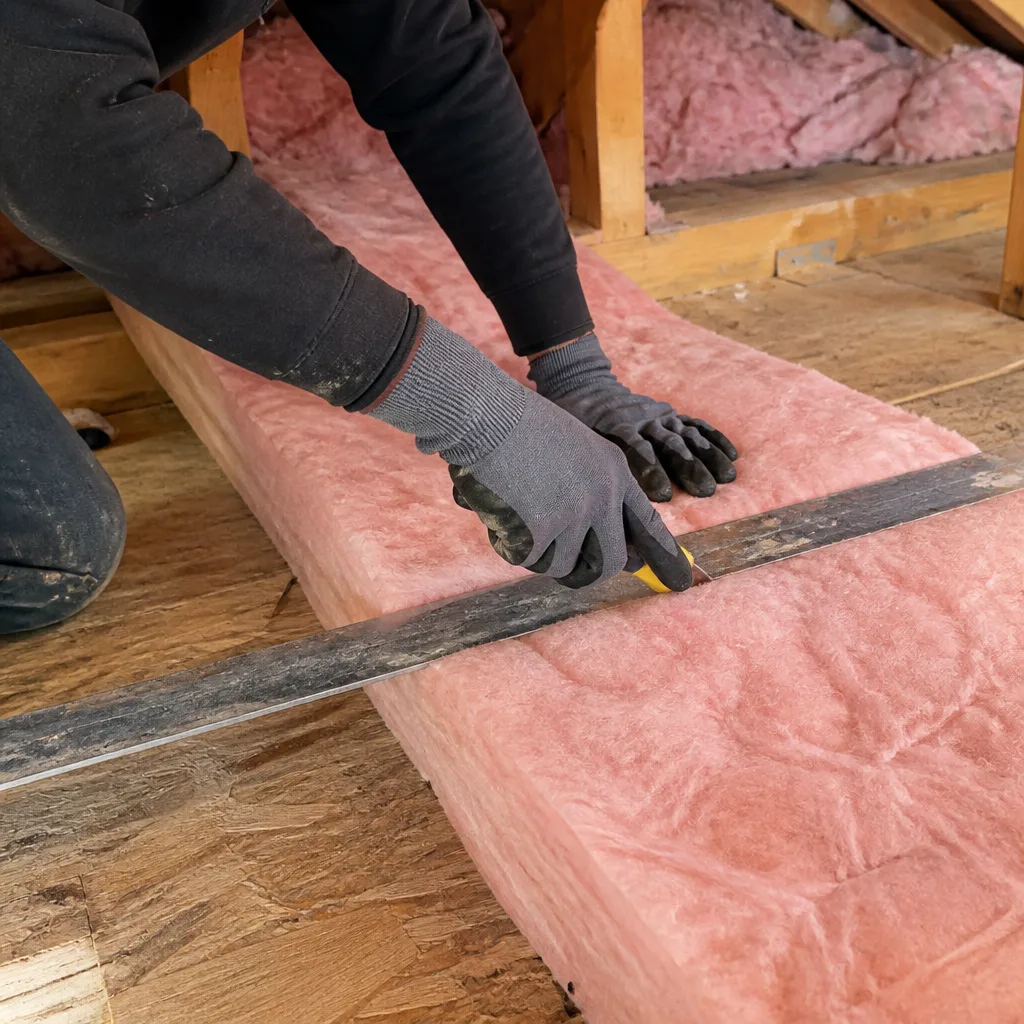
- Upstairs rooms that run 5 to 8 degrees colder than the rest of the house. This is the classic symptom in Chicago bungalows and two-flats. The cause is almost always gaps at the attic floor perimeter where warm air from the living space leaks up before the insulation ever has a chance to do its job. Sealing top plates and can-light housings first is non-negotiable before re-insulating.
- Ice dams forming along the roof edge in January and February. Heat leaking through an under-insulated or gap-ridden attic melts roof snow, which refreezes at the eave. Fix the air leaks and raise the R-value, and the dams usually stop forming.
- Batt insulation that appears flattened, torn, or darkened along the edges. Compression drops the effective R-value fast. A 6-inch batt crushed to 4 inches performs like R-19 when you paid for R-30, and the crushed areas become thermal shortcuts.
- Loose-fill insulation that sits below the tops of the joists. Owens Corning AttiCat and similar blown-in fiberglass settle over time, especially with attic foot traffic. If the material is below the framing, it’s functionally an R-12 to R-19 product even if the bag said R-38.
- Rodent droppings, nesting material, or chewed insulation visible when you open the hatch. Chicago rats and mice love loose fiberglass. Contaminated insulation holds zero insulating value and needs to be removed and replaced. We see this constantly in Albany Park, Jefferson Park, and Portage Park, where century-old balloon-frame cavities give rodents a highway from basement to attic.
Replacement Cost & What’s Included
Here’s the pricing picture for Chicago, broken down the way we actually quote it:
- Blown-in Owens Corning fiberglass (R-49) in a typical 1,000-1,500 sq ft attic: $2,100-$3,600 installed.
- Batt insulation (R-38) for the same footprint: $1,800-$3,000, depending on access and existing material removal.
- Complete removal of failed or contaminated insulation, air sealing, and new blown-in product: $3,200-$5,800 for most Chicago homes, with AttiCat or ProPink at R-49 or R-60.
- Air sealing only (top plates, can lights, plumbing penetrations, chimney chase): $800-$1,900 before any insulation work, and always bundled into the full scope when we’re doing the attic.
Every quote is a written price before any work starts. What you get on the back end: a printed report with pre- and post-installation ACH50 blower-door readings, installed R-values by zone, and a photo log of every sealing location. On a recent Des Plaines split-level, the blower-door read 4,200 CFM50 before sealing and 2,100 after, before a single bag of insulation was opened. That’s the part numbers alone can’t deliver. All work carries our 365-Day Done Right Promise: if it’s not done right, we make it right. That’s in writing too, under Haven Standard Clause 1.
DIY or Call Us?
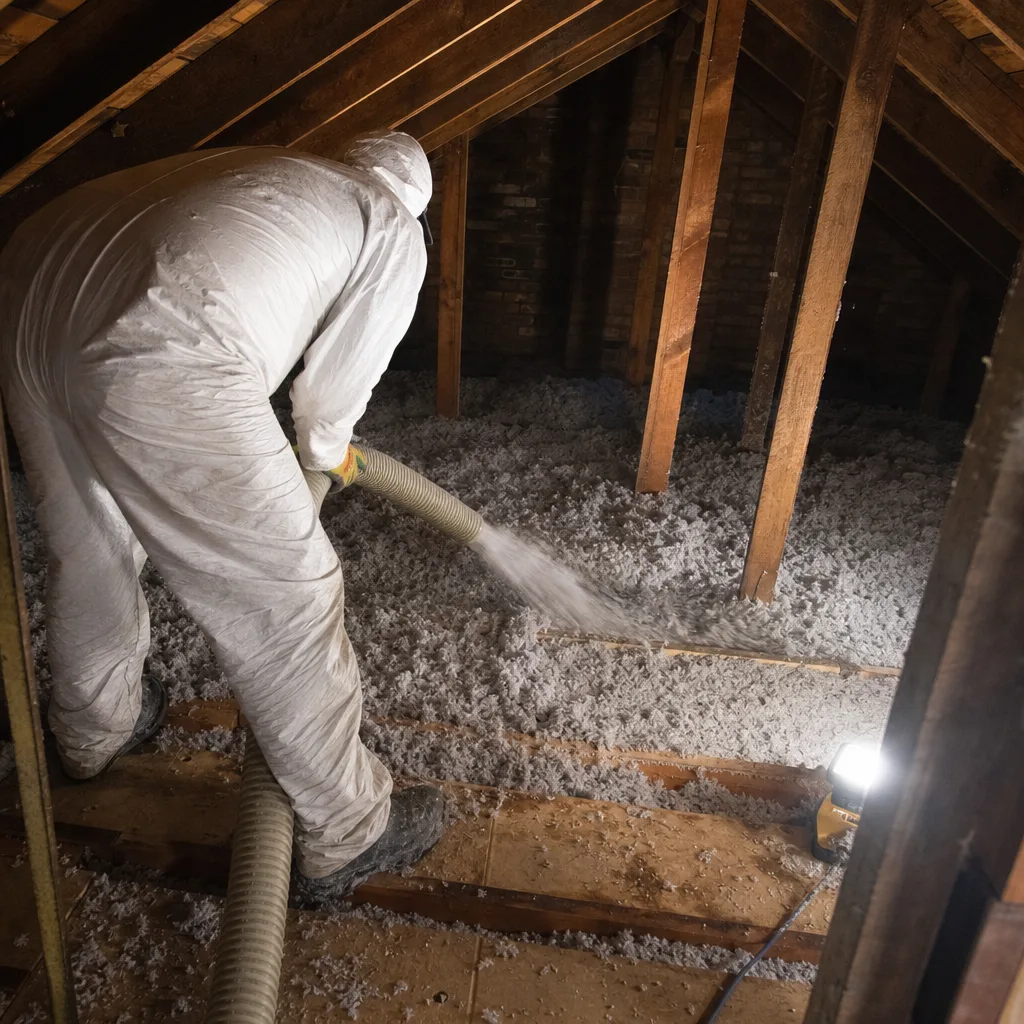
What any owner can do safely: open the hatch, take photos with a flashlight, measure the joist depth (not the insulation depth, the framing depth), and check for rodent sign, moisture staining, and batt compression. That’s genuinely useful intel that helps us quote over the phone before we even schedule the visit. What’s not safe to DIY: removing contaminated insulation without proper PPE, working in a hot attic during a Chicago summer, and – most critically – verifying that air sealing worked. Without a blower-door test before and after, you’re guessing whether the air leakage was actually addressed. A pressurized diagnostic reads out in one number how much conditioned air the house was losing before and after the work. That’s not a tool a homeowner rents at the hardware store. If you want the short version: seal the holes first. Then add the R-value. The numbers will tell you whether it worked. If you want us to do it, call (218) 261-7714 and we’ll put the price in writing before anyone lifts a tool.
FAQs
Blown-in fiberglass holds its R-value for 30 to 50 years if the attic stays dry and undisturbed, but Chicago’s freeze-thaw cycles and humid summers shorten that fast when air leaks are present. A wet batt loses up to 40% of its R-value within two seasons, and a rodent-contaminated attic is effectively uninsulated. If your insulation is older than 20 years or shows any of the failure signs above, it’s worth a closer look.
Damaged batt sections can sometimes be patched, but compressed, water-damaged, or rodent-contaminated material needs removal and replacement. In most Chicago homes, a partial repair leaves the same air leaks in place, and the performance gap comes right back. Call (218) 261-7714 and we’ll give you a straight answer on whether patching makes sense for your attic, not just for our schedule.
Most single-family attic replacements in Chicago take one full day, sometimes a day and a half if we’re doing complete removal plus air sealing plus new blown-in product to R-49 or R-60. Larger homes or attics with accessibility problems (narrow hatches, steep access stairs) can stretch to two days. The written scope you get before work starts will say exactly how long your job takes.
We keep Owens Corning blown-in fiberglass and batt products in inventory, along with Johns Manville, Knauf, Rockwool, CertainTeed, Icynene, Demilec, GreenFiber, and Reflectix. We’re not tied to any one brand, and we’re not affiliated with Owens Corning. If your attic is best served by a specific product, that’s what goes in. Materials are never on backorder for the jobs we quote.
Written by Wes Okafor, Owner & Lead Building Envelope Technician, Topside Attic Insulation, serving Chicago and nearby areas.