
Owens Corning Crawl Space Encapsulation: The Chicago Owner’s Guide
If your Owens Corning basement finishing system or crawl space liner is showing signs of failure, here’s the direct answer: we install Owens Corning crawl space encapsulation systems and compatible components throughout Chicago, with most complete encapsulation jobs running between $4,800 and $9,500 depending on square footage and access. The materials are in stock at our Chicago warehouse, and we can typically start within 3 to 5 business days. Most owners discover a problem the same way: a musty smell that won’t go away, or standing water that shows up after the first hard spring rain.
Owens Corning manufactures encapsulation systems specifically designed for basement and crawl space environments, but Chicago’s freeze-thaw cycles and high water table put stress on every component, from the vapor barrier to the fastening strips. We see the same failure points repeat across the North Side and western suburbs: seams pulling apart, fasteners popping loose from concrete, and liner punctures from rodents or settling. The fix is usually straightforward once you identify what actually failed.
Which Owens Corning Models This Applies To
The Owens Corning Basement Finishing System and the Owens Corning Crawl Space Encapsulation System both use a proprietary wall panel and liner system. The key compatibility gotcha is this: Owens Corning fastening strips and panels are interlocking, and they are not interchangeable with generic aftermarket panels. The wall panels are 24 inches wide with a tongue-and-groove edge, while the crawl space liner comes in rolls of 12, 20, and 30 mil thickness depending on the application. If you’re replacing a section, you need to match the thickness exactly, or the seams won’t seal properly.
For the liner specifically, Owens Corning’s white 20-mil reinforced liner is the most common spec we see in Chicago homes built after 2010. The part number you’ll want to look for is printed on the liner face near the wall junction, usually starting with “OC” followed by a series number. If the liner has faded or the printing is worn, measure the thickness with a micrometer. We stock Owens Corning OEM liners in all three thicknesses, plus compatible aftermarket liners for owners who want a lower material cost. Reflectix makes a compatible reflective insulation that some homeowners use in conjunction with the Owens Corning system for added thermal break, and we stock that as well.
The fastening strip is the part that fails most often. It’s a rigid PVC channel that anchors the liner to the foundation wall using concrete nails or screws. Once those nails back out, even slightly, the liner sags and water finds a way behind it. Owens Corning fastening strips are color-matched to the liner: white for the wall system, gray for the crawl space liner. Don’t mix those up. The gray strips have a wider base flange and won’t seat correctly in the white wall channels.
Signs Your Owens Corning Crawl Space Encapsulation Is Failing
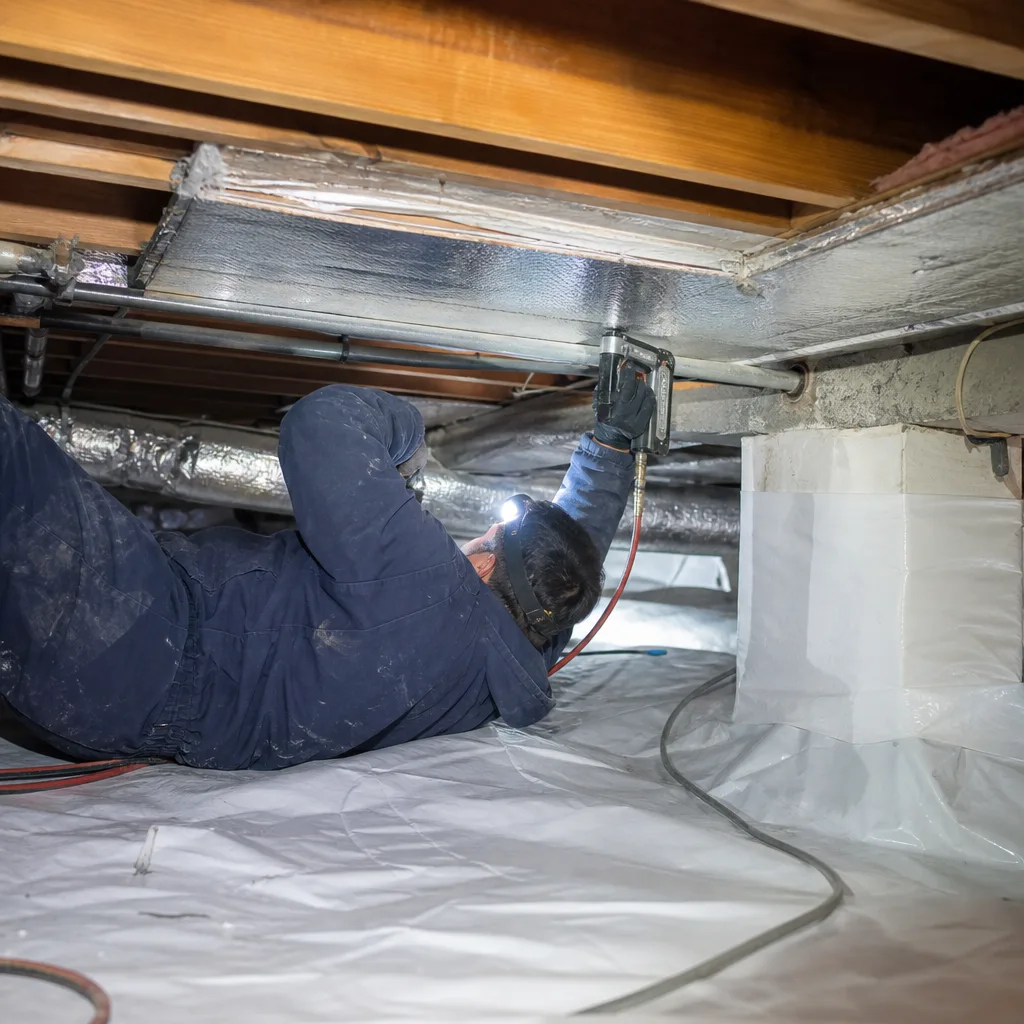
- Damp spots on the liner face or water beading underneath. This usually means a seam has separated at the overlap, or a fastener has pulled out and created a gap. Water follows the gap, not the liner.
- Musty odor coming through the floor above. When the liner fails, humidity in the crawl space climbs and that moist air migrates up through the subfloor. You smell it in the living room before you see it in the crawl space.
- Liner pulling away from the foundation walls. The fastening strips have lost their grip on the concrete. This happens more often on the north and east sides of Chicago homes where the freeze-thaw cycle works the concrete harder.
- Mold growth on the visible face of the liner. That means moisture is sitting on top, and the liner has either punctured or the drainage beneath has failed. Mold on the liner face is a symptom, not the source.
- Standing water pooling in the low spots. The liner was installed without proper grading beneath it, or the sump pump can’t keep up. In Chicago’s clay-heavy soil, improper drainage under the liner causes water to pond and eventually rupture the material.
Replacement Cost & What’s Included
Complete Owens Corning crawl space encapsulation in Chicago runs $4,800 to $9,500 for a typical 800 to 1,500 square foot crawl space. Partial repairs, like a failed fastening strip or a torn liner section, run $350 to $1,400. The price depends on three things: square footage, access height, and whether the existing drainage or vapor barrier beneath needs correction.
Every job includes the Owens Corning or compatible liner material, new fastening strips where needed, seam tape, and labor. We also include a documented photo record of the install, taken before, during, and after, so you can see exactly what was done under your house. The 365-Day Done Right Promise applies to all completed work: if something’s not right, we make it right. Before any work starts, you get a written price and a written scope. No exceptions. That’s Haven Standard Clause 1.
DIY or Call Us?
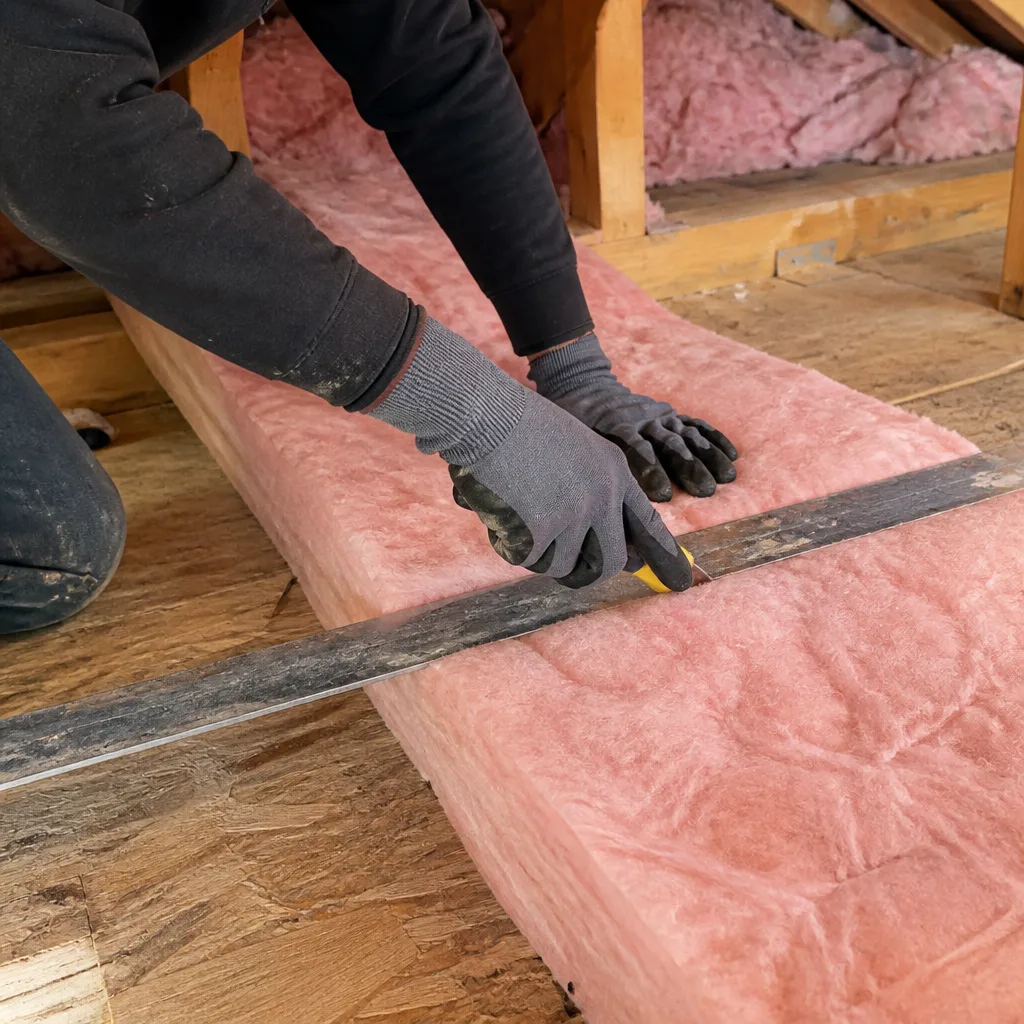
Here’s the honest split. You can safely inspect your crawl space liner yourself. Check the seams with a flashlight, look for water under the liner at the wall junction, and note where the fastening strips have pulled away. That’s useful information, and it’ll help you describe the problem when you call.
Where DIY goes wrong is the repair itself. Re-tensioning a sagging liner, resealing a seam 30 feet from the access point, and resetting fastening strips into concrete in a 3-foot-tall crawl space is physical, awkward work, and if the liner goes back with even a small gap, the humidity problem returns. You’ll know it did because the smell comes back within a month. Crawl space work also involves risk: mold exposure, sharp fasteners, and contorting in a space where you can’t move quickly if something goes wrong. If the liner has failed once, the underlying cause is usually still there. We fix the cause, not just the symptom. Call (218) 261-7714 and we’ll give you a straight answer on what you’re dealing with.
FAQs
An Owens Corning encapsulation system typically lasts 15 to 25 years in Chicago conditions, but the fastening strips and seam tape often need attention by year 10 because of freeze-thaw movement in the foundation walls. The 20-mil liner itself can last longer if it’s not punctured. Call (218) 261-7714 for an inspection, and we’ll tell you what still has life left in it.
Most liner failures are repairable: a torn section can be patched with a compatible seam tape, and failed fastening strips can be replaced without pulling the entire liner. Full replacement is only needed when the liner has multiple punctures, or the drainage beneath was never installed correctly. We’ll give you a written price for either path before any work starts.
A partial repair takes 2 to 4 hours. A full Owens Corning replacement in a standard Chicago crawl space takes 1 to 2 days depending on access and square footage. We’ll give you a time estimate in the written scope, and you’ll get a text when the crew is on the way.
Yes. We carry Owens Corning liners in all three standard thicknesses, both white and gray fastening strips, and seam tape on every truck that does crawl space work in Chicago. If the job needs something specific we don’t have, it’s at our warehouse and back on the job the next day. Call (218) 261-7714 and tell us what you’re seeing, and we’ll bring the right parts the first time.
Written by Wes Okafor, Owner & Lead Building Envelope Technician, Topside Attic Insulation at Topside Attic Insulation, serving Chicago and nearby areas.