
Owens Corning Home Energy Audit in Chicago: What to Know First
An Owens Corning home energy audit in Chicago typically costs between $350 and $650 for a blower-door test with thermal imaging, and most audits are scheduled within five to seven business days. That price covers a calibrated pressurization reading, an infrared scan of your ceilings and walls, a duct-leakage check, and a written report with the numbers that matter. If you own a Chicago home with Owens Corning insulation, this page explains exactly what we look for, what we find, and what the documentation looks like when we leave.
We’ll say it plainly: we’re an independent Owens Corning service provider, not a factory-authorized warranty station. That matters because the audit we perform tells you things the product data sheet can’t – like whether the pink fiberglass batts in your attic are actually doing their job, or just sitting there while conditioned air pours through unsealed top plates. Call (218) 261-7714 if you want an audit scheduled this week. If you want the full picture first, keep reading.
Key Takeaways:
- Owens Corning fiberglass and foam products age differently in Chicago’s freeze-thaw cycle, and failure modes are specific to product line.
- We run a blower-door test before any insulation decision gets made. No exceptions.
- You get a printed report with pre- and post-audit ACH50 numbers, not a verbal summary.
- Written price before work starts. Always. Under Haven Standard Clause 1.
How Owens Corning Products Fail – and How We Fix Them
Most Owens Corning insulation in Chicago homes was installed correctly for its time. The problem is that Chicago is hard on building envelopes, and the failure modes we see in audits are predictable once you know the product line. Here’s what we find in the field:
- Owens Corning R-30 fiberglass batts in vented attics compressing under storage decking. We see this in bungalows across Jefferson Park and Portage Park. When pink batts get compressed from R-30 to R-19 because a previous owner laid plywood over them, the listed R-value on the package stops meaning anything. The fix is removal, air sealing, and loose-fill fiberglass or cellulose blown to the target depth for your climate zone.
- Atticat blown-in fiberglass settling below the manufacturer’s minimum coverage marks. Owens Corning prints coverage charts on every Atticat bag, and in Chicago homes with original insulation from the 1980s and 1990s, we regularly measure settled depths at inches below the printed minimum for R-49. The blower-door test will read higher air leakage when the fiberglass has settled enough to expose the top plates around the attic perimeter. We document the settled depth inch by inch before touching anything.
- Foamular XPS rigid board on basement rim joists that was never air sealed at the perimeter. Foamular is a fine product, but it’s a thermal break, not an air barrier. If the edges aren’t sealed with spray foam or a compatible sealant, Chicago’s temperature swings create a pressure differential that pulls air around the board. Our audit catches this with the infrared camera during a blower-door depressurization – the cold air moving around the board shows up immediately.
- Owens Corning basement blanket systems trapping moisture behind the vinyl facing. This one shows up in older Lincoln Park and Lakeview basements. The fiberglass blanket with vinyl facing gets installed against the foundation wall, and Chicago’s wet basements push moisture into it. The audit’s infrared scan will show cold spots and temperature differentials that indicate moisture-saturated insulation. We’ll document it, then recommend removal and a properly sequenced solution.
- Thermafiber mineral wool batts in party walls of two-flats and three-flats that were never cut to fit around electrical boxes. Thermafiber is an Owens Corning product line we respect, but in Chicago’s vintage multi-unit buildings, installers often rough-cut around ceiling boxes and leave gaps that communicate air between units. The blower-door test in one unit of a two-flat can pull air through those gaps, and our thermal imaging will pinpoint exactly which boxes need to be re-insulated and sealed.
The pattern here isn’t a knock on Owens Corning. The products do what the labels say. The failures come from installation sequencing and Chicago’s climate: thermal expansion cycles, moisture from the lake, and decades of deferred maintenance on the air-sealing layer that should have come first.
Our Owens Corning Home Energy Audit Process
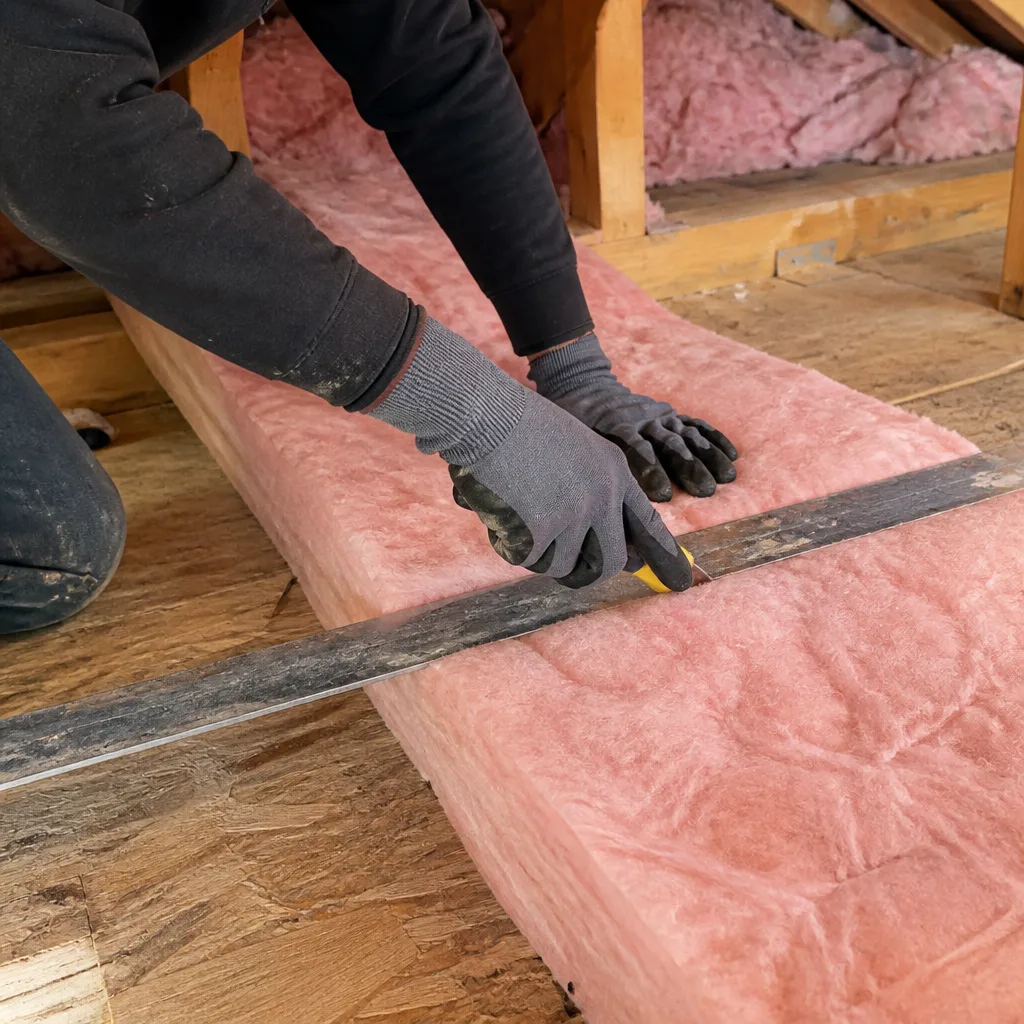
Here’s what the job looks like from the first call to the final walkthrough. It’s the same process Wes Okafor has run on over 9,000 Chicago homes since 2016, and it doesn’t change because the insulation says Owens Corning on it.
- 1
Call or text. A live person answers 24/7. You describe the house, the insulation you know about, and what’s bothering you – high heating bills, cold rooms, drafts.
- 2
We schedule the audit. You get a named technician and a text when we’re on the way. Under Haven Standard: arrive on schedule, every time.
- 3
Blower-door test runs first. The fan goes in the front door, the gauge reads ACH50, and we have the first number. Wes grew up six blocks from the Portage Park field house and has been running these tests in Chicago for over twenty years – the blower-door is always the first tool out.
- 4
Thermal imaging while the house is depressurized. The infrared camera walks the ceilings, walls, rim joists, and around every can light and penetration. The pressure differential makes air leaks visible.
- 5
Duct leakage testing where needed. If the home has forced air, we test the ducts for leakage using a duct blaster. A 20% duct leak in a Chicago attic means you’re heating the neighborhood.
- 6
Written report before we leave. You get the pre-audit ACH50, the thermal images with notes, the duct leakage percentage, and a prioritized list of exactly what we’d fix first if it were our house. Written price for any recommended work is on the report. No surprise visits, no follow-up calls pushing a sale.
Seal the holes first. Then add the R-value. The numbers will tell you whether it worked.
What Owens Corning Home Energy Audit Costs in Chicago
Price depends on house size and what you want tested. Here’s the honest range for Chicago homes:
- Blower-door test only: $300-$450. Good for a single diagnostic number before a real estate transaction or a dispute with a previous contractor.
- Full audit with blower-door, thermal imaging, and written report: $400-$625. This is what most Chicago homeowners book. The report is yours to keep regardless of whether you hire us for any work.
- Full audit plus duct leakage testing: $550-$750. For homes with forced air and unexplained comfort or humidity problems.
What moves the price: house square footage, number of stories, attic accessibility, and whether you want the duct test included. The quote is written before we step inside – no upsells, no “while we’re here” additions. If you bring us a competing written estimate for a comparable audit, we’ll read it with you line by line. That’s the Free Second Opinion, and it applies to estimates, not just installation quotes.
Call (218) 261-7714 for an exact number. The estimate is free, and you’ll have it in writing before you decide anything.
Why Chicago Homeowners Call Topside Attic Insulation for Owens Corning Work
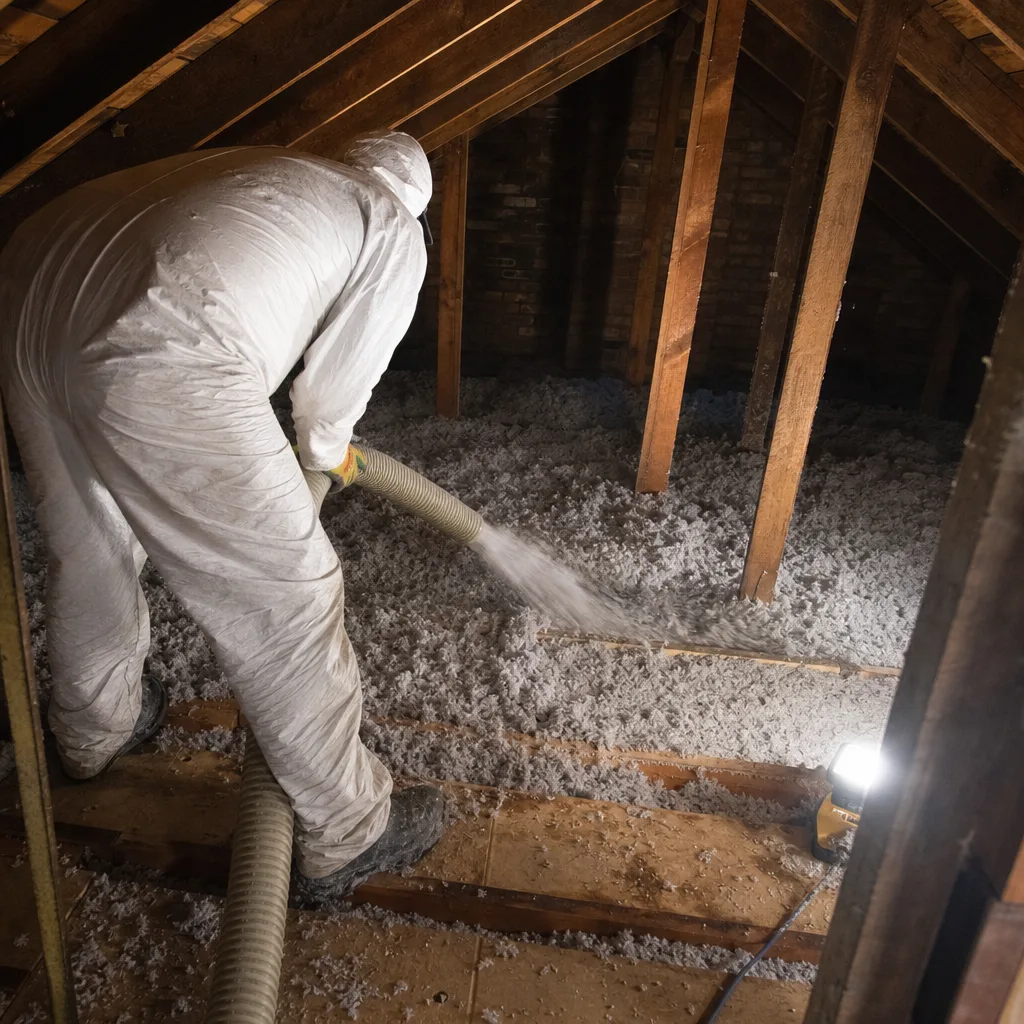
Most insulation contractors in Chicago will blow new material over whatever is already up there and call it a day. We won’t. Wes Okafor came up through the building technology program at Truman College on the North Side, and the first thing that program teaches is that air movement and thermal performance are the same problem. You can’t fix one without measuring the other. That’s why every Owens Corning job we touch starts with a blower-door reading, and ends with a photo log of every air-sealing location and a printed report with pre- and post-installation ACH50. No exceptions in nine years.
We also stock and work with multiple brands – Johns Manville, Knauf, Rockwool, CertainTeed, Icynene, Demilec, GreenFiber, and Reflectix where it fits. That means when we find a failed Owens Corning product in your attic, we’re not locked into replacing it with the same line if a different material matches the Chicago climate better. You get the right material for the job, not the product we have a purchasing agreement with. The 365-Day Done Right Promise covers whatever we install, and it’s in writing before anyone lifts a tool.
FAQs
No. A diagnostic audit doesn’t modify or remove any insulation, so it cannot void your warranty. In fact, the written report we provide with pre-audit ACH50 readings and thermal imaging gives you documentation you can use to make a warranty claim with Owens Corning if the audit reveals a product defect. Call (218) 261-7714 to schedule, and we’ll walk you through what the report includes.
Plan on two to four hours for a typical Chicago single-family home. The blower-door test itself runs 20 to 30 minutes, the thermal imaging walkthrough takes 30 to 60 minutes depending on house size, and the written report with recommendations takes us about 30 minutes to prepare before we leave. You get the full report the same day, not an emailed summary a week later.
Yes, we can scope the audit to the attic only. But if you’re seeing high heating bills or cold rooms, the source may not be the attic – a blower-door test on the whole house gives us the full leakage number, and the thermal imaging will show us if the rim joists or walls are the real problem. A whole-house audit costs more, but it answers the question the first time.
If the installer didn’t air seal first, yes. Fiberglass insulation is an air filter, not an air barrier. Air leaks through the top plates and can lights before it ever reaches the fiberglass, and the fiberglass does almost nothing to stop it. We see this in Chicago homes every week: inches of Atticat, high ACH50 readings, and homeowners wondering why the gas bill hardly moved. An audit will tell you within the hour whether your Atticat is underperforming or if the real problem is the air-sealing layer underneath it.
Utility-sponsored audits are useful starting points, but they’re usually walkthrough-level assessments without blower-door testing or thermal imaging specific to insulation performance. Our audit gives you the actual ACH50 number, the infrared images, and a written scope with dollar figures attached to each recommendation. You can take that report to any contractor – including ComEd’s approved list – and get apples-to-apples bids. Call (218) 261-7714 and we’ll send you the audit scope in writing before you commit.
Written by Wes Okafor, Owner & Lead Building Envelope Technician, Topside Attic Insulation at Topside Attic Insulation, serving Chicago and nearby areas.